




![[Gallery] Ancient City Auto Club 41st Annual Car Show](https://www.racingjunk.com/news/wp-content/uploads/2025/12/DSC_9441-1-e1766520816593-376x206.jpg)
![[Gallery] Village Shoppes Cruise-In](https://www.racingjunk.com/news/wp-content/uploads/2026/10/DSC_9496-e1790963792837-376x206.jpg)
Managing Mayhem: Gear Ratio Combinations Part 1
Click Here to Begin Slideshow
I guarantee this will date me, but a long time ago, picking gears for a performance car was pretty simple: Whatever ratio was in the transmission, was in the transmission. Nothing was changed (of course, way back when, there was little transmission gear ratio choice anyway). Out back, you just used what the local hot dog ran (which invariably was a 4.11:1 ring and pinion). With a ratio like that, you were the king (unless, of course, someone showed up with a 4.88:1 gear set in the back of his car and could hook it up -- then you were quickly relegated to "clown prince" status). The only real criteria for this selection process was the RPM at which the car crossed the finish stripe on the drag strip.
Flash back to today, and you'll soon find things are far different. Modern tuning takes the engine torque curve, the transmission gear ratios, torque converter slippage (and indirectly, the torque converter stall speed), rear axle ratio and slick roll out dimensions into consideration as a total package. Although these factors might not seem independently significant, they have a profound effect upon the real performance of a car. The key to ultimate performance is to take all of the variables into consideration. Unfortunately, there is no real easy way to predict how all of these variables intertwine to ultimately affect vehicle performance, aside from using a computer simulation program. I'll get to that in a minute, but there is something to address: When it comes to selecting gear ratios (transmission and final drive), there are no hard and fast answers. Each car will be different. Because of this, there are no definitive conclusions to this particular discussion. Instead, the purpose of this article is to establish current trends and obviously, to see where gearing is headed in the future.
The first point to consider is the engine torque curve. It's something you can't take lightly when choosing gear ratios. A long time ago one of my magazine assignments was to assemble a dozen winning tips from a dozen winning racers. Bill "Grumpy" Jenkins was one of the first racers I talked to (believe me, I held Jenkins in reverence at the time, and although Bill has passed on, I still respect his wisdom). Although his exact words escape me, Bill felt too many racers over-geared their combinations (buzzing them in the lights) and as a consequence, failed to take engine torque and the actual power band into consideration. Bottom line? Jenkins felt that in many cases, a bit less gear could make a given car quicker, faster, more consistent and ultimately, more reliable.
Backing up Jenkins advice was an interesting tid-bit passed on by another drag racing friend (and philospher). It went something like this: "The main object in drag racing is to get the car into high gear as quickly as possible." If you give it some thought, it means you should get the engine into the "meat" of the power band as soon as you can. This way, it will accelerate out the back door.
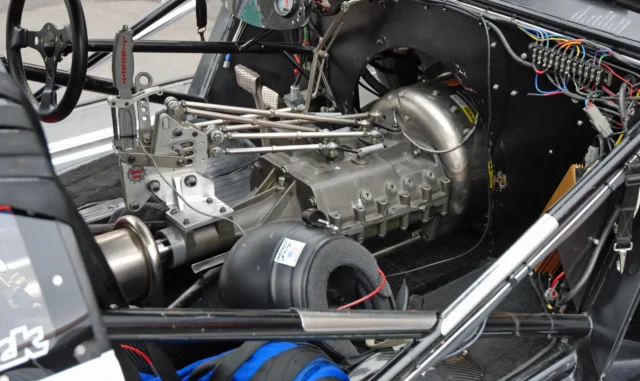
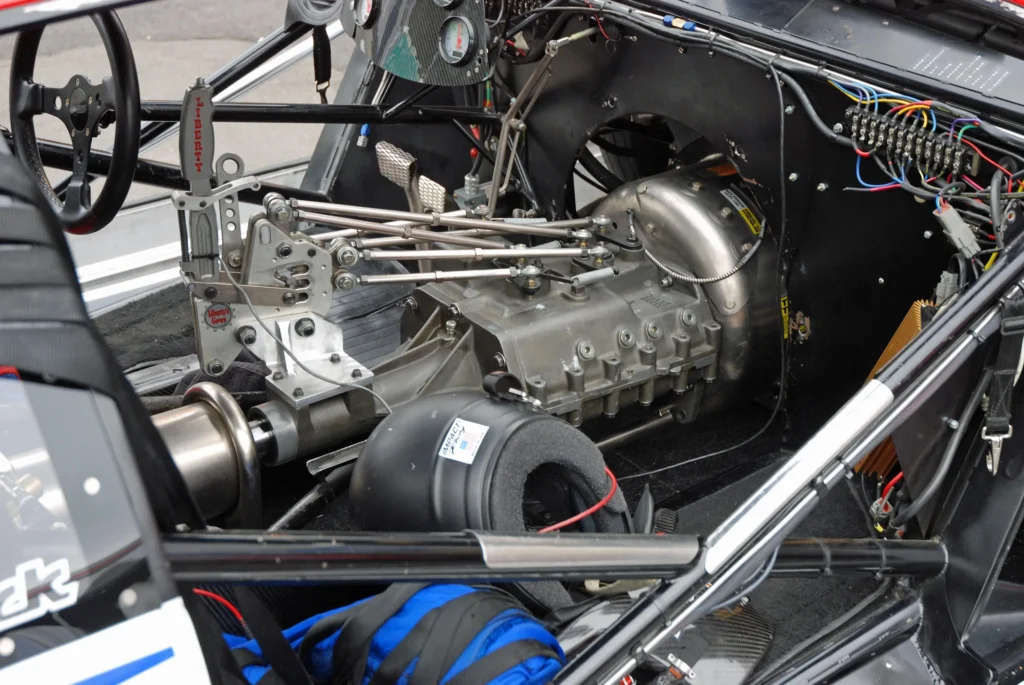
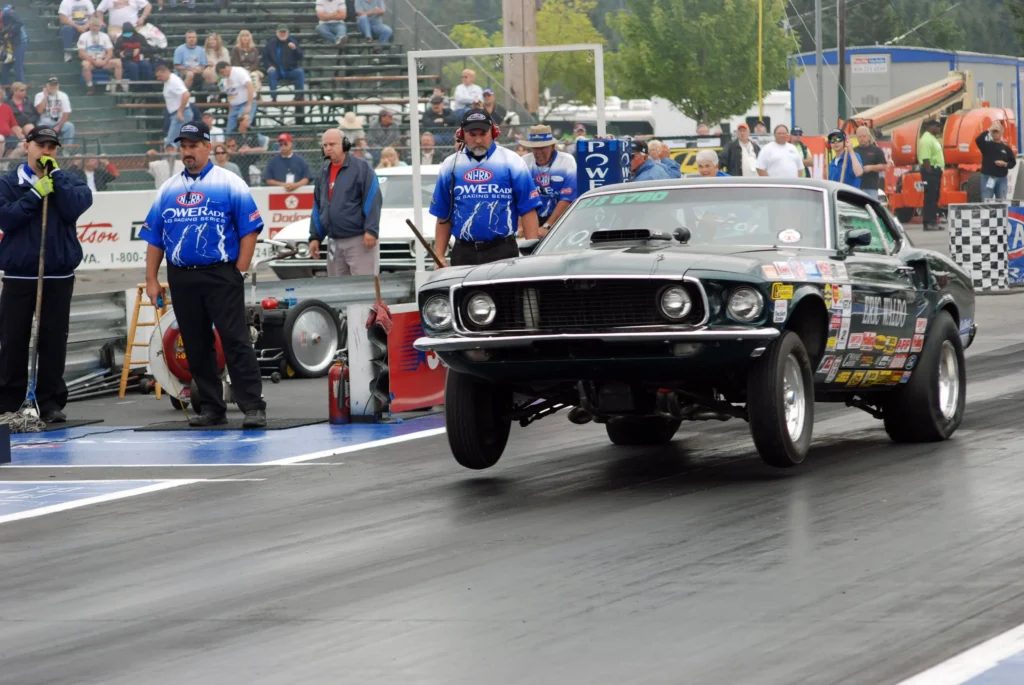
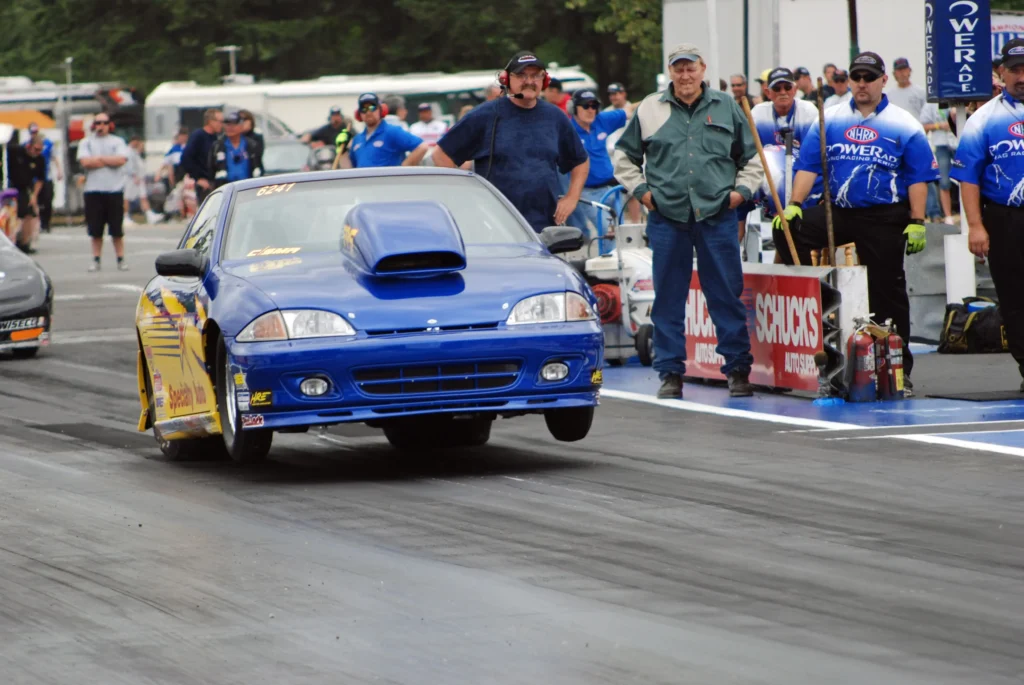
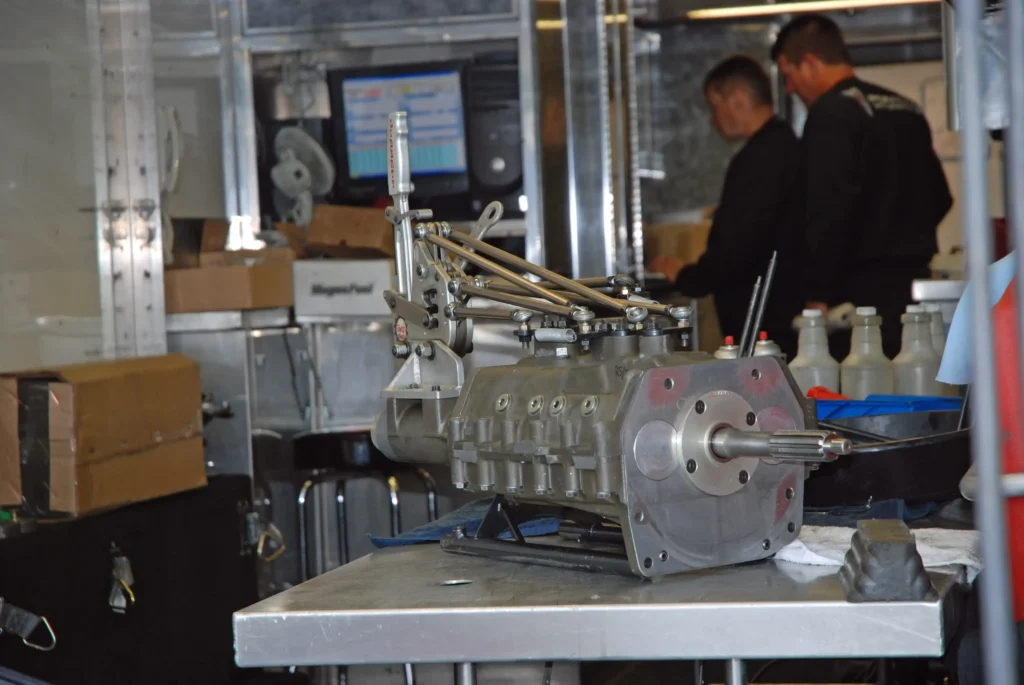
Obviously, a lot of racers and savvy parts manufacturers have been paying attention too. As engine torque bands have become narrower over the years, transmissions with more gears are also becoming more common. While the power curve moves up, the band of usable power narrows, hence the need for more gears. Case-in-point: In drag racing, three speed automatics have almost completely replaced Powerglides in Comp Eliminator as well as in the Modified ranks of Super Stock. That's also why five speed manual transmissions have completely transposed the venerable four speed in all racing classes where they're legal (Pro Stock, Pro Stock Truck, Competition Eliminator and many Super Stock classes).
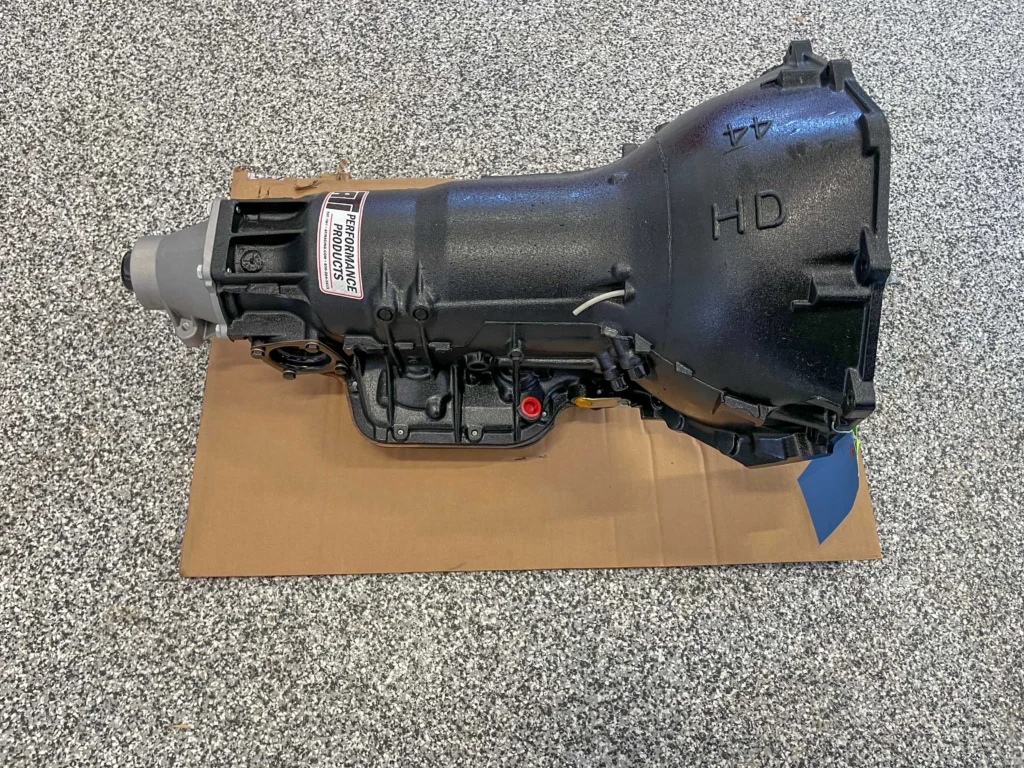
Using automatics as an example, racers have long known that a Powerglide spends a considerable amount of time "on the converter". This really means the converter is doing most of the work. Not so with a three speed automatic. With these transmissions, more time is actually spent (traversing the quarter mile) "on the gear". In the end, less power is wasted due to slippage and more power is applied to the rear wheels.
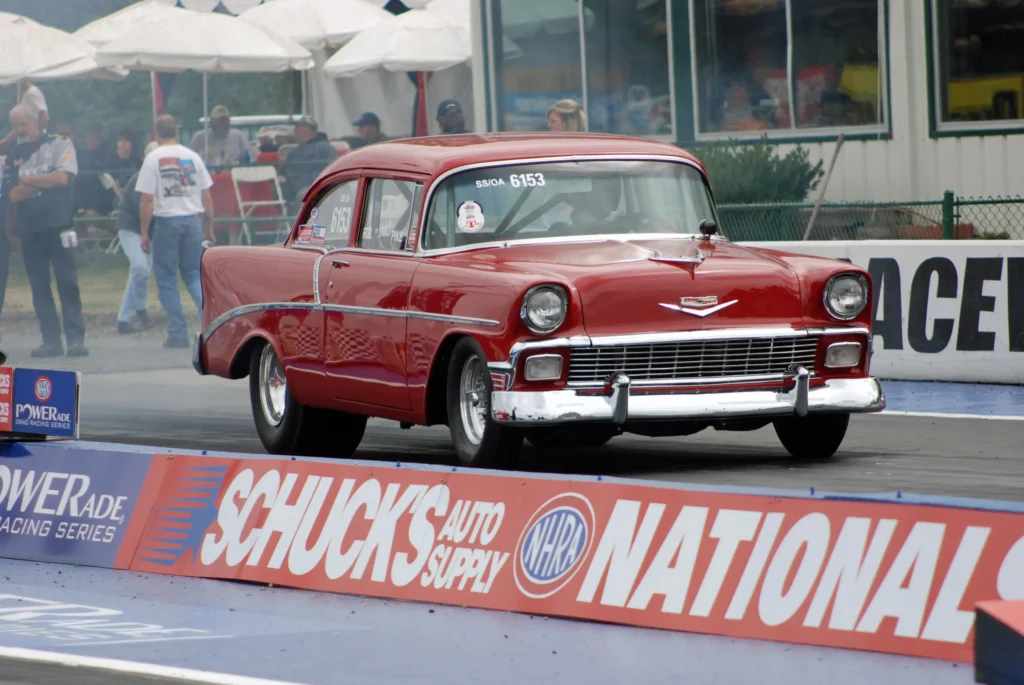
In an effort to illustrate this fact, I plugged three very simple automatic transmission combinations into a computer simulation program. The car in question was a hypothetical platform, operating under ideal SAE "dyno corrected" conditions (60° F, 0' Elevation, 0% Humidity and a Barometer of 29.92"). The engine displaced 340 cubic inches and produced (at least on paper) 735 HP at 8,900 RPM. Using a 2745 pound "door car" as the basis, I ran three tests. The first incorporated a 1.98:1 first gear Powerglide. The second test was identical, with one exception: A three speed with a 2.28:1 first gear and a 1.40:1 second gear (third gear is obviously 1:1) was "installed". The baseline test with the Powerglide simulated an 8.75 second pass at 154.2 MPH. Substituting the three speed automatic showed a pass of 8.63 seconds at 154.9 MPH. The final test used the Jenkins' "less-could-be-more" approach. By adding some gear to the transmission (swapping to a 2.40:1 first gear along with a 1.45:1 second) and taking gear out of the rear axle, the elapsed time stayed the same, but the speed increased to 155.4 MPH. Engine RPM across the finish stripe came down from 9,840 to 9,560. Just as revealing was the way the power was distributed.
One item becomes pretty clear when you consider the combinations. The Powerglide combination spends a good portion of it's time trying to scramble back to the maximum power peak of the engine. Meanwhile, the three speed combinations are accelerating rapidly toward the gear change (and the end of the drag strip). At least in these simulations, It goes to show that the Powerglide would really "like" an engine with a wider power band than the three speed.
Does this mean that Powerglides and four speed manual transmissions are dead? Hardly. There are plenty of places where the more traditional gear boxes can excel. As an example, an engine with a broad, flat torque curve can usually get down the track and down the road with far less fuss with fewer gears (countless small tire fastest street cars fit this mold).
We’re not done yet. Computer simulations and the real world can sometimes prove to be two different things. Because of that, the writer went directly to racers and other experts to verify our paper tests. You might be surprised at what we discovered. We’ll also take a quick look stick shift transmissions too. In that world, the sky is the limit when it comes to ratios and gear splits. We’ll complete this discussion in the next issue. Watch for it!
Click Here to Begin Slideshow
I guarantee this will date me, but a long time ago, picking gears for a performance car was pretty simple: Whatever ratio was in the transmission, was in the transmission. Nothing was changed (of course, way back when, there was little transmission gear ratio choice anyway). Out back, you just used what the local hot dog ran (which invariably was a 4.11:1 ring and pinion). With a ratio like that, you were the king (unless, of course, someone showed up with a 4.88:1 gear set in the back of his car and could hook it up -- then you were quickly relegated to "clown prince" status). The only real criteria for this selection process was the RPM at which the car crossed the finish stripe on the drag strip.
Flash back to today, and you'll soon find things are far different. Modern tuning takes the engine torque curve, the transmission gear ratios, torque converter slippage (and indirectly, the torque converter stall speed), rear axle ratio and slick roll out dimensions into consideration as a total package. Although these factors might not seem independently significant, they have a profound effect upon the real performance of a car. The key to ultimate performance is to take all of the variables into consideration. Unfortunately, there is no real easy way to predict how all of these variables intertwine to ultimately affect vehicle performance, aside from using a computer simulation program. I'll get to that in a minute, but there is something to address: When it comes to selecting gear ratios (transmission and final drive), there are no hard and fast answers. Each car will be different. Because of this, there are no definitive conclusions to this particular discussion. Instead, the purpose of this article is to establish current trends and obviously, to see where gearing is headed in the future.
The first point to consider is the engine torque curve. It's something you can't take lightly when choosing gear ratios. A long time ago one of my magazine assignments was to assemble a dozen winning tips from a dozen winning racers. Bill "Grumpy" Jenkins was one of the first racers I talked to (believe me, I held Jenkins in reverence at the time, and although Bill has passed on, I still respect his wisdom). Although his exact words escape me, Bill felt too many racers over-geared their combinations (buzzing them in the lights) and as a consequence, failed to take engine torque and the actual power band into consideration. Bottom line? Jenkins felt that in many cases, a bit less gear could make a given car quicker, faster, more consistent and ultimately, more reliable.
Backing up Jenkins advice was an interesting tid-bit passed on by another drag racing friend (and philospher). It went something like this: "The main object in drag racing is to get the car into high gear as quickly as possible." If you give it some thought, it means you should get the engine into the "meat" of the power band as soon as you can. This way, it will accelerate out the back door.
Obviously, a lot of racers and savvy parts manufacturers have been paying attention too. As engine torque bands have become narrower over the years, transmissions with more gears are also becoming more common. While the power curve moves up, the band of usable power narrows, hence the need for more gears. Case-in-point: In drag racing, three speed automatics have almost completely replaced Powerglides in Comp Eliminator as well as in the Modified ranks of Super Stock. That's also why five speed manual transmissions have completely transposed the venerable four speed in all racing classes where they're legal (Pro Stock, Pro Stock Truck, Competition Eliminator and many Super Stock classes).
Using automatics as an example, racers have long known that a Powerglide spends a considerable amount of time "on the converter". This really means the converter is doing most of the work. Not so with a three speed automatic. With these transmissions, more time is actually spent (traversing the quarter mile) "on the gear". In the end, less power is wasted due to slippage and more power is applied to the rear wheels.
In an effort to illustrate this fact, I plugged three very simple automatic transmission combinations into a computer simulation program. The car in question was a hypothetical platform, operating under ideal SAE "dyno corrected" conditions (60° F, 0' Elevation, 0% Humidity and a Barometer of 29.92"). The engine displaced 340 cubic inches and produced (at least on paper) 735 HP at 8,900 RPM. Using a 2745 pound "door car" as the basis, I ran three tests. The first incorporated a 1.98:1 first gear Powerglide. The second test was identical, with one exception: A three speed with a 2.28:1 first gear and a 1.40:1 second gear (third gear is obviously 1:1) was "installed". The baseline test with the Powerglide simulated an 8.75 second pass at 154.2 MPH. Substituting the three speed automatic showed a pass of 8.63 seconds at 154.9 MPH. The final test used the Jenkins' "less-could-be-more" approach. By adding some gear to the transmission (swapping to a 2.40:1 first gear along with a 1.45:1 second) and taking gear out of the rear axle, the elapsed time stayed the same, but the speed increased to 155.4 MPH. Engine RPM across the finish stripe came down from 9,840 to 9,560. Just as revealing was the way the power was distributed.
One item becomes pretty clear when you consider the combinations. The Powerglide combination spends a good portion of it's time trying to scramble back to the maximum power peak of the engine. Meanwhile, the three speed combinations are accelerating rapidly toward the gear change (and the end of the drag strip). At least in these simulations, It goes to show that the Powerglide would really "like" an engine with a wider power band than the three speed.
Does this mean that Powerglides and four speed manual transmissions are dead? Hardly. There are plenty of places where the more traditional gear boxes can excel. As an example, an engine with a broad, flat torque curve can usually get down the track and down the road with far less fuss with fewer gears (countless small tire fastest street cars fit this mold).
We’re not done yet. Computer simulations and the real world can sometimes prove to be two different things. Because of that, the writer went directly to racers and other experts to verify our paper tests. You might be surprised at what we discovered. We’ll also take a quick look stick shift transmissions too. In that world, the sky is the limit when it comes to ratios and gear splits. We’ll complete this discussion in the next issue. Watch for it!
Click Here to Begin Slideshow