




New NHRA-Approved SSR Carburetors from Quick Fuel Technology
We take a look at the new NHRA-legal SSR carburetors from Quick Fuel Technology
We take a look at the new NHRA-legal SSR carburetors from Quick Fuel Technology
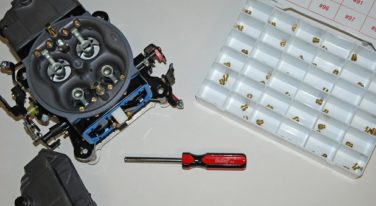
Wayne Scraba talks jetting and horsepower in a Holley carb and how to increase effectiveness.

What is it that gives certain drivers a distinct advantage when it comes time to lay down one quick lap? It’s not just boldness, grit or bravery that a quick driver needs to secure the frontmost position on the grid.
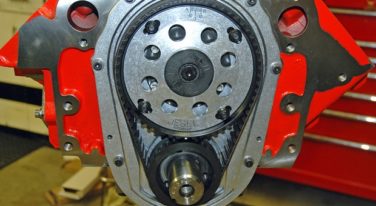
Over the past three segments of this series, we’ve taken a look at the installation of a Jesel belt drive system. We also installed the crank pulley. In this segment, we’ll complete the installation with the fitting of the cam pulley and the drive belt.

Anyone who’s spent much time racing realizes how, as they gain experience on the track, they’re able to relax. Some of this has to do with their improved car control, but it’s also because of their ability to process a greater amount of information.
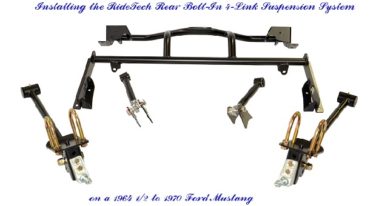
You can almost completely eliminate wheel hop by removing your leafsprings and installing a quality 4-link rear end.
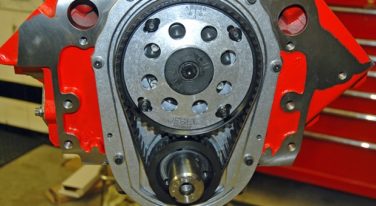
We’re back with our third segment of the Jesel camshaft timing belt installation. This time around we’ll show you how to shim the cam pulley adapter, and we’ll also dig into installing the crank pulley.

No matter how much money you put into it, the rear suspension on your 70-73 F-body has one glaring shortcoming: It’s got a solid axle. There’s a way to overcome that, though. It’s called an independent rear suspension (IRS).
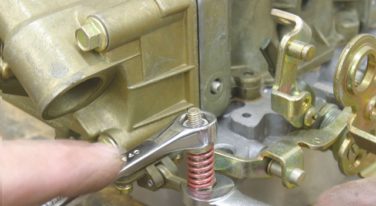
Randy Bolig sheds some light on why the accelerator pump on our carburetor is so important.
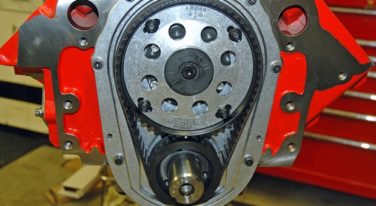
In our last segment we started the installation of a Jesel belt drive. This time around, we’ll install the valley cover plate for the final time and dig into the prep required for the camshaft install.