




Going Quicker, Faster and More Reliably with Lightweight Hardware Part 2
In our last issue, we began our look at how you can slice and dice your ET slip by way of reducing rear end unsprung and rotational weight.
In our last issue, we began our look at how you can slice and dice your ET slip by way of reducing rear end unsprung and rotational weight.

It should be no secret to anyone who has ever climbed into a racecar that there’s more than one way to go fast.
Because of the prevalence of paddle-shifted gearboxes in modern sports cars, the appeal of left-foot braking is greater these days, so why not learn to capitalize on a new-fangled form of technology and put that lazy left foot to work?

Moving from the world of muscle cars into the world of road racers is a shock for many. Lots of back-and-forth ensues regarding the right spring selection, the right amount of swaybar and how to balance front and rear stiffness to help – and, truthfully, it never ends.

As the drivers sit on the starting grid, their eyes fix keenly on the light or the flag marshal, they bite their lips, breathe shallowly and tense their grip around the steering wheel.

At which point does a driver decide to accept that a slide is beyond catching, and how do they know which way to go to avoid a competitor who’s spun off ahead of them?

In this video, HolleyPerformance brings us a How To Install a Sniper EFI Fabricated Intake.
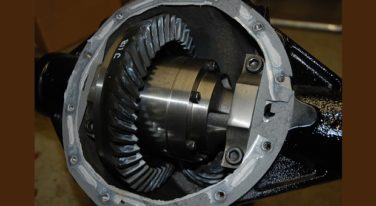
During the muscle car era, the Detroit Locker was likely the toughest, meanest, gnarliest differential that ever turned a tire on the street. As it turns out, the Detroit Locker is still the most durable and dependable locking differential available today.

Despite the notion that racing is a solitary sport, the best racers are those who can work well with their mechanics and engineers.
![[Video] Mickey Thompson Tire Challenge](https://www.racingjunk.com/news/wp-content/uploads/2017/08/Untitled-376x206.png)
Justin Banner breaks down two cars with identical setups, the only difference? Their rear tires.