




![[Gallery] 3rd. Annual Father's Day Classic Car Show](https://www.racingjunk.com/news/wp-content/uploads/2026/07/Calistoga-2026-18-scaled-e1783026475349-376x206.jpg)


![[Gallery] Blackhawk Museum Stop Over](https://www.racingjunk.com/news/wp-content/uploads/2026/06/DSC_0918-e1782449621944-376x206.jpg)
Fel-Pro’s Take On High Performance Engine Gaskets Part 3
Part 3 of Wayne Scraba's series on Fel-Pro gaskets focuses on the intake gasket.
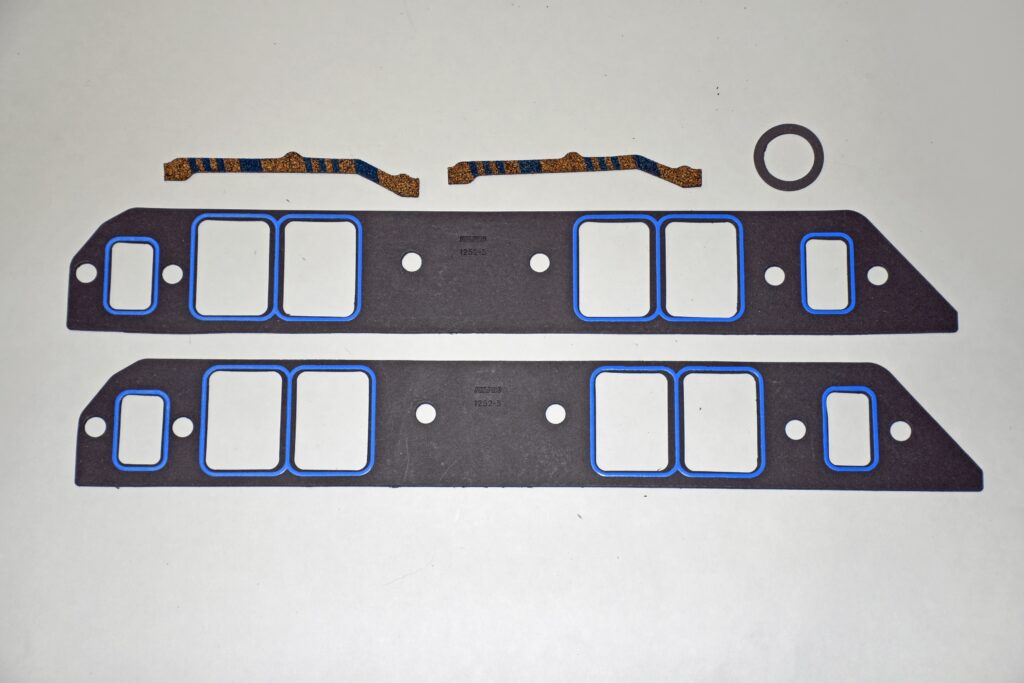
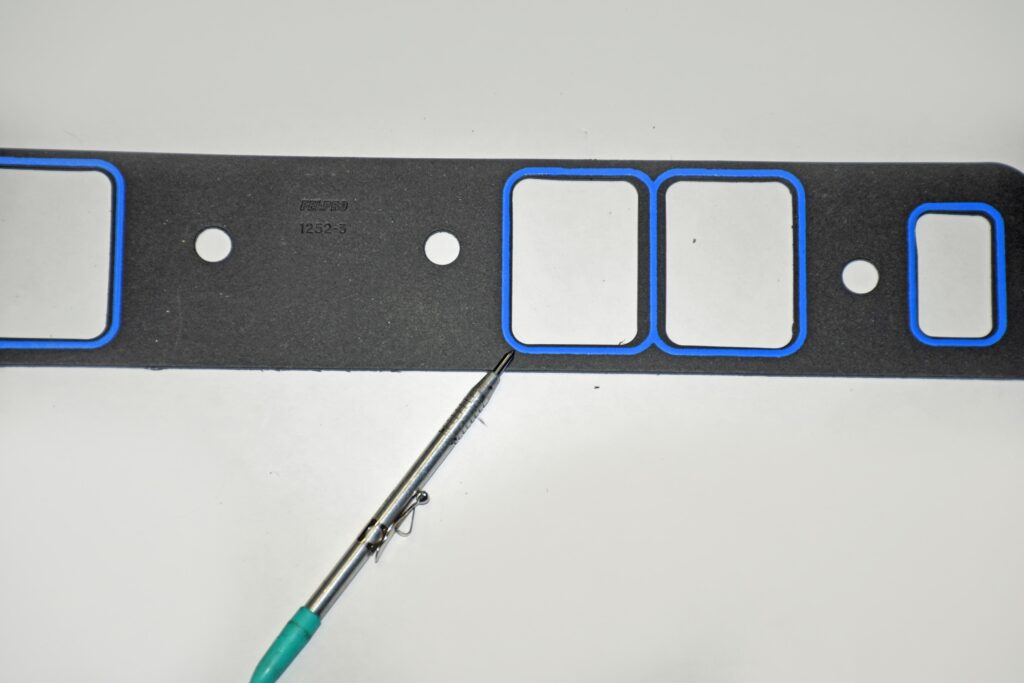
In our last issue we took a detailed look at how to install Fel-Pro head gaskets and how technology has changed header gaskets. But that’s not the end of it. Staying with the top end of the engine, there are several different options available for intake gaskets. First things first: Check the port sizing first! If your heads have been ported, then check them dimensionally. Fel-Pro offers a huge range of intake manifold gaskets for pretty all of today’s popular racing and high performance engine combinations.
Fel-Pro adds this with regard to intake gaskets: “Most Fel-Pro Performance intake manifold gaskets are designed without a metal core, to allow engine builders to trim the gasket for exact fit on modified ports. The base gasket material resists coolant, gasoline, alcohol, and oil. As needed, Printoseal® elastomeric sealing beads are used to provide the extra sealing strength needed around the ports. These gaskets are designed and optimized for true race applications.”
“For high-vacuum applications, Fel-Pro Performance solid core intake gaskets are the preferred choice. The strong steel core prevents movement of
the gasket into the intake port, which can lead to engine power loss. The gasket also has an anti-stick coating to make gasket removal and clean-up easier, while preventing gasket failure due to intake manifold and cylinder head movement. This type of gasket is ideal for circle track racing when restrictor plates are used (or drag cars running throttle stops), as well as for long service life engines – such as those in street applications.”
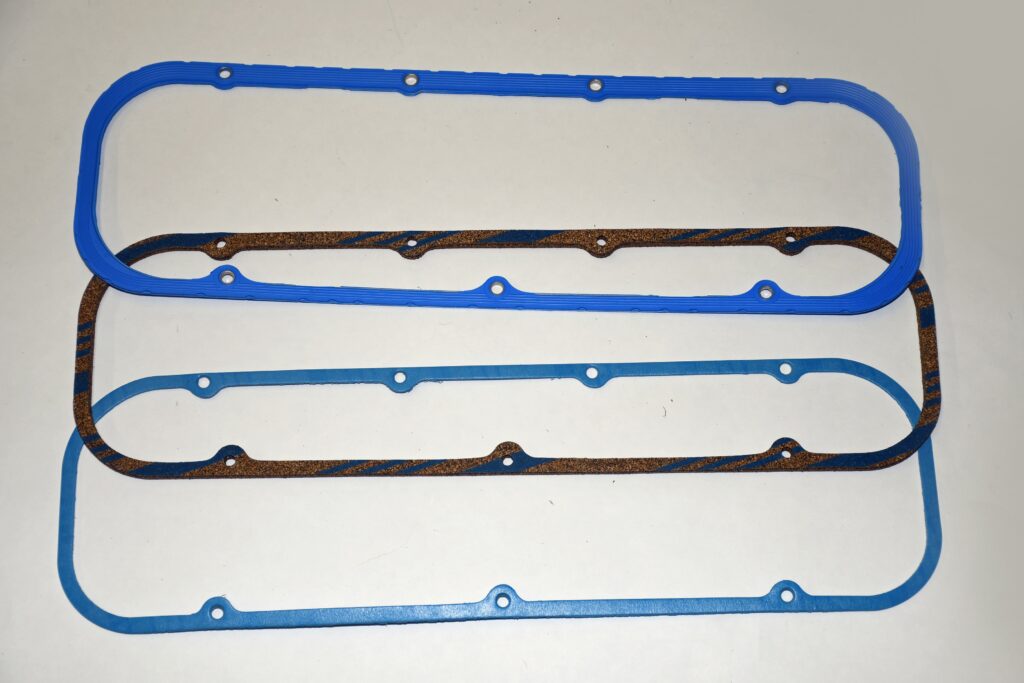
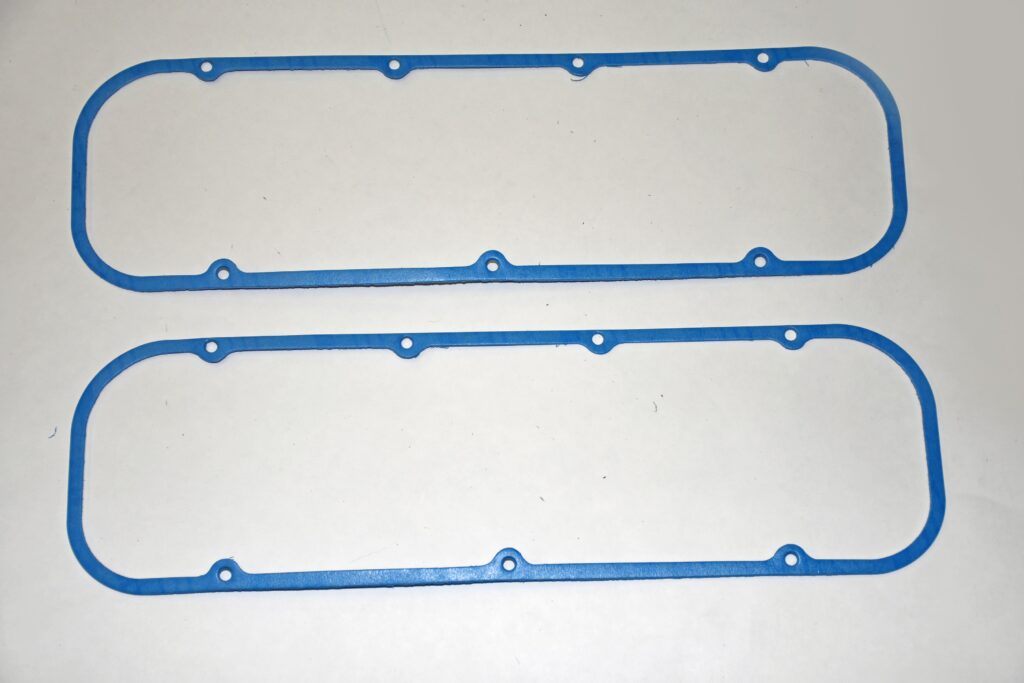
Something else that can be at the mercy of high vacuum conditions are the valve cover and oil pan gaskets. There are all sorts of them available today and Fel-Pro alone offers a wide range of different configurations. Included are cork rubber gaskets (Fel-Pro “Blue Stripe”), rubber coated fiber gaskets, laminated cork/metal gaskets (Fel-Pro “Cork Lam”), laminated composite gaskets and rigid core molded silicone gaskets. The Blue Stripe gaskets are typically a little thicker than replacement gaskets. Meanwhile, the Cork Lam gaskets are used for applications where high vacuum or blowout conditions exist. The rubber coated fiber is great for applications where the valve cover is close or adjacent to the exhaust header or manifold. Rigid core silicone gaskets work great on engines where you have to remove the valve covers regularly (for example, setting lash) and finally, the composite material is best suited for high vacuum conditions and where the valve covers are regularly removed.
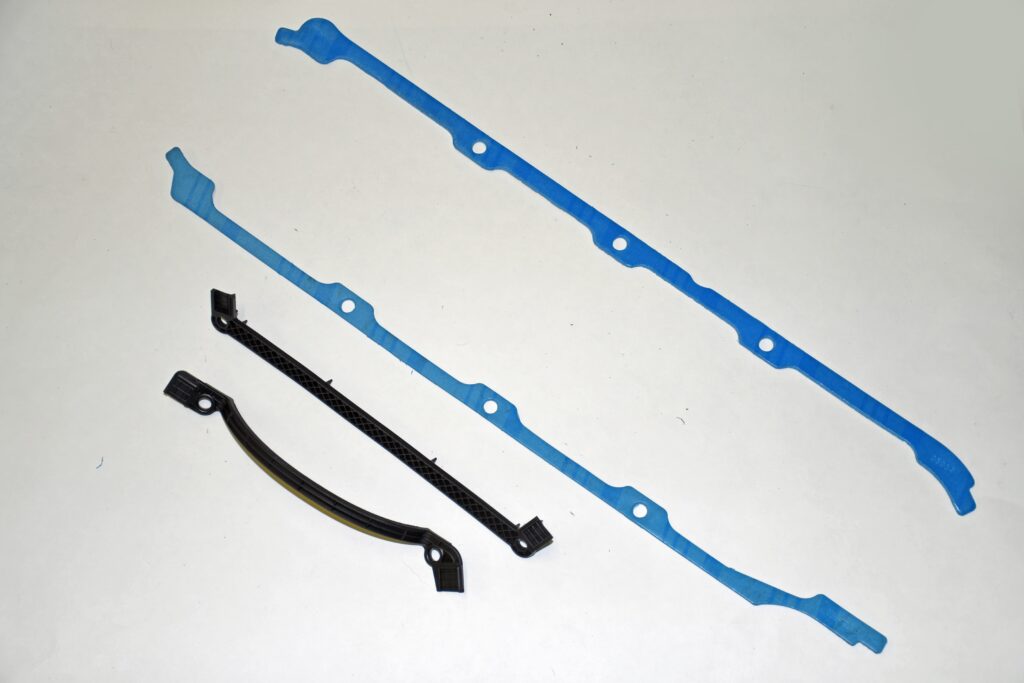
When it comes to oil pan gaskets, you’ll also discover considerable choice in today’s marketplace. Some of the most popular gaskets come from the folks at Fel-Pro. They offer a number of different examples for high performance and race applications: Felcoid/Plus, Enhanced Felcoid/Plus and rigid core, molded silicone rubber. Stop right here. What’s “Fel-Coid”? Basically, it consists of a fiber sheet core with a latex rubber coating. This provides for excellent blowout production, plus it has a great wench “feel” when torqueing down the fasteners. The enhanced version adds a solid steel core sandwiched with a rubber coated fiber facing material. Additionally, the gasket comes with a self-adhesive side to make for simpler installations. Finally, the rigid core, molded silicone rubber gasket is a one piece affair. The end seals are molded in.
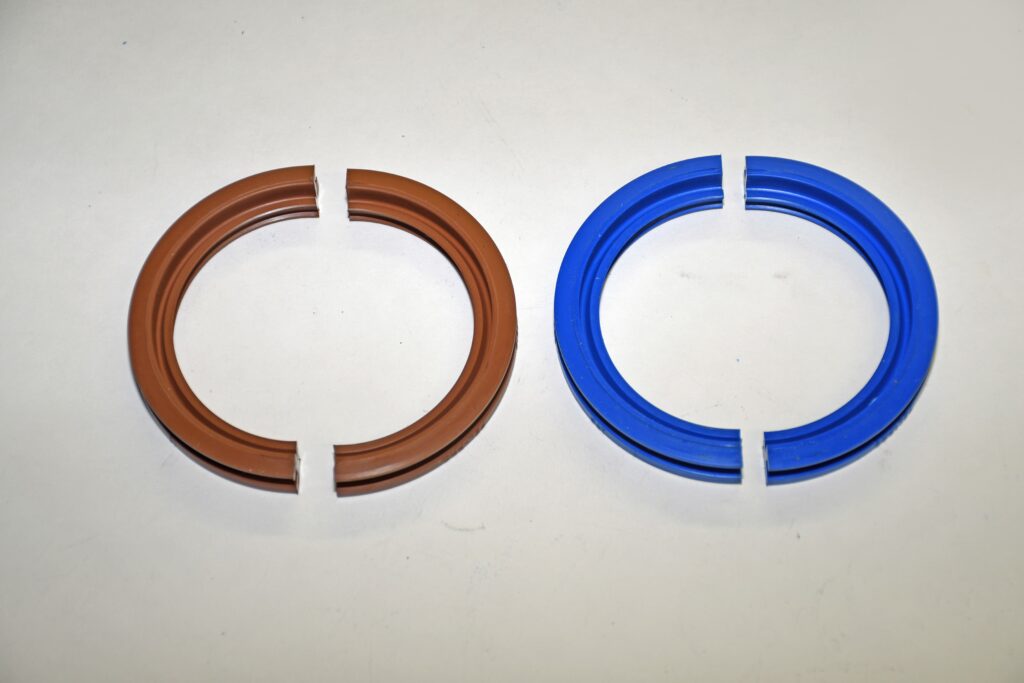
Let’s examine the rear main seals next. Two piece jobs have always a source for potential leaks and frustration for engine builders. Fel-Pro notes there are three different high performance materials available – Silicone, Viton and PTFE rubber. According to Fel Pro:
“Silicone is often used in higher temperature (480° F) engine applications. The drawback of silicone is that it is fragile and requires careful handling during installation.
“Viton® combines the abrasion resistance of polyacrylate and the heat resistance (450° F) of silicone – at a premium price. It is required on many high-temperature engines.
“PTFE rubber is the ultimate in rear main seal design and material. It offers the best in fluid and high-temperature compatibility, and the unique “laydown lip” contact sealing surface can run on undersize shafts, seal minor shaft imperfections, and virtually eliminate shaft wear.”
Fel-Pro goes on to add: “Some seals are designed with ribs around the lip. These ribs, or helixes, help direct the oil back into the engine for proper oil control. Other seals have a double lip design. The inner lip has a helix that helps direct oil back into the engine, while the outer lip keeps dust and dirt from contaminating the inner sealing lip. This improves the long-term performance of the seal.
“An optional design available for several Chevrolet engines has an offset sealing lip. This can be used when the point of contact of the previous seal has worn a groove into the crankshaft sealing surface. The offset lip contacts the shaft at a different point than the original equipment seal, preventing oil leaking through the groove and eliminating the need for expensive crankshaft repair or replacement.
“For certain applications, Fel-Pro offers a choice of single lip, offset lip, or double lip design as shown in the catalog entry.”
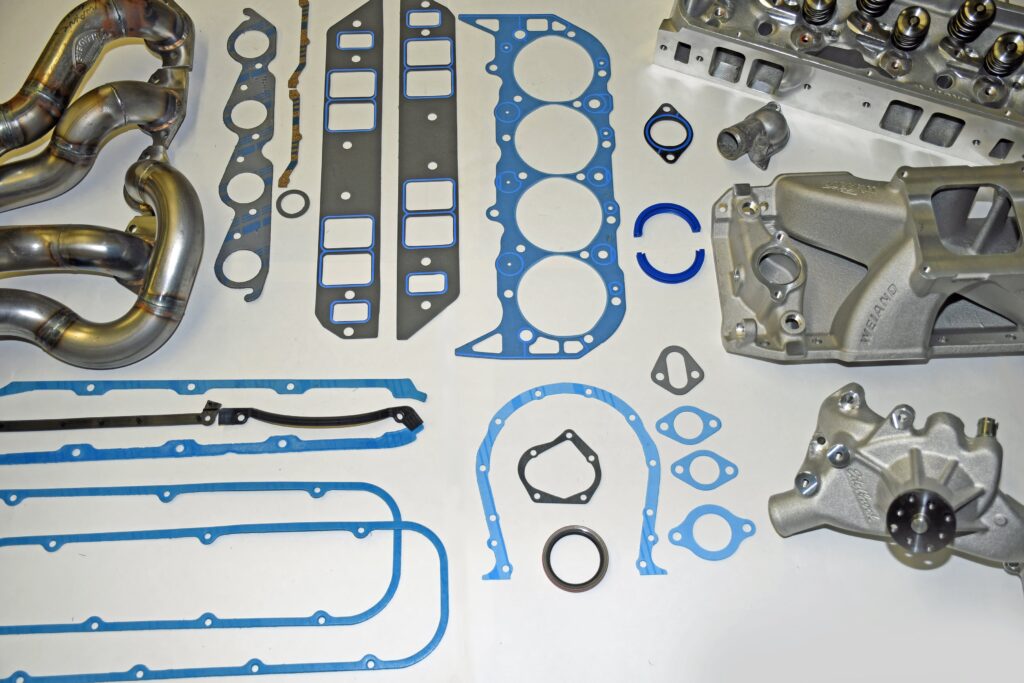
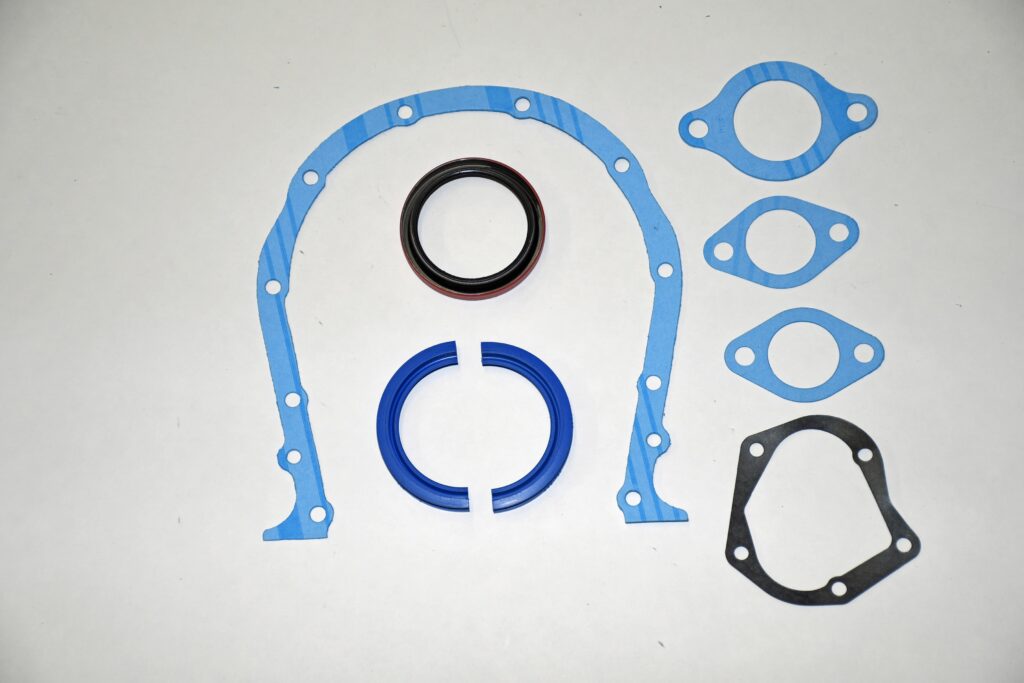
On the nose of the engine (and elsewhere) you also have some options. Years ago, the folks from Fel-Pro came up with an idea for packaging all of the critical little gaskets in one set. They called them “Remainder to Assemble Complete Engine” or R.A.C.E. sets. Using a common big block Chevy as the example, the R.A.C.E. set includes a rear main seal, a timing cover crank seal, timing cover gasket, mechanical fuel pump gasket, water pump to block gaskets, oil pump gasket, front oil pan seal (specific part numbers only), and a thermostat housing gasket. The bottom line here is, the R.A.C.E. set saves you a lot of steps tracking down individual gaskets. Plus, they’re typical Fel-Pro quality.
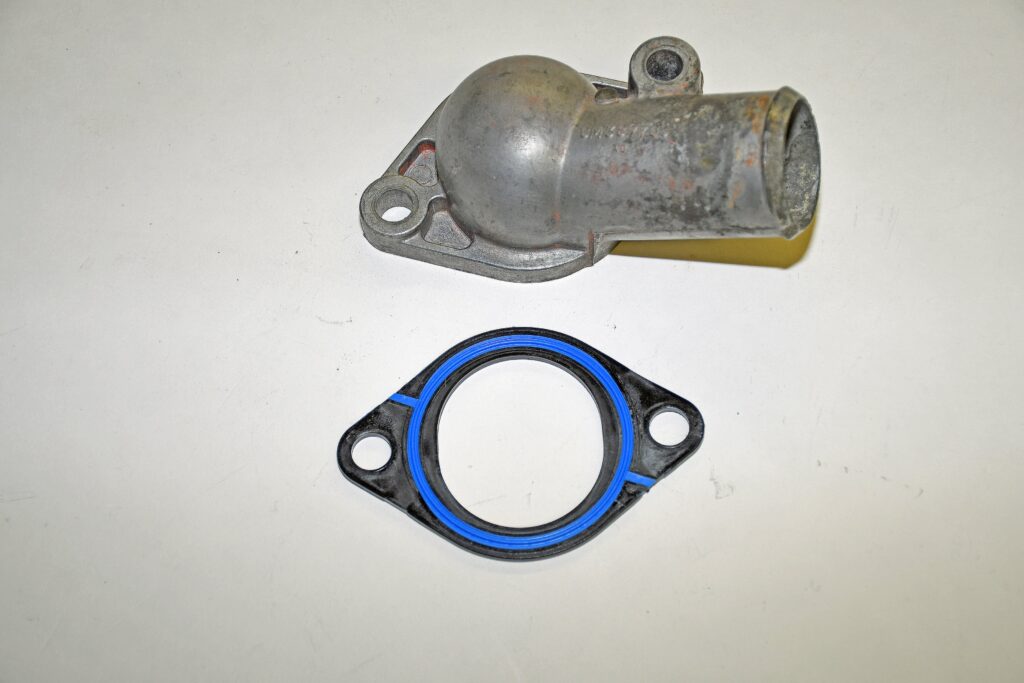
One final problem solver we should look at is Fel-Pro’s composite thermostat housing gasket. Coolant weeping or outright leakage out of the thermostat housing is common. This often caused by flange warping or flange corrosion. Sometimes an abundant application of sealant on common paper gasket will work. But often times it won’t. The fix for Chevy applications is Fel-Pro Performance part number 2202. It’s a mix of precision-molded plastic along with molded rubber. The plastic carrier prevents over-torqueing, while the molded rubber assures a secure seal. The gasket is easily removed and can be reused.
Once you’ve perused the above, it should be no secret the sheer number of varieties of engine gaskets is pretty much Huge X Large. There’s something here for everyone. For an inside look at the gaskets discussed here, check out the accompanying photos:
Click Here to Begin Slideshow
Leave a Reply