



![[Gallery] Eric's 1934 Coupe Named "The Beast"](https://www.racingjunk.com/news/wp-content/uploads/2022/06/20200527_161929-min-scaled-e1655842527384-376x206.jpg)
![[Gallery] Cruisin’ One Daytona](https://www.racingjunk.com/news/wp-content/uploads/2026/03/DSC_0538-e1774027057404-376x206.jpg)


How to Prep Your Project Car – Paperwork Part 2
Part 2 of Wayne Scraba's Prepping Your Project -- Paperwork series breaks down which manuals will make your project, and thus your life, easier in terms of identifying parts.
In our last issue, we started an examination of various reference manuals you can (and most like should) have in hand if you’re starting a project. That project can be almost anything for almost any application. Often times, a seemingly simple task on a car can prove monumental. Someone once said a simple fifteen-minute project is one stripped bolt away from a three-day ordeal. Truth. That’s why a manual that spells out the exact process is so valuable. But that’s not the end of it. In most projects you’ll find you need parts. Sometimes plenty of parts. And that’s what this segment is all about. We’ll look at OEM parts, used parts and aftermarket parts. Here, manuals are also your best friend(s). Check it out:
Factory (OEM) Parts Catalog
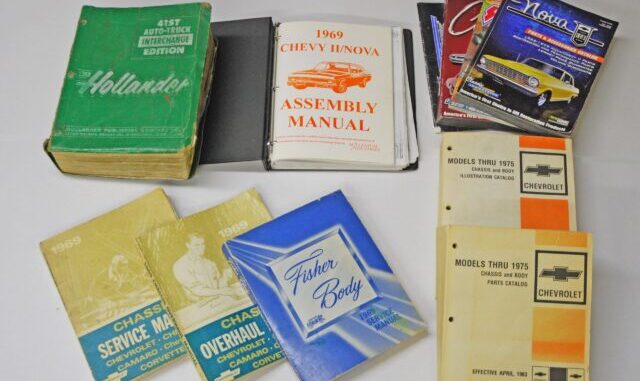
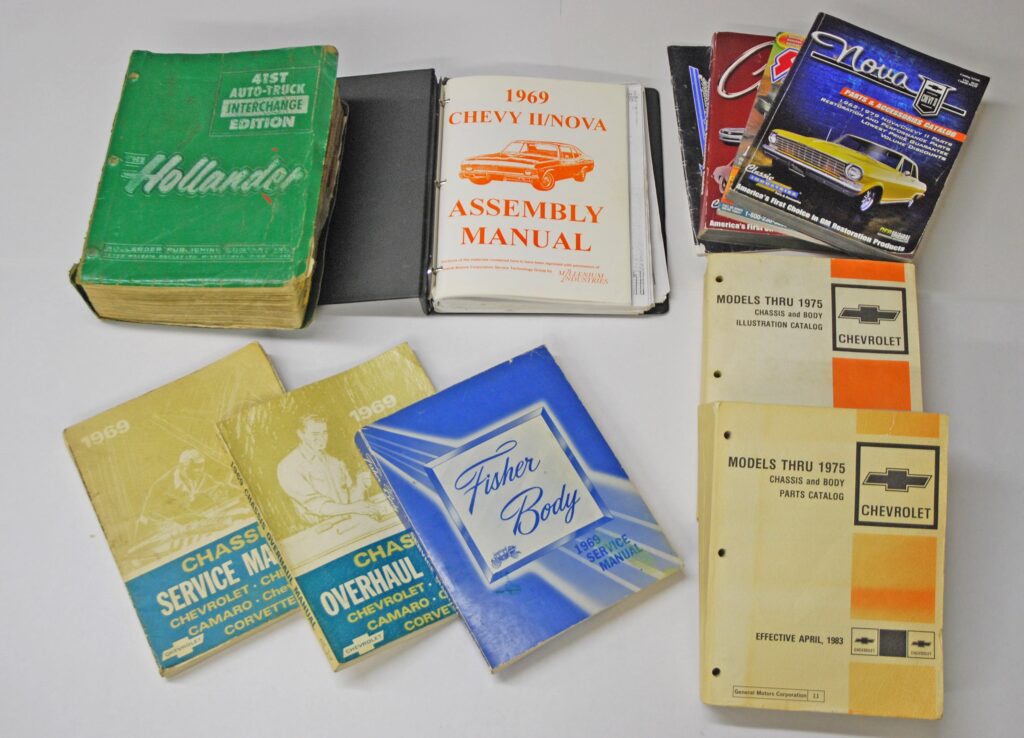
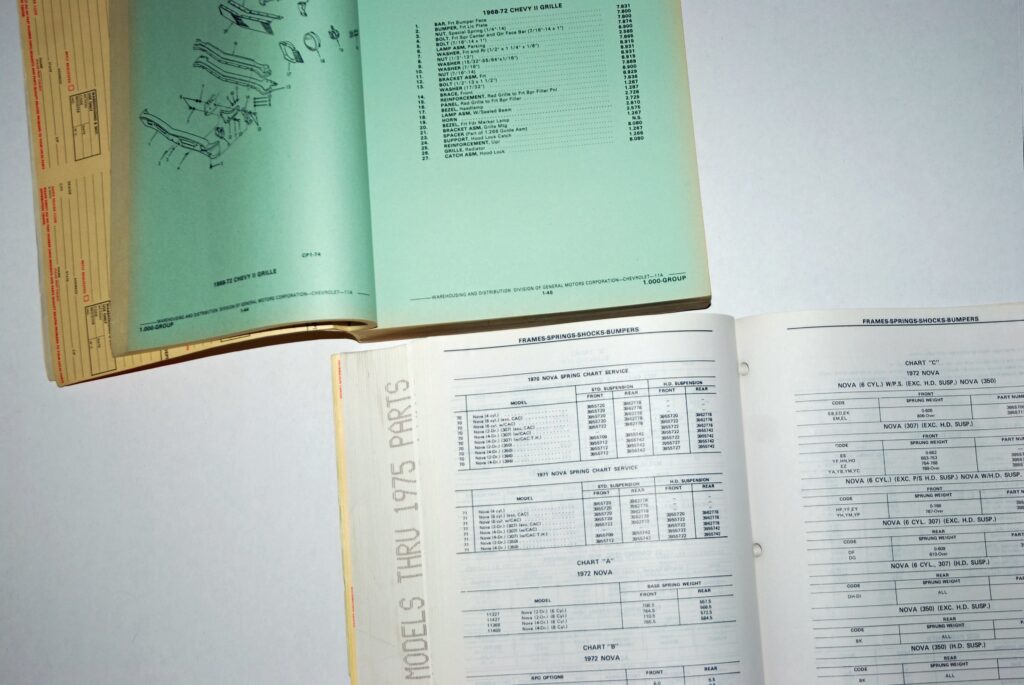
Reprints of vintage Original Equipment Manufacturer parts catalogs (or originals) are readily available if you do a bit of digging. These catalogs typically list the part numbers for various components, and most also feature blow-up illustrations of a wide range of components. If you’re dealing a 1969 vintage vehilce, then one of the best bets as far as parts catalogs are concerned are the reprinted 1970 or 1971 examples. Why is that? Simple. The numbers are usually more stable in that they haven’t been changed up (superceded). Obviously, almost all of the part numbers will be discontinued while the few remaining ones have been changed up in the past decades. But the real beauty here is if your car needs a specific component, you’ll actually have a part number to search for. It makes shopping and scrounging the internet a whole bunch easier.
Hollander Interchange Manual
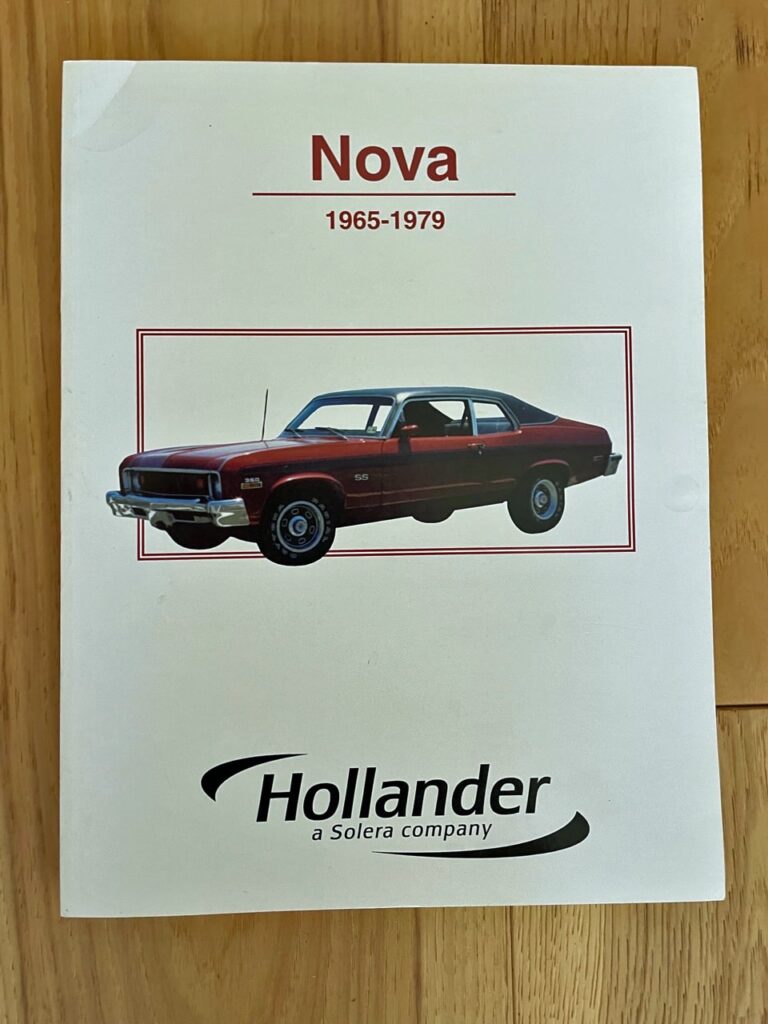
Speaking of scrounging parts, you’ll sometimes find some bits and pieces can seem almost impossible to locate. There is a publication that can help. It’s called a Hollander Interchange Manual. It was used forever by wrecking yards and it allowed them to determine what parts fit what cars. For example, many pieces in a given car are direct interchanges with other similar (or not so similar) "corporate" offerings. As an example, a Nova four-door sedan or even something like a Buick Apollo can supply a host of goodies for your SS396 project. Items like suspension pieces, electrical components, some transmission components and even certain trim parts and myriad accessory or optional components are virtually identical.
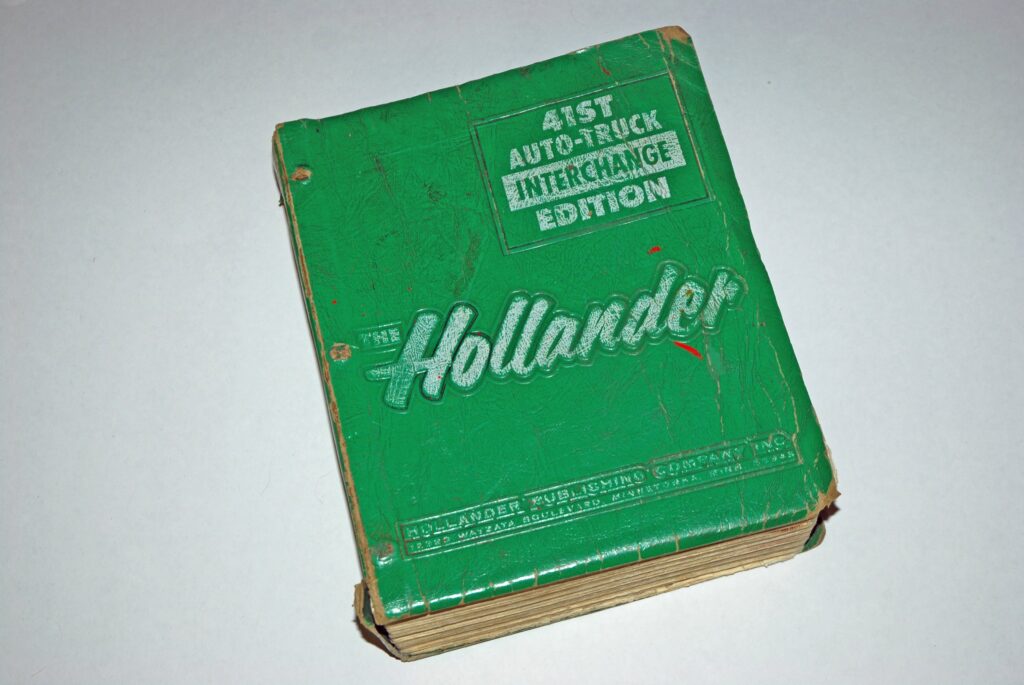
The Hollander Interchange is a huge manual that can prove to be four or so inches thick. It includes information on all "hard" parts including identification of those components. Little items such as trim pieces are not included.
If you have a mid-sixties car, consider the 1964-1974 issue, Volumes 1 and 2. This is an expensive package, but the dollars saved during the restoration will be well worth the expense.
If the high price scares you off, try searching for a used "41st Auto-Truck Interchange Edition" (like the one shown in the accompanying photos). It covers domestic vehicles from 1965 to 1975 and as a result, will encompass all vehicles from that era. Where do you find used Hollanders? Your local wrecking yards are good bets. FYI, the Hollander Interchange Manual is considered the "bible" of the dismantling business. Any reputable wrecker will know what you're talking about.
Aftermarket Support
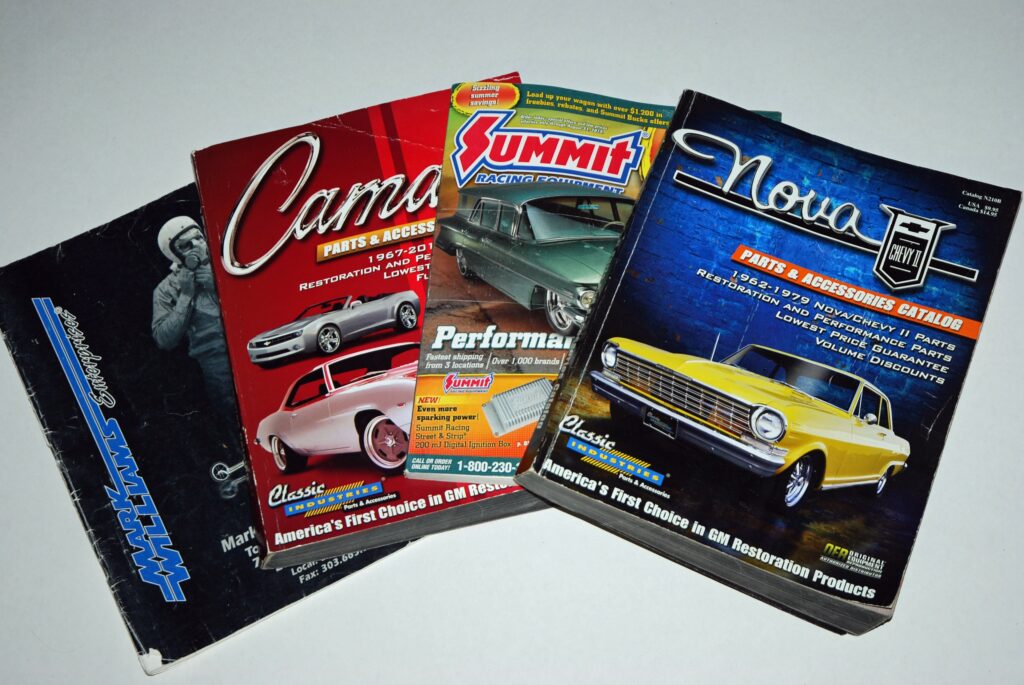
Some cars don’t have a lot of aftermarket support. Others do. The old Chevy’s I mess with fall into the “good” side of the equation. Before you even begin the build (and perhaps long before you buy a car), you should consider the availability of things like reproduction parts, NOS parts and aftermarket high performance parts. With really good resources such as these, its whole bunch easier to piece together a good car. In the end, it's a good idea to collect as many pertinent catalogs as possible that pertain to your car. Some of the vendors offer decent discounts to regular customers too. When it comes to aftermarket vendors, some are good. Some are great. Some are not so good. Research is your friend.
As you can see, lining yourself up with a number of manuals can make any job on your car go faster and smoother. Recall what we said about the fifteen-minute job (above). It really does apply. Having a stack of reference manuals on hand is something you’ll never regret.
Leave a Reply