



![[Gallery] Ancient City Auto Club 41st Annual Car Show](https://www.racingjunk.com/news/wp-content/uploads/2025/12/DSC_9452-e1766170514455-376x206.jpg)

![[Gallery] Eric's 1934 Coupe Named "The Beast"](https://www.racingjunk.com/news/wp-content/uploads/2022/06/20200527_161929-min-scaled-e1655842527384-376x206.jpg)
Flexi-Flyers Part 1–Solid Body Mounts
Click Here to Begin Slideshow
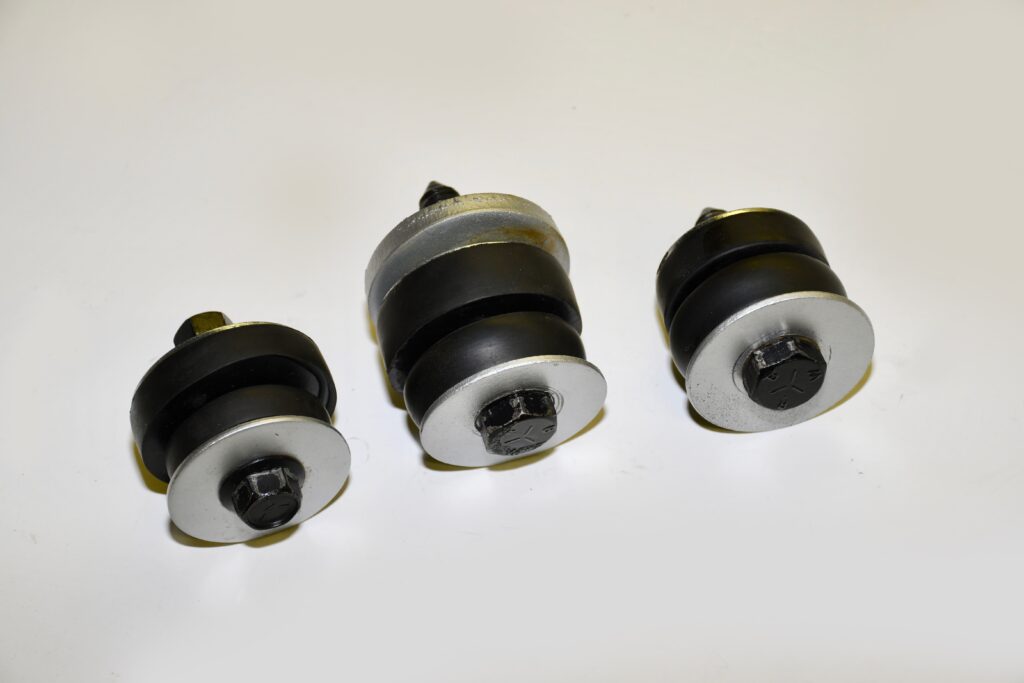
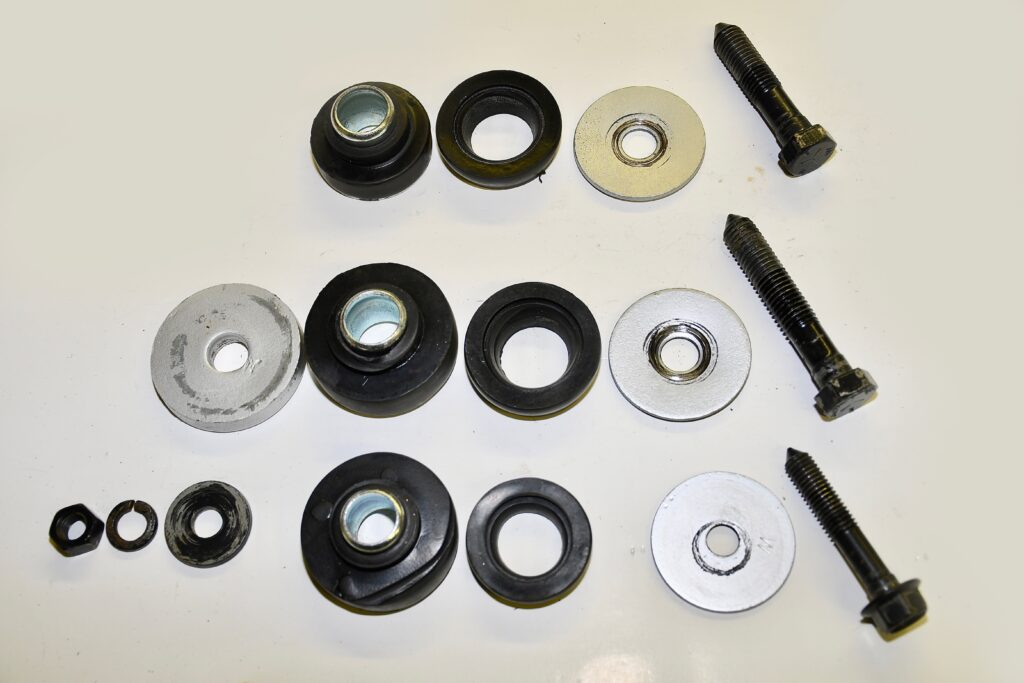
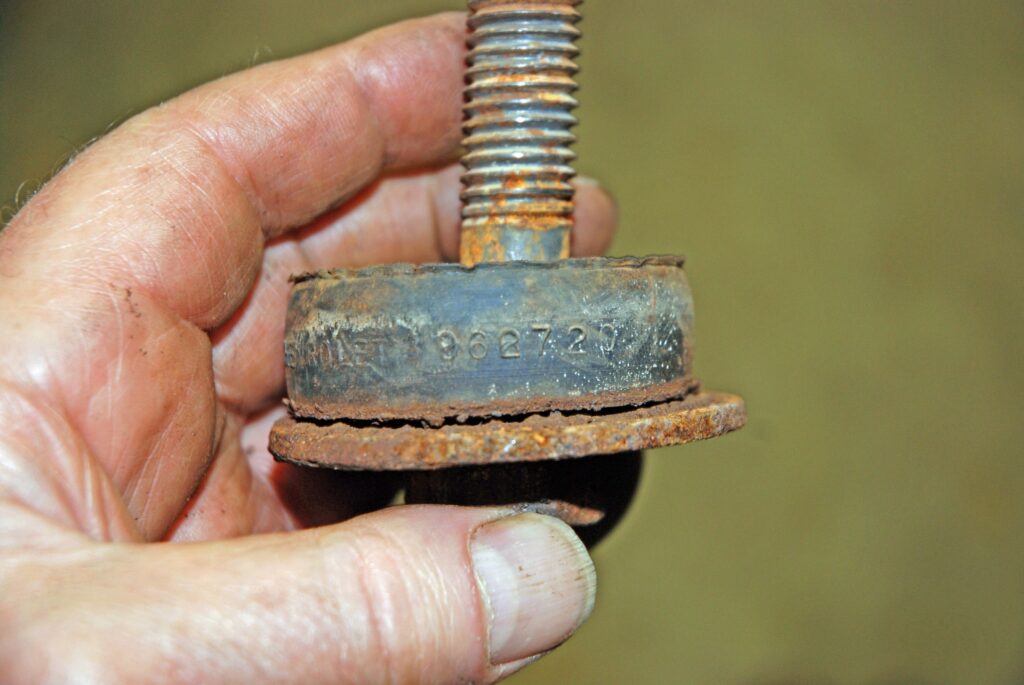
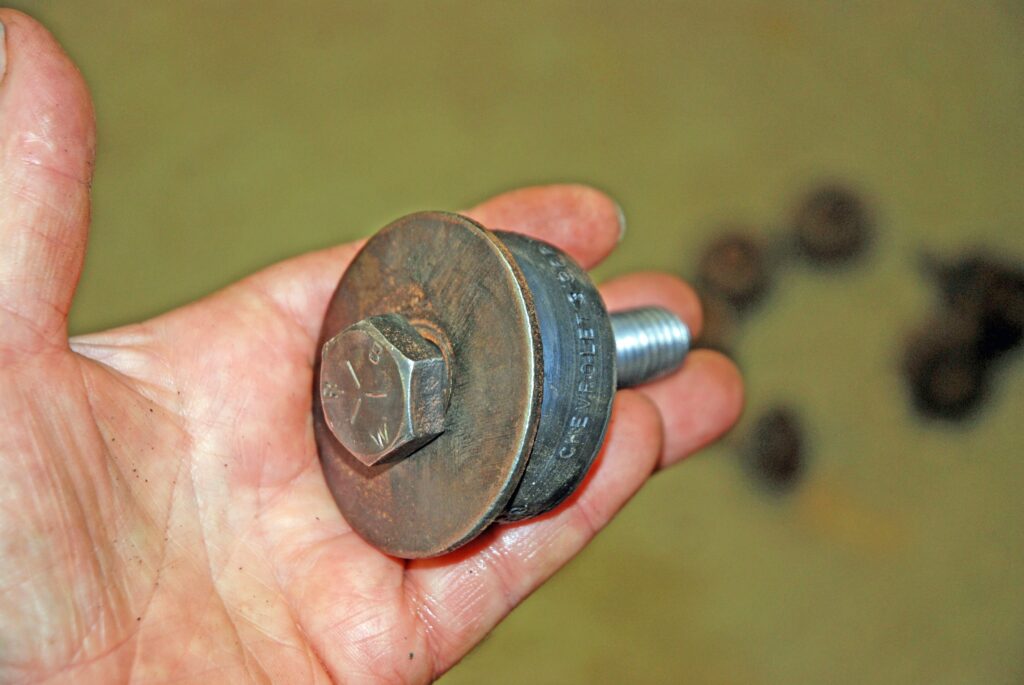
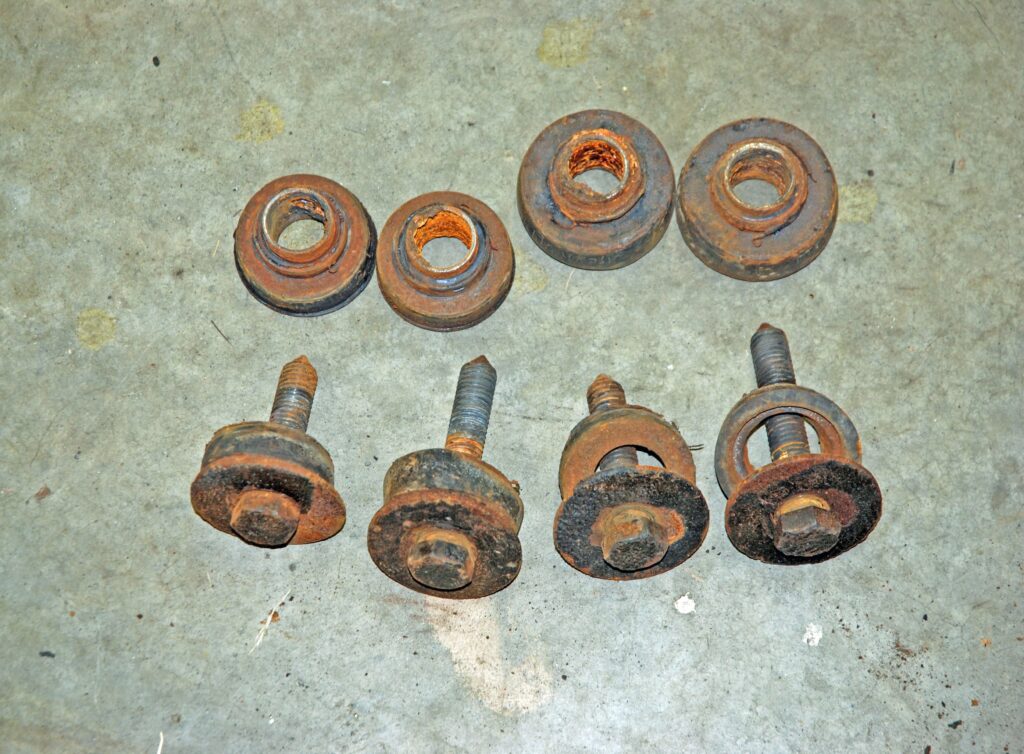
Cars such as first and second generation Camaros along with similar GMs such as the Pontiac Firebird, Chevy Nova, Pontiac Phoenix, Oldsmobile Omega, Buick Apollo and Canadian Pontiac Acadian were all built with a robust front subframe that (a) bolted to the body in four places and (b) provided a place to mount the radiator core support. No secret. Those mounts consisted of four big rubber and steel cushions for the actual body and two smaller rubber and steel cushions for the rad support. The trouble is, after the passing of time the rubber in the cushions deteriorates and before long you really do have a veritable “flexi-flier” on your hands. What really happens is the body; the rad support and finally the subframe connections tend to move independently. Flex becomes the the biggest problem. So much so, you can often see the hood and fenders move around when you’re driving the car. As you can well imagine, handling (both straight line and carving corners) vaporizes too. Factor in some extra power (it doesn’t have to be massive) and the flex worsens.
In order to fix the flex, there several different solutions out there: Stock style rubber bushing reproductions, urethane bushings and solid mounts.
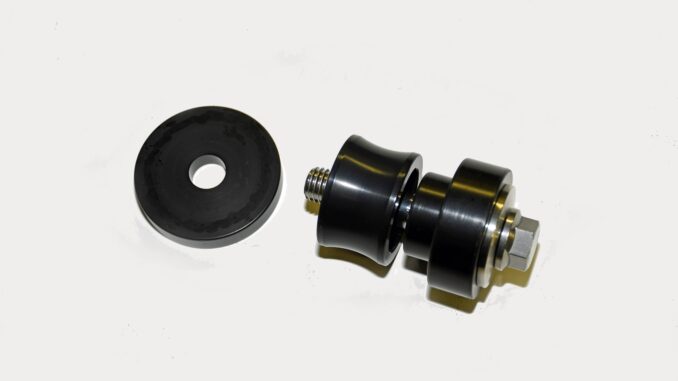
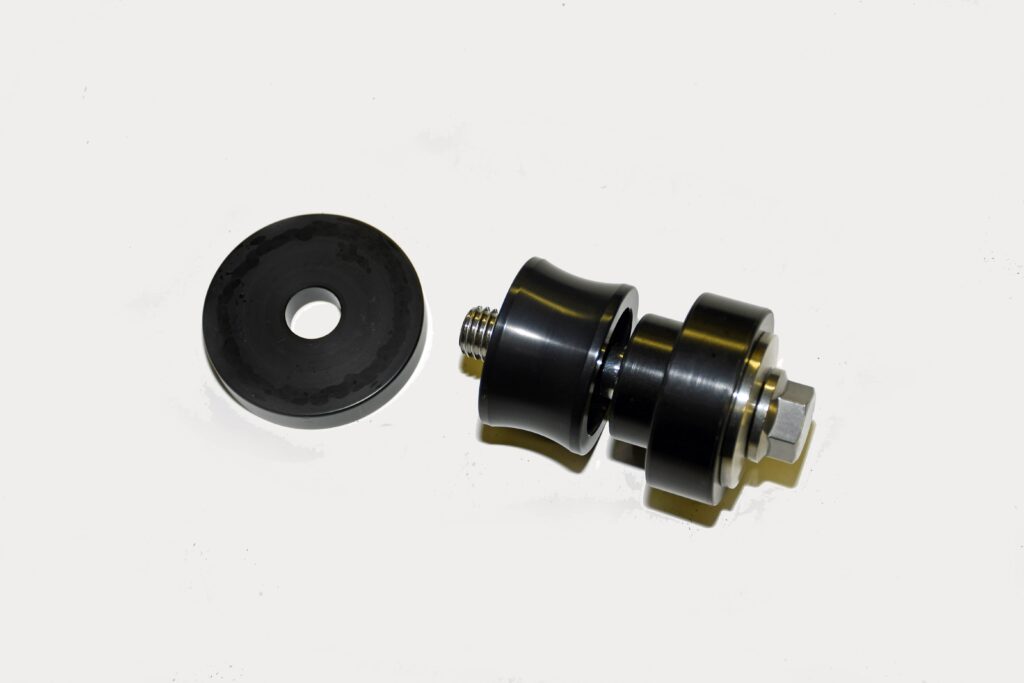
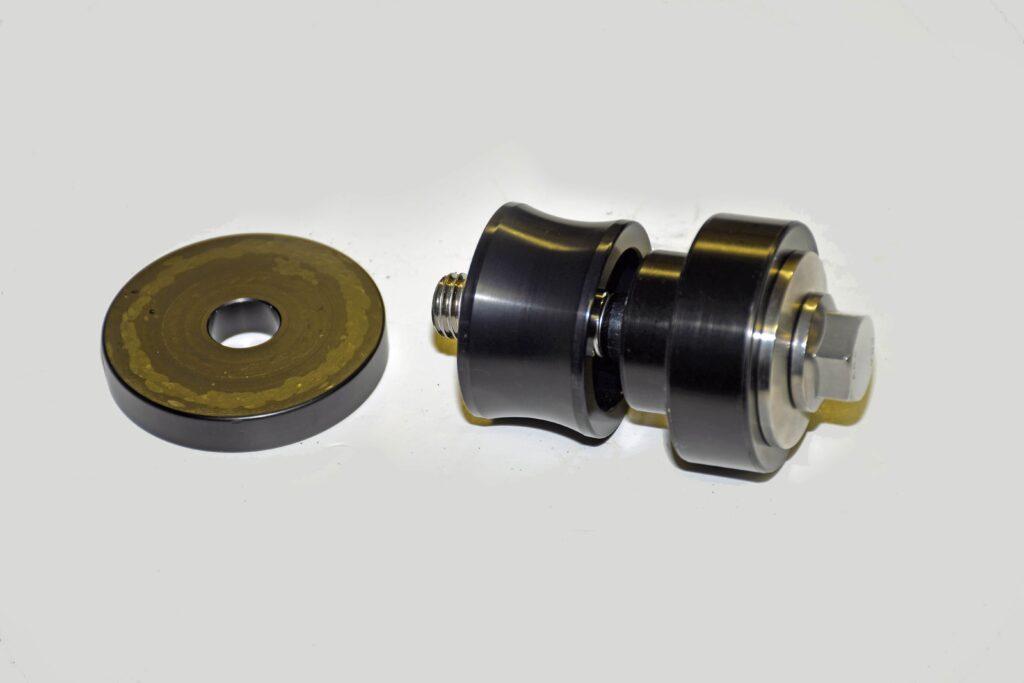
What’s the best option? It depends. If your car is relatively close to stock (for example, a restoration), then the stock or stock style rubber bushings are most likely the best choice. The second option when it comes stiffness and superior performance is the urethane bushing. And finally, the ultimate choice for a high performance car is the solid mount. Here, any and all flex (and the focus of this series) is eliminated. Keep in mind solid mounts transmit the largest amount of vibraiton through the car, followed by urethane bushings and finally, the smoothest, quietest setup is the rubber bushing. There all sorts of different solid bushing arrangements out there, but if you have a Camaro or Nova (or a derivative), one of the slickest setups is the solid mount package from Detroit Speed. The actual mounts are CNC machined from billet aluminum and they’re hard coated (not bright anodized). The reason Detroit Speed hard anodizes them is because it resists the common corrosion that occurs between steel and aluminum surfaces. The Detroit Speed mounts include a set of machined bevel stainless steel washers (which fit under the fastener). They also offer an optional set of 17-4 stainless steel flanged bolts to install the solid mounts. FYI these are manufactured for Detroit Speed by ARP. And just like the billet mounts and washers, the fasteners are top quality.
In the accompanying photos, we’ll take an up-close look at OEM subframe/body mounts. It will become apparent why they’re “flex-fliers”. And in the next segment, we’ll dig deeper into the Detroit Speed mount packages. Watch for it.
Click Here to Begin Slideshow
Cars such as first and second generation Camaros along with similar GMs such as the Pontiac Firebird, Chevy Nova, Pontiac Phoenix, Oldsmobile Omega, Buick Apollo and Canadian Pontiac Acadian were all built with a robust front subframe that (a) bolted to the body in four places and (b) provided a place to mount the radiator core support. No secret. Those mounts consisted of four big rubber and steel cushions for the actual body and two smaller rubber and steel cushions for the rad support. The trouble is, after the passing of time the rubber in the cushions deteriorates and before long you really do have a veritable “flexi-flier” on your hands. What really happens is the body; the rad support and finally the subframe connections tend to move independently. Flex becomes the the biggest problem. So much so, you can often see the hood and fenders move around when you’re driving the car. As you can well imagine, handling (both straight line and carving corners) vaporizes too. Factor in some extra power (it doesn’t have to be massive) and the flex worsens.
In order to fix the flex, there several different solutions out there: Stock style rubber bushing reproductions, urethane bushings and solid mounts.
What’s the best option? It depends. If your car is relatively close to stock (for example, a restoration), then the stock or stock style rubber bushings are most likely the best choice. The second option when it comes stiffness and superior performance is the urethane bushing. And finally, the ultimate choice for a high performance car is the solid mount. Here, any and all flex (and the focus of this series) is eliminated. Keep in mind solid mounts transmit the largest amount of vibraiton through the car, followed by urethane bushings and finally, the smoothest, quietest setup is the rubber bushing. There all sorts of different solid bushing arrangements out there, but if you have a Camaro or Nova (or a derivative), one of the slickest setups is the solid mount package from Detroit Speed. The actual mounts are CNC machined from billet aluminum and they’re hard coated (not bright anodized). The reason Detroit Speed hard anodizes them is because it resists the common corrosion that occurs between steel and aluminum surfaces. The Detroit Speed mounts include a set of machined bevel stainless steel washers (which fit under the fastener). They also offer an optional set of 17-4 stainless steel flanged bolts to install the solid mounts. FYI these are manufactured for Detroit Speed by ARP. And just like the billet mounts and washers, the fasteners are top quality.
In the accompanying photos, we’ll take an up-close look at OEM subframe/body mounts. It will become apparent why they’re “flex-fliers”. And in the next segment, we’ll dig deeper into the Detroit Speed mount packages. Watch for it.
Click Here to Begin Slideshow
Hi Wayne
Very informative article on front frame bushings. Will these be installed on the green chevy nova I wonder ? Ted