





![[Gallery] Street Rodders for Life Memorial Day Car Show](https://www.racingjunk.com/news/wp-content/uploads/2026/06/Memorial-day-show_0198-376x206.jpg)
![[Gallery] Townsman Car Show](https://www.racingjunk.com/news/wp-content/uploads/2026/05/916_2843-e1780072552171-376x206.jpg)





Everything You Need To Know About Modern Gaskets: Part 3
Click Here to Begin Slideshow
We’re back with Part 3 of our gasket saga. In past issues, we zoomed in on head gasket technology along with component preparation and installation techniques, courtesy of Mahle Performance. This time around, we’ll focus on header gaskets, intake gaskets and valve cover gaskets. There’s some very interesting hardware here (interesting solutions too!) for both racers and hot rodders.
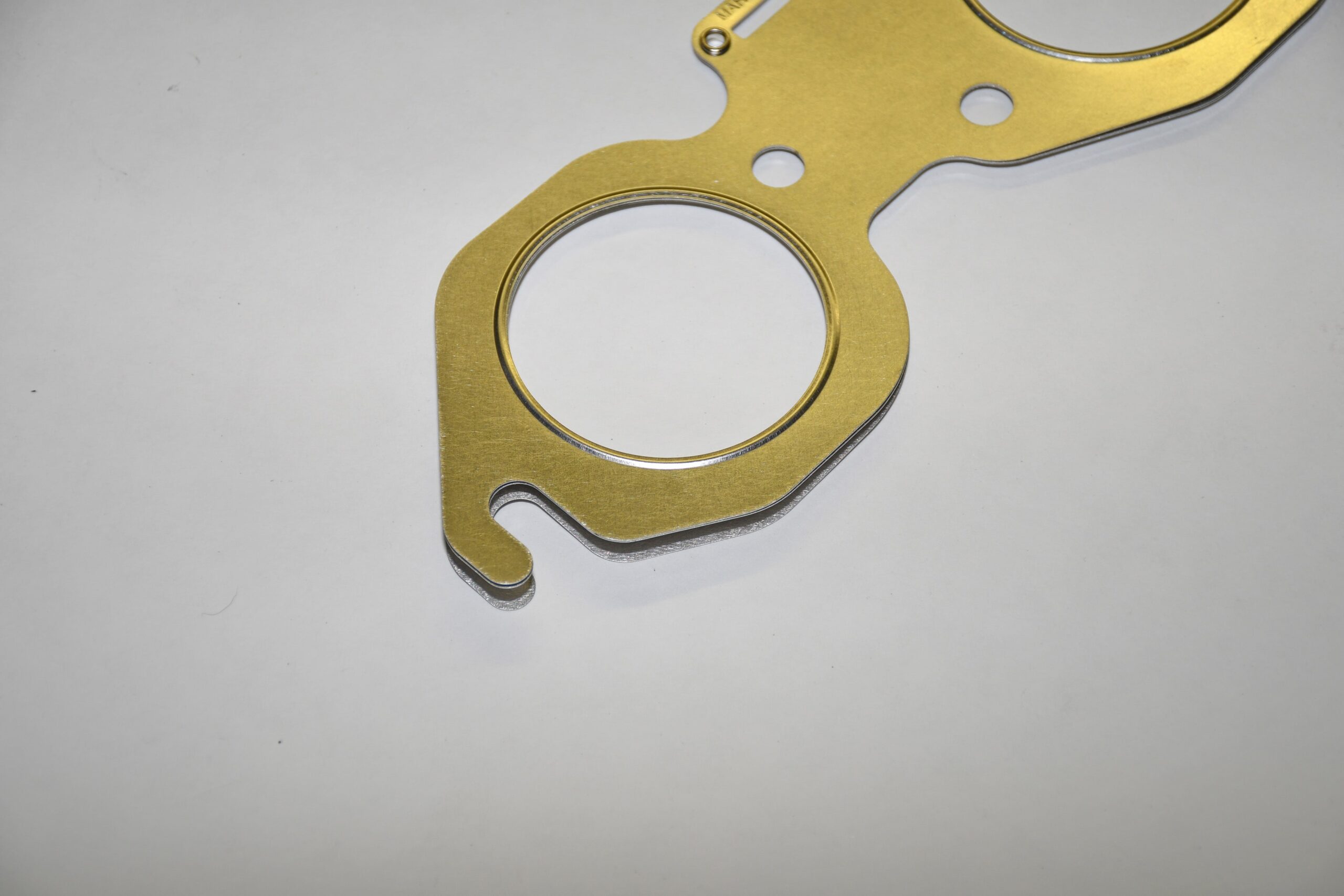
MLS head gaskets aren’t the only tool in an engine builder’s arsenal. Mahle has taken advantage of their MLS head gasket technology and they’ve introduced Multi-Layer Steel header gaskets. These gaskets are, like the head gaskets, manufactured from high grade 301 series stainless steel. And similar to the head gaskets, the gasket consists of three sheets. The outboard layers are embossed while the inside layer is plain. The embossing effectively creates a spring that maintains fastener torque and doesn’t mandate the use of additional sealants. The spring effect is very resistant to header flange movement and at the same time, maintains a strong seal around the exhaust ports. Where they differ from head gaskets is the fact the layers are uncoated. Using the big block Chevy example (shown in the accompanying photos, you’ll find the gaskets are riveted together. And like the head gaskets, the rivets are strategically placed so that they don’t interfere with sealing surfaces. The bottom line with these header gaskets is that they won’t burn or push out and require no additional sealers.
Another Mahle header gasket that’s loaded with innovation is their Graphite job. It consists of a Graphite-Kevlar® composite fiber facing material attached to both sides of a perforated steel core. The gaskets are mechanically clinched on both sides of the facing, and they’re highly conformable. This material is much stronger than paper, resisting burnout from high temperatures. It has the ability to seal slightly warped surfaces and at the same time, provides excellent torque retention.
When it comes to all sorts of different composition gaskets, Mahle advises they spend considerable resources in getting the material density right for each application. Additionally, Mahle also tells us they do not simply buy a 1000-foot roll of material, coat it and then call it a day. They take a far different approach. Mahle figures that “application-driven engineering” should give their customers confidence they have taken a hard look at all of the parts they offer. Bottom line here is, nothing is universal. Each gasket is designed from the ground up for the application.
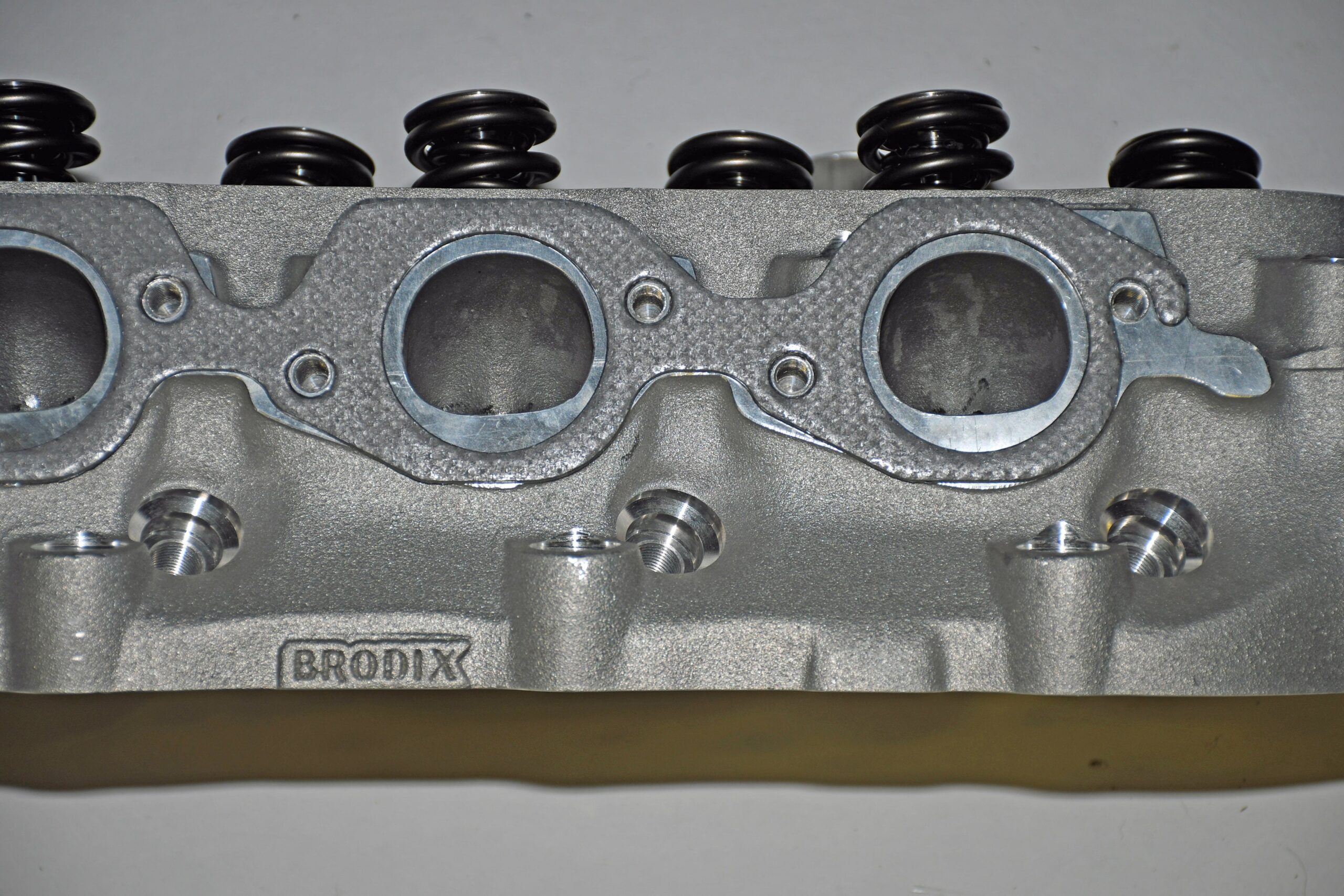
Before we leave header gaskets, we should touch on something: While it may seem obvious, some folks still get sizing wrong. The header gasket must be larger than the exhaust port in the cylinder head and at the same time, larger than the primary tube in the header. If it isn’t, it will cause an exhaust restriction and simultaneously, make for early gasket failure. The bottom line here is, measure the parts you have before you buy the first gasket available. That’s why companies like Mahle offer gaskets in a range of port configurations and sizes.
Moving topside, there are several different options available for intake gaskets. And once again, check the port sizing first! If your heads have been ported, then check them dimensionally (more below). Mahle offers myriad intake manifold gaskets for pretty all of today’s popular racing and high performance engine combinations (something in the order of two-dozen different part numbers for big block Chevys alone).
Some of the Mahle intake sets are composite gaskets with a double perforated steel core along with a non-stick coating. Some are laminated fiber. Some are laminated fiber with an integral silicone bead to seal the ports. Some are even graphite. Each of these is a conformable material. The base fiber material (offered with and without a steel core) resists coolant, gasoline, alcohol, and oil. The gaskets without silicone sealing beads are designed so they can be trimmed to fit modified ports. Meanwhile, the gaskets with silicone beads help maintain seal under high vacuum conditions (think vacuum pump). Finally, Mahle offers these gaskets in varying thicknesses in order to accommodate decked blocks and heads. Typically, they range from 0.045-inch to 0.060-inch to 0.120-inch thickness.
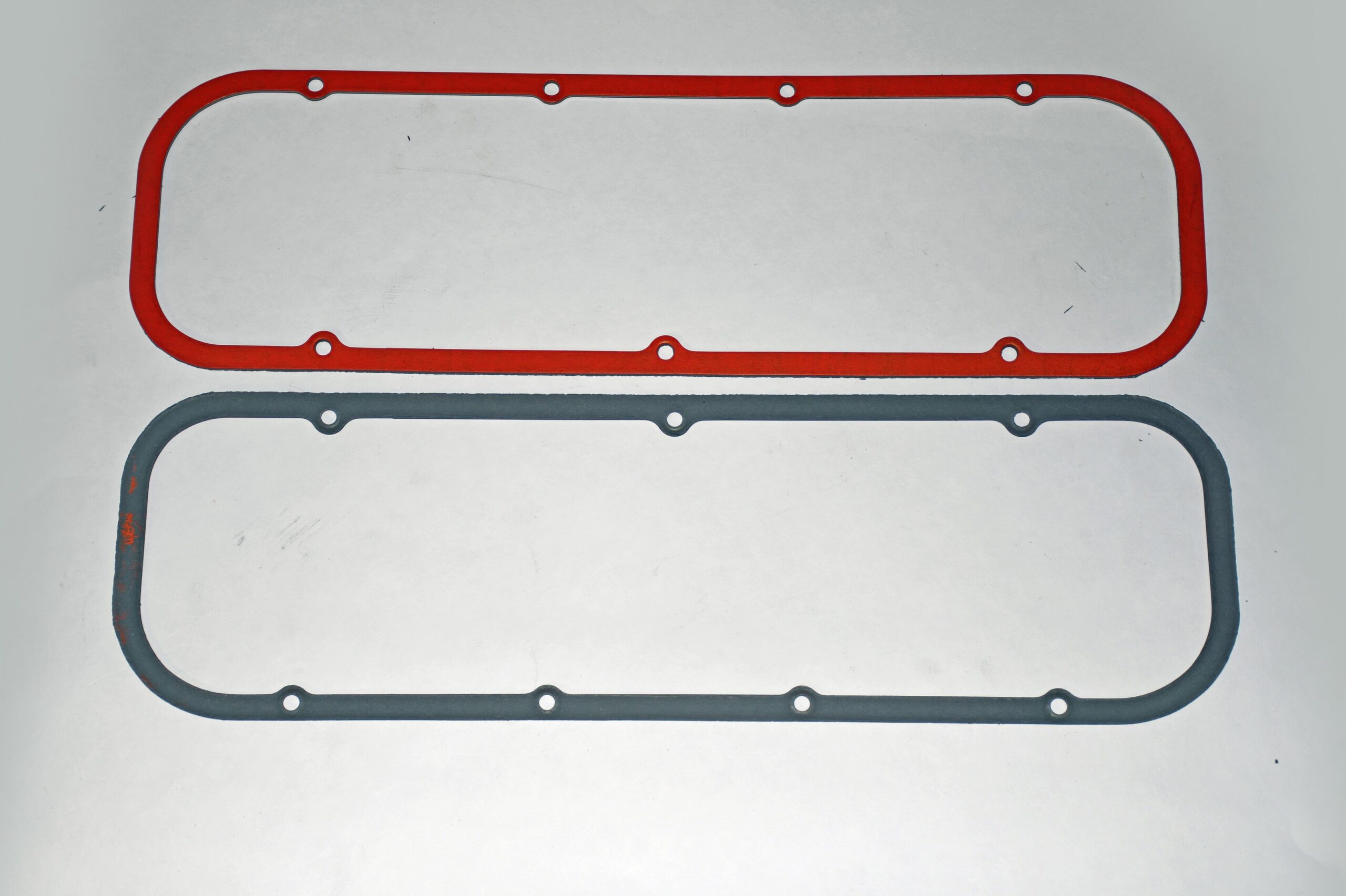
Speaking of high vacuum conditions and the challenges they pose: Valve cover and oil pan gaskets can also come under the gun in race (and occasionally street) applications. Mahle points out that high density cork rubber and laminated cork composite gaskets result in a compressible gasket without leak paths. Typically, these gaskets are thicker than a standard passenger vehicle gasket.
Meanwhile, steel core laminate valve cover gaskets are a great choice for the professional racer. Gaskets manufactured with fiber laminated over a steel core provide maximum compression and torque retention in high vacuum conditions. Mahle coats these gaskets with Teflon. It provides for superior sealing characteristics and at the same time, allows for easier gasket removal.
That’s not the end your options either: Molded rubber valve cover gaskets provide greater ease of installation as well as superior sealing characteristics particularly in race applications where the valve covers are on and off on regular basis. Mahle notes these gaskets are constructed with a rigid carrier (steel or steel and plastic) along with compression limiters to prevent over tightening. Silicone rubber materials provide a long service life and multiple sealing beads prevent oil leaks.
We’re out of time and space for this issue, but in our final chapter on gaskets, we’ll examine a special oil pan gasket from Mahle along with some very interesting smaller engine gaskets. Technology has leaped forward here too. It’s very intriguing. Watch for it.
MAHLE Aftermarket Inc.
23030 MAHLE Drive, Farmington Hills, MI 48335
Phone: (800) 338-8786
Website: Mahle Performance
Click Here to Begin Slideshow
We’re back with Part 3 of our gasket saga. In past issues, we zoomed in on head gasket technology along with component preparation and installation techniques, courtesy of Mahle Performance. This time around, we’ll focus on header gaskets, intake gaskets and valve cover gaskets. There’s some very interesting hardware here (interesting solutions too!) for both racers and hot rodders.
MLS head gaskets aren’t the only tool in an engine builder’s arsenal. Mahle has taken advantage of their MLS head gasket technology and they’ve introduced Multi-Layer Steel header gaskets. These gaskets are, like the head gaskets, manufactured from high grade 301 series stainless steel. And similar to the head gaskets, the gasket consists of three sheets. The outboard layers are embossed while the inside layer is plain. The embossing effectively creates a spring that maintains fastener torque and doesn’t mandate the use of additional sealants. The spring effect is very resistant to header flange movement and at the same time, maintains a strong seal around the exhaust ports. Where they differ from head gaskets is the fact the layers are uncoated. Using the big block Chevy example (shown in the accompanying photos, you’ll find the gaskets are riveted together. And like the head gaskets, the rivets are strategically placed so that they don’t interfere with sealing surfaces. The bottom line with these header gaskets is that they won’t burn or push out and require no additional sealers.
Another Mahle header gasket that’s loaded with innovation is their Graphite job. It consists of a Graphite-Kevlar® composite fiber facing material attached to both sides of a perforated steel core. The gaskets are mechanically clinched on both sides of the facing, and they’re highly conformable. This material is much stronger than paper, resisting burnout from high temperatures. It has the ability to seal slightly warped surfaces and at the same time, provides excellent torque retention.
When it comes to all sorts of different composition gaskets, Mahle advises they spend considerable resources in getting the material density right for each application. Additionally, Mahle also tells us they do not simply buy a 1000-foot roll of material, coat it and then call it a day. They take a far different approach. Mahle figures that “application-driven engineering” should give their customers confidence they have taken a hard look at all of the parts they offer. Bottom line here is, nothing is universal. Each gasket is designed from the ground up for the application.
Before we leave header gaskets, we should touch on something: While it may seem obvious, some folks still get sizing wrong. The header gasket must be larger than the exhaust port in the cylinder head and at the same time, larger than the primary tube in the header. If it isn’t, it will cause an exhaust restriction and simultaneously, make for early gasket failure. The bottom line here is, measure the parts you have before you buy the first gasket available. That’s why companies like Mahle offer gaskets in a range of port configurations and sizes.
Moving topside, there are several different options available for intake gaskets. And once again, check the port sizing first! If your heads have been ported, then check them dimensionally (more below). Mahle offers myriad intake manifold gaskets for pretty all of today’s popular racing and high performance engine combinations (something in the order of two-dozen different part numbers for big block Chevys alone).
Some of the Mahle intake sets are composite gaskets with a double perforated steel core along with a non-stick coating. Some are laminated fiber. Some are laminated fiber with an integral silicone bead to seal the ports. Some are even graphite. Each of these is a conformable material. The base fiber material (offered with and without a steel core) resists coolant, gasoline, alcohol, and oil. The gaskets without silicone sealing beads are designed so they can be trimmed to fit modified ports. Meanwhile, the gaskets with silicone beads help maintain seal under high vacuum conditions (think vacuum pump). Finally, Mahle offers these gaskets in varying thicknesses in order to accommodate decked blocks and heads. Typically, they range from 0.045-inch to 0.060-inch to 0.120-inch thickness.
Speaking of high vacuum conditions and the challenges they pose: Valve cover and oil pan gaskets can also come under the gun in race (and occasionally street) applications. Mahle points out that high density cork rubber and laminated cork composite gaskets result in a compressible gasket without leak paths. Typically, these gaskets are thicker than a standard passenger vehicle gasket.
Meanwhile, steel core laminate valve cover gaskets are a great choice for the professional racer. Gaskets manufactured with fiber laminated over a steel core provide maximum compression and torque retention in high vacuum conditions. Mahle coats these gaskets with Teflon. It provides for superior sealing characteristics and at the same time, allows for easier gasket removal.
That’s not the end your options either: Molded rubber valve cover gaskets provide greater ease of installation as well as superior sealing characteristics particularly in race applications where the valve covers are on and off on regular basis. Mahle notes these gaskets are constructed with a rigid carrier (steel or steel and plastic) along with compression limiters to prevent over tightening. Silicone rubber materials provide a long service life and multiple sealing beads prevent oil leaks.
We’re out of time and space for this issue, but in our final chapter on gaskets, we’ll examine a special oil pan gasket from Mahle along with some very interesting smaller engine gaskets. Technology has leaped forward here too. It’s very intriguing. Watch for it.
MAHLE Aftermarket Inc.
23030 MAHLE Drive, Farmington Hills, MI 48335
Phone: (800) 338-8786
Website: Mahle Performance
Click Here to Begin Slideshow
Leave a Reply