




![[Gallery] 3rd. Annual Father's Day Classic Car Show](https://www.racingjunk.com/news/wp-content/uploads/2026/07/Calistoga-2026-18-scaled-e1783026475349-376x206.jpg)


![[Gallery] Blackhawk Museum Stop Over](https://www.racingjunk.com/news/wp-content/uploads/2026/06/DSC_0918-e1782449621944-376x206.jpg)
Dropping the Engine: When Side Mounts Won’t Work
Click Here to Begin Slideshow
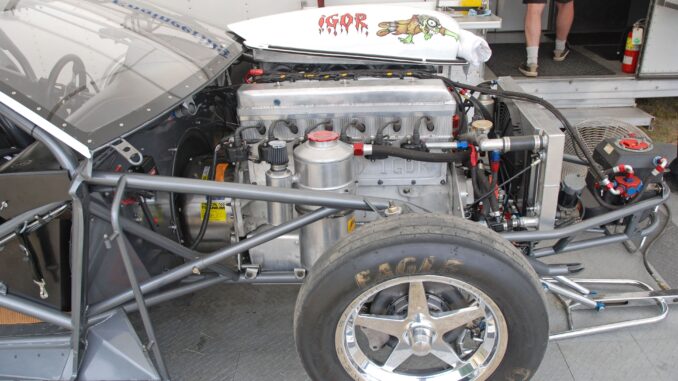
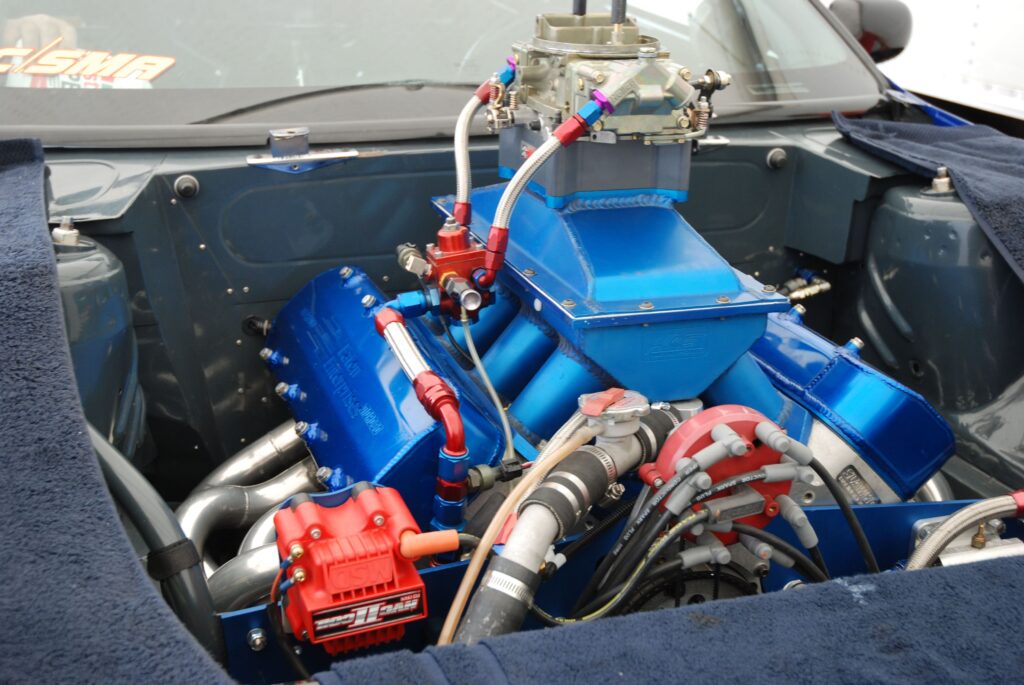
Assume you have a custom-built car you’re working on. Assume you have an engine. At some point you have to mix the two together. No big deal right? Probably not. You just slide the thing on the mounts and forget about it, but have you really considered why racers often use motor plates? There are a couple of reasons, not the least of which is header clearance. When a conventional three-point mount (one on each side of the block and one on the transmission tail shaft) is used, then the headers are sometimes forced to snake over and around the mounts, which, for the most part are located at the sides of the engine. If the factory mount isn't in the way, it's easy to see that the header design isn't nearly as compromised. Another factor is ease of engine installation and removal. Instead of laying on your back trying to line up a pair of bolts, a typical motor plate-equipped engine can be slipped onto the saddles, a few easily aligned bolts installed (from the top side no less) and you’re done. One more benefit of a motor-plate equipped car is the ease of transmission swaps. When changing a transmission in such an application, there's no need to support the rear of the engine when the gearbox is removed. The front and rear plates hold the engine up. All of this adds up to a pretty big plus in a modified application. The downside (isn’t there always one?) is the fact the mounts are solid. You’ll get some engine vibration in the cockpit. If you can live with that, read on:
Motor Plate Materials
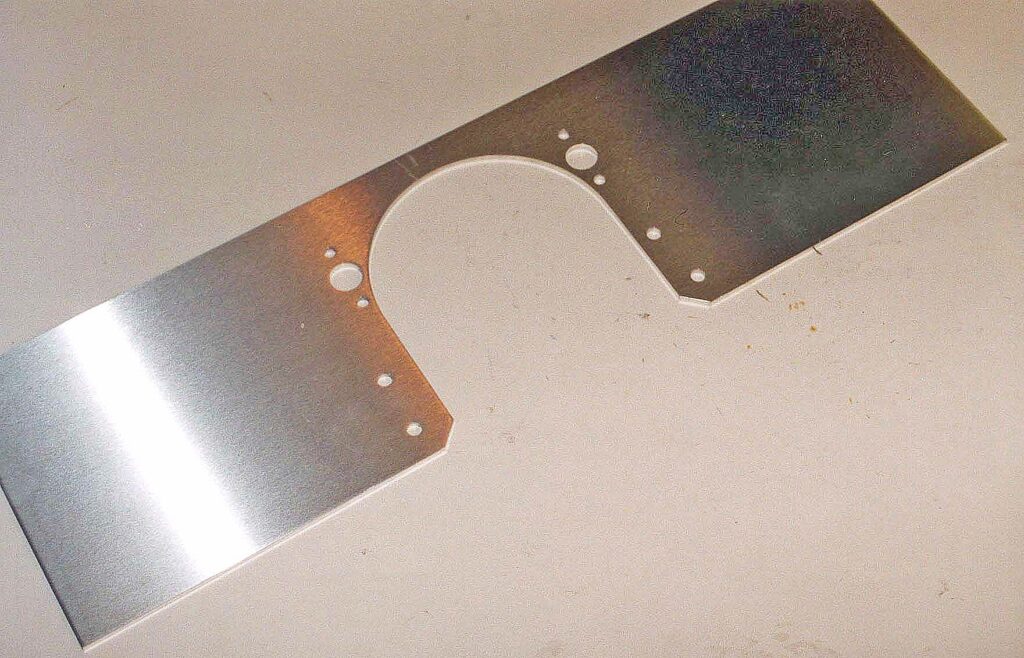
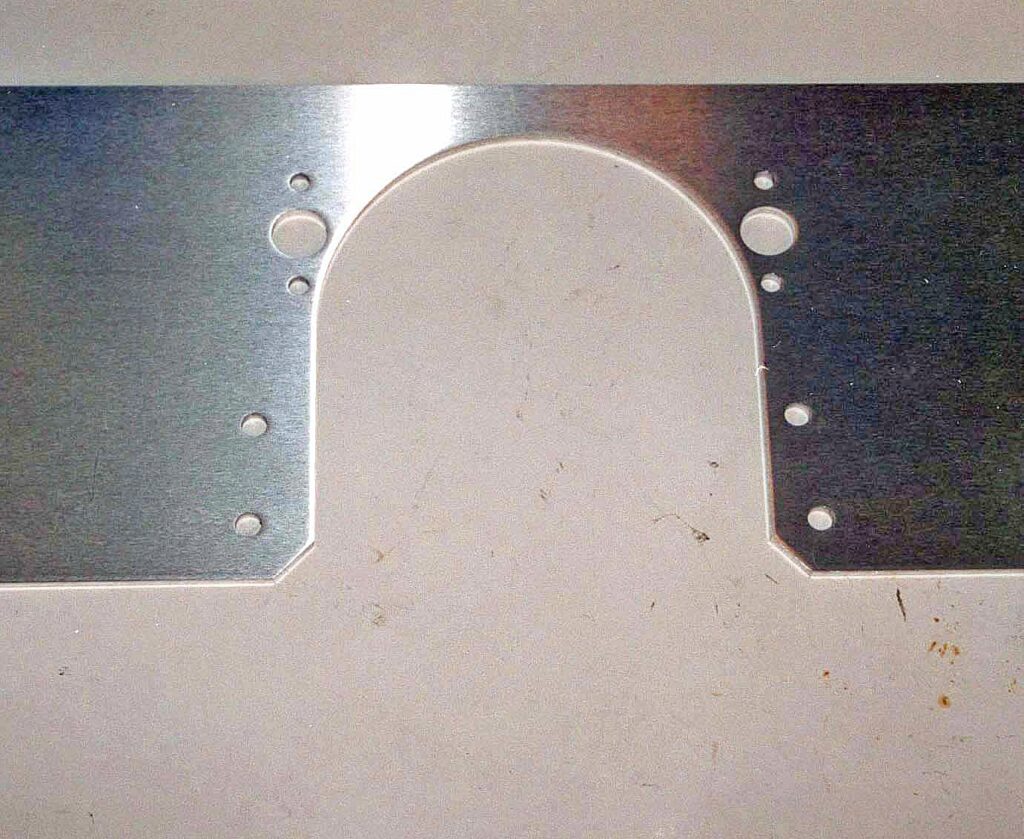
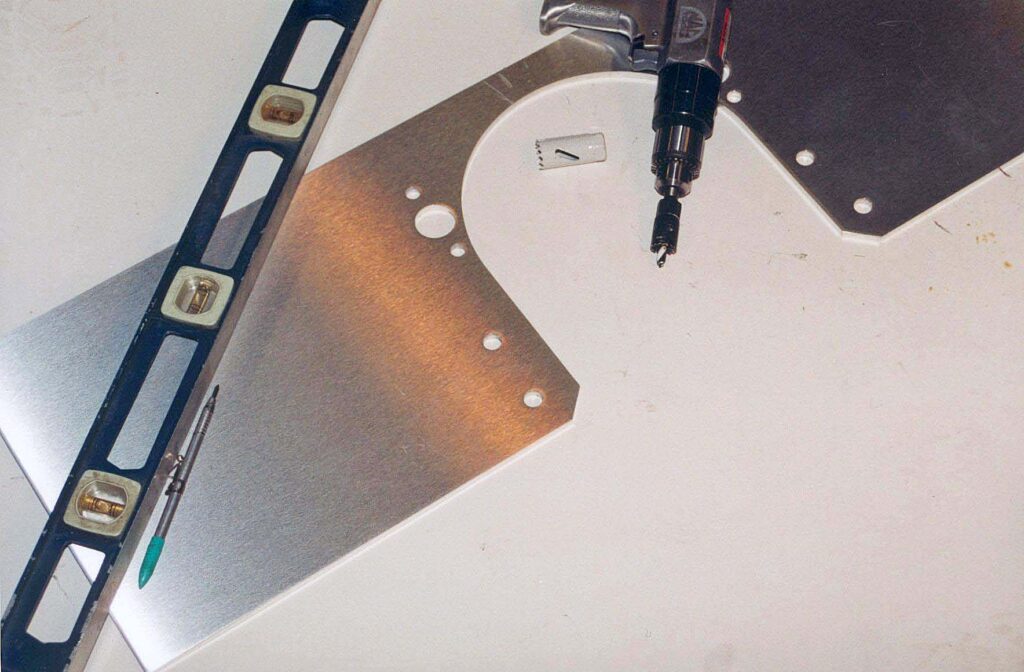
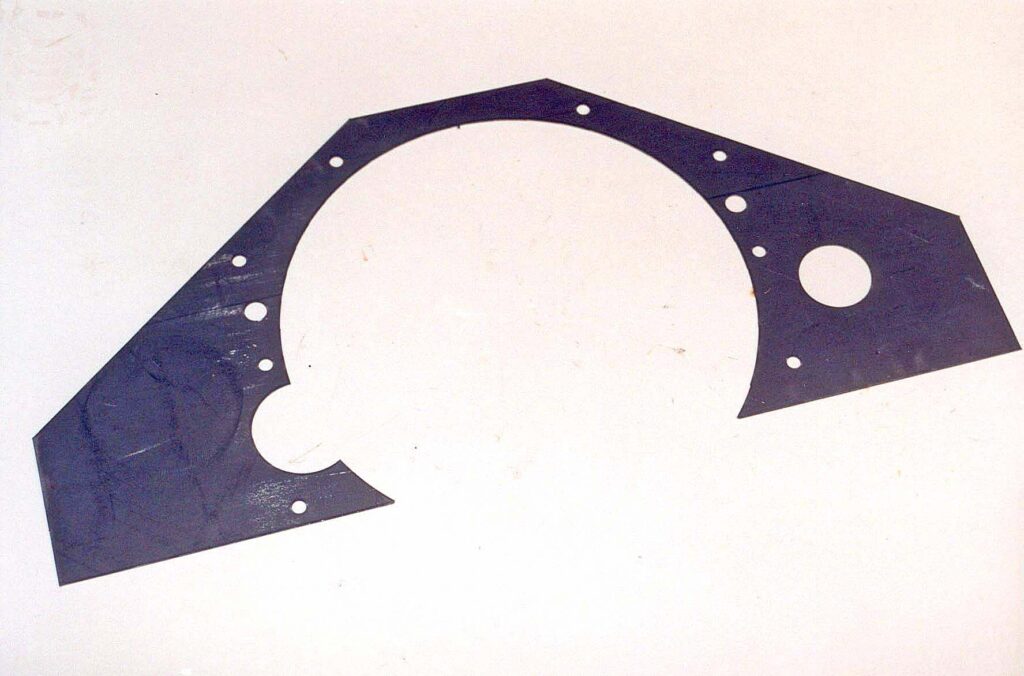
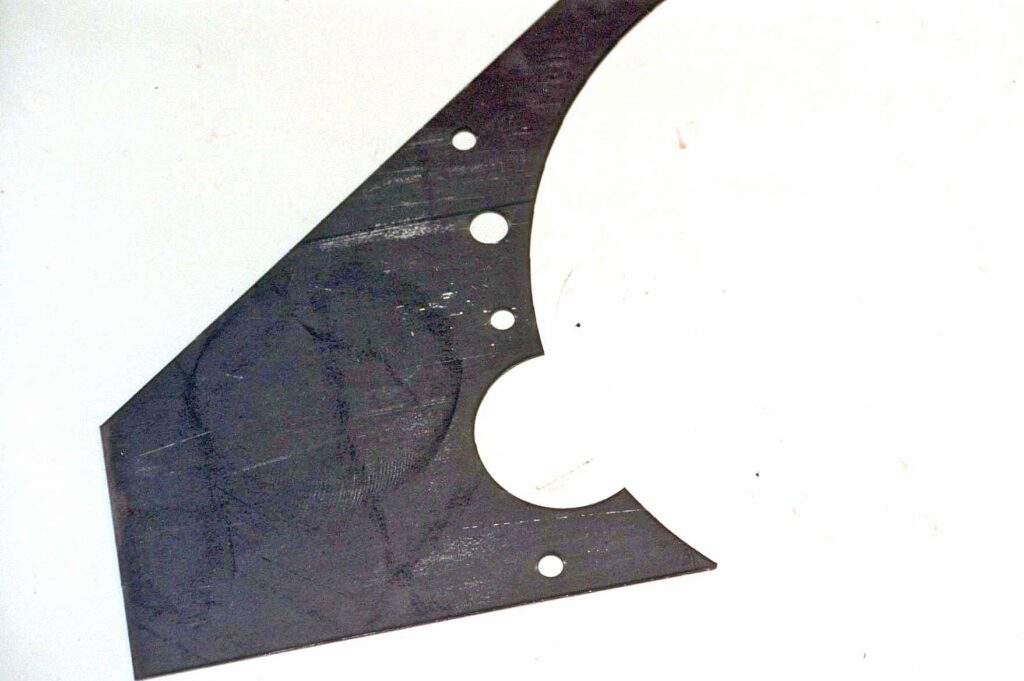
Front motor plates are almost exclusively constructed from aluminum while rear plates can either be constructed from aluminum or steel. Is any type of aluminum suitable for motor plates? Absolutely not. For example, the Competition Engineering plate shown in the photos is constructed from 0.250-inch thick 6061T6 aluminum (which is a grade commonly used in aircraft). Why is the aluminum grade important? It's simple: Pure (99.0%) aluminum is unsuitable for racecar structures because it is far too soft. There's a catch though. When alloyed with other materials or elements, aluminum can be made into an ideal structural material. One major reason aluminum is so attractive is weight. Typically, aluminum is roughly 1/3 the weight of steel.
As indicated above, alloying can change the properties of aluminum. Alloying is simply the method of mixing aluminum with other materials to make it stronger. The percentage of copper or zinc mixed with aluminum will determine the strength of the alloy. According to the Standard Aviation Maintenance Handbook, when aluminum is mixed with copper, manganese or magnesium, the alloy is capable of carrying major structural loads. Aluminum alloys are identified by a four-digit numbering system. The first digit identifies the primary alloy group and the others indicate the additional alloys present. For your information, 6061T6 aluminum includes the following percentages of alloying elements: Magnesium: 1.0; Silicon: 0.6; Copper: 0.25; Chromium: 0.25. When aluminum is alloyed with copper or zinc, it's characteristics change to the extent that it can be hardened as well as softened by the use of heat. The T6 suffix indicates the aluminum is solution heat treated and artificially aged. Why is this important with regard to motor plates? It has to do with strength properties. 6061T6 aluminum has an ultimate strength of 45,000 PSI, a Brinell (hardness) rating of 95 and a shearing strength of 30,000 PSI. In comparison, a more, "pure" aluminum such as 1100-0 has an ultimate strength of 13,000 psi, a Brinell rating of 23 and ultimate shear strength of 9,500. As you can see, the differences in strength numbers between the two types of aluminum are considerable.
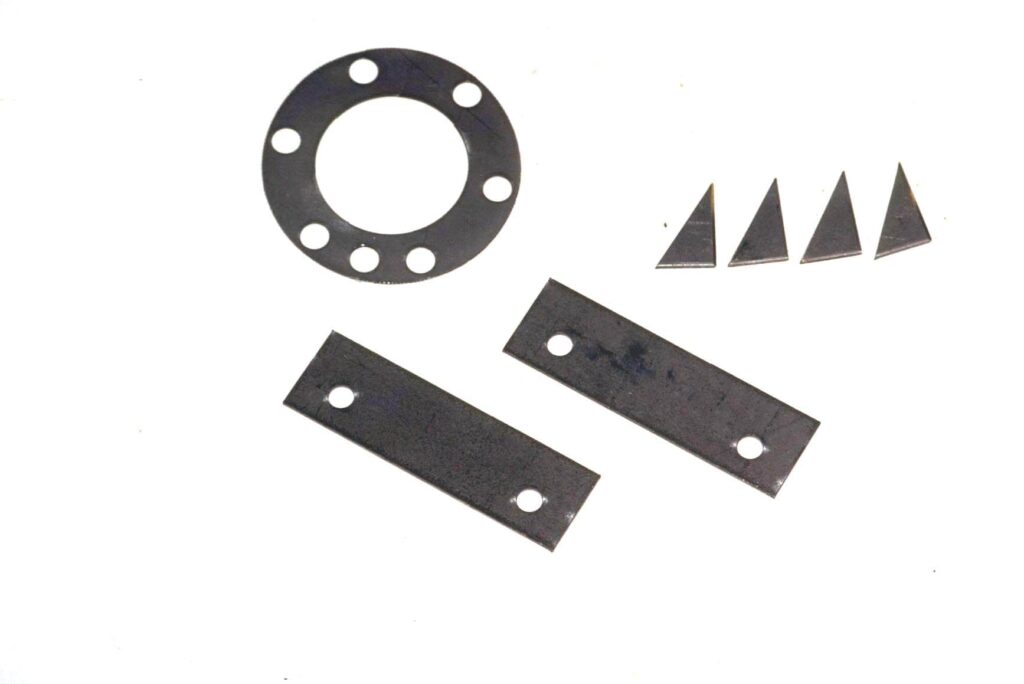
Rear motor plates can also be manufactured from mild steel and they have one major advantage when compared to aluminum rear plates: Sheet metal steel rear plates or "mid mounts" can be constructed thin enough so that major modifications to the transmission input shaft and clutch throw out bearing are not required. According to Competition Engineering, their mild steel mid mount is 0.090" thick, and is machined on a computer-controlled punch. This ensures consistency between components, and of course, an exact fit.
Plate Configurations
A number of different motor plate styles are readily available in the racing aftermarket. For example, big and small block Chevy plates, small block Ford plates, 460 Ford plates as well as big and small block Chrysler plates are generally available. You can purchase plates for specific chassis types (tube frame cars or "converted" production cars), universal plates (which allow you to trim them to size) or "pre-cut" plates, which are often profile milled and ready for installation in a kit chassis. Some companies also manufacture "conversion" plates. In this case, the plate design allows you to install a small block Chevy into a tube frame chassis that was originally set up for a big block. These plates are engineered to compensate for the shorter length of the small block, but it is factory offset (with a custom series of bends on each end) allowing it to bolt to big block mounts.
At one time, it was relatively common to modify a safety bell housing by welding ears to the external ring or ears so that a second plate or mid mount wasn't required. It was a clean solution, but unfortunately, when the welding was accomplished it was impossible to know if the bell housing was structurally sound. Obviously, the welding could change the properties of the safety bell housing, and as a result, that practice is now forbidden by the respective race sanctioning bodies.
Motor Plate Mounts
When installing a motor plate-equipped engine in a car, you'll obviously need some way to bolt the pieces together. Generally speaking, there are two different motor plate "systems" in use today: One geared toward tube frame cars and the other geared toward converted "built-in-Detroit" cars. Typically, a tube frame car will have a forward roll cage hoop in the engine compartment, which can easily accept a mount saddle and tab for the motor plate. At the bottom, a tube frame chassis will also readily accept a lower plate mount or saddle system. In comparison, this isn't always possible with a factory car since the frame rails are usually further apart and at a far different height than in a tube frame car. Further to this, many combinations that began life as "real cars" are not equipped with forward roll cage hoops. Not only does this have an effect upon the mounting, it also changes the shape and design of the motor plate. Purpose built tube frame style cars usually have a front motor plate that is mounted in two locations per side (upper and lower). Meanwhile, a front motor plate for a production car is often mounted at the bottom only (one mount location per side). Rear plates also differ. Full tube frame chassis are often designed so that the mid mount is tied to the roll cage. Because of the differences in motor plate mounting, fore and aft engine movement can prove critical, especially in cars with production line chassis.
Controlling The Movement
Motor plates are very good at controlling the rotational engine movement in a chassis. In some applications where OEM style transmission cases are included, they aren't that great at controlling fore and aft movement. In a Pro Stock drag race car, the transmission is held fast by the mount package. Typically, these cars have a robust transmission case and integral transmission mount arrangement that allows for solid mounting. In the case of a Pro Stock drag car, most fabricators use a relatively stout 6061T6 mid mount which is not only bolted to the lower frame rail: It's also fastened at the top (over the bell housing) which allows the plate to tie directly to the roll cage of the car. Obviously with this sort of arrangement, the engine isn't going anywhere.
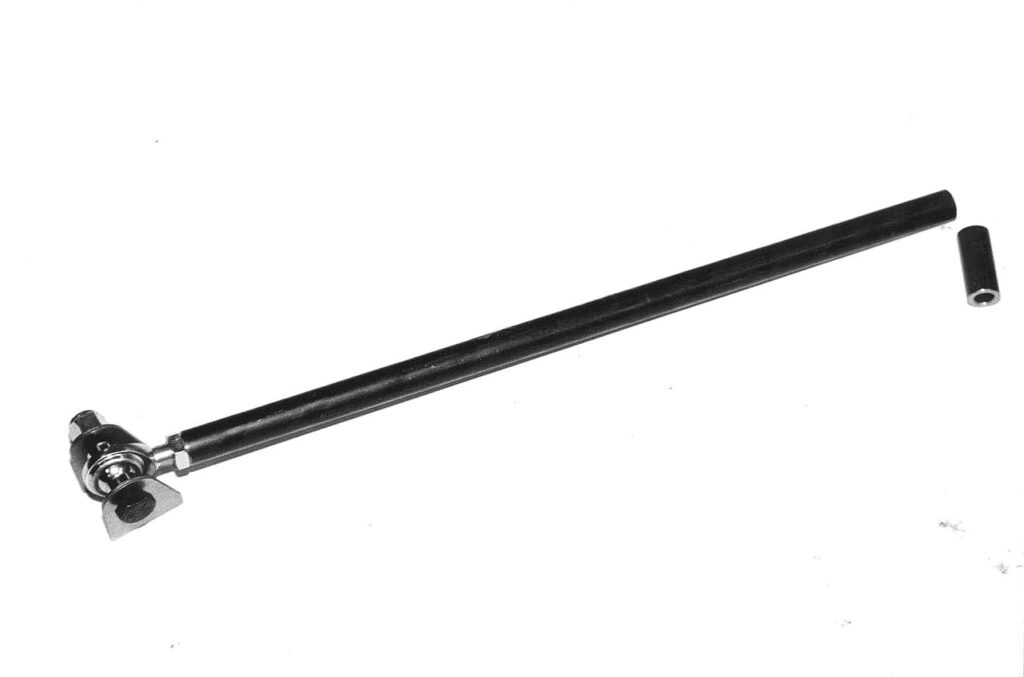
When an automatic transmission enters the mix (particularly with a relatively flexible sheet metal mid mount), it's not easy to control the fore and aft movement of the engine. The solution is an engine limiter. Typically, a limiter is mounted at a rearward angle between the cylinder block and the front frame rail on the driver's side of the car. This arrangement precludes large scale fore and aft motion from the engine. The result, of course, is a happy transmission case and a front motor plate that doesn't bend or fracture.
In the end, you can see motor plates can ease the pain of working on your custom-built application (sometimes by considerable margins). Not only do they make life easier when it comes to installing an engine, they can also make room for more efficient headers. The result, of course, is a bit more power potential and obviously, less clutter in the engine compartment. Harnessing the engine to the car might be more important than you think.
Click Here to Begin Slideshow
Assume you have a custom-built car you’re working on. Assume you have an engine. At some point you have to mix the two together. No big deal right? Probably not. You just slide the thing on the mounts and forget about it, but have you really considered why racers often use motor plates? There are a couple of reasons, not the least of which is header clearance. When a conventional three-point mount (one on each side of the block and one on the transmission tail shaft) is used, then the headers are sometimes forced to snake over and around the mounts, which, for the most part are located at the sides of the engine. If the factory mount isn't in the way, it's easy to see that the header design isn't nearly as compromised. Another factor is ease of engine installation and removal. Instead of laying on your back trying to line up a pair of bolts, a typical motor plate-equipped engine can be slipped onto the saddles, a few easily aligned bolts installed (from the top side no less) and you’re done. One more benefit of a motor-plate equipped car is the ease of transmission swaps. When changing a transmission in such an application, there's no need to support the rear of the engine when the gearbox is removed. The front and rear plates hold the engine up. All of this adds up to a pretty big plus in a modified application. The downside (isn’t there always one?) is the fact the mounts are solid. You’ll get some engine vibration in the cockpit. If you can live with that, read on:
Motor Plate Materials
Front motor plates are almost exclusively constructed from aluminum while rear plates can either be constructed from aluminum or steel. Is any type of aluminum suitable for motor plates? Absolutely not. For example, the Competition Engineering plate shown in the photos is constructed from 0.250-inch thick 6061T6 aluminum (which is a grade commonly used in aircraft). Why is the aluminum grade important? It's simple: Pure (99.0%) aluminum is unsuitable for racecar structures because it is far too soft. There's a catch though. When alloyed with other materials or elements, aluminum can be made into an ideal structural material. One major reason aluminum is so attractive is weight. Typically, aluminum is roughly 1/3 the weight of steel.
As indicated above, alloying can change the properties of aluminum. Alloying is simply the method of mixing aluminum with other materials to make it stronger. The percentage of copper or zinc mixed with aluminum will determine the strength of the alloy. According to the Standard Aviation Maintenance Handbook, when aluminum is mixed with copper, manganese or magnesium, the alloy is capable of carrying major structural loads. Aluminum alloys are identified by a four-digit numbering system. The first digit identifies the primary alloy group and the others indicate the additional alloys present. For your information, 6061T6 aluminum includes the following percentages of alloying elements: Magnesium: 1.0; Silicon: 0.6; Copper: 0.25; Chromium: 0.25. When aluminum is alloyed with copper or zinc, it's characteristics change to the extent that it can be hardened as well as softened by the use of heat. The T6 suffix indicates the aluminum is solution heat treated and artificially aged. Why is this important with regard to motor plates? It has to do with strength properties. 6061T6 aluminum has an ultimate strength of 45,000 PSI, a Brinell (hardness) rating of 95 and a shearing strength of 30,000 PSI. In comparison, a more, "pure" aluminum such as 1100-0 has an ultimate strength of 13,000 psi, a Brinell rating of 23 and ultimate shear strength of 9,500. As you can see, the differences in strength numbers between the two types of aluminum are considerable.
Rear motor plates can also be manufactured from mild steel and they have one major advantage when compared to aluminum rear plates: Sheet metal steel rear plates or "mid mounts" can be constructed thin enough so that major modifications to the transmission input shaft and clutch throw out bearing are not required. According to Competition Engineering, their mild steel mid mount is 0.090" thick, and is machined on a computer-controlled punch. This ensures consistency between components, and of course, an exact fit.
Plate Configurations
A number of different motor plate styles are readily available in the racing aftermarket. For example, big and small block Chevy plates, small block Ford plates, 460 Ford plates as well as big and small block Chrysler plates are generally available. You can purchase plates for specific chassis types (tube frame cars or "converted" production cars), universal plates (which allow you to trim them to size) or "pre-cut" plates, which are often profile milled and ready for installation in a kit chassis. Some companies also manufacture "conversion" plates. In this case, the plate design allows you to install a small block Chevy into a tube frame chassis that was originally set up for a big block. These plates are engineered to compensate for the shorter length of the small block, but it is factory offset (with a custom series of bends on each end) allowing it to bolt to big block mounts.
At one time, it was relatively common to modify a safety bell housing by welding ears to the external ring or ears so that a second plate or mid mount wasn't required. It was a clean solution, but unfortunately, when the welding was accomplished it was impossible to know if the bell housing was structurally sound. Obviously, the welding could change the properties of the safety bell housing, and as a result, that practice is now forbidden by the respective race sanctioning bodies.
Motor Plate Mounts
When installing a motor plate-equipped engine in a car, you'll obviously need some way to bolt the pieces together. Generally speaking, there are two different motor plate "systems" in use today: One geared toward tube frame cars and the other geared toward converted "built-in-Detroit" cars. Typically, a tube frame car will have a forward roll cage hoop in the engine compartment, which can easily accept a mount saddle and tab for the motor plate. At the bottom, a tube frame chassis will also readily accept a lower plate mount or saddle system. In comparison, this isn't always possible with a factory car since the frame rails are usually further apart and at a far different height than in a tube frame car. Further to this, many combinations that began life as "real cars" are not equipped with forward roll cage hoops. Not only does this have an effect upon the mounting, it also changes the shape and design of the motor plate. Purpose built tube frame style cars usually have a front motor plate that is mounted in two locations per side (upper and lower). Meanwhile, a front motor plate for a production car is often mounted at the bottom only (one mount location per side). Rear plates also differ. Full tube frame chassis are often designed so that the mid mount is tied to the roll cage. Because of the differences in motor plate mounting, fore and aft engine movement can prove critical, especially in cars with production line chassis.
Controlling The Movement
Motor plates are very good at controlling the rotational engine movement in a chassis. In some applications where OEM style transmission cases are included, they aren't that great at controlling fore and aft movement. In a Pro Stock drag race car, the transmission is held fast by the mount package. Typically, these cars have a robust transmission case and integral transmission mount arrangement that allows for solid mounting. In the case of a Pro Stock drag car, most fabricators use a relatively stout 6061T6 mid mount which is not only bolted to the lower frame rail: It's also fastened at the top (over the bell housing) which allows the plate to tie directly to the roll cage of the car. Obviously with this sort of arrangement, the engine isn't going anywhere.
When an automatic transmission enters the mix (particularly with a relatively flexible sheet metal mid mount), it's not easy to control the fore and aft movement of the engine. The solution is an engine limiter. Typically, a limiter is mounted at a rearward angle between the cylinder block and the front frame rail on the driver's side of the car. This arrangement precludes large scale fore and aft motion from the engine. The result, of course, is a happy transmission case and a front motor plate that doesn't bend or fracture.
In the end, you can see motor plates can ease the pain of working on your custom-built application (sometimes by considerable margins). Not only do they make life easier when it comes to installing an engine, they can also make room for more efficient headers. The result, of course, is a bit more power potential and obviously, less clutter in the engine compartment. Harnessing the engine to the car might be more important than you think.
Click Here to Begin Slideshow
Leave a Reply