




![[Gallery] Ancient City Auto Club 41st Annual Car Show](https://www.racingjunk.com/news/wp-content/uploads/2025/12/DSC_9441-1-e1766520816593-376x206.jpg)
![[Gallery] Village Shoppes Cruise-In](https://www.racingjunk.com/news/wp-content/uploads/2026/10/DSC_9496-e1790963792837-376x206.jpg)
MANAGING MAYHEM – Part 2
Click Here to Begin Slideshow
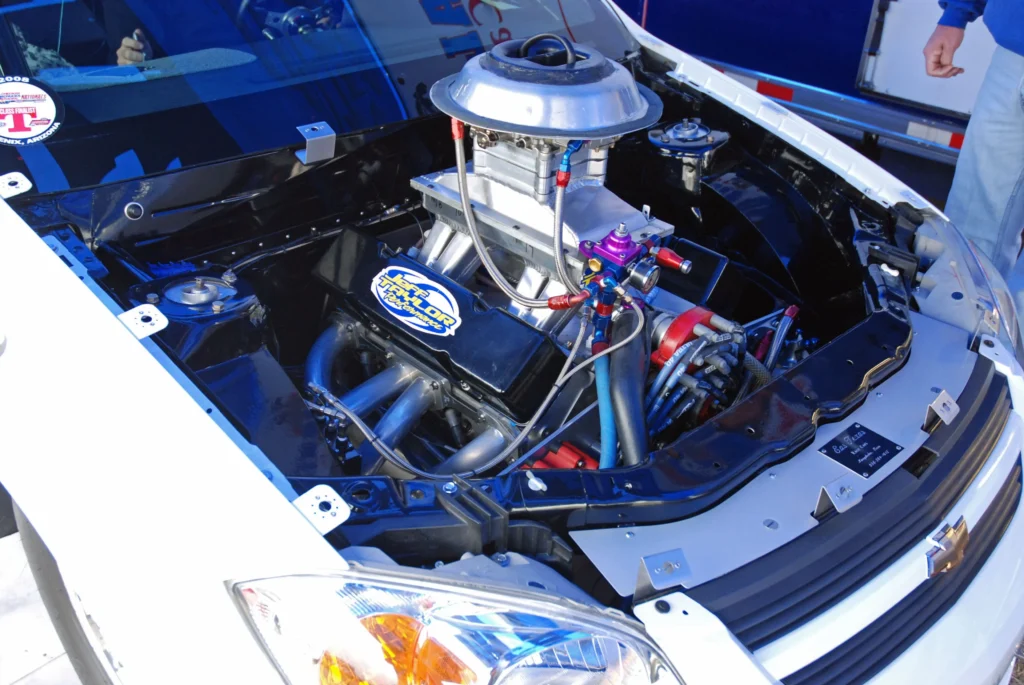
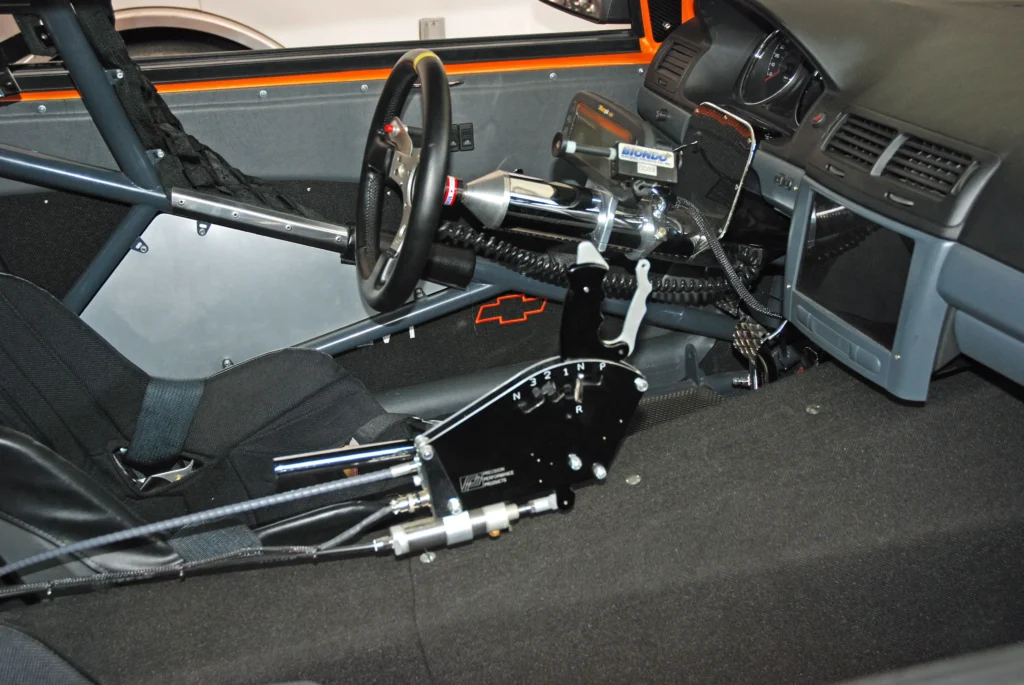
In our last issue, we looked at how drag racing has opened to the use of three speed automatics versus two speeds, particularly in cases where the power band is narrow and engine speed is high. The added gearing just makes for a more efficient combination with smaller engines and a simple swap can help pick a car up by a tenth of a second or more (this is particularly important when you consider how well sorted out many of today’s class cars are). We’ll dig a little deeper into this in below
Theory and reality are often on two different planes. They often collide and what happens in a computer simulation might have little to do with reality. Given that fact, I decided to query a number of folks in the industry about the real world effects of using a three speed automatic instead of a two speed.
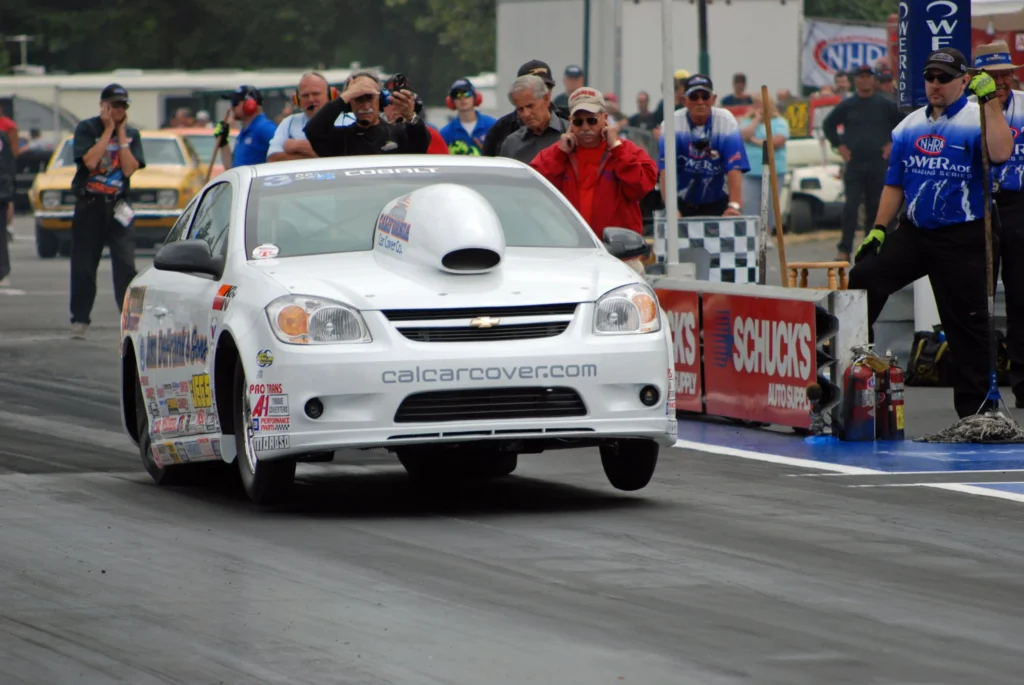
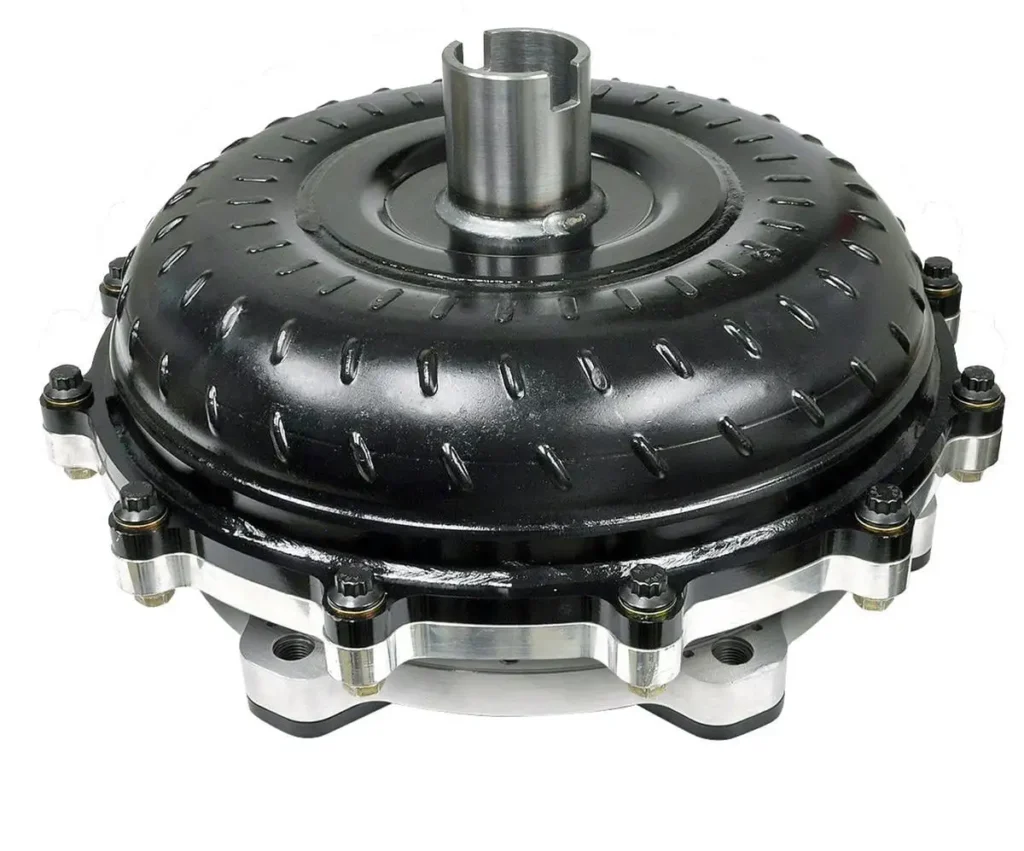
Most agree the computer simulation wasn't too far off. More than one racer has picked up a tenth with a swap from a Powerglide to a three speed -- and some of those cars are similar to the one in my computer test. Of course, not all cars may respond this well, and the improvements really depend upon the combination. Today plenty of racers are examining the effects of building a narrow power band engine for use with the three speed automatics. In essence, those engines are much like stick shift combinations. We're sure the trend will go that way. Another item we should ponder is this: Converter science with the three speeds is a whole new world. Plenty of racers are now leaving the starting line at peak horsepower with an automatic. That's 9,000 RPM (or more). In the past, racers would leave below the power peak, and allow the engine to accelerate. Now, they're truly leaving like a stick shift car. What the racers are doing is creating the "poor man's slipper clutch.
As far as the future of three speed automatics is concerned, the manufacturers have only scratched the surface. There are dozens upon dozens of different gear ratio combinations available for the range of available automatics. We’re sure there will be a few more as time goes on. The real opportunity for improvements will come from reducing internal drag. Modern drag race three speeds are so efficient, manufacturers have been able to reduce line pressure, and consequently, reduce the size of several key internal components. There is a caveat though: The venerable Powerglide isn't dead yet. There are plenty of race cars which will work just as well with a two speed.
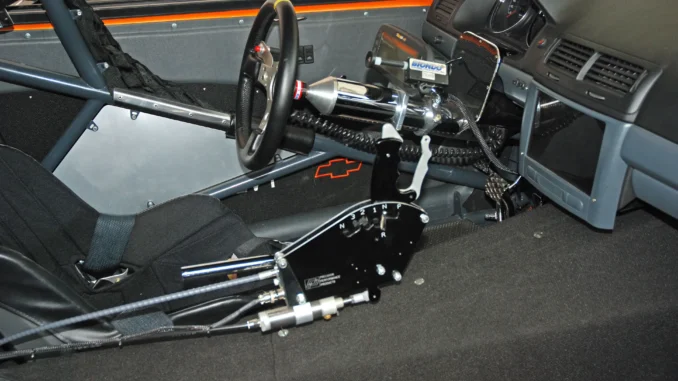
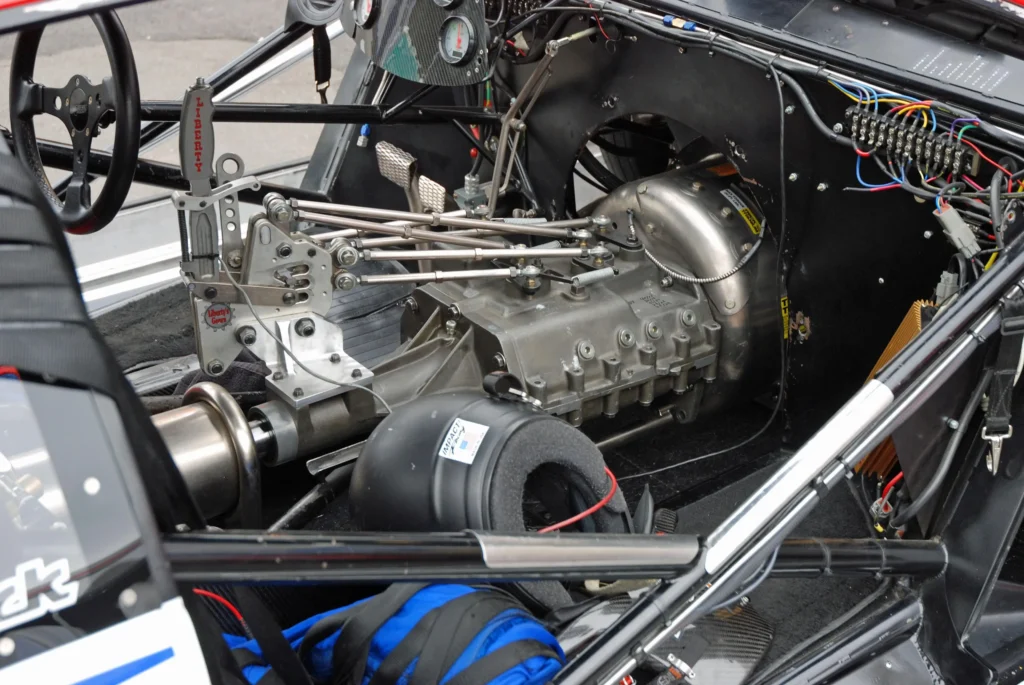
What about manual combinations? Just look at what’s out there: Liberty, Jerico and G Force offer a number of different manual transmissions and all of them have an extremely wide cross section of available gear sets. So how do you pick and choose? Obviously each of the manufacturers have solid data on what works and what doesn’t, but this is rough idea on how they can help with your initial ratio selections:
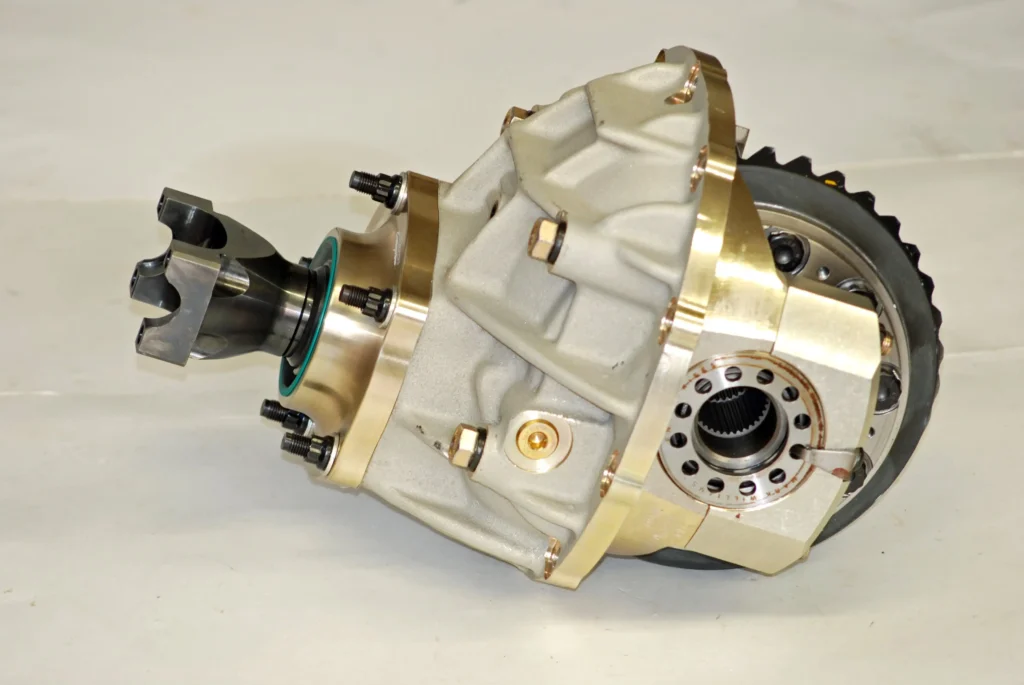
Typically, the first thing they need to know is how fast the car will go. They’ll also need to know what the tire diameter is. And at this point, they can usually work backward to determine what the rear axle ratio should be along with maximum engine speed. Experience will usually tell them what first gear ratio is required -- obviously, a peakier engine, or an engine with less torque will require more first gear in the transmission. At this point, they can calculate the balance of the ratios. The splits (and accompanying engine RPM drops) are important -- they should be as equal as possible. A smart racer can use gearing to his or her advantage on a bad track. Let's say there's a bump in the track at the 300-foot mark. If the ratios you've selected for the transmission mean you have to shift at the bump in the track, you can change ratios to avoid this conflict. In this case, the car will actually go quicker and faster if you can get over the bump without shifting -- even if it means the ratios aren't ideal. There are some very smart racers who always take this into consideration.
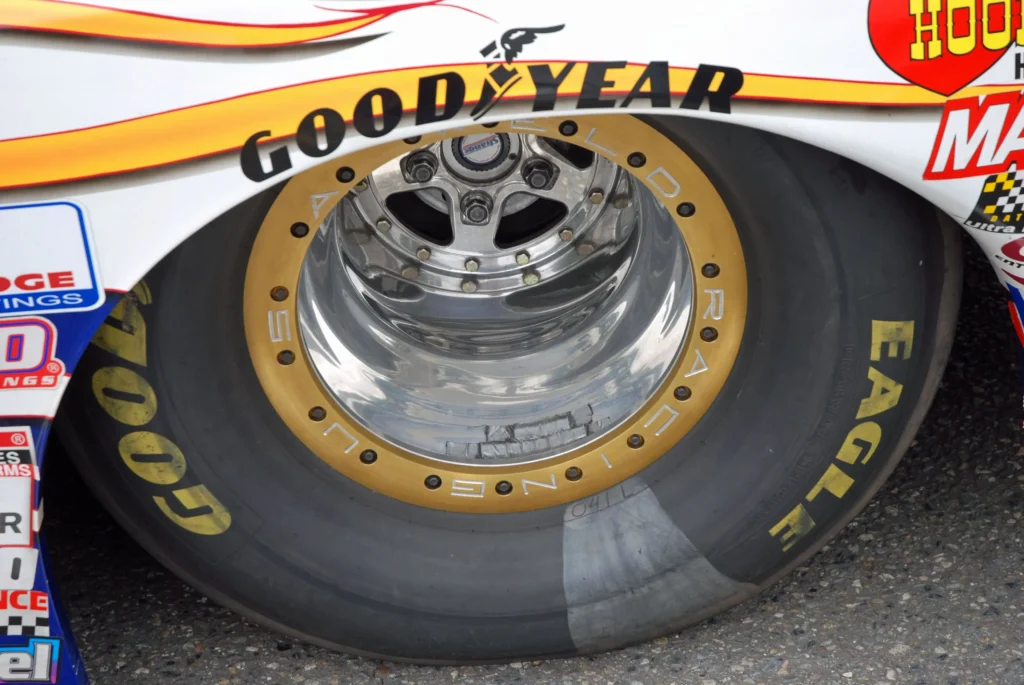
When all is said and done, you can see that today's wave of tighter power band engine combinations and transmissions with more forward gears is here to stay. The real key to optimum performance is to take the engine torque curve, the transmission gear ratios, torque converter (or clutch) slippage, torque converter stall speed, rear axle ratio and slick roll out dimensions into consideration as a total package. If you do, you'll fly.
Click Here to Begin Slideshow
In our last issue, we looked at how drag racing has opened to the use of three speed automatics versus two speeds, particularly in cases where the power band is narrow and engine speed is high. The added gearing just makes for a more efficient combination with smaller engines and a simple swap can help pick a car up by a tenth of a second or more (this is particularly important when you consider how well sorted out many of today’s class cars are). We’ll dig a little deeper into this in below
Theory and reality are often on two different planes. They often collide and what happens in a computer simulation might have little to do with reality. Given that fact, I decided to query a number of folks in the industry about the real world effects of using a three speed automatic instead of a two speed.
Most agree the computer simulation wasn't too far off. More than one racer has picked up a tenth with a swap from a Powerglide to a three speed -- and some of those cars are similar to the one in my computer test. Of course, not all cars may respond this well, and the improvements really depend upon the combination. Today plenty of racers are examining the effects of building a narrow power band engine for use with the three speed automatics. In essence, those engines are much like stick shift combinations. We're sure the trend will go that way. Another item we should ponder is this: Converter science with the three speeds is a whole new world. Plenty of racers are now leaving the starting line at peak horsepower with an automatic. That's 9,000 RPM (or more). In the past, racers would leave below the power peak, and allow the engine to accelerate. Now, they're truly leaving like a stick shift car. What the racers are doing is creating the "poor man's slipper clutch.
As far as the future of three speed automatics is concerned, the manufacturers have only scratched the surface. There are dozens upon dozens of different gear ratio combinations available for the range of available automatics. We’re sure there will be a few more as time goes on. The real opportunity for improvements will come from reducing internal drag. Modern drag race three speeds are so efficient, manufacturers have been able to reduce line pressure, and consequently, reduce the size of several key internal components. There is a caveat though: The venerable Powerglide isn't dead yet. There are plenty of race cars which will work just as well with a two speed.
What about manual combinations? Just look at what’s out there: Liberty, Jerico and G Force offer a number of different manual transmissions and all of them have an extremely wide cross section of available gear sets. So how do you pick and choose? Obviously each of the manufacturers have solid data on what works and what doesn’t, but this is rough idea on how they can help with your initial ratio selections:
Typically, the first thing they need to know is how fast the car will go. They’ll also need to know what the tire diameter is. And at this point, they can usually work backward to determine what the rear axle ratio should be along with maximum engine speed. Experience will usually tell them what first gear ratio is required -- obviously, a peakier engine, or an engine with less torque will require more first gear in the transmission. At this point, they can calculate the balance of the ratios. The splits (and accompanying engine RPM drops) are important -- they should be as equal as possible. A smart racer can use gearing to his or her advantage on a bad track. Let's say there's a bump in the track at the 300-foot mark. If the ratios you've selected for the transmission mean you have to shift at the bump in the track, you can change ratios to avoid this conflict. In this case, the car will actually go quicker and faster if you can get over the bump without shifting -- even if it means the ratios aren't ideal. There are some very smart racers who always take this into consideration.
When all is said and done, you can see that today's wave of tighter power band engine combinations and transmissions with more forward gears is here to stay. The real key to optimum performance is to take the engine torque curve, the transmission gear ratios, torque converter (or clutch) slippage, torque converter stall speed, rear axle ratio and slick roll out dimensions into consideration as a total package. If you do, you'll fly.
Click Here to Begin Slideshow