




![[Gallery] Mecum Kissimmee Auction 2026](https://www.racingjunk.com/news/wp-content/uploads/2026/03/DSC_0717-e1774629242515-376x206.jpg)
![[Gallery] Cruisin’ One Daytona](https://www.racingjunk.com/news/wp-content/uploads/2026/03/DSC_0538-e1774027057404-376x206.jpg)



Button It Up: Dzus Fasteners
Click Here to Begin Slideshow
Bolts are designed to hold stuff together. Bolts used in the aircraft industry are special (no secret). But there are other high quality methods incorporated in aviation to affix parts, and several have been used with regularity in motor sports. And those aviation-fastening devices are Dzus fasteners.
In case you didn't know, the founder William Dzus established Dzus in 1932 with the invention of the original quarter-turn fastener. Its rapid acceptance as a standard fastener for aircraft cowlings and access panels led to many other applications and to the rather extensive product range currently available. Now, before we begin our look at Dzus fasteners, keep in mind that the most common types used in racing (usually 1/4 turn buttons or wing head fasteners) are only the tip of the quick release fastener iceberg. Dzus offer countless shapes and styles of fasteners. And more than a few of those can find a legitimate home in drag racing. Here's a basic rundown of the various products:
Standard Line...
This is the original Quarter turn fastener (which, by the way, has seen over 60 years of successful use), and likely is the fastener the majority of racers are most familiar with. This Dzus line offers the largest selection of ¼-turn configurations available in the industry. The basic components that make up a "Standard Line" fastener include a spiral-cam stud (commonly called a "button" by most enthusiasts), a stud retainer and a receptacle. As the button is rotated, the quarter turn spiral cam in the button engages a spring-wire receptacle and pulls it up and over the cam peak. The spring snaps into the detent at the end of the cam, which in turn, holds the fastener in a firm locked tension. The peak engineered into the cam resists opening rotation of a locked button under vibration.
These ¼-turn fasteners are available in four basic stud sizes. The sizes and specifications are as follows:
Sizes Available #3 #4 #5 #65
____________________________________________________________
Stud End Diameter (inches): 3/16 1/4 5/16 13/32
Stud Head Diameter (inches): 5/16 7/16 9/16 11/16
Locked Service Tension (lbs): 20 30 45 55
Max. Tension Without Distortion (lbs): 45 60 85 110
Rated Sheer (lbs): 100 150 200 300
Wear Life (cycles in thousands) 5 5 25 40
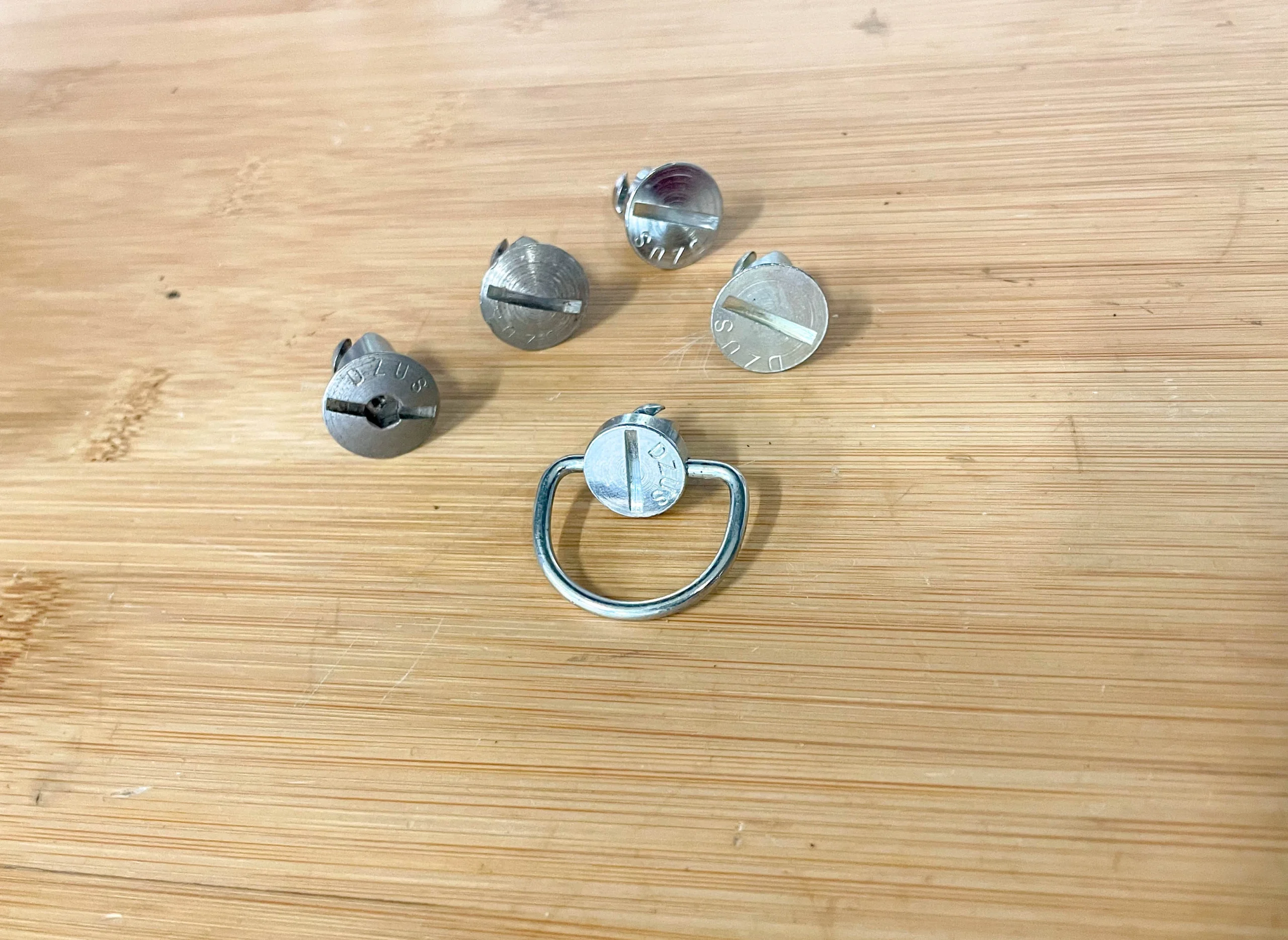
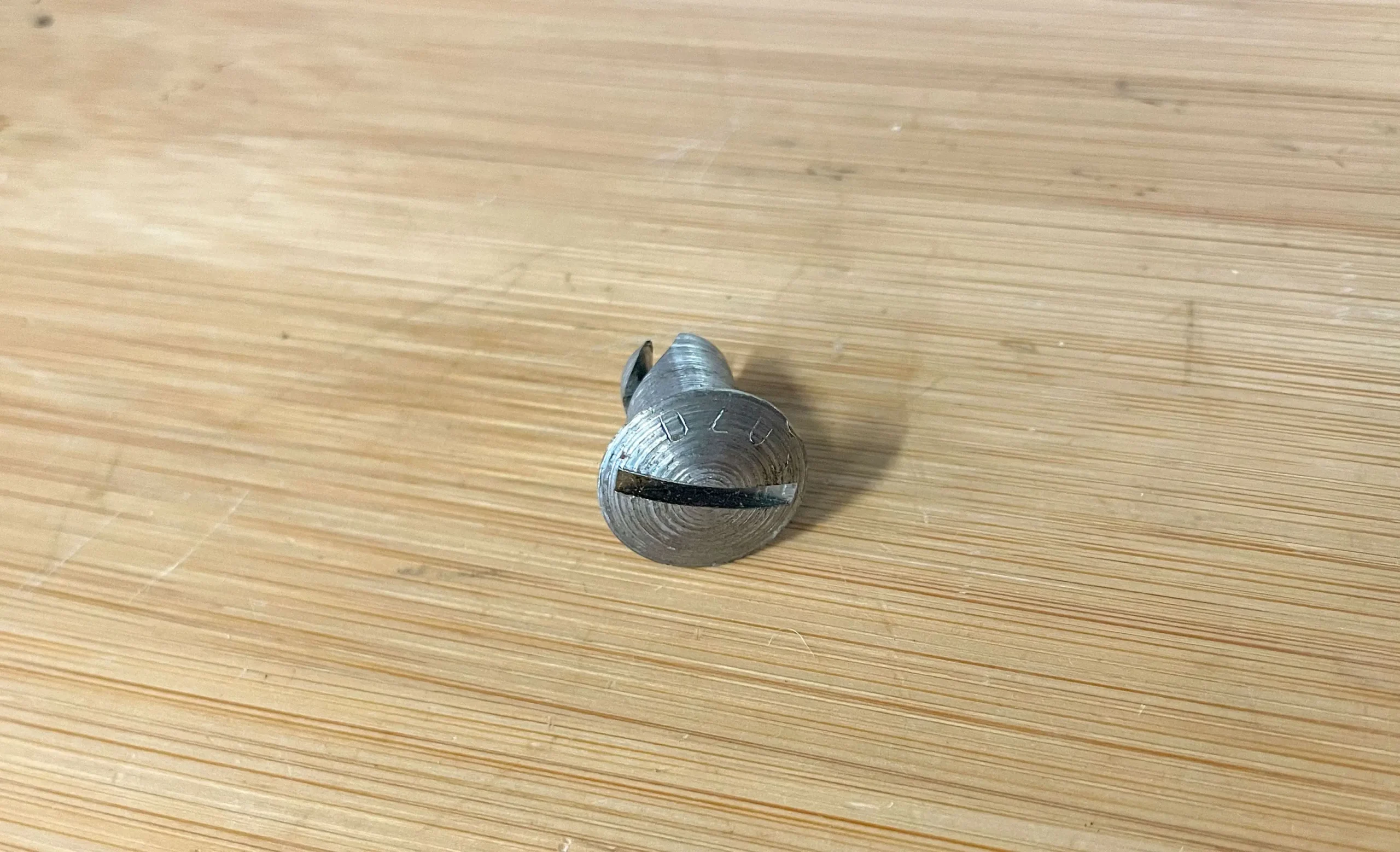
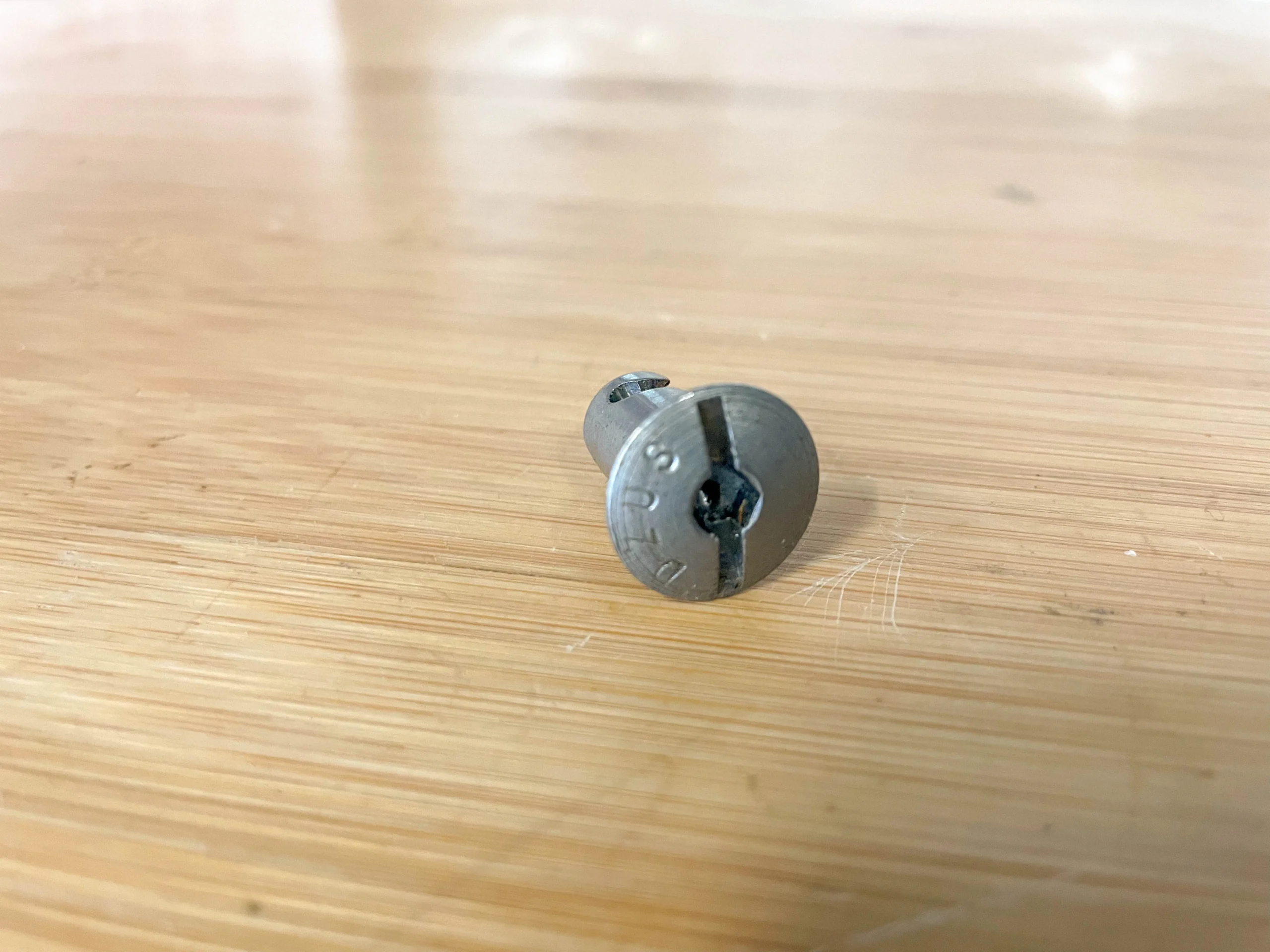
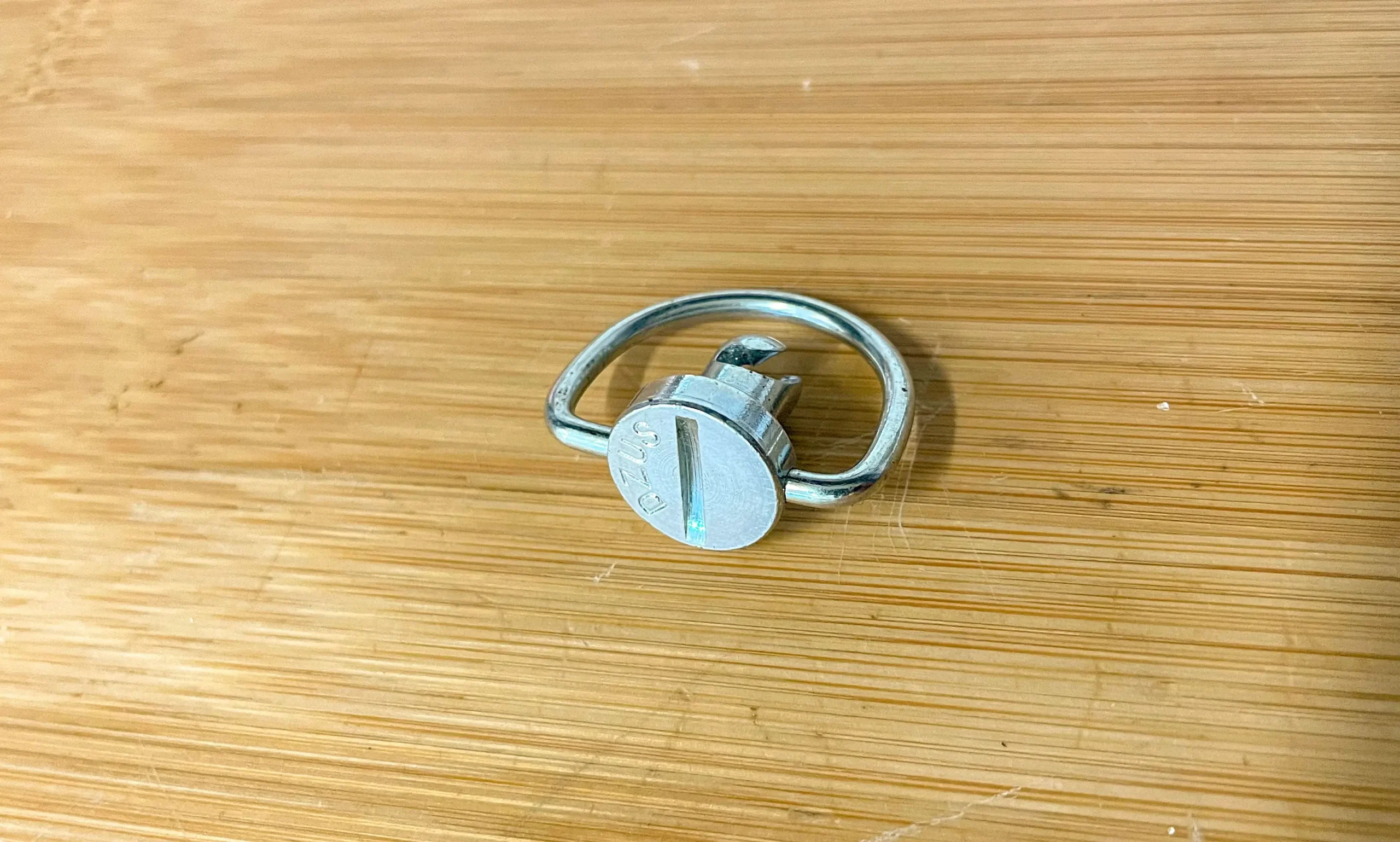
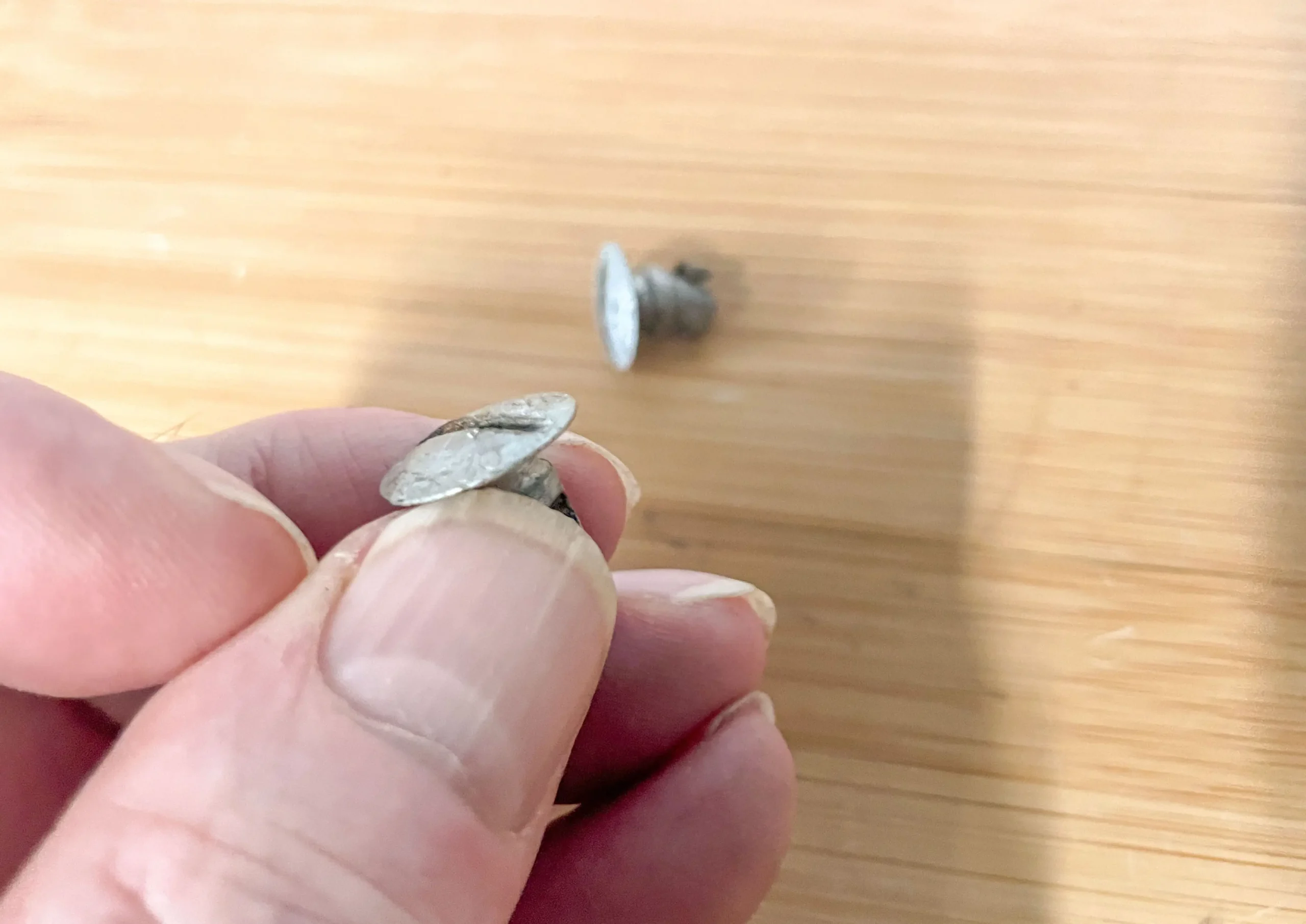
There are six different stud head (button) configurations available in the Dzus Standard Line. Included are the Slotted Head that obviously has a slotted head, but it is domed. A Flush Head configuration is available, and it too uses a common flat blade screwdriver for operation (the Flush Head is the common countersunk design used in racing). A Wing Head design is available (essentially, this is a dome head with a wing attached). A Ring Head model is available too. This configuration uses a small button, but has a folding metal ring affixed to the head. Finally, you can purchase Standard Line fasteners with a Phillips head or with an internal hex head instead of a conventional flat blade screwdriver head.
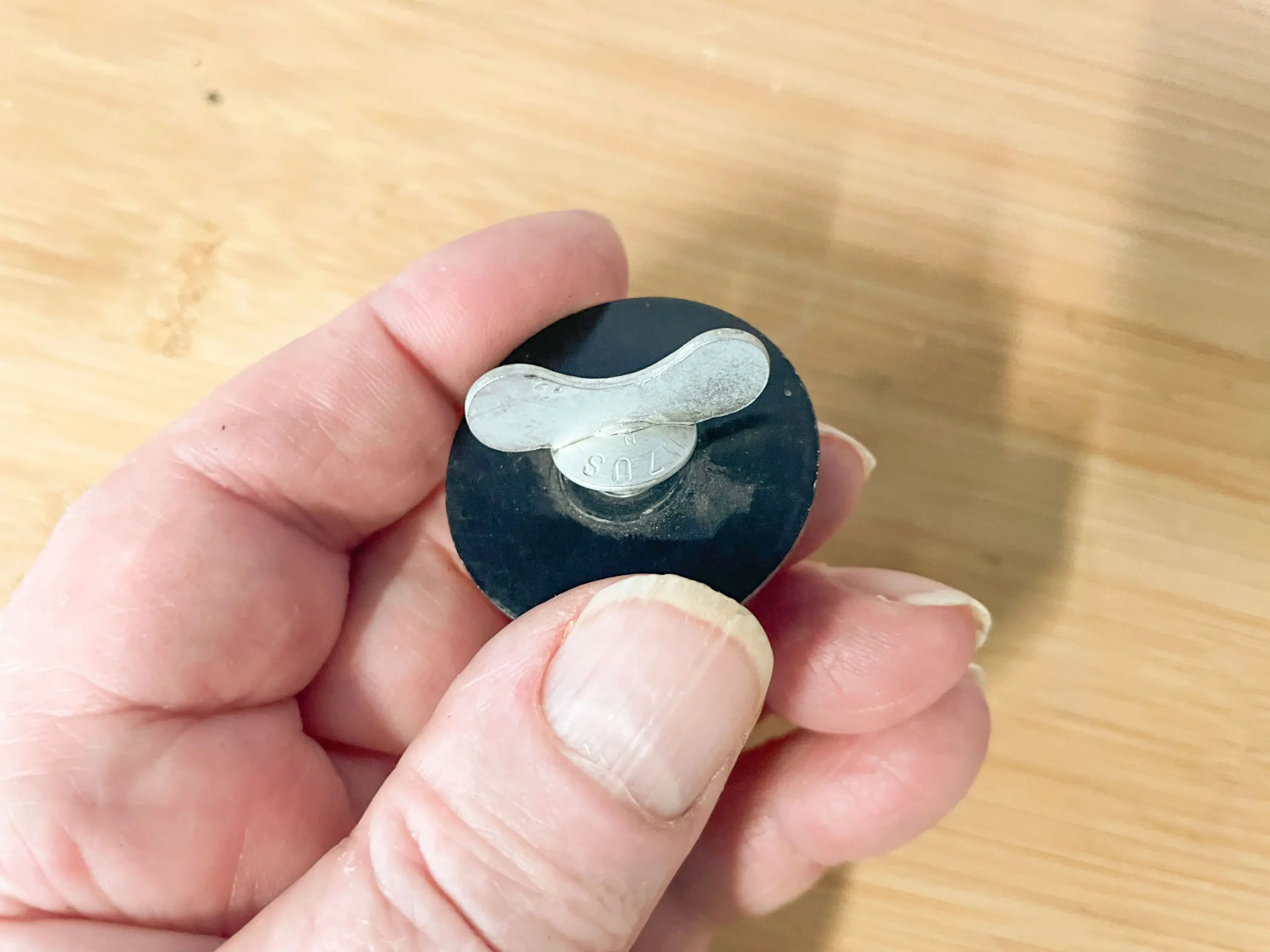
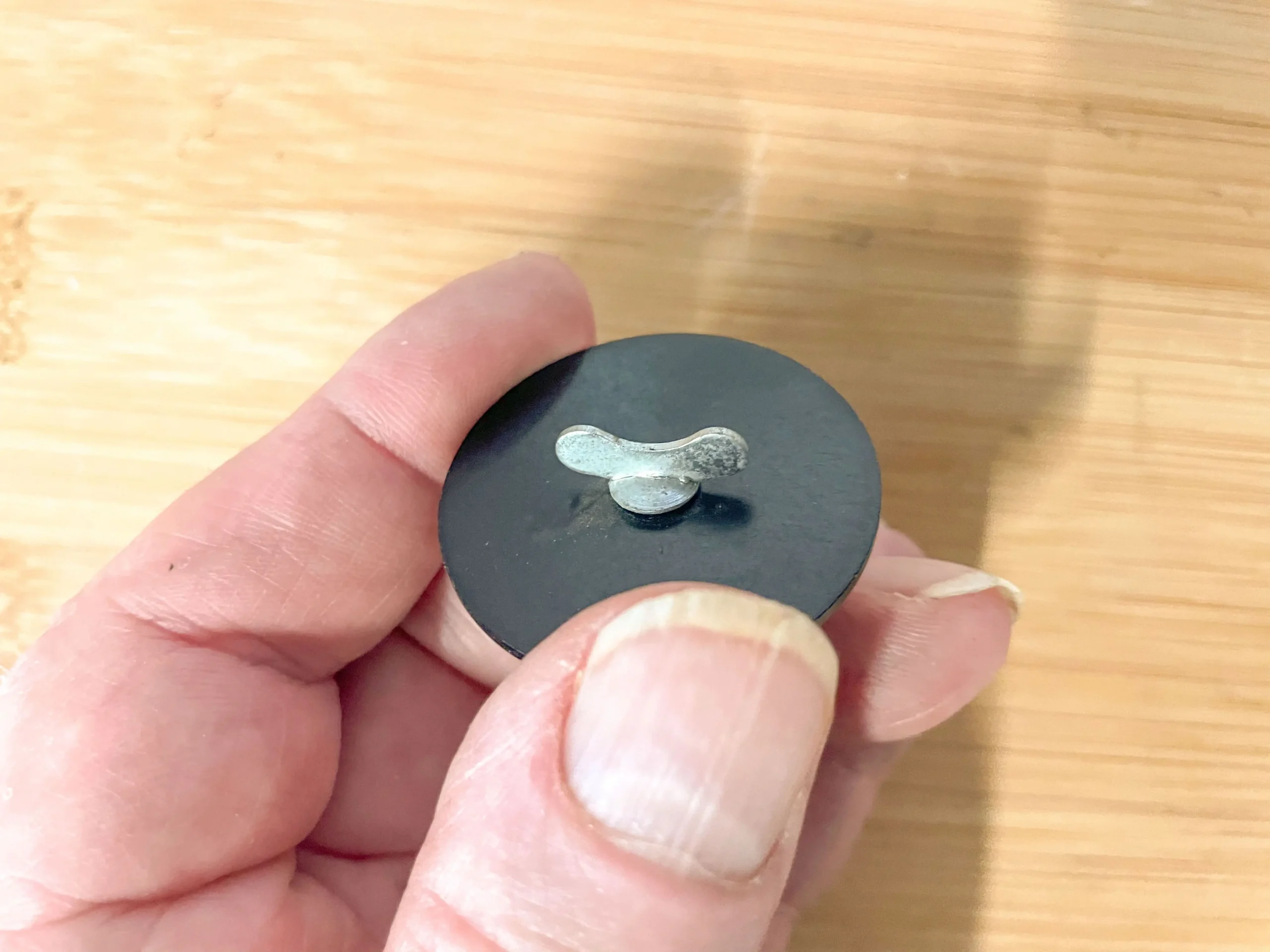
Fasteners in numbers 3, 4 and 5 sizes can be specified with a self-ejecting feature. In this case, a stainless steel ejecting spring along with a black plastic cup are sold attached to the stud. The "Type SE" ejection is partial, limited by the length of the stud undercut not occupied by the cup, panel and stud retainer. Stud ejection will normally be sufficient so that you can visually see the fastener is unlocked. When ejected, spring tension holds an opened stud firmly, which in turn, eases the removal and replacement of panels. This is particularly appealing in applications where the panel is oriented vertically and/or when the panel is held in place with multiple fasteners.
Another choice you have when purchasing Dzus fasteners is the type of receptacle. The basic formats include a "S-Spring" model, a Weld Plate model (which has the spring installed, and is available in several different configurations), a side spring receptacle and a corner spring receptacle. The different spring shapes allow the fastener to be used in different locations. For example, a common "S-Spring" spring might not work in a location with a tight corner radius. In this case, you could specify a "Corner Spring" receptacle. Not all receptacles are available in all fastener sizes, but the selection is still incredibly broad. In fact there are so many different combinations (conventional steel, stainless steel, varying standoff heights for varying material thicknesses and so on), we don't have room to list them all. Suffice to say, there's a spring receptacle for almost any racing application.
But good old-fashioned springs aren't the only means to "anchor" a Dzus fastener. You can specify press-in receptacles that are designed to press into either the face or the rear of the fastener "orifice". You can also specify clip in receptacles in several different formats.
We’ll wrap it up for this segment. Next time around, we’ll continue our look at Dzus fasteners, including a detailed examination of Guide Pin fasteners. They’re an interesting fastener with all sorts of applications. Watch for it. In the meantime, check out the accompanying slide show:
Click Here to Begin Slideshow
Bolts are designed to hold stuff together. Bolts used in the aircraft industry are special (no secret). But there are other high quality methods incorporated in aviation to affix parts, and several have been used with regularity in motor sports. And those aviation-fastening devices are Dzus fasteners.
In case you didn't know, the founder William Dzus established Dzus in 1932 with the invention of the original quarter-turn fastener. Its rapid acceptance as a standard fastener for aircraft cowlings and access panels led to many other applications and to the rather extensive product range currently available. Now, before we begin our look at Dzus fasteners, keep in mind that the most common types used in racing (usually 1/4 turn buttons or wing head fasteners) are only the tip of the quick release fastener iceberg. Dzus offer countless shapes and styles of fasteners. And more than a few of those can find a legitimate home in drag racing. Here's a basic rundown of the various products:
Standard Line...
This is the original Quarter turn fastener (which, by the way, has seen over 60 years of successful use), and likely is the fastener the majority of racers are most familiar with. This Dzus line offers the largest selection of ¼-turn configurations available in the industry. The basic components that make up a "Standard Line" fastener include a spiral-cam stud (commonly called a "button" by most enthusiasts), a stud retainer and a receptacle. As the button is rotated, the quarter turn spiral cam in the button engages a spring-wire receptacle and pulls it up and over the cam peak. The spring snaps into the detent at the end of the cam, which in turn, holds the fastener in a firm locked tension. The peak engineered into the cam resists opening rotation of a locked button under vibration.
These ¼-turn fasteners are available in four basic stud sizes. The sizes and specifications are as follows:
Sizes Available #3 #4 #5 #65
____________________________________________________________
Stud End Diameter (inches): 3/16 1/4 5/16 13/32
Stud Head Diameter (inches): 5/16 7/16 9/16 11/16
Locked Service Tension (lbs): 20 30 45 55
Max. Tension Without Distortion (lbs): 45 60 85 110
Rated Sheer (lbs): 100 150 200 300
Wear Life (cycles in thousands) 5 5 25 40
There are six different stud head (button) configurations available in the Dzus Standard Line. Included are the Slotted Head that obviously has a slotted head, but it is domed. A Flush Head configuration is available, and it too uses a common flat blade screwdriver for operation (the Flush Head is the common countersunk design used in racing). A Wing Head design is available (essentially, this is a dome head with a wing attached). A Ring Head model is available too. This configuration uses a small button, but has a folding metal ring affixed to the head. Finally, you can purchase Standard Line fasteners with a Phillips head or with an internal hex head instead of a conventional flat blade screwdriver head.
Fasteners in numbers 3, 4 and 5 sizes can be specified with a self-ejecting feature. In this case, a stainless steel ejecting spring along with a black plastic cup are sold attached to the stud. The "Type SE" ejection is partial, limited by the length of the stud undercut not occupied by the cup, panel and stud retainer. Stud ejection will normally be sufficient so that you can visually see the fastener is unlocked. When ejected, spring tension holds an opened stud firmly, which in turn, eases the removal and replacement of panels. This is particularly appealing in applications where the panel is oriented vertically and/or when the panel is held in place with multiple fasteners.
Another choice you have when purchasing Dzus fasteners is the type of receptacle. The basic formats include a "S-Spring" model, a Weld Plate model (which has the spring installed, and is available in several different configurations), a side spring receptacle and a corner spring receptacle. The different spring shapes allow the fastener to be used in different locations. For example, a common "S-Spring" spring might not work in a location with a tight corner radius. In this case, you could specify a "Corner Spring" receptacle. Not all receptacles are available in all fastener sizes, but the selection is still incredibly broad. In fact there are so many different combinations (conventional steel, stainless steel, varying standoff heights for varying material thicknesses and so on), we don't have room to list them all. Suffice to say, there's a spring receptacle for almost any racing application.
But good old-fashioned springs aren't the only means to "anchor" a Dzus fastener. You can specify press-in receptacles that are designed to press into either the face or the rear of the fastener "orifice". You can also specify clip in receptacles in several different formats.
We’ll wrap it up for this segment. Next time around, we’ll continue our look at Dzus fasteners, including a detailed examination of Guide Pin fasteners. They’re an interesting fastener with all sorts of applications. Watch for it. In the meantime, check out the accompanying slide show:
Click Here to Begin Slideshow
Leave a Reply