



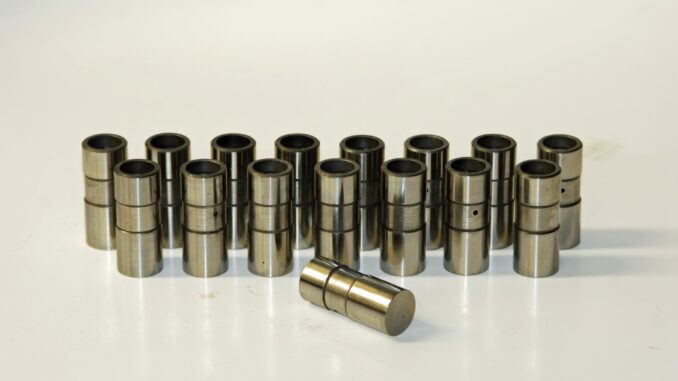

In a past issue we started to look at flat tappet cams and lifters. If you spin your browser back, you’ll find we examined some conventional and almost unobtanium technology used to make flat tappets work. This time around, we’ll look at geometry, machining and break in techniques.
It’s important to note that lifter to bore tolerances along with overall valve train geometry are critical – particularly when you consider that many of the engines using flat tappet lifters are decades old (case-in-point is the small block Chevy – the 265 is soon celebrating it’s 70th birthday). Another issue is core shift. Some engines are more plagued with the problem with others, but It’s not out of reason to sleeve a set of lifter bores to fix both wear, past damage and geometry issues. When lifter bore sleeves are installed, the machine shop sets the block up in a fixture, which in turn determines the angle of the reaming tool. Once the bores have been aligned and opened (oversize), sleeves (most often bronze) are pressed into place. The sleeves are then trimmed and beveled before they’re finish honed to size. In this way, the lifter bores can be blueprinted – providing proper lifter-to-bore clearance along with correct geometry. It should be noted that if the geometry is spot on, the bores look good, and the lifter-to-bore clearance is good, then all the bores need is a quick touch with a lifter-honing tool. Here, the idea is to create a smooth, crosshatched finish. Each machine shop will have their own ideas of how smooth the crosshatch will be, so keep that in mind.
Aside from cost and regulations, are there any advantages to using a flat tappet camshaft? Probably not. But there isn’t a huge difference in internal friction reduction by switching to a roller – perhaps 5 HP at the best. In fact, a flat tappet solid can, in many cases, actually out-power a hydraulic roller. That’s because a hydraulic roller is a pretty heavy piece of equipment. Add oil weight to the mix and you can see why it can be outgunned by a lightweight solid. You can rank the overall performance of cams in this way: The best is a solid roller, followed by a solid flat tappet, followed by a hydraulic roller with a hydraulic flat tappet at the bottom end of the scale. Loft is another issue. Loft is where the engine actually sees more lift than the cam provides. Essentially, it’s controlled valve float. You can get it in something like a NHRA Stock Eliminator engine, and what it does is to increase both lift and duration. As you can well imagine, it is possible to really hit a flat tappet cam [hard] to achieve loft – particularly in the case of a solid. It’s also possible to achieve loft with a hydraulic, but here, some of the short travel (small preload) hydraulic race lifters available today are the key. Not all folks subscribe to the “loft” concept though. And obviously for good reason.
In the end, when working with flat tappet combinations, it’s still critical to keep the lifters and the lobes in order when rebuilding an engine. They still need to be acquainted with one another. The same applies to the old rule of engines requiring new lifters with a new camshaft. Nothing here has changed. And neither have the camshaft break-in procedures of old:
1. Before installation in the engine, the camshaft should be cleaned with mineral spirits or washed with solvent. Inspect the cam for defects (deep scratches, lobe damage, etc.). Inspect the lobes, the bearing journals and the distributor gear carefully. It’s a good idea to re-wash the cam with hot soapy water and fully dry prior to installation.
2. Liberally coat the camshaft (lobes, journals and distributor gear) and the lifters with the installation lube provided by the manufacturer. If you do not have lube supplied by the camshaft manufacturer, use some form of high-pressure lubricant such as molybdenum disulphide.
3. When using dual valve springs, always remove the inner valve spring during break in. If using a high load single spring, replace it with a lighter spring during break-in.
4. Use a fresh oil filter and use high quality engine oil with a good amount of Zinc in the oil (see the sidebar).
5. Once the cam and lifters have been installed, it’s a good idea to directly pour a bottle of cam break-in lube directly over the camshaft and lifters (by way of the lifter valley. Years ago, GM EOS (Engine Oil Supplement) was the break in lube of choice, however it may have lost much of its punch due to reductions in Zinc.
6. Set the timing (statically) as close as is possible. The same applies to the carburetor settings and the basic lash. The break in time is not the time to tune the engine. The idea here is to get it to fire quickly and get up to a high idle speed quickly.
7. Set the car up in such a manner that you can keep it relatively cool. Keep in mind it will be operating at higher-than-normal engine speeds during the break-in. An old trick is to place a couple of large volume 110-volt electric fans in front of the radiator to aid in cooling. A slow running water hose directed at the radiator core also helps (just be sure the running water and the running 110-volt fan cords don’t mix).
8. Once the engine fires bring the rpm up to 2,000 to 2,500 during the first 30 minutes of operation. Vary the RPM from 2,000 to 2,500 periodically so that oil splash is directed at different parts of the camshaft. Some engines (a big block Chevy is but one example) tend to have internal windage patterns that starve camshaft journals from oil spray at specific engine RPM ranges.
9. Once the 30-minute break-in is complete, change the oil and the filter once again. Always use good quality oil with high amounts of Zinc, including (but not limited to) Brad Penn, Joe Gibbs, Valvoline R, Redline, Lucas and others.
10. Replace the inner valve springs (or swap in the regular springs). Re-lash the camshaft. At this point you can tune the carburetor and ignition timing.

Here’s a comparison of three Comp Cams’ lifters. As you can see the performance jobs (non EDM and EDM) are similar in layout. The tool steel lifter on the right is not. FYI, the tool steel models are extreme quality and as you can well imagine, not inexpensive. 
Lunati offers a number of different solid lifters. These are actually EDM jobs with some surprises. More in the next photos: 
As pointed out in the text, there are a couple of takes on EDM lifters. They can be purchased with a center EDM hole as shown here. 
Lifters can also be purchased with an offset EDM hole. The choice is yours. As the text notes, some engine builders prefer the offset hole. Others mandate the centered oiling hole.
Sidebar: Zinc Based Additives
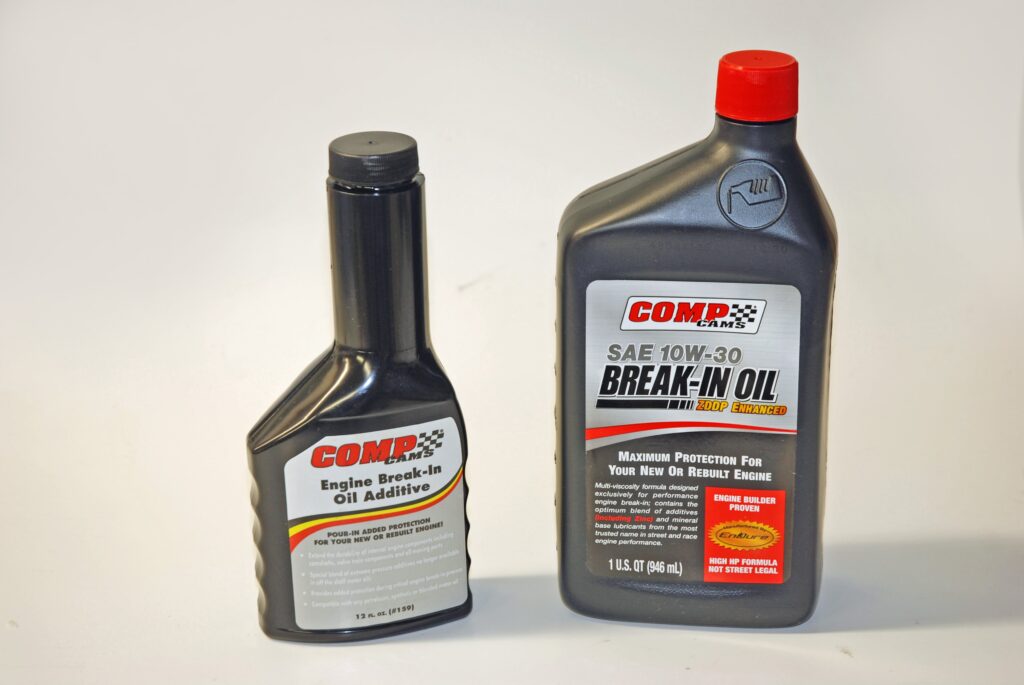
When it comes to flat tappets, oil is the key. And not just the oil, but also the additives contained within. As Detroit moved away from flat tappets, the major oil companies followed suit with their additive packages. For decades, one of those additive packages included a compound called “Zinc Dialkyl-Dithio-Phosphate”, or ZDDP for short. Zinc-based additives include anti-wear/anti-oxidant properties. It’s idea for engines – particularly those fitted with flat tappet cams. ZDDP was a standard additive in motor oil all deep into the nineties.
But there was a hitch: Phosphate found in the additive doesn’t play nice with catalytic converters. As pointed out above, roller cams pretty much became standard across the board in the auto industry. It was two-pronged assault on ZDDP – and at the same time, it also helped automotive manufacturers meet mandatory emission control warranties. But no one considered the tens of thousands (millions?) of vehicles on the road or in garages with flat tappet camshafts. And no one told the aftermarket cam manufacturers that the additive packages were modified. Engine havoc was the operative word. Camshaft manufacturers took the brunt of it (and undeservedly).
As it turns out, a few oil companies began to pay attention. Several of them now offer quality oils with comprehensive additive packages (including ZDDP) designed for use with flat tappet camshafts. Brad Penn, Joe Gibbs Driven Competition Cams and Valvoline VR are four examples with mineral-based (and in some cases, synthetic-based) oils with satisfactory ZDDP additives. Red Line oil has several synthetic lubes with ZDDP additives (keep in mind that you should not break an engine in with synthetic – most experts recommend you start with mineral oil). Additionally, Comp Cams, Red Line Oil, Lucas Oil and others offer ZDDP in additive form to allow you to treat regular oil.
Leave a Reply