




![[Gallery] Mecum Kissimmee Auction 2026](https://www.racingjunk.com/news/wp-content/uploads/2026/03/DSC_0717-e1774629242515-376x206.jpg)
![[Gallery] Cruisin’ One Daytona](https://www.racingjunk.com/news/wp-content/uploads/2026/03/DSC_0538-e1774027057404-376x206.jpg)



What's So Special About this (NHRA Required) Dipstick?
Click Here to Begin Slideshow
Decades ago I had a big block-powered Impala beater I used as a daily driver. It was an old high mileage neglected four door. The price was right. Gas was cheap. And it was tired. Just before I retired it, the rad developed a leak and some of the engine coolant actually entered the trans cooler. In turn, this allowed anti-freeze to contaminate the transmission fluid. In the Impala’s final days, it would regularly push the transmission dipstick right out of the tube, and shower the firewall with hot oil and coolant. This can also occur when the transmission vent is simply plugged.
Fair enough. It was an old, well-used and abused car, but the scenario where a transmission dipstick is pushed out of a tube isn’t all that uncommon. As you can well imagine, at a drag strip (or even on the street when you get on the gas), it can cause all sorts of chaos because the fluid can easily find its way under the back tires. You know what can happen next. And it is because of this, locking dipsticks are mandatory in many drag race classes:
According to the NHRA Rulebook (section 2:14 of the General Regulations): “All cars running 10.99 (*6.99 “in the 1/8 mile”) seconds and quicker must have an NHRA-accepted locking-type dipstick on the transmission, and dipstick tubes must be securely fastened (i.e., bolted, aircraft clamped). Wire ties, hose clamps, etc. prohibited.”
When you peruse the “accepted” list, you’ll find a number of different manufacturers. ATI and many of the other manufacturers on the list purchase their locking dipsticks from a company called “Masta Performance Inc.” (https://mastaperformance.com). Dan Masta was the originator of the Trick Stick, and his company has been building them for decades. Now, you might not know this, but in local Michigan circles, Masta developed a reputation as the go-to guy for Powerglides. Local lore tells us how it was a pretty common site to see Dan rebuilding a racer’s transmission in the pits during an event. And keep in mind, Masta was and still is a drag racer.
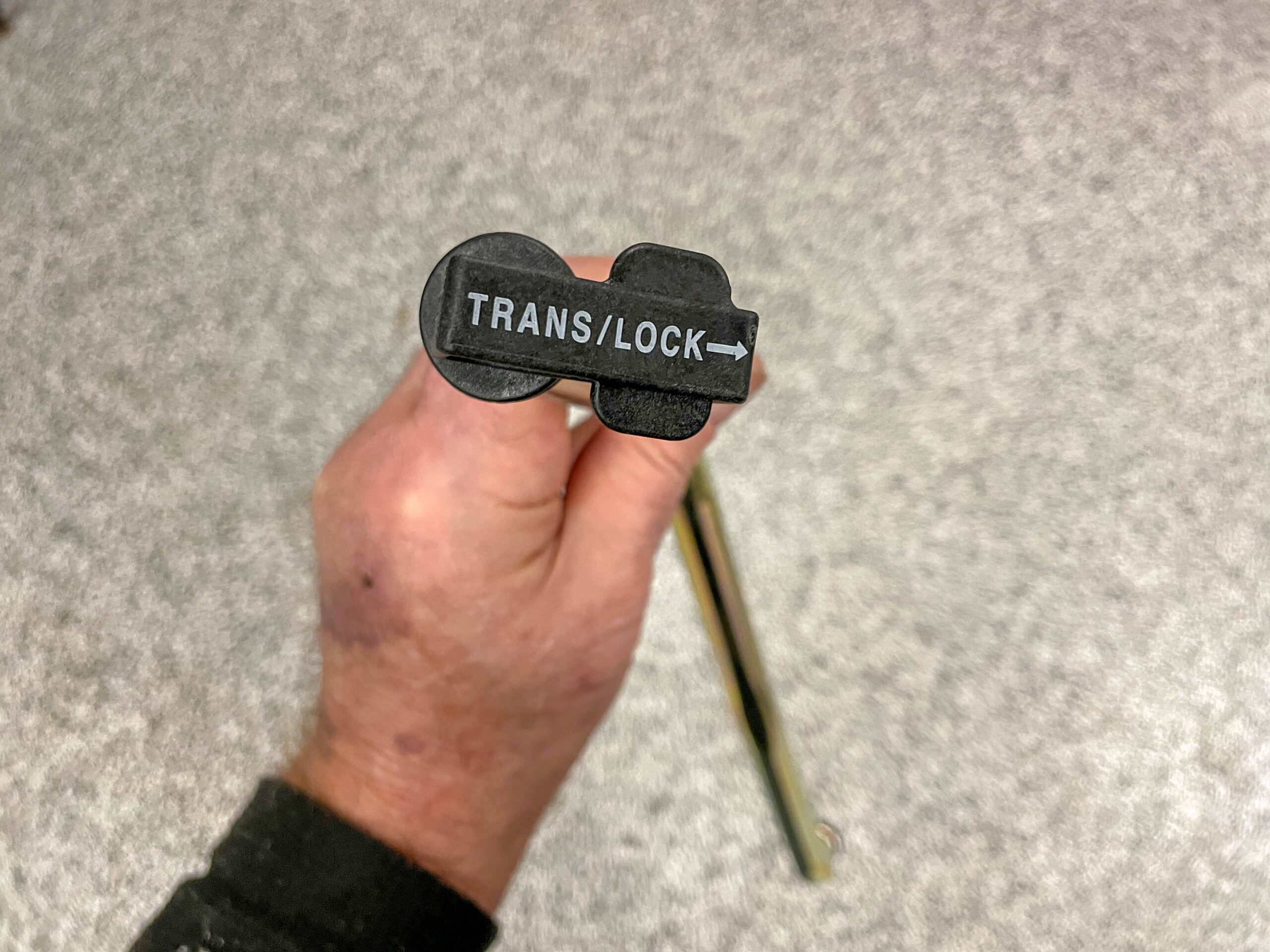
And since Dan was (and is) a drag racer, he too needed a locking dipstick. So he built one. Over the course of time, that led to the development of a wide range of custom dipstick tubes complete with calibrated, locking handles. As of this writing, Masta Performance offers at least 40(!) different examples – 9 alone for various Powerglide applications. And if you have a special dipstick and tube setup that has everyone else baffled, Masta can custom build it.
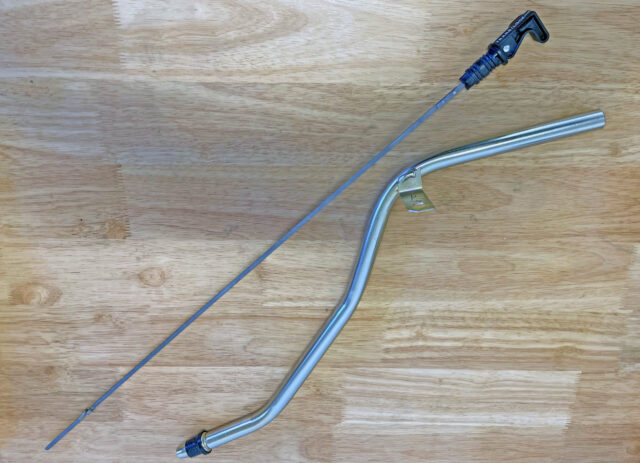
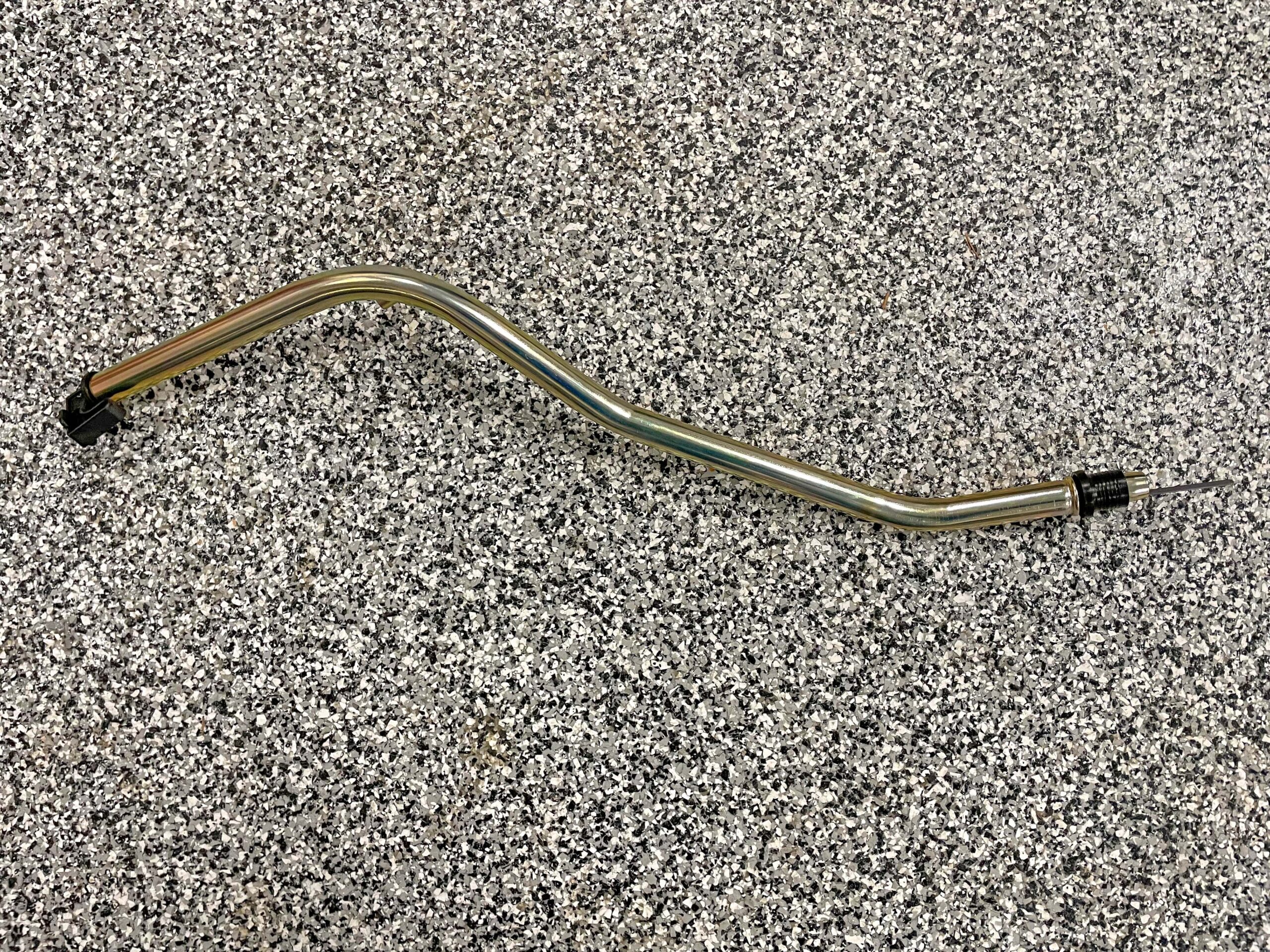
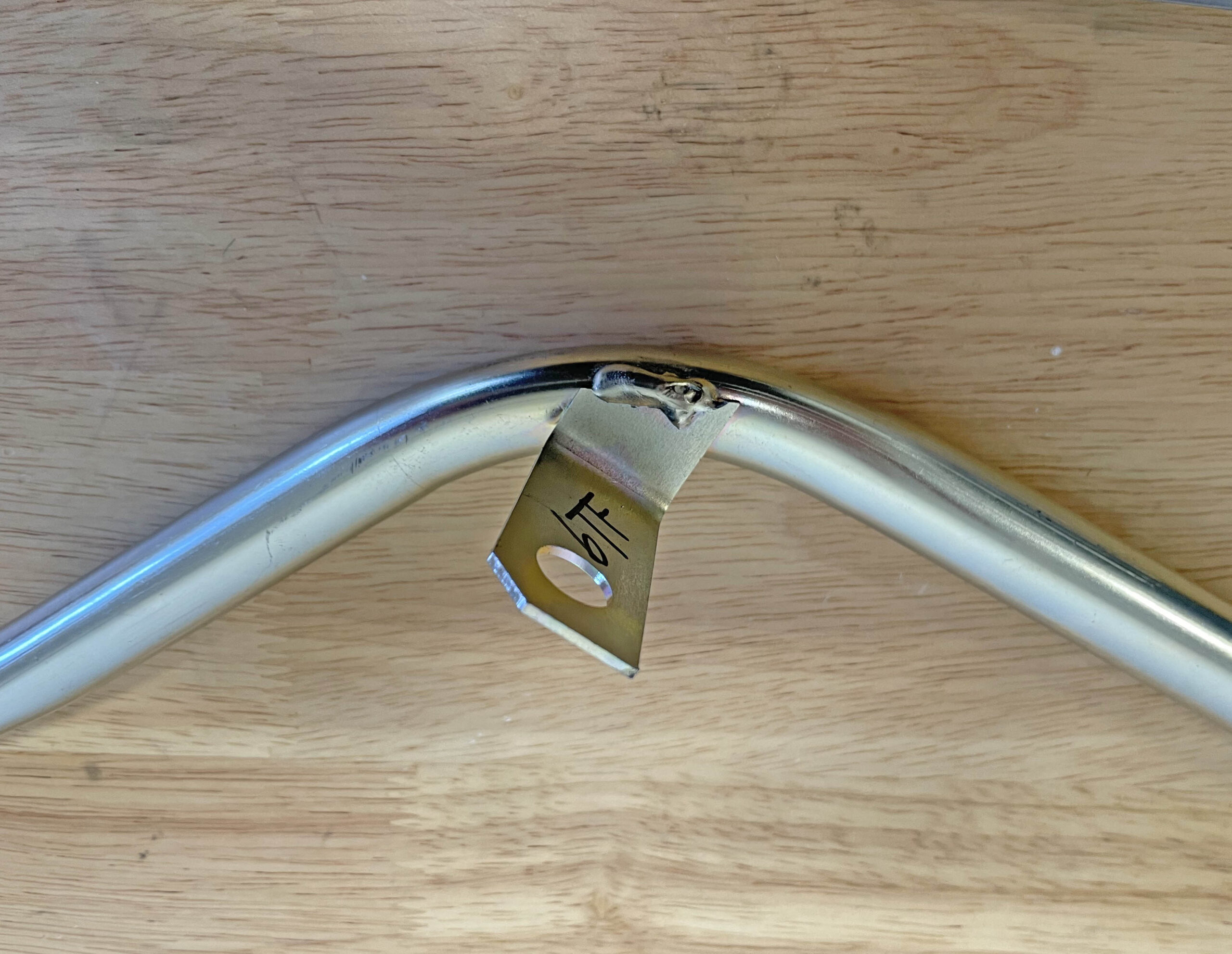
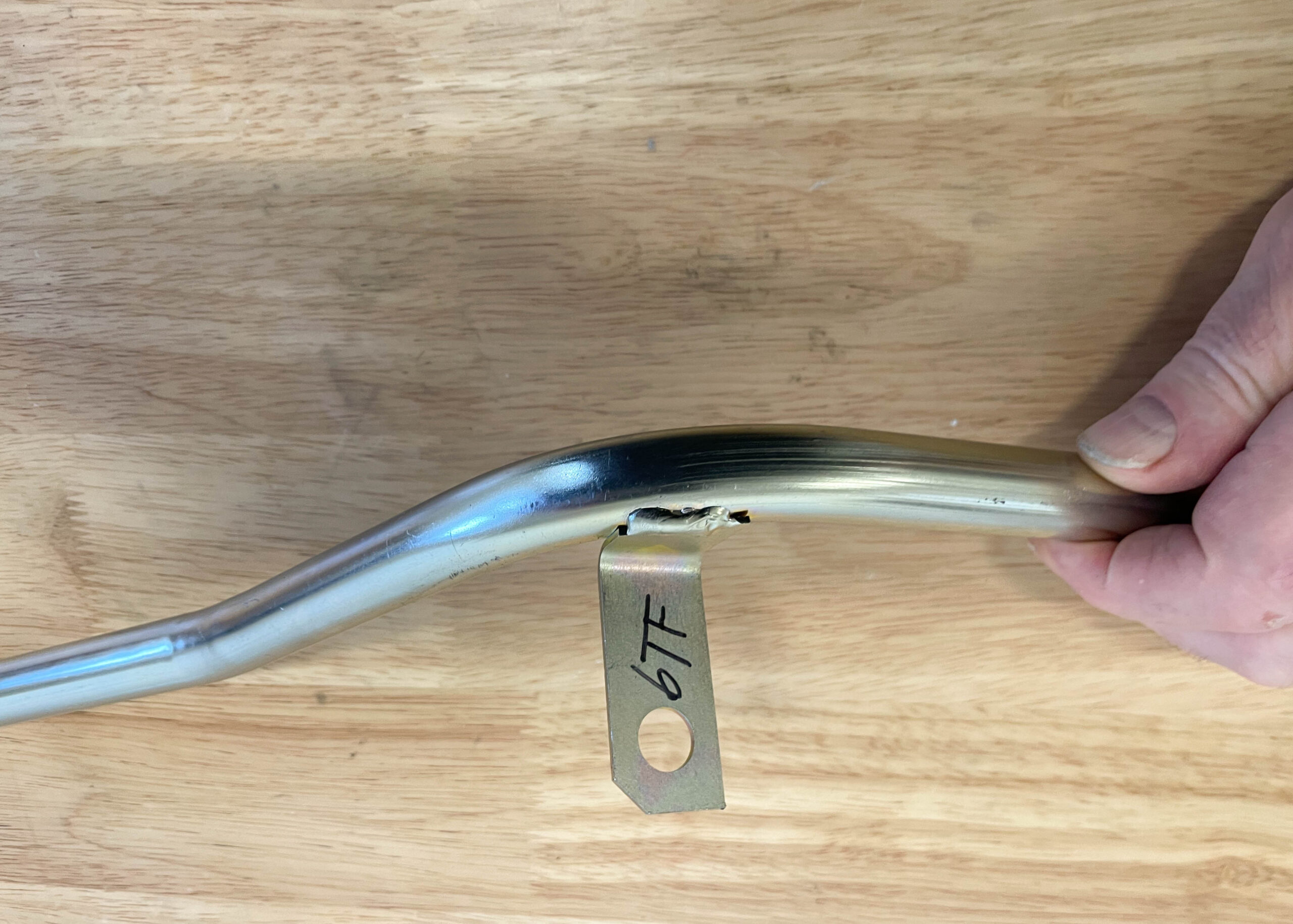
Off the shelf Trick Sticks all have custom bent tubes. All are designed so that they affix to the transmission or engine solidly (per the regulations). With off the shelf examples, the tubes are zinc plated (see the accompanying photos). Custom tubes are not plated (although they can be by request). Each assembly comes with a calibrated dipstick and each of them is manufactured with a locking tab. At the bottom end, each tube comes with a boot style seal. FYI, many OEM transmission dipstick tubes use a more leak-prone o-ring. We’ll give you a tip on installation in the accompanying photo captions.
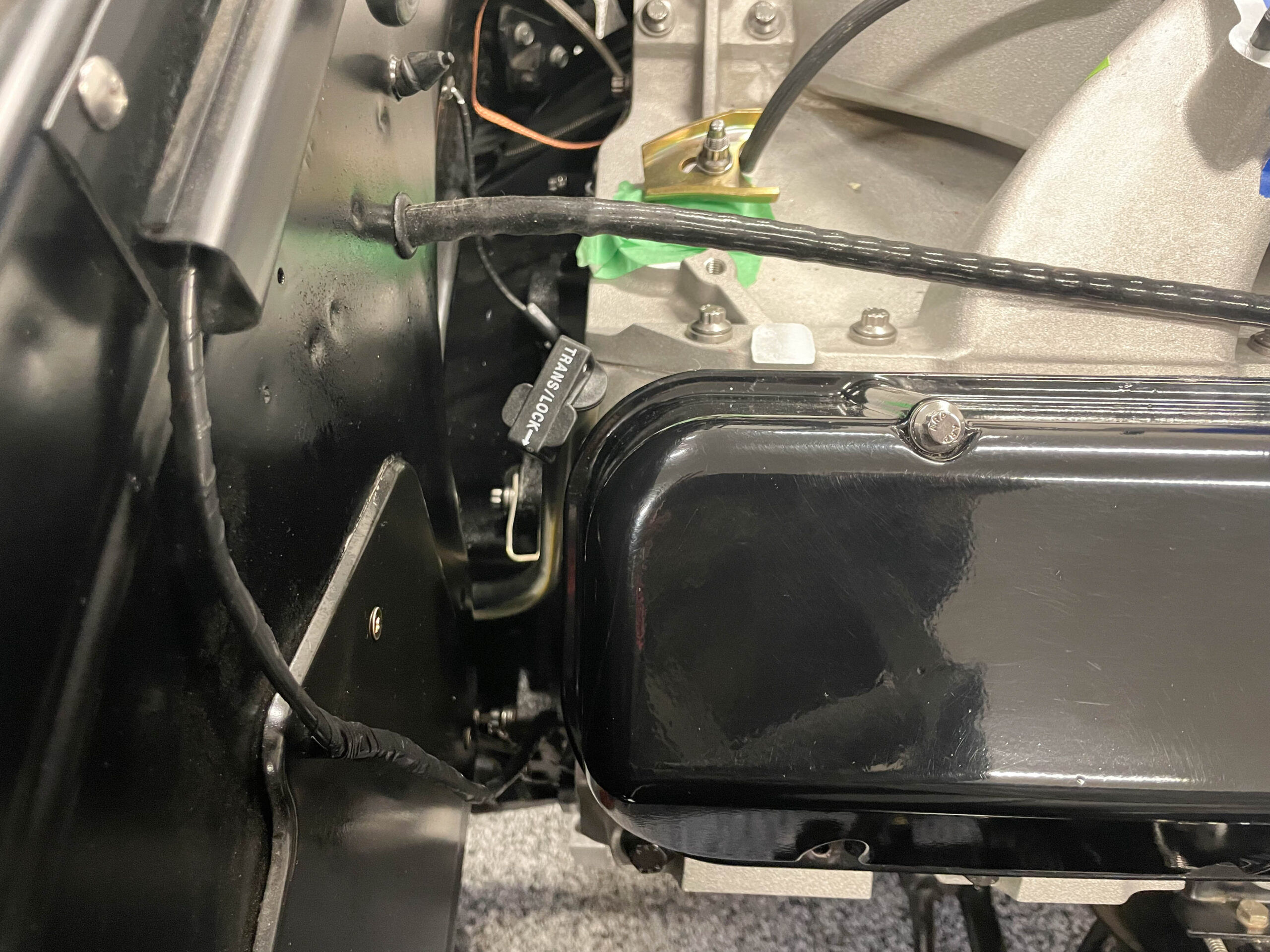
Some cars, such as the writer’s BBC powered Nova have relatively tight confines when it comes to the dipstick tube. Fortunately, Masta offers a special “Tight Fit” tube just for this application. Essentially, it follows the contour of the transmission and bellhousing. Topside, it snugs up right behind the top rear corner of the valve cover. It’s out of the way. Valve cover access is good and there’s still room to insert a funnel and fill the transmission. To get the tube in place requires minimal “garage gymnastics”. We found it was easy to slide it from the bottom up.
In the end, the Masta Performance Trick Stick is an inexpensive, solid solution to an age-old dilemma. It addresses the NHRA rules directly and the made-in-the-USA components are readily available. And by the way, Masta Performance also manufactures engine oil dipsticks for a number of applications (along with specialty Powerglide components). For a closer look at the Trick Stick, check out the accompanying photos:
Click Here to Begin Slideshow
Decades ago I had a big block-powered Impala beater I used as a daily driver. It was an old high mileage neglected four door. The price was right. Gas was cheap. And it was tired. Just before I retired it, the rad developed a leak and some of the engine coolant actually entered the trans cooler. In turn, this allowed anti-freeze to contaminate the transmission fluid. In the Impala’s final days, it would regularly push the transmission dipstick right out of the tube, and shower the firewall with hot oil and coolant. This can also occur when the transmission vent is simply plugged.
Fair enough. It was an old, well-used and abused car, but the scenario where a transmission dipstick is pushed out of a tube isn’t all that uncommon. As you can well imagine, at a drag strip (or even on the street when you get on the gas), it can cause all sorts of chaos because the fluid can easily find its way under the back tires. You know what can happen next. And it is because of this, locking dipsticks are mandatory in many drag race classes:
According to the NHRA Rulebook (section 2:14 of the General Regulations): “All cars running 10.99 (*6.99 “in the 1/8 mile”) seconds and quicker must have an NHRA-accepted locking-type dipstick on the transmission, and dipstick tubes must be securely fastened (i.e., bolted, aircraft clamped). Wire ties, hose clamps, etc. prohibited.”
When you peruse the “accepted” list, you’ll find a number of different manufacturers. ATI and many of the other manufacturers on the list purchase their locking dipsticks from a company called “Masta Performance Inc.” (https://mastaperformance.com). Dan Masta was the originator of the Trick Stick, and his company has been building them for decades. Now, you might not know this, but in local Michigan circles, Masta developed a reputation as the go-to guy for Powerglides. Local lore tells us how it was a pretty common site to see Dan rebuilding a racer’s transmission in the pits during an event. And keep in mind, Masta was and still is a drag racer.
And since Dan was (and is) a drag racer, he too needed a locking dipstick. So he built one. Over the course of time, that led to the development of a wide range of custom dipstick tubes complete with calibrated, locking handles. As of this writing, Masta Performance offers at least 40(!) different examples – 9 alone for various Powerglide applications. And if you have a special dipstick and tube setup that has everyone else baffled, Masta can custom build it.
Off the shelf Trick Sticks all have custom bent tubes. All are designed so that they affix to the transmission or engine solidly (per the regulations). With off the shelf examples, the tubes are zinc plated (see the accompanying photos). Custom tubes are not plated (although they can be by request). Each assembly comes with a calibrated dipstick and each of them is manufactured with a locking tab. At the bottom end, each tube comes with a boot style seal. FYI, many OEM transmission dipstick tubes use a more leak-prone o-ring. We’ll give you a tip on installation in the accompanying photo captions.
Some cars, such as the writer’s BBC powered Nova have relatively tight confines when it comes to the dipstick tube. Fortunately, Masta offers a special “Tight Fit” tube just for this application. Essentially, it follows the contour of the transmission and bellhousing. Topside, it snugs up right behind the top rear corner of the valve cover. It’s out of the way. Valve cover access is good and there’s still room to insert a funnel and fill the transmission. To get the tube in place requires minimal “garage gymnastics”. We found it was easy to slide it from the bottom up.
In the end, the Masta Performance Trick Stick is an inexpensive, solid solution to an age-old dilemma. It addresses the NHRA rules directly and the made-in-the-USA components are readily available. And by the way, Masta Performance also manufactures engine oil dipsticks for a number of applications (along with specialty Powerglide components). For a closer look at the Trick Stick, check out the accompanying photos:
Click Here to Begin Slideshow
Great thing!
Need to see your Nova! 🙂