




![[Gallery] Mecum Kissimmee Auction 2026](https://www.racingjunk.com/news/wp-content/uploads/2026/03/DSC_0717-e1774629242515-376x206.jpg)
![[Gallery] Cruisin’ One Daytona](https://www.racingjunk.com/news/wp-content/uploads/2026/03/DSC_0538-e1774027057404-376x206.jpg)




WE HAUL! Trailering Info & Tips
Click Here to Begin Slideshow
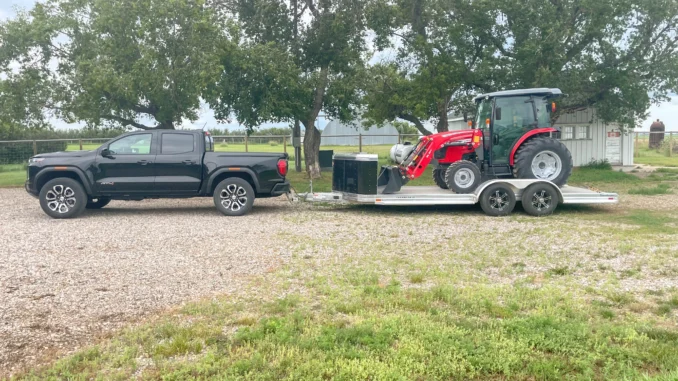
If you’re staring at the opening photo of this article…. No, you haven’t accidentally tuned into "Farm and Ranch Digest” L-O-L, but I recently picked up a new tractor with my truck and aluminum race car trailer. Some of what I discovered is really of interest to anyone out there towing a car or truck or even a tractor. Check it out:
Trailers are part and parcel of our hobby and industry. They’re one of the most important (if not the most important) pieces of equipment you have in your arsenal aside from your race car or hot rod. It’s no secret trailers, tow vehicles, hitches and other trailering accessories have a come a long ways over years gone by. In the old days, it wasn’t uncommon to hook a trailer to the back of a tow vehicle (pickup truck, Suburban, station wagon or even an El Camino) and go racing. Where the car fit on the trailer is where it fit. You strapped or chained it down and called it a day. Back then there were often some white knuckles coupled with a death grip on the steering wheel while towing. A lot of it had to do with the equipment and how it was loaded.
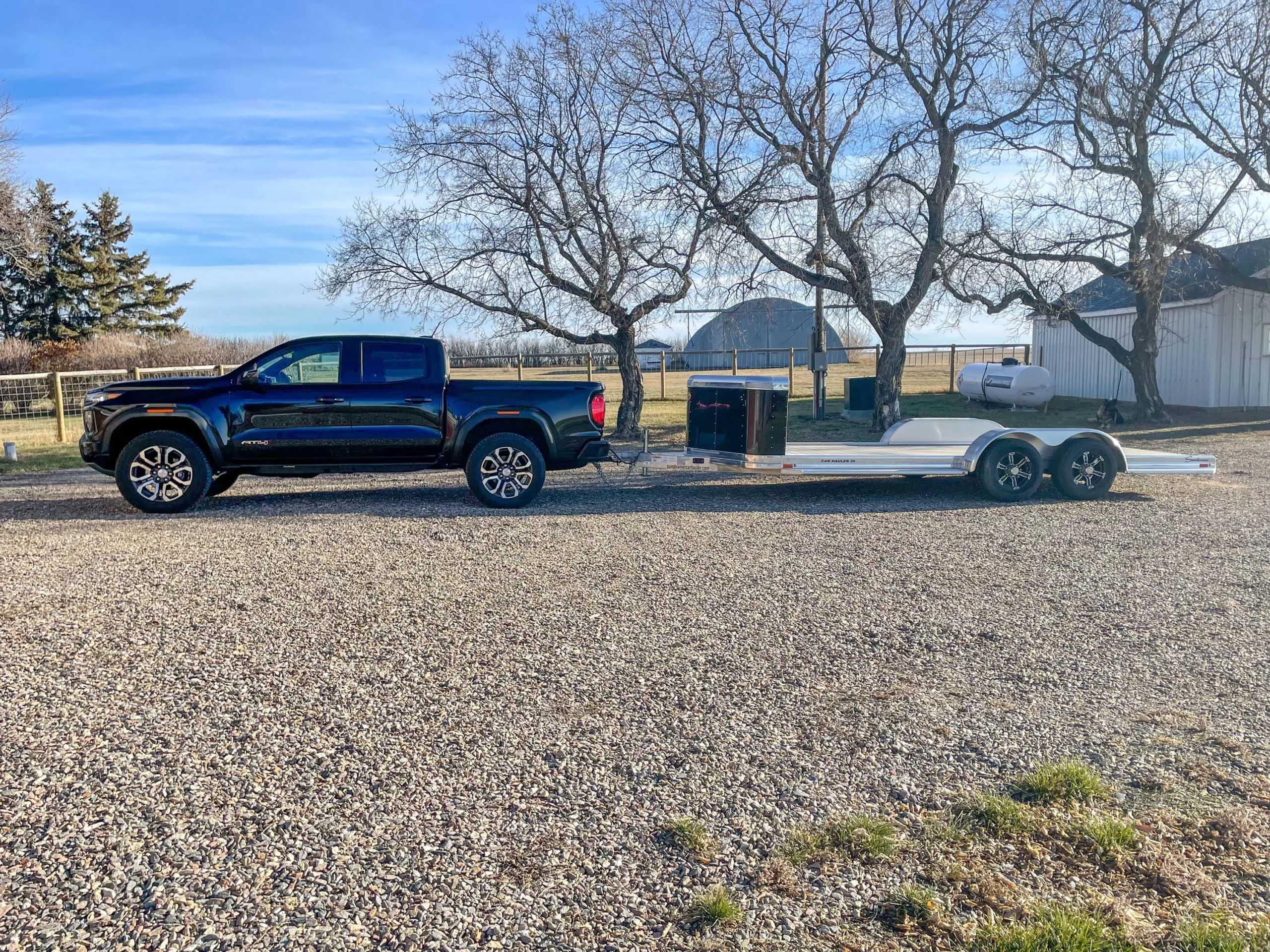
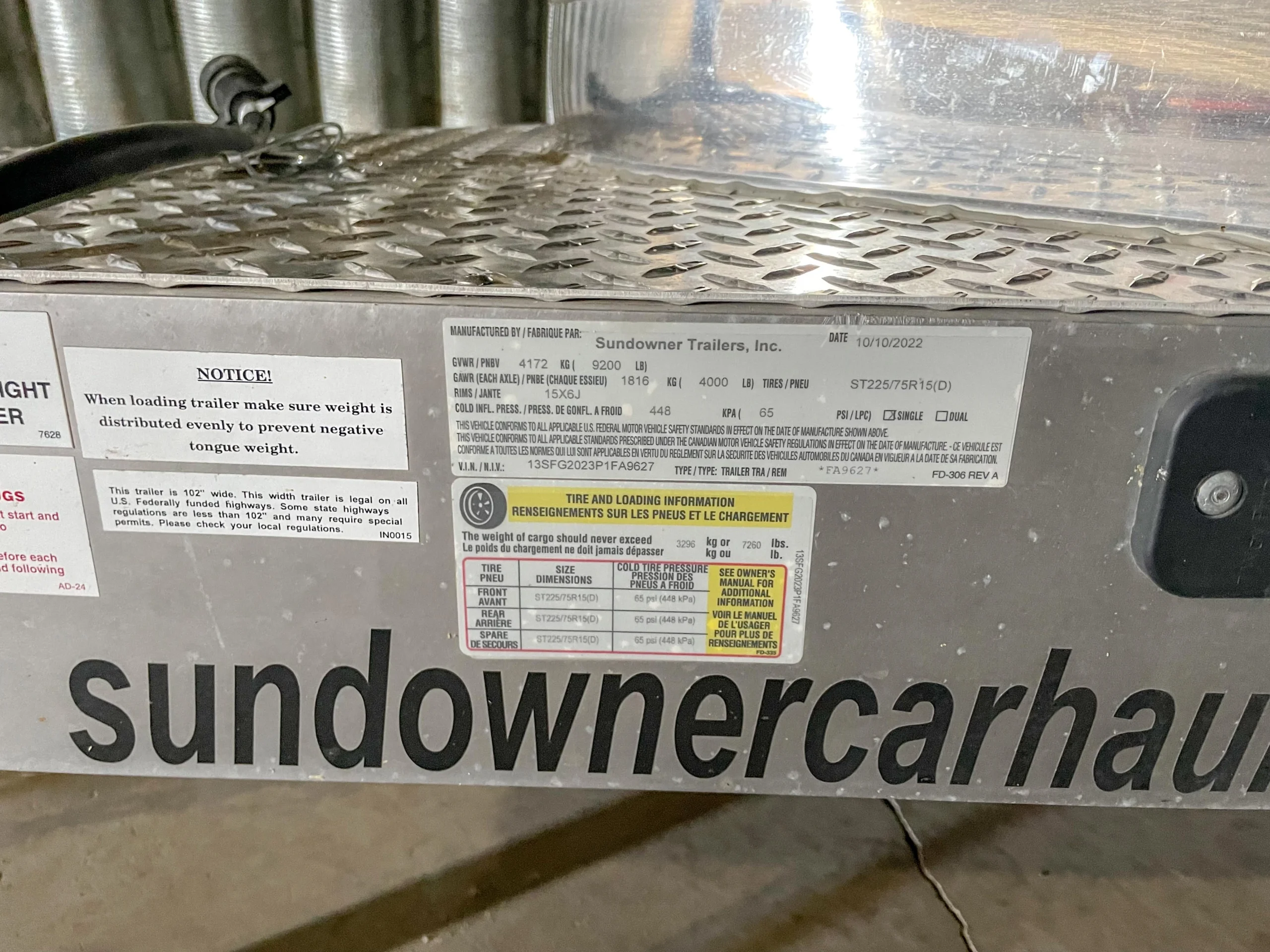
The place to begin is with the tow vehicle. Honestly, the bigger the tow truck, the more fudge factor you have when it comes to trailering. However, the margin for error gets quite a bit smaller once the tow capacity of the truck and the weight of the loaded trailer become much closer. A good example is my personal experience. Over the years, I’ve downsized from full size trucks (crew cab duallys) right down to smaller trucks like my current GMC Canyon. In order to tow with the Canyon, I use a lighter weight car trailer (in my case, an all-aluminum 20-foot Sundowner). I also have to watch loading and over weights very carefully. Here’s why: The truck has a trailer towing capacity of 7,700 pounds. The trailer has a maximum loaded weight of 9,200 pounds, with a capacity of 7,260 pounds (this is actually the total tire load capacity). I certainly can’t max out the trailer and tow it with the Canyon. Fair enough, the numbers tell the story: When I do the math, the maximum load weight the Canyon can handle on my trailer is 5740 pounds (7700 pound capacity minus 1960 pound trailer weight equals 5740 pounds). Also, figure in weight of the passengers, tools and so on and it’s easy to see where it can become overloaded. And like many folks who have pulled car trailers through all sorts of conditions, you’re far better off having a wee bit of “extra” left over. I personally like that “extra” to be 1,000 pounds or so under the max capacity, just for insurance.
Seasoned towers might scoff at using a new “small” truck for trailer towing, but small is really relevant today. Today’s “small” trucks are actually very similar in size, capability and specification when compared to full size trucks from the nineties. In fact, I surprised myself when I compared my current GMC to a 1989 Silverado I once owned (and one I towed with across the country and over and around the Rocky Mountains more than once). It was a real eye opener!
These are some towing-relevant specifications: The turbo four cylinder Canyon has more power and considerably more torque than the old Silverado with a 350 (granted, the power comes in a higher RPM level): The turbo 4 has 310 HP at 5,600 RPM. Silverado had 210 HP at 4,000 RPM. Turbo 4 has 430 foot pounds of torque at 3,000 RPM. Silverado had 300 foot pounds at 2,800 RPM. In terms of brake sizes, the Canyon comes with 13.4-inch front and 13.3-inch diameter rear rotors. Meanwhile the old Silverado came equipped with 11.57-inch diameter front rotors and 10-inch rear brake drums. The Canyon wears much larger P275-60R20 tires while the old Silverado was fitted with P225-75R15 skins. The Canyon weighs approximately 4670 pounds (curb) while the old Silverado was also (somewhere) in the range of 4,400-4,600 pounds at the curb (it was a 2WD; the Canyon is a 4X4). The old Silverado had a GCVW (Gross Combined Vehicle Weight) rating of 12,500 pounds with a 3.73:1 rear gear. Doing the math (12,500-pounds minus curb weight of 4,600 pounds) the Silverado’s towing capability was approximately 7,900 pounds, not counting passengers and other items in the truck. As you can clearly see, the specs are almost in favor of the late model. To me at least, it’s very interesting to see how a “little” ½ ton truck from today compares to a “big” ½ ton truck from yesteryear.
Aside from an interesting comparison, is there a moral here? Absolutely. Before you even begin to think about towing, spend some time figuring out what your specifications are for your tow truck and your trailer along with estimated weights for your load(s). This is also extremely important if you are shopping for a new truck and/or a new trailer. Vehicle manufacturers all list trailer capabilities for their respective trucks. As pointed out above if you’re looking at an older truck you might have to crunch numbers because manufacturers tended to publish GCVW or GCVWR in place of towing capacity. If you’re shopping used, the World Wide Web is a good place to track down the specifications. Similarly, trailer manufacturers also publish specifications for their specific products.
One more item you should consider when truck shopping is tires (seriously). We’ll get into trailer tongue weights in the next issue, but typically trailer tongue weight figures should be in the range of 10-15% of the total weight of the trailer and the load. If your loaded trailer weighs (for example) 6,000 pounds the correct tongue weight will be in the range of 600 to 750 pounds. That’s pretty much the load placed on the back tires of your truck. On my Canyon example, the maximum tire load at full PSI is 2,650 or so pounds (each). The truck has a payload capacity (contents, passengers and including trailer tongue weight) of 1,431 pounds. So, there’s a lot of fudge factor available here for my application when it comes to tire capability.
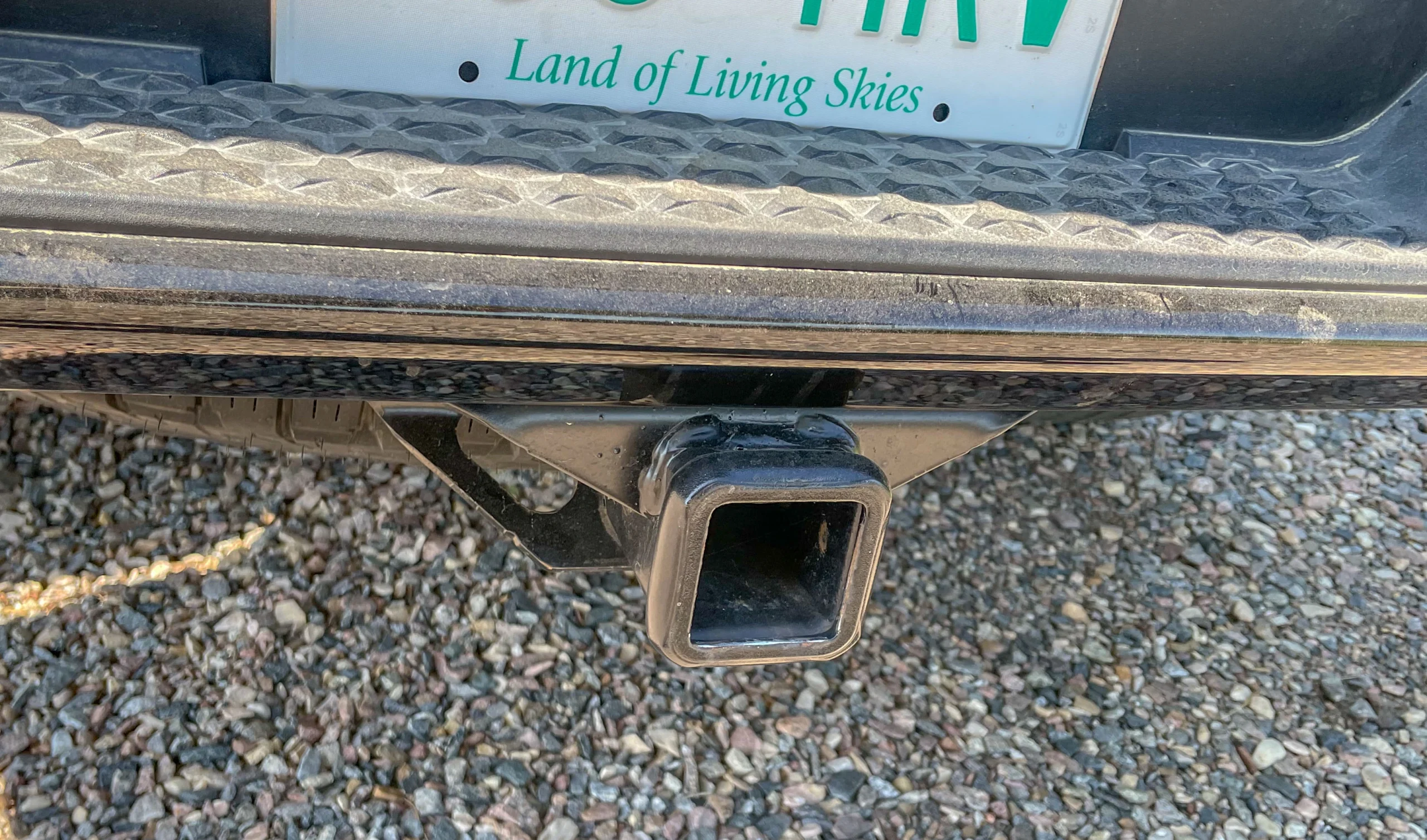
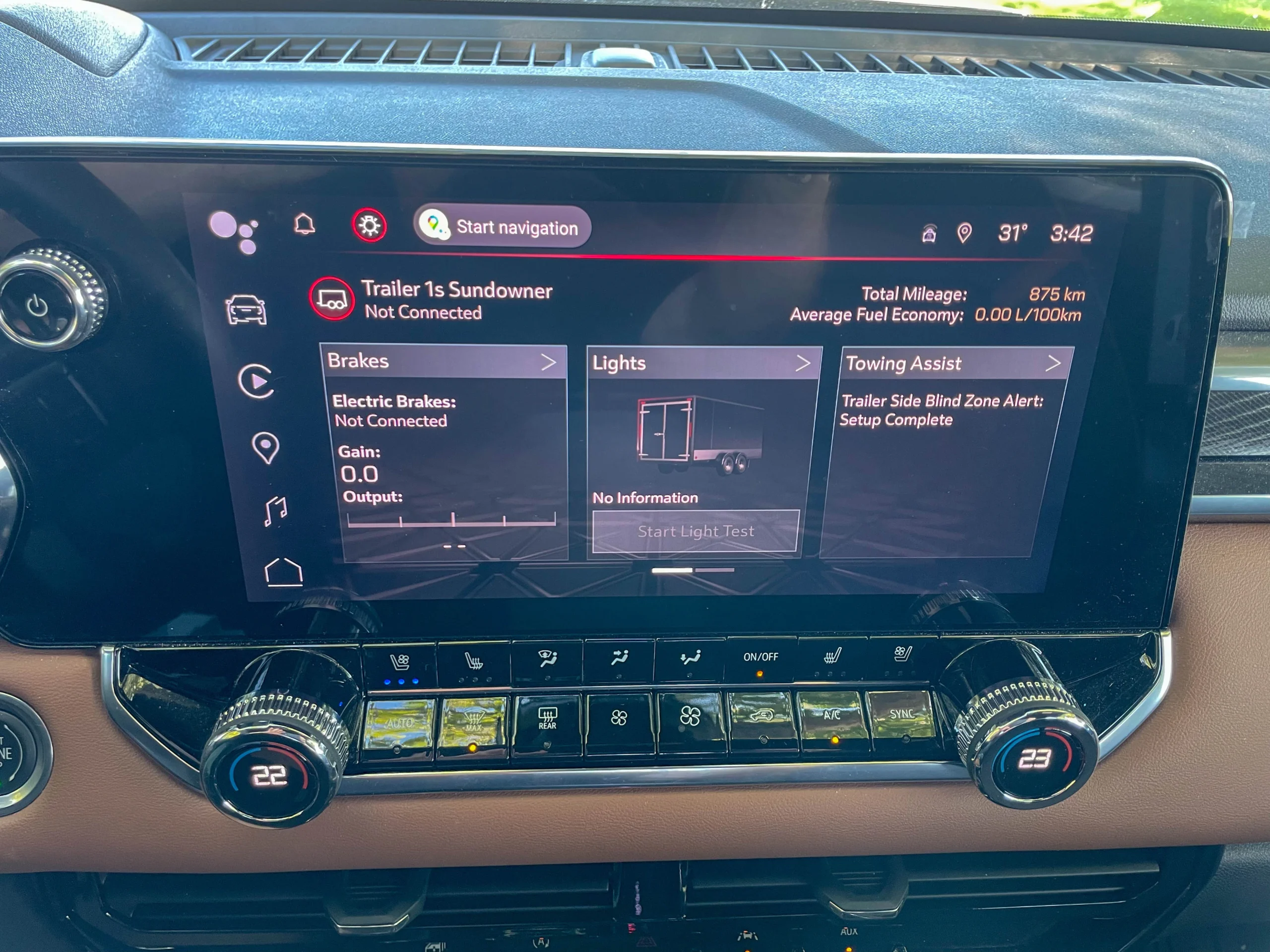
That’s a wrap for this issue. Next time around we’ll look at hitches, take a deep dive into tongue weight and examine some very basic trailer features you might want to consider. Watch for it. In the meantime, check out the accompanying photos and captions:
Click Here to Begin Slideshow
If you’re staring at the opening photo of this article…. No, you haven’t accidentally tuned into "Farm and Ranch Digest” L-O-L, but I recently picked up a new tractor with my truck and aluminum race car trailer. Some of what I discovered is really of interest to anyone out there towing a car or truck or even a tractor. Check it out:
Trailers are part and parcel of our hobby and industry. They’re one of the most important (if not the most important) pieces of equipment you have in your arsenal aside from your race car or hot rod. It’s no secret trailers, tow vehicles, hitches and other trailering accessories have a come a long ways over years gone by. In the old days, it wasn’t uncommon to hook a trailer to the back of a tow vehicle (pickup truck, Suburban, station wagon or even an El Camino) and go racing. Where the car fit on the trailer is where it fit. You strapped or chained it down and called it a day. Back then there were often some white knuckles coupled with a death grip on the steering wheel while towing. A lot of it had to do with the equipment and how it was loaded.
The place to begin is with the tow vehicle. Honestly, the bigger the tow truck, the more fudge factor you have when it comes to trailering. However, the margin for error gets quite a bit smaller once the tow capacity of the truck and the weight of the loaded trailer become much closer. A good example is my personal experience. Over the years, I’ve downsized from full size trucks (crew cab duallys) right down to smaller trucks like my current GMC Canyon. In order to tow with the Canyon, I use a lighter weight car trailer (in my case, an all-aluminum 20-foot Sundowner). I also have to watch loading and over weights very carefully. Here’s why: The truck has a trailer towing capacity of 7,700 pounds. The trailer has a maximum loaded weight of 9,200 pounds, with a capacity of 7,260 pounds (this is actually the total tire load capacity). I certainly can’t max out the trailer and tow it with the Canyon. Fair enough, the numbers tell the story: When I do the math, the maximum load weight the Canyon can handle on my trailer is 5740 pounds (7700 pound capacity minus 1960 pound trailer weight equals 5740 pounds). Also, figure in weight of the passengers, tools and so on and it’s easy to see where it can become overloaded. And like many folks who have pulled car trailers through all sorts of conditions, you’re far better off having a wee bit of “extra” left over. I personally like that “extra” to be 1,000 pounds or so under the max capacity, just for insurance.
Seasoned towers might scoff at using a new “small” truck for trailer towing, but small is really relevant today. Today’s “small” trucks are actually very similar in size, capability and specification when compared to full size trucks from the nineties. In fact, I surprised myself when I compared my current GMC to a 1989 Silverado I once owned (and one I towed with across the country and over and around the Rocky Mountains more than once). It was a real eye opener!
These are some towing-relevant specifications: The turbo four cylinder Canyon has more power and considerably more torque than the old Silverado with a 350 (granted, the power comes in a higher RPM level): The turbo 4 has 310 HP at 5,600 RPM. Silverado had 210 HP at 4,000 RPM. Turbo 4 has 430 foot pounds of torque at 3,000 RPM. Silverado had 300 foot pounds at 2,800 RPM. In terms of brake sizes, the Canyon comes with 13.4-inch front and 13.3-inch diameter rear rotors. Meanwhile the old Silverado came equipped with 11.57-inch diameter front rotors and 10-inch rear brake drums. The Canyon wears much larger P275-60R20 tires while the old Silverado was fitted with P225-75R15 skins. The Canyon weighs approximately 4670 pounds (curb) while the old Silverado was also (somewhere) in the range of 4,400-4,600 pounds at the curb (it was a 2WD; the Canyon is a 4X4). The old Silverado had a GCVW (Gross Combined Vehicle Weight) rating of 12,500 pounds with a 3.73:1 rear gear. Doing the math (12,500-pounds minus curb weight of 4,600 pounds) the Silverado’s towing capability was approximately 7,900 pounds, not counting passengers and other items in the truck. As you can clearly see, the specs are almost in favor of the late model. To me at least, it’s very interesting to see how a “little” ½ ton truck from today compares to a “big” ½ ton truck from yesteryear.
Aside from an interesting comparison, is there a moral here? Absolutely. Before you even begin to think about towing, spend some time figuring out what your specifications are for your tow truck and your trailer along with estimated weights for your load(s). This is also extremely important if you are shopping for a new truck and/or a new trailer. Vehicle manufacturers all list trailer capabilities for their respective trucks. As pointed out above if you’re looking at an older truck you might have to crunch numbers because manufacturers tended to publish GCVW or GCVWR in place of towing capacity. If you’re shopping used, the World Wide Web is a good place to track down the specifications. Similarly, trailer manufacturers also publish specifications for their specific products.
One more item you should consider when truck shopping is tires (seriously). We’ll get into trailer tongue weights in the next issue, but typically trailer tongue weight figures should be in the range of 10-15% of the total weight of the trailer and the load. If your loaded trailer weighs (for example) 6,000 pounds the correct tongue weight will be in the range of 600 to 750 pounds. That’s pretty much the load placed on the back tires of your truck. On my Canyon example, the maximum tire load at full PSI is 2,650 or so pounds (each). The truck has a payload capacity (contents, passengers and including trailer tongue weight) of 1,431 pounds. So, there’s a lot of fudge factor available here for my application when it comes to tire capability.
That’s a wrap for this issue. Next time around we’ll look at hitches, take a deep dive into tongue weight and examine some very basic trailer features you might want to consider. Watch for it. In the meantime, check out the accompanying photos and captions:
Click Here to Begin Slideshow
Great info…keep it coming.