





Fuel injection is common on racing engines for motorsports. It takes some work to get set up and dialed in, but the speed and repeatability it achieves is phenomenal. Earlier fuel injected setups used a mechanical fuel injection system to power their engines. Newer setups can use electronic components to automate the process. Both have their strengths and weaknesses.
Mechanical Fuel Injection (MFI)
MFI for racing is most often a simple continuous flow, hydraulic system with mechanical adjustments. A crank-driven fuel pump feeds fuel to the engine. Fuel flow is regulated with engine nozzle jets and a bypass jet related to the size of the engine. A bypass jet (main bypass or mbp) returns fuel overage to the supply. In this way, tuning for performance is done simply by changing return flow with the main bypass jet size.
- A larger main bypass jet returns more fuel to the supply, reducing the fuel to the engine. Ideal scenarios would be low air density environments such as from hot weather or high altitude.
- A smaller main bypass jet returns less fuel to the supply, increasing the fuel to the engine. Ideal scenarios would be high air density environments such as from cool weather or low altitude.

Racing with MFI
MFI is most often selected because of its simplicity. It is used throughout drag racing in both modern and nostalgia events. Additionally, it is common in circle track and tractor pulling. Not too long ago, MFI racers competed in Can-Am, Formula 5000, and the Indy 500 high speed oval. It is used for racing on land and on water. Basically, MFI can be found throughout highspeed motorsports.
For spark ignition engines with common racing fuels, both a throttle body and fuel control circuit are needed. Fuel injection controls the air to fuel ratio for the proper mixture.
MFI Just Looks Cool
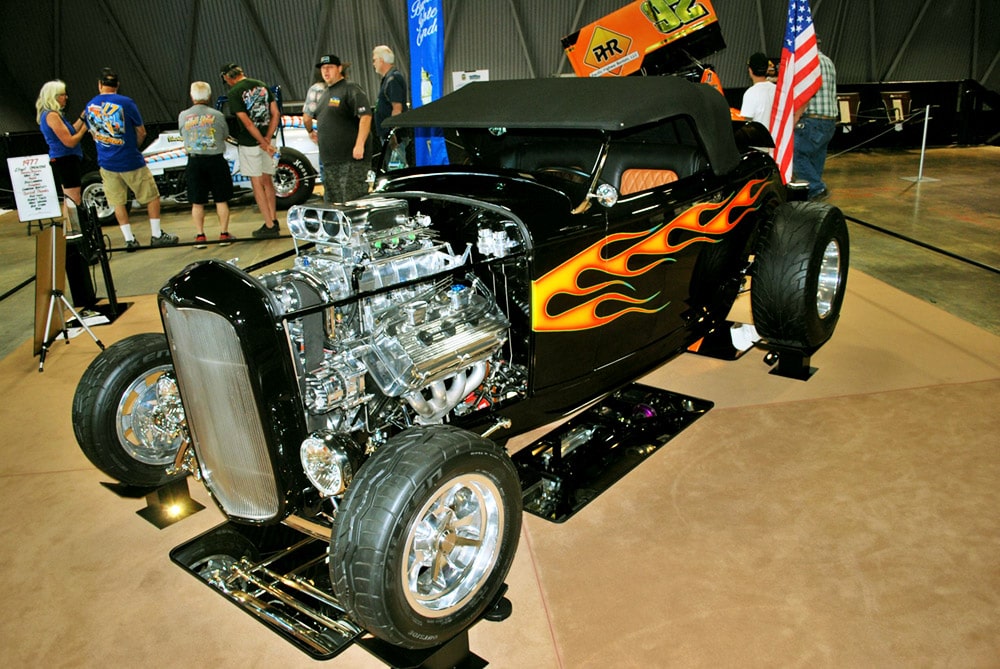
Mechanical fuel injection for racing just looks really cool! The intake on a fuel-injected power plant is the most visible part of the engine. On normally aspirated racing engines, the ram tubes, injectors, and fuel lines look intricately sleek. With superchargers and/or tunnel ram manifolds, the fuel injection throttle body hat and lines are cool looking as well. In addition to looking cool, simple mechanical fuel injection is also useful for more demanding racers such as nitro classes, outlaw Pro Mod drag racing, and high HP tractor pulling.

Constant Flow OEM Mechanical Fuel Injection
In older OEM engine setups from GM Rochester and Bosch, for example, these special MFI systems had additional load sensing fuel controls. They were used to provide good idle, mid and full throttle fuel regulation as well as good cold starting provisions. Fuel capacity limits in many of these systems can limit the power increase from performance modifications.
Using High Speed Bypasses in Addition to Main Bypass
Some MFI systems have an added bypass jet (high speed bypass) to compensate for different fuel needs. The added bypass assists in fuel curve modifications for engine RPM changes and vehicle speed changes.
Multiple bypasses are used by some tuners with more demanding fuel need changes. Tuning becomes more involved with greater maintenance as a result. Added components must be kept clean and in good working order. A good tuning calculator or other software can be used to determine different fuel curves that can be a lot easier than trial-and-error tuning.

Timed Mechanical Fuel Injection
Mechanical fuel injection controls both air and fuel. Timed MFI from Bosch is common in older European OEM gasoline engines such as Porsche and Mercedes. Recently, road-racing applications used timed MFI from Lucas / Kinsler with both throttled air control and fuel control with a unique hydraulic system. Fuel flow is timed to the inlet cycle of each cylinder. Timed MFI is engineered for specific highway and racing applications. Special fuel curve tailoring is needed that may require more of an engineering-level of understanding of the system.
MFI Racing Applications
For racing, constant flow mechanical fuel injection is used most often from ‘off-throttle’ idle to ‘full-throttle’ full power with little ‘mid-throttle’ moderate power demands.
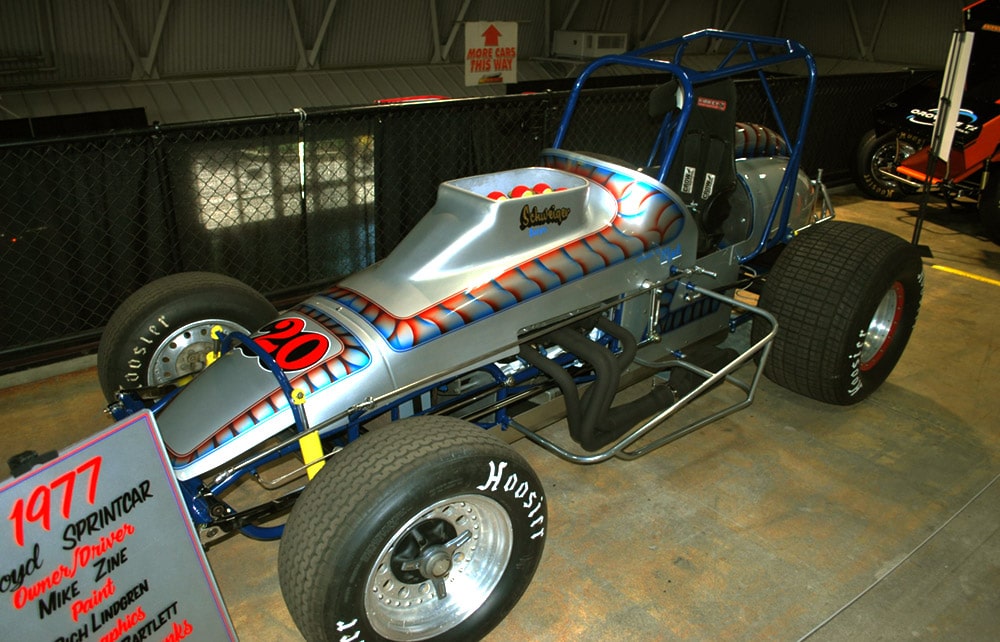
In Sprint Car racing on short courses, however, limited mid-throttle fuel control is necessary where the driver modulates the throttle around tight turns and through traffic. This is done with a simple secondary fuel bypass circuit. Engler fuel injection developed an added stumble valve circuit as well. These mid-throttle circuits are only approximate fuel modulation devices. They work primarily with alcohol fuels that do not foul spark plugs from the enrichment surges that occur with these simple systems. However, for sprint car racing, they work very well. They are also useful with loose torque converter-equipped automatic transmissions where some level of drivability is needed.
MFI Air and Fuel Control
Continuous flow MFI systems include a throttle body for air control. Fuel is controlled with a fuel pump, barrel valve, nozzles, and fuel bypass circuit. Most components are low cost and can be installed and rebuilt by a mechanic, even those with limited knowledge or tools. However, setup and tuning information is important to dial in a new MFI engine build (racecarbook.com).
Hidden Advantages With MFI
Recently, several different fuel systems were tried in the development of a high output 4-cylinder midget racecar engine. MFI made more power than racing carburetors or EFI (5000 Horsepower on Methanol).
In another application from years ago, a retrofit Hilborn MFI setup was developed and tested on a Mercury Marine inline 6-cylinder 2-cycle racing engine. The MFI setup made more power than factory developed racing carburetors for that era (Dick Sherrer [RIP], former boat racing record holder). MFI is not limited by inlet restrictions from the venturis and boosters needed in carburetors.
MFI engines can be set up with higher fuel pressures than those in common port injection EFI. Higher fuel pressure can increase power and throttle response from good fuel atomization. Higher nozzle fuel velocity occurs from higher fuel pressure in MFI systems. Higher nozzle fuel velocity can also be used to steer the air intake in the ports for a better CFM fill. The directed stream can help to increase mass flow and power.

Electronic Fuel Injection (EFI)
EFI setups for spark ignition engines control air and fuel amounts. Fuel control is by throttle body, port, or direct cylinder injection. EFI is common on OEM engines, those with modifications or rebuilds, and many crate engine modifications or rebuilds. Additionally, aftermarket EFI kits are available for transportation as well as racing applications. EFI does provide good fuel management due to a greater extent of fuel modulation with electronics.

EFI and Alcohol Fuel in Racing
EFI is expanding into alcohol fuel applications. These require corrosion inhibitive materials throughout and larger capacity components for increased fuel volumes.
- Ethanol volume is approximately 1.5 times that of gasoline for a similar power level.
- Methanol volume is approximately twice that of gasoline for a similar power level.
It should be noted that increased vaporization cooling of the intake from alcohol fuels usually increases power over that of gasoline for the same engine or blower size setups.
EFI Fuel Tuning
EFI can be operated in ‘open loop’ or ‘closed loop’.
- In ‘open loop’, EFI does not compensate for changes in air density. Reprogramming an electronic controller is needed to tune for weather or altitude
- In ‘closed loop’, EFI automatically regulates the air to fuel ratio with a specialty controller for air density changes. Initial setup usually requires a special programmer. Closed loop controls are limited in the amount of compensation. They may not work very well with high HP / high volume fuel needs.
EFI Is More Complex Than MFI
EFI can be more complex with several components: throttle control, multiple sensors, fuel pump, regulated fuel return circuit, electronic injectors, controller, and programmer. Electronic injectors in higher power applications usually require special high current power supplies over the more common low current OEM injector power supplies. In some high horsepower applications, fuel pressures need to be regulated from low volume, idle mode to high volume, full power mode. All of this can get expensive compared to MFI.
EFI Direct Injection
Direct injection applications used for spark ignition engines can inject the fuel directly into the cylinder. With no boundary layer of fuel on a cold inlet port surface, the inlet is dry. This is an advantage in highway applications with emission and economy needs.
Direct injection setups use complex components to regulate very high fuel pressures, often in excess of 2,000 psi. In setups with exhaust gas recirculation (EGR), inlet valve contamination can be a consequence. This is due to the absence of inlet fuel to wash the intake valves clean from EGR byproducts. In some older direct injection OEM engines with EGR, warrantee problems are reported from dirty valves. We saw some of these occurring within 50,000 miles of use.

MFI vaporization cooling compared to EFI Direct Injection
MFI may have an advantage in power over direct injection EFI applications. In direct injection, the air intake is limited to the dry airflow characteristics of the inlet. No vaporization cooling or condensation occurs in the dry intake as seen in other fuel systems with fuel in the air stream, ahead of the intake valve. Because of this, MFI can have a power increase over EFI direct injection.
MFI air and fuel dwell time compared to EFI Direct Injection
MFI engines with manifold or port nozzle locations have an increase in air and fuel dwell time. That dwell time increases vaporization of the fuel droplets. A more powerful combustion burn occurs with more fuel vaporization.
Notably, alcohol or nitro fuels with high vaporization cooling properties experience this effect. Vaporization cooling increases the density of the air flow into the engine. That plus an appropriate increase in fuel for the dense air can make more power.

Finding MFI & EFI Manufacturers
Common manufacturers of mechanical fuel injection for racing are Kinsler, Enderle, Rons, and Engler. Some of the past manufacturers of MFI units that are throughout motorsports are Pete Jackson, Crower, Algon and Hilborn. Common electronic fuel injection manufacturers include MagnaFuel Products, EFI Hardware, and JMS Performance.
In addition, Alky Digger, Good Vibrations, and many others around the world are popular suppliers of MFI and EFI assemblies and parts.
References
Fuel Injection Racing Secrets
5000 Horsepower on Methanol
Blown Nitro Racing on a Budget
MFI Calc
Air Density Online
Autorama
Leave a Reply