




![[Gallery] The Last Hot Rod Fall Out XX](https://www.racingjunk.com/news/wp-content/uploads/2026/04/DSC_8368-e1776446464704-376x206.jpg)

Buckle Up Baby: How To Refurbish Original Seat Belts At Home
Click Here to Begin Slideshow
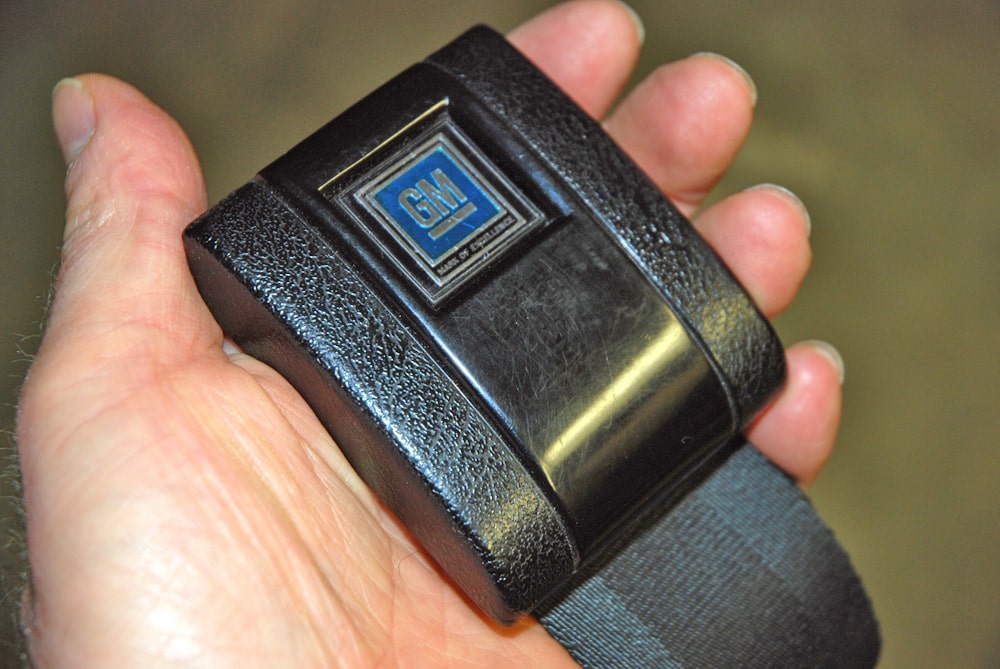
Ponder the case of the seat belt in your vintage car (musclecar, hot rod, etc.). In the vast majority of cases, they live a tough life. Buckles become scratched and dinged. Labels yellow. And to make matters worse, plenty of old cars happened to be new cars when social habits such as smoking was extremely common. The smoke permeates the belts, and in particular the shoulder harness assemblies. Before long, the belts and harness begin to look like refugees from a wrecking yard.
In most treasured cars, the seat upholstery gets cleaned, vinyl dashes and door panels get scrubbed and carpets get shampooed. But most folks forget about (or ignore) the lowly seat belt and shoulder harness. Besides, they must be impossible to clean? That’s the bad news. The good news is this: With a little bit of elbow grease coupled with a few common cleaners its possible to make the seat belt and shoulder harness assembly’s look just like new (or even better than new). Sound interesting? Read on:
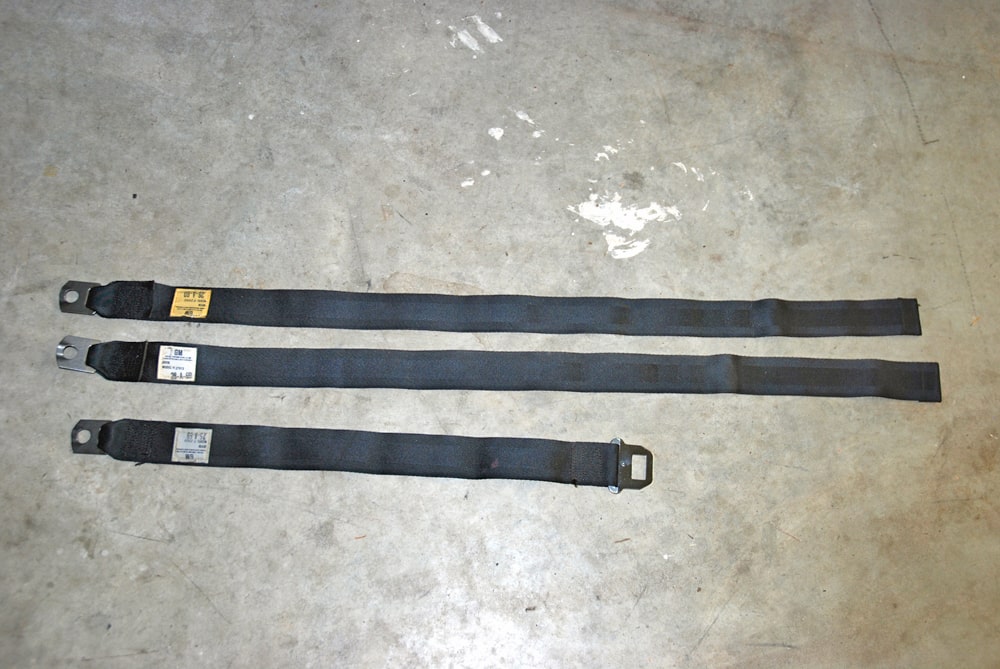
In my case, I had a pretty neat old Chevy Nova I was slowly working on. While a super low mileage vehicle, time and past owners still took their toll on the seat belts and shoulder harness. The first step was to remove all of the belts and harnesses from the car. I sorted out the pieces, bagged and tagged them for restoration. The initial thought was I’d send them off for a professional rework (which, by the way, can cost in the thousands for a five or six piece set). But then I thought about it a bit. “Why not try to restore the belts myself”. I had nothing to lose? Besides, if it worked, I’d save a big chunk of cash.
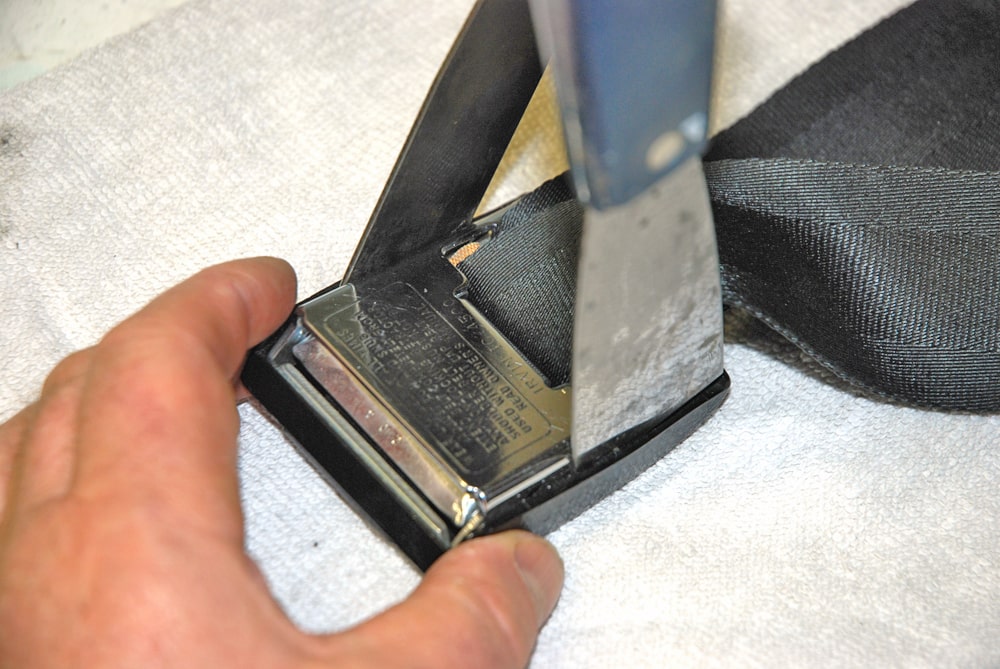
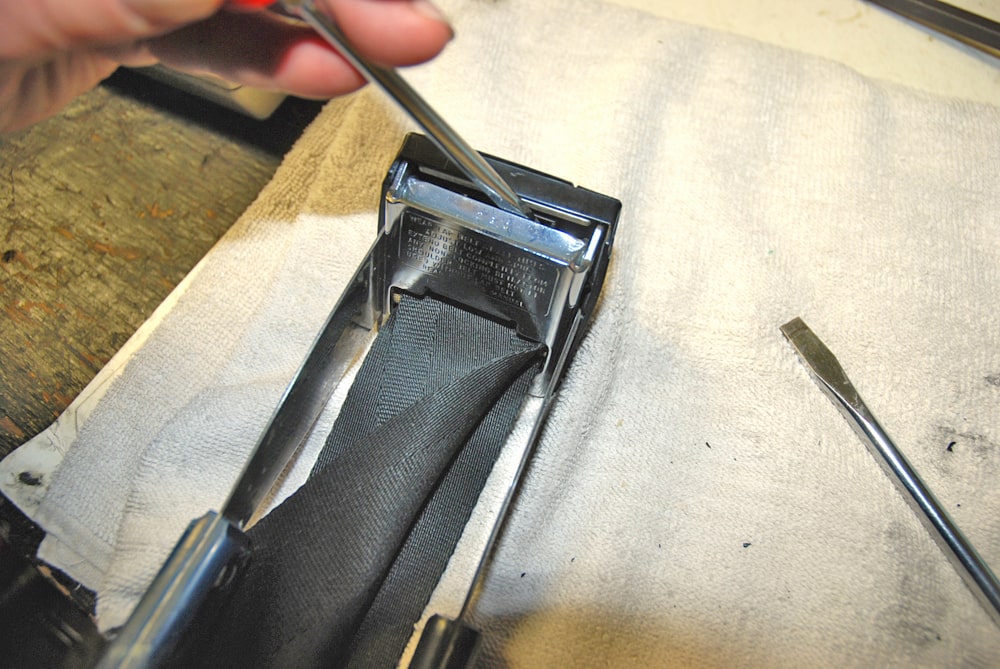
First things first: The belts and harnesses must be stripped. To remove the buckles, first turn them upside down on a soft surface (a rolled up terry towel is perfect). Next, a couple of thin gasket or paint scrapers must be inserted into each side of the buckle (see the accompanying photo). By carefully sliding the scrapers in place, you’ll release the side attachment clips for the cover. Then insert a large flat blade screwdriver into the latch slot in the face of the buckle. Rotate the screwdriver in the latch slot (maintaining steel on steel, rolling the latch off). The buckle cover will release, and the buttons will simply pop off. Repeat with the entire selection of buckle assembles, and remove anything else such as plastic covers. Set all of the hardware – fasteners, buckles, covers and so on aside.
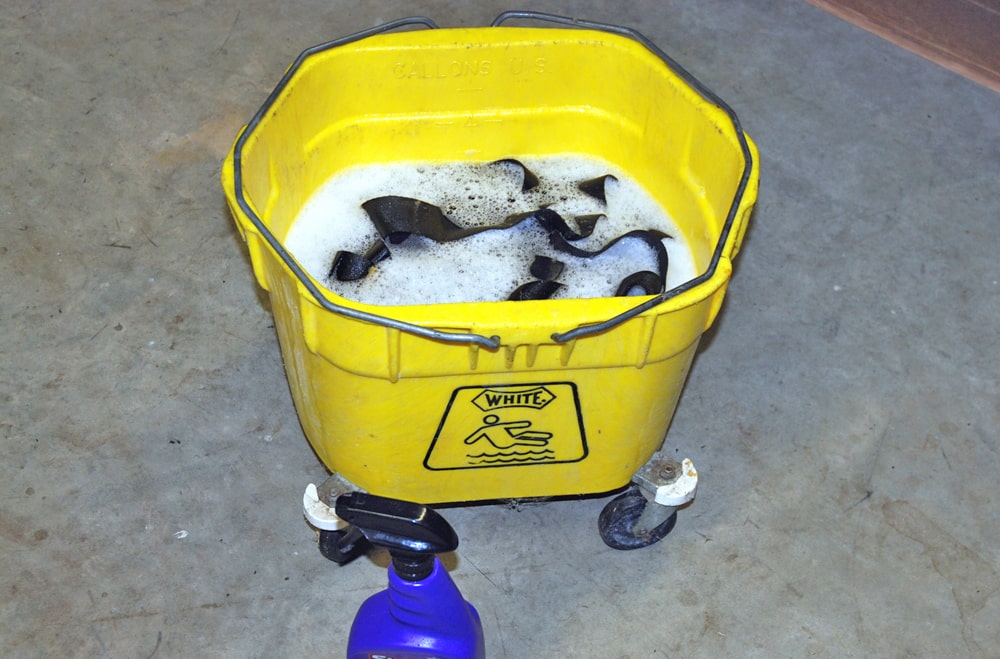
Next up, it’s time to clean the bare belts and harnesses (keeping in mind you cannot remove anything sewn in place). I prepared a 5-gallon wash bucket with hot water (right out of the hot water heater) along with a splash of common Purple Stuff automotive degreaser. In my case, the belts weren’t excessively soiled, but they had their fair share of cigarette smoke residue. I used a mix of approximately 25:1 – 12 fluid ounces of degreaser to 2.5 gallons of water (although for belts that are heavily soiled, you might have to use a bit stronger mix). With the belts completely submerged in the water/degreaser mix, simply stir occasionally and allow the cleaner to work. I continued this for a couple of hours. The belts were eventually rinsed with cold tap water, and then I “recharged” the bucket with another mix of hot water and degreaser. I followed the same steps. Once again, the belts were rinsed. I kept rinsing until the water in the bucket came out squeaky clean.
At this point, I strung the belts out on a section of steel doweling and draped them over a stepladder erected on the garage floor. A good old-fashioned house fan was pointed at belts. I simply allowed the fan to run at low speed until the belts dried (of course, that all depends upon the humidity level and the ambient temperature).
While the belts are drying, you can turn your attention to the buckles and covers. The basic buckles (the steel parts) can be detailed with good quality chrome cleaner. If there is any corrosion, a bit of polishing with fine (0000) steel wool will cure it. Buff and you’re done.
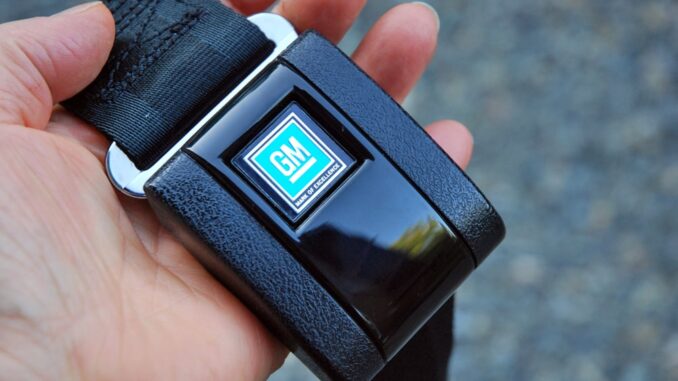
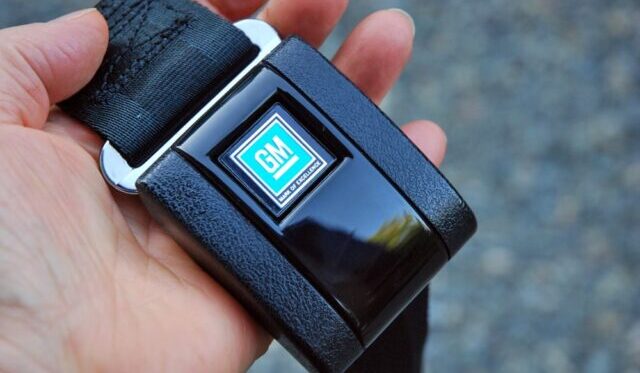
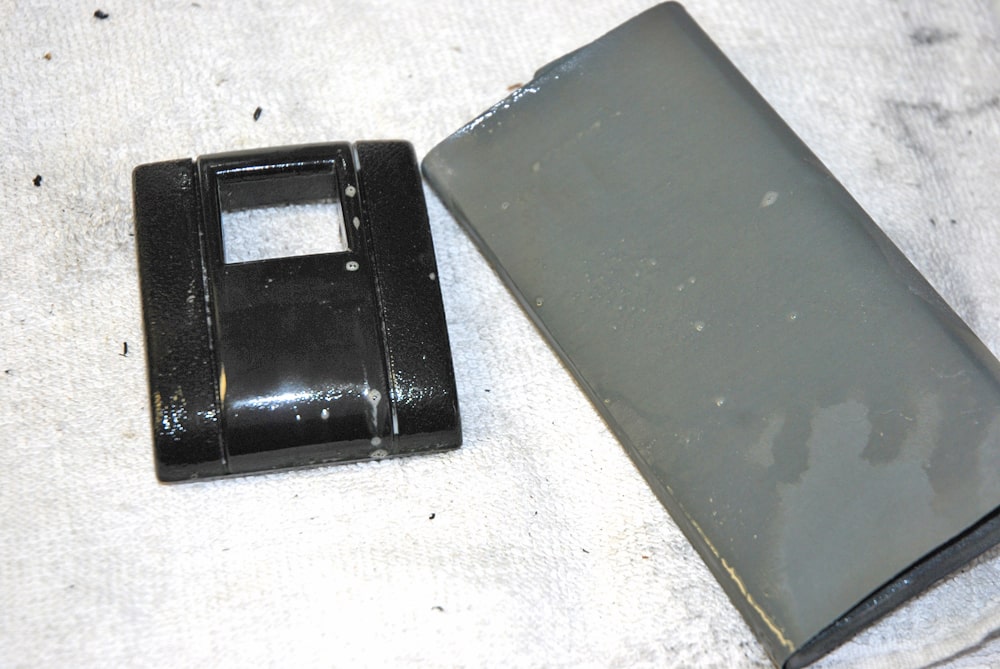
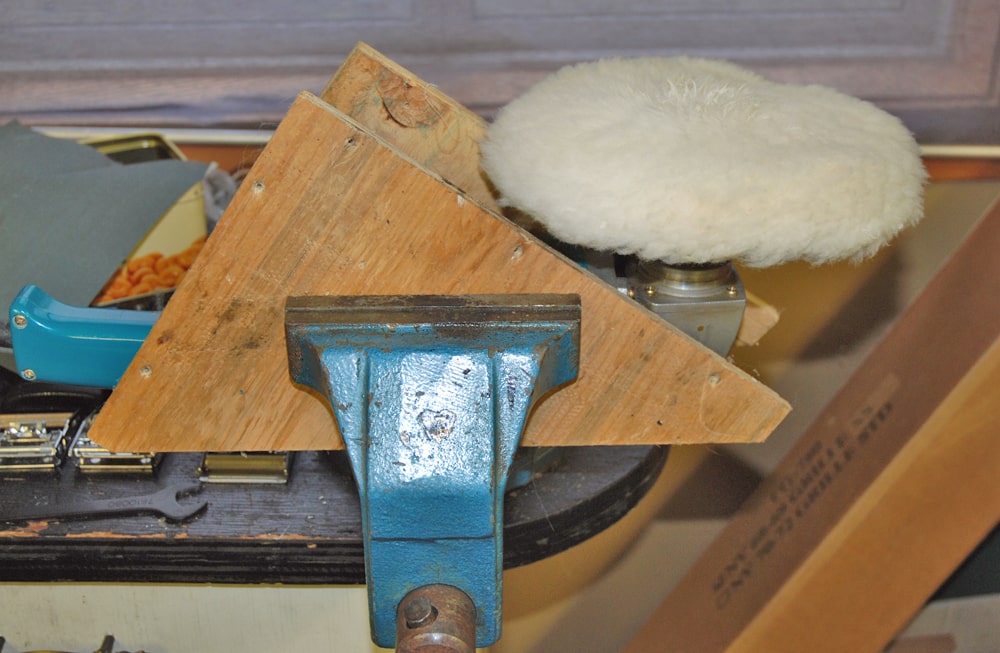
The plastic buckle covers are just as easy to detail. Here, I simply wet sanded the scratches with 2,000-grit sandpaper mounted on a rubber-sanding block. Just like polishing automotive paint, I used a mix of household liquid dish soap and water as the lubricant. Be sure to flood the cover with the soapy water mix, as you’re wet sanding. By the way, if you soak the sand paper over night in a tray of soap and water, it works better. Next, the covers were hand polished with a good plastic polish. Finally, I applied a light coat of automotive paint swirl remover on the buckle bodies and buffed with a wool pad mounted on a Makita variable speed buffer (turned to low). It’s tough to handle the big buffer on a small part, but the buffer can be clamped upside down in a shop vice. I did that. This allowed the buffer to remain stationary while I moved the buckle over it. I did use a couple of pieces of plywood on each side of the buffer to keep the vise jaws from destroying the buffer. In the end, the results were fabulous.
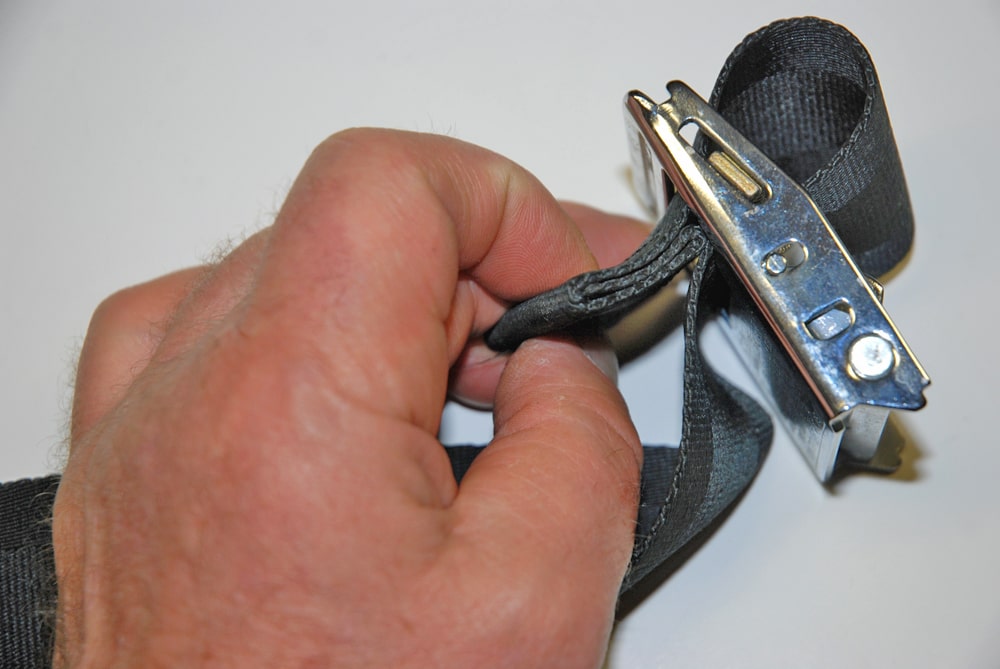
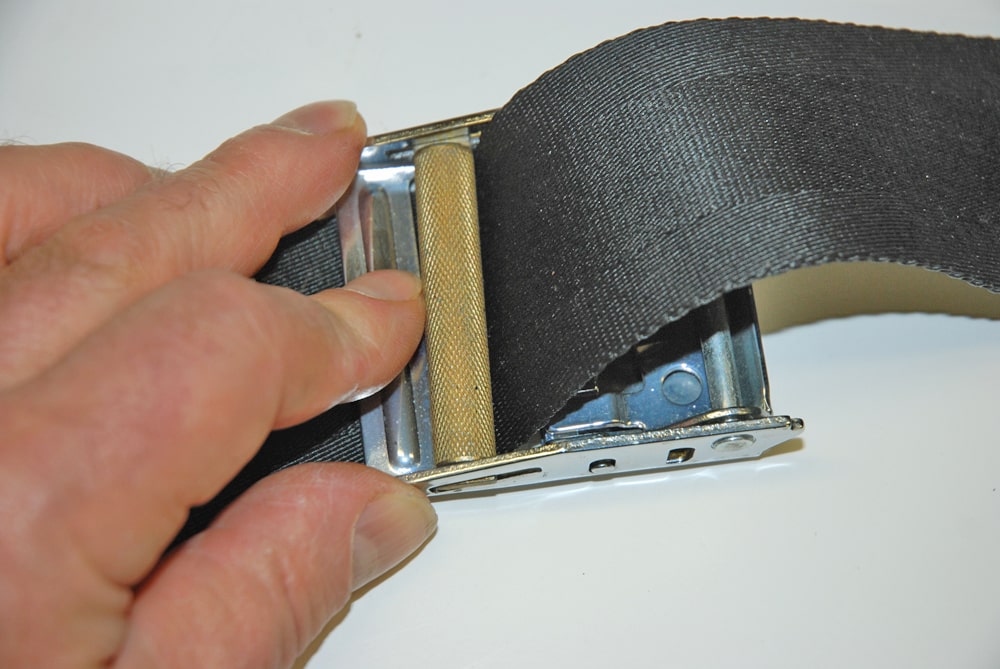
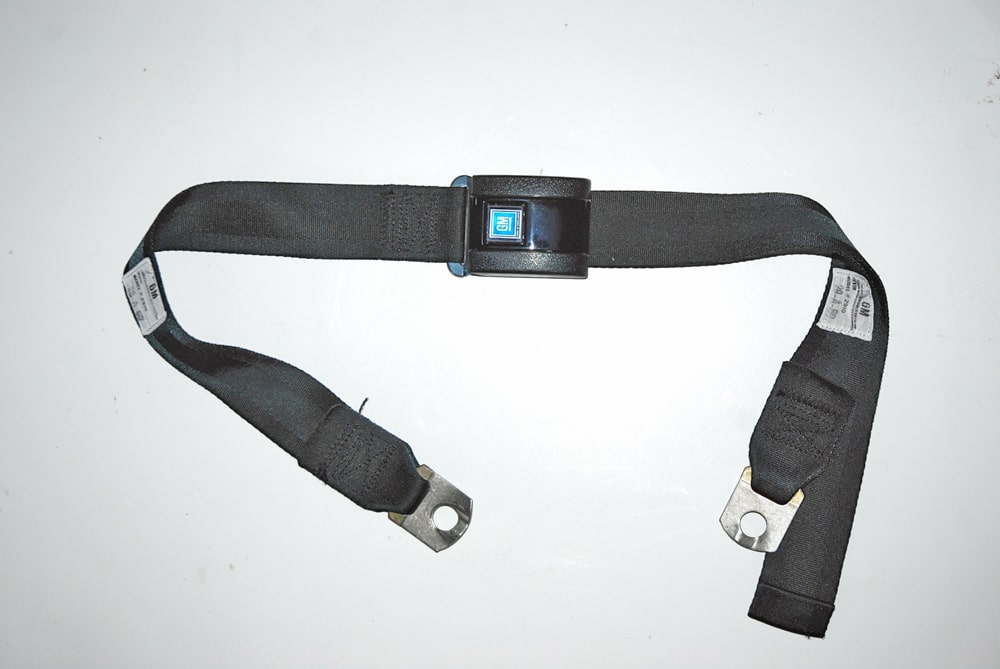
Once the belts are completely dry, you can start the reassembly process. The seat belt material wraps around the buckle (see the accompanying photos) while the covers and actuator button simply snap into place. FYI, I cleaned the associated mount hardware and plastic trim separately. And with that, you’re done. For a closer look, check out the accompanying photos. Its amazing how well they turn out.
Click Here to Begin Slideshow
Ponder the case of the seat belt in your vintage car (musclecar, hot rod, etc.). In the vast majority of cases, they live a tough life. Buckles become scratched and dinged. Labels yellow. And to make matters worse, plenty of old cars happened to be new cars when social habits such as smoking was extremely common. The smoke permeates the belts, and in particular the shoulder harness assemblies. Before long, the belts and harness begin to look like refugees from a wrecking yard.
In most treasured cars, the seat upholstery gets cleaned, vinyl dashes and door panels get scrubbed and carpets get shampooed. But most folks forget about (or ignore) the lowly seat belt and shoulder harness. Besides, they must be impossible to clean? That’s the bad news. The good news is this: With a little bit of elbow grease coupled with a few common cleaners its possible to make the seat belt and shoulder harness assembly’s look just like new (or even better than new). Sound interesting? Read on:
In my case, I had a pretty neat old Chevy Nova I was slowly working on. While a super low mileage vehicle, time and past owners still took their toll on the seat belts and shoulder harness. The first step was to remove all of the belts and harnesses from the car. I sorted out the pieces, bagged and tagged them for restoration. The initial thought was I’d send them off for a professional rework (which, by the way, can cost in the thousands for a five or six piece set). But then I thought about it a bit. “Why not try to restore the belts myself”. I had nothing to lose? Besides, if it worked, I’d save a big chunk of cash.
First things first: The belts and harnesses must be stripped. To remove the buckles, first turn them upside down on a soft surface (a rolled up terry towel is perfect). Next, a couple of thin gasket or paint scrapers must be inserted into each side of the buckle (see the accompanying photo). By carefully sliding the scrapers in place, you’ll release the side attachment clips for the cover. Then insert a large flat blade screwdriver into the latch slot in the face of the buckle. Rotate the screwdriver in the latch slot (maintaining steel on steel, rolling the latch off). The buckle cover will release, and the buttons will simply pop off. Repeat with the entire selection of buckle assembles, and remove anything else such as plastic covers. Set all of the hardware – fasteners, buckles, covers and so on aside.
Next up, it’s time to clean the bare belts and harnesses (keeping in mind you cannot remove anything sewn in place). I prepared a 5-gallon wash bucket with hot water (right out of the hot water heater) along with a splash of common Purple Stuff automotive degreaser. In my case, the belts weren’t excessively soiled, but they had their fair share of cigarette smoke residue. I used a mix of approximately 25:1 – 12 fluid ounces of degreaser to 2.5 gallons of water (although for belts that are heavily soiled, you might have to use a bit stronger mix). With the belts completely submerged in the water/degreaser mix, simply stir occasionally and allow the cleaner to work. I continued this for a couple of hours. The belts were eventually rinsed with cold tap water, and then I “recharged” the bucket with another mix of hot water and degreaser. I followed the same steps. Once again, the belts were rinsed. I kept rinsing until the water in the bucket came out squeaky clean.
At this point, I strung the belts out on a section of steel doweling and draped them over a stepladder erected on the garage floor. A good old-fashioned house fan was pointed at belts. I simply allowed the fan to run at low speed until the belts dried (of course, that all depends upon the humidity level and the ambient temperature).
While the belts are drying, you can turn your attention to the buckles and covers. The basic buckles (the steel parts) can be detailed with good quality chrome cleaner. If there is any corrosion, a bit of polishing with fine (0000) steel wool will cure it. Buff and you’re done.
The plastic buckle covers are just as easy to detail. Here, I simply wet sanded the scratches with 2,000-grit sandpaper mounted on a rubber-sanding block. Just like polishing automotive paint, I used a mix of household liquid dish soap and water as the lubricant. Be sure to flood the cover with the soapy water mix, as you’re wet sanding. By the way, if you soak the sand paper over night in a tray of soap and water, it works better. Next, the covers were hand polished with a good plastic polish. Finally, I applied a light coat of automotive paint swirl remover on the buckle bodies and buffed with a wool pad mounted on a Makita variable speed buffer (turned to low). It’s tough to handle the big buffer on a small part, but the buffer can be clamped upside down in a shop vice. I did that. This allowed the buffer to remain stationary while I moved the buckle over it. I did use a couple of pieces of plywood on each side of the buffer to keep the vise jaws from destroying the buffer. In the end, the results were fabulous.
Once the belts are completely dry, you can start the reassembly process. The seat belt material wraps around the buckle (see the accompanying photos) while the covers and actuator button simply snap into place. FYI, I cleaned the associated mount hardware and plastic trim separately. And with that, you’re done. For a closer look, check out the accompanying photos. Its amazing how well they turn out.
Click Here to Begin Slideshow
Thank you for this! 🙂
And for you> assemblies
🙂