



![[Gallery] The Last Hot Rod Fall Out XX](https://www.racingjunk.com/news/wp-content/uploads/2026/04/DSC_8368-e1776446464704-376x206.jpg)



Breaking Down Drag Racing at Miles of Mayhem 2022 Part 1
Click Here to Begin Slideshow
I’ve been involved in the drag race publishing business for almost four decades. In that time span, I’ve the opportunity to work for (in various capacities) the late great Super Stock & Drag Illustrated, Bracket Racing USA, National DRAGSTER and several others. I’ve attended drag races all over North America and I even had an adventure to a track in South America. I’ve been to a number of enjoyable events, larger and small (and I’ve also been to some pretty bad ones, but we won’t go there).
In spite of all of the above, one of the most entertaining drag races I’ve ever experienced was a local western Canadian event called “Miles of Mayhem”. According their website (https://www.milesofmayhemdnd.ca): “Miles Of Mayhem Drag ‘n Drive is a five day competition where street legal drag race cars run 1/8 mile time trials every day at four different tracks, while driving on public roads between each track unassisted by support vehicles, traveling over 1700 km (Editor Note: 1056 Miles). This is the ultimate test of street/strip cars and drivers. Trophies and cash prizes in multiple classes for vehicles with various levels of modifications. The car with the lowest average elapsed time over the week of racing is named Miles Of Mayhem's fastest street car in Canada!”
Essentially this is a Western Canadian version of Drag Week (or any of the other “drag and drive” style of events that have popped up across the continent). Basically, competitors drive their cars (or trucks), under their own power from track to track. In this case, each of the tracks are set up for 1/8-mile competition (even though some are ¼ mile facilities). Cars cannot be towed, trailered, pushed, or hauled at any time. You cannot be followed by a support or chase vehicle. And you can’t be followed by a motorhome either. Each day of the event includes at least one mandatory check point. The route can include paved and even some gravel roads. Given weather and numbers of entries, you can have two or more chances to nail down an ET number at each track. When that’s done, you pack up and head to the next track. Racers usually tow a small trailer (less than 14-feet) filled with the tools and spare parts they think they might need. Yes, you can take a buddy along with you. And many racers do just that.
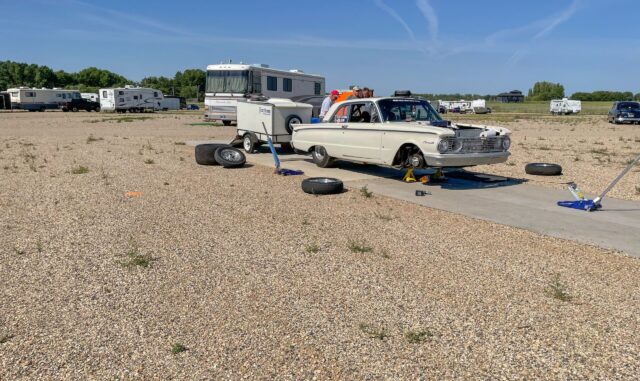
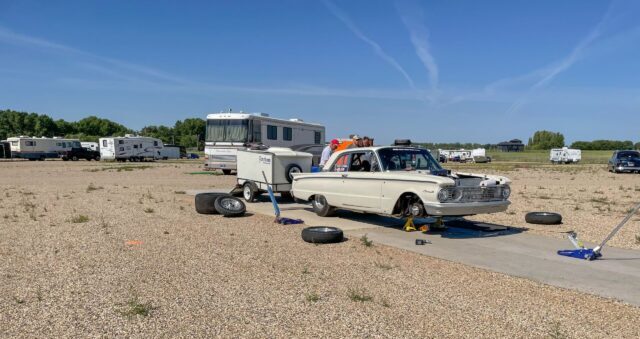
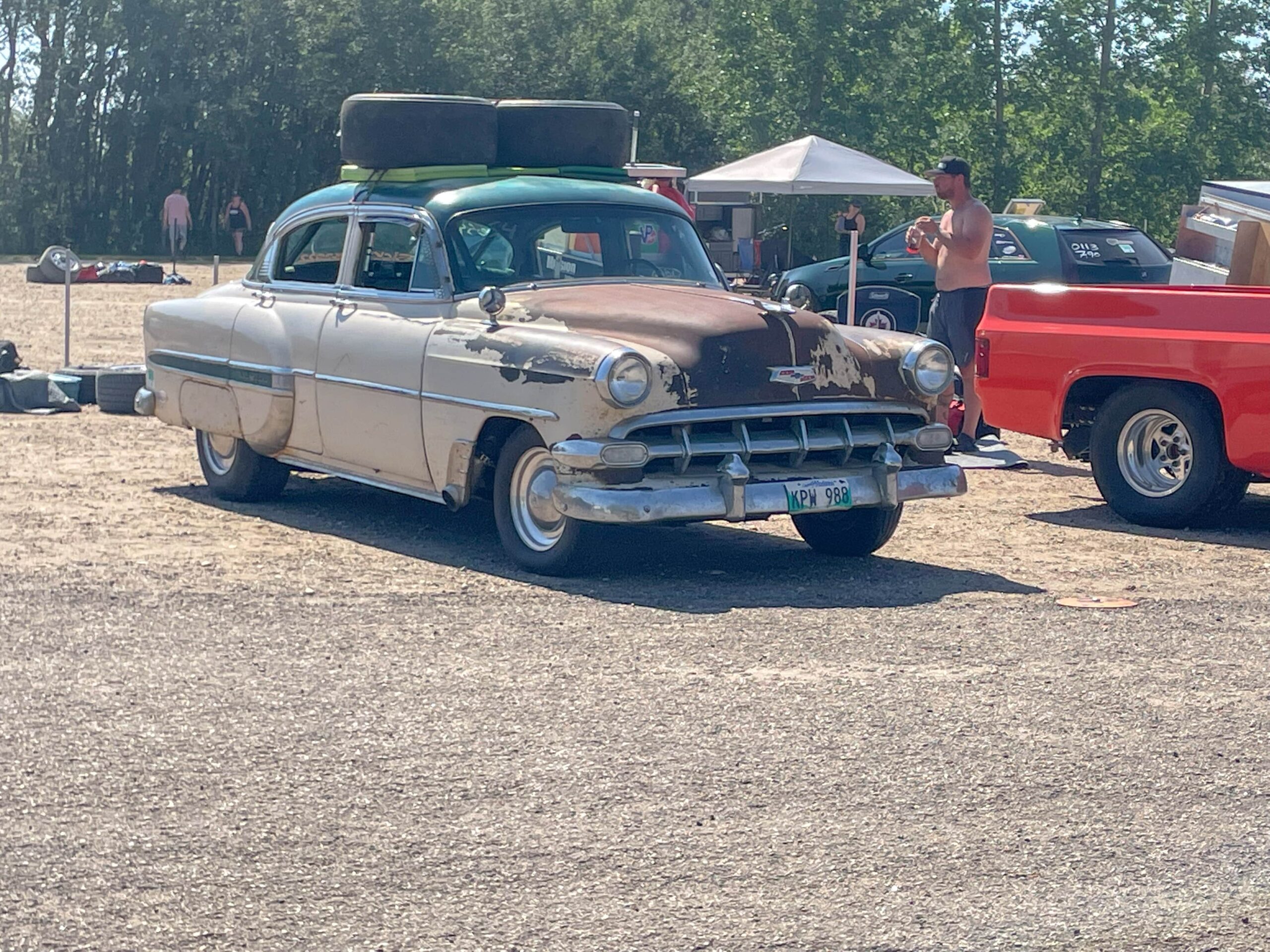
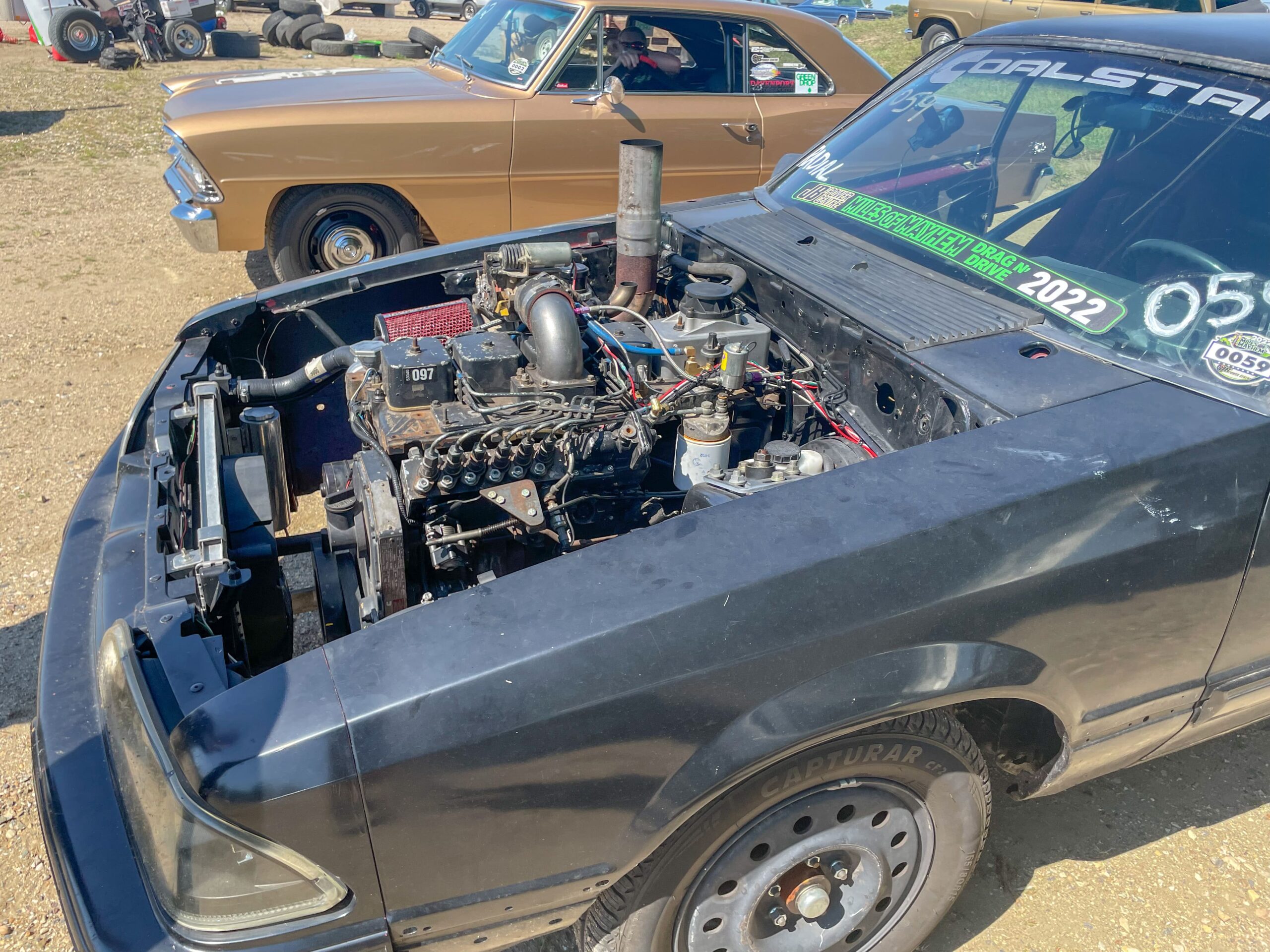
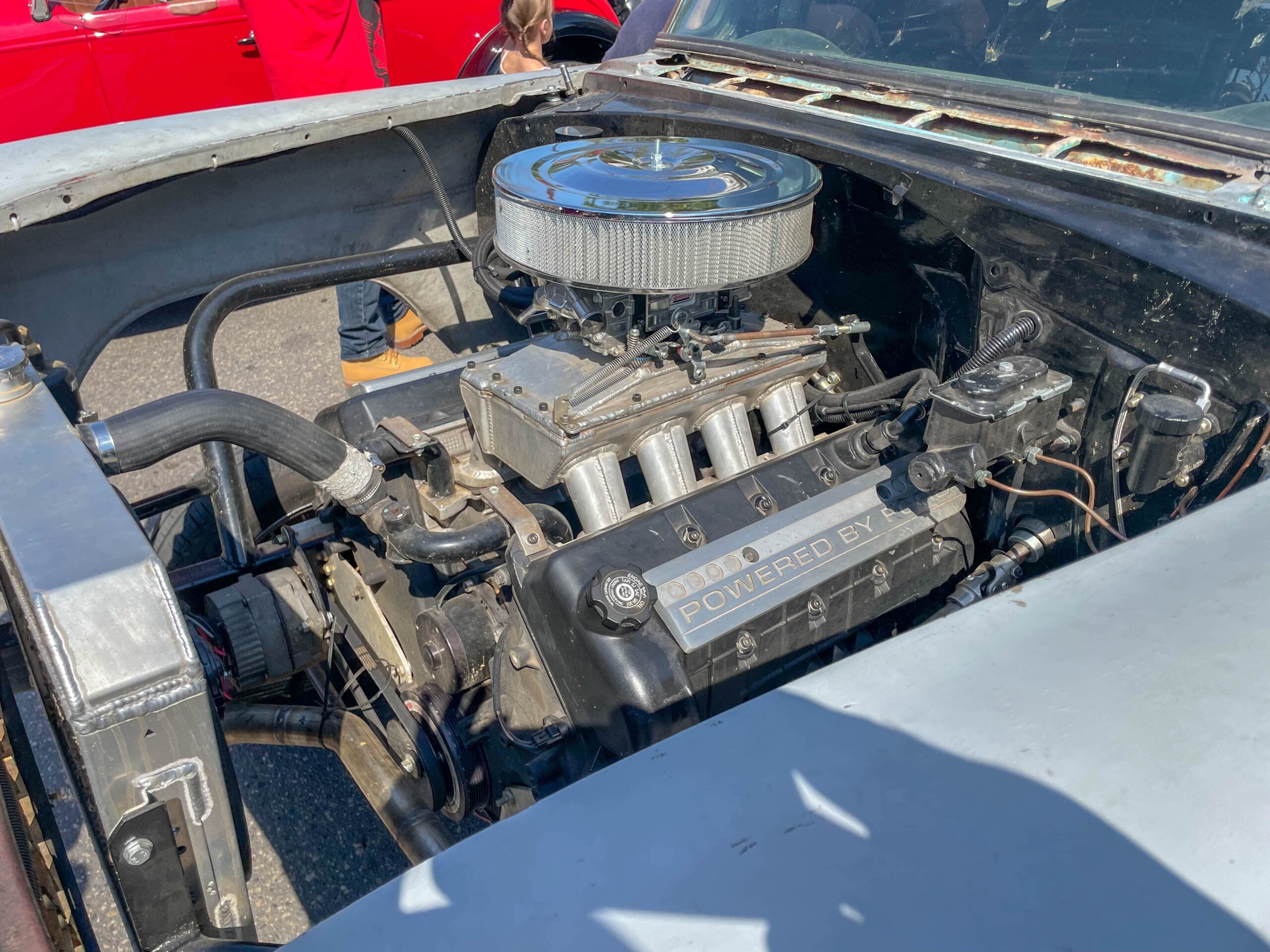
Fair enough. Sounds very much like other similar events. What really made this event mechanically interesting (at least to me) was the sheer diversity of the cars that were entered. Where else would you encounter a late model Ford powered ’55 Chevy gasser or a diesel powered Mustang? Factor in the colossal amount of camaraderie, and you have the makings for a great event. The weather was Sizzling Hot! Clearly, this added to the challenge. But everyone I saw was smiling. That even included folks who were laying on the gravel, drenched in oil, getting ready to pull a broken hulk of a driveline piece in the heat.
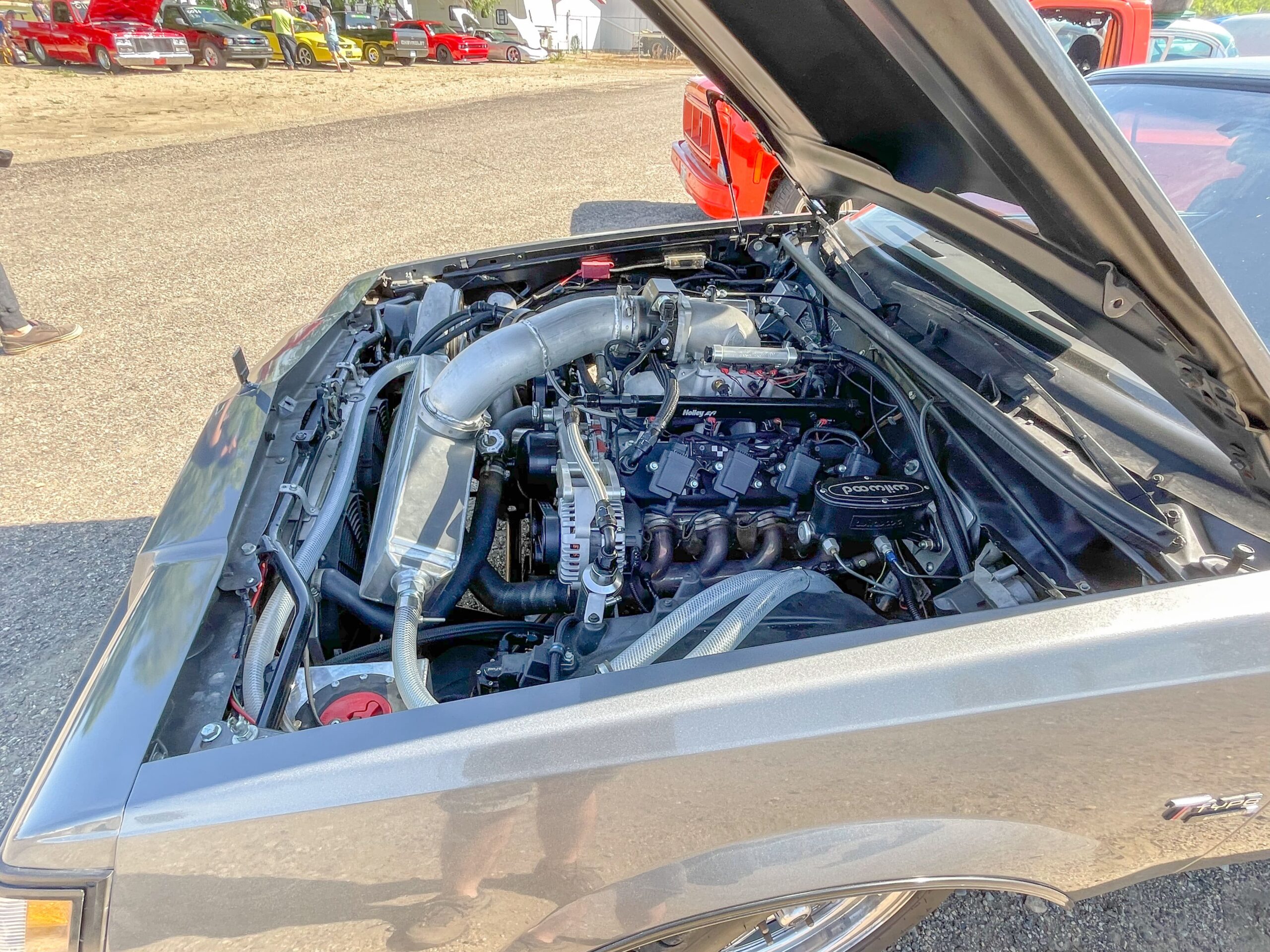
Much to my surprise, I even encountered an old friend: A turbo Buick I had originally built almost 15 years ago. It had gone through a couple of hands, but it was still very much recognizable (my signature is still on the inside of the trunk lid). “Buford” was definitely both battle scarred and battle weary compared to when I owned it, but the old Buick was still killer fast. It made me smile. It also made me yearn to build another, but that’s another story.
What about the classes? First of all, each class follows the NHRA Rule Book for speed and E.T. (and that applies to IHRA sanctioned tracks too). Each competitor must turn in one ET slip from each track. From that point, it must follow the Miles of Mayhem class structure, which loosely breaks down as follows:
OUTLAW: Outlaw is the fastest of fast, the most radical vehicles of Miles of Mayhem. Unlimited modifications, no limitations, if you want to drive your pro mod please do.
SMALL TIRE: Small tire is more for the 275x/10.5 inch tire cars. Unlimited modifications, aside from tires. Class is limited to 28.5x10.5 non W tire size. Any type or brand of race tire can be used in competition.
PRO STREET: Pro street, 5.80 et 1/8-mile cap. Pro street is for NHRA/IHRA 8.50 certified vehicles. Must use an all-steel, OEM body. (Corvette/factory fiberglass, OEM plastics allowed). Must have OEM style grill, no fully closed/blocked fronts. Hood, bumpers, hood scoop, wings only exception. Must have factory glass (except trucks with Plexiglas/Lexan rear windows for roll bar passage). Body must resemble the way the car came from factory. No stretching wheel bases, no sloped front ends, no relocating front wheel wells. Stretching rear wheel wells is allowed. Must use stock appearing dash structure, must have driver and passenger seats.
MODERN MUSCLE: Open to any modern musclecar (includes new Hell Cats, Mustangs and Camaros, but it is open to any year make and models). Must run a 17-inch rim or bigger while racing. Aside from that, modifications are unlimited. E.T cap of 6.39 or 135 mph. Vehicles 2006 and new with all OEM safety equipment do not require a roll bar. Any vehicle 2005 and older NHRA roll bar required if E.T is quicker than 7.35-seconds.
MAN PEDAL: For all “3-pedal” competitors. H-pattern, V-gate and multiple shifters are allowed. Unlimited modifications
BRACKET CLASS: Set up for bracket racers, but this class is slightly different: Since it is a dial-in class, you dial in and that’s the number you attempt to run all week. If that’s not enough challenge for you, reaction time is also recorded. (ET + RT – dial-in = TIME) The most consistent package throughout the week determines the winner. No time slips with a red light will be accepted. Open to any speed and ET. No delay boxes, throttle stop, or any kind of speed control allowed.
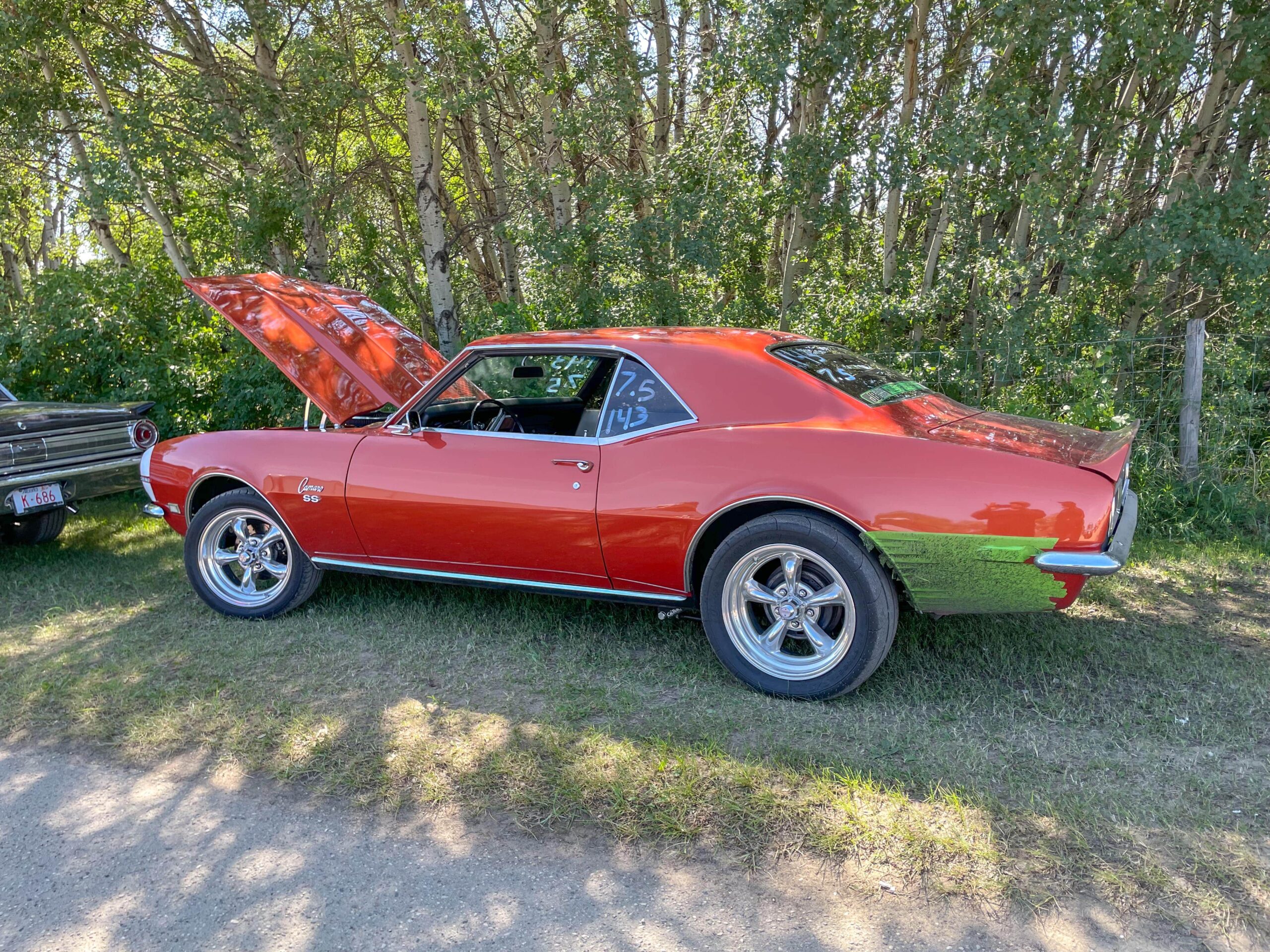
7.5 SECOND CLASS: This is a laid-back class with limited vehicle rules (no roll bar needed). This class is for those who can run the most consistent time laps (like bracket racing). 7.5 seconds is your dial in, but your reaction time will be added into the equation. The car with the most consistent package throughout the 5 days of competition wins. No time slip quicker then 7.5 will be accepted and a red light is a red light, time slip with a red light will also not be accepted.
TRUCK AND SUV CLASS: All vehicles must have factory OEM body panels. Fiberglass/Carbon fiber hoods, and Plexiglas back window are the exceptions. Open to 2WD, 4x4 and AWD. Unlimited modifications. Minimum weight of 3800 pounds.
Click Here to Begin Slideshow
I’ve been involved in the drag race publishing business for almost four decades. In that time span, I’ve the opportunity to work for (in various capacities) the late great Super Stock & Drag Illustrated, Bracket Racing USA, National DRAGSTER and several others. I’ve attended drag races all over North America and I even had an adventure to a track in South America. I’ve been to a number of enjoyable events, larger and small (and I’ve also been to some pretty bad ones, but we won’t go there).
In spite of all of the above, one of the most entertaining drag races I’ve ever experienced was a local western Canadian event called “Miles of Mayhem”. According their website (https://www.milesofmayhemdnd.ca): “Miles Of Mayhem Drag ‘n Drive is a five day competition where street legal drag race cars run 1/8 mile time trials every day at four different tracks, while driving on public roads between each track unassisted by support vehicles, traveling over 1700 km (Editor Note: 1056 Miles). This is the ultimate test of street/strip cars and drivers. Trophies and cash prizes in multiple classes for vehicles with various levels of modifications. The car with the lowest average elapsed time over the week of racing is named Miles Of Mayhem's fastest street car in Canada!”
Essentially this is a Western Canadian version of Drag Week (or any of the other “drag and drive” style of events that have popped up across the continent). Basically, competitors drive their cars (or trucks), under their own power from track to track. In this case, each of the tracks are set up for 1/8-mile competition (even though some are ¼ mile facilities). Cars cannot be towed, trailered, pushed, or hauled at any time. You cannot be followed by a support or chase vehicle. And you can’t be followed by a motorhome either. Each day of the event includes at least one mandatory check point. The route can include paved and even some gravel roads. Given weather and numbers of entries, you can have two or more chances to nail down an ET number at each track. When that’s done, you pack up and head to the next track. Racers usually tow a small trailer (less than 14-feet) filled with the tools and spare parts they think they might need. Yes, you can take a buddy along with you. And many racers do just that.
Fair enough. Sounds very much like other similar events. What really made this event mechanically interesting (at least to me) was the sheer diversity of the cars that were entered. Where else would you encounter a late model Ford powered ’55 Chevy gasser or a diesel powered Mustang? Factor in the colossal amount of camaraderie, and you have the makings for a great event. The weather was Sizzling Hot! Clearly, this added to the challenge. But everyone I saw was smiling. That even included folks who were laying on the gravel, drenched in oil, getting ready to pull a broken hulk of a driveline piece in the heat.
Much to my surprise, I even encountered an old friend: A turbo Buick I had originally built almost 15 years ago. It had gone through a couple of hands, but it was still very much recognizable (my signature is still on the inside of the trunk lid). “Buford” was definitely both battle scarred and battle weary compared to when I owned it, but the old Buick was still killer fast. It made me smile. It also made me yearn to build another, but that’s another story.
What about the classes? First of all, each class follows the NHRA Rule Book for speed and E.T. (and that applies to IHRA sanctioned tracks too). Each competitor must turn in one ET slip from each track. From that point, it must follow the Miles of Mayhem class structure, which loosely breaks down as follows:
OUTLAW: Outlaw is the fastest of fast, the most radical vehicles of Miles of Mayhem. Unlimited modifications, no limitations, if you want to drive your pro mod please do.
SMALL TIRE: Small tire is more for the 275x/10.5 inch tire cars. Unlimited modifications, aside from tires. Class is limited to 28.5x10.5 non W tire size. Any type or brand of race tire can be used in competition.
PRO STREET: Pro street, 5.80 et 1/8-mile cap. Pro street is for NHRA/IHRA 8.50 certified vehicles. Must use an all-steel, OEM body. (Corvette/factory fiberglass, OEM plastics allowed). Must have OEM style grill, no fully closed/blocked fronts. Hood, bumpers, hood scoop, wings only exception. Must have factory glass (except trucks with Plexiglas/Lexan rear windows for roll bar passage). Body must resemble the way the car came from factory. No stretching wheel bases, no sloped front ends, no relocating front wheel wells. Stretching rear wheel wells is allowed. Must use stock appearing dash structure, must have driver and passenger seats.
MODERN MUSCLE: Open to any modern musclecar (includes new Hell Cats, Mustangs and Camaros, but it is open to any year make and models). Must run a 17-inch rim or bigger while racing. Aside from that, modifications are unlimited. E.T cap of 6.39 or 135 mph. Vehicles 2006 and new with all OEM safety equipment do not require a roll bar. Any vehicle 2005 and older NHRA roll bar required if E.T is quicker than 7.35-seconds.
MAN PEDAL: For all “3-pedal” competitors. H-pattern, V-gate and multiple shifters are allowed. Unlimited modifications
BRACKET CLASS: Set up for bracket racers, but this class is slightly different: Since it is a dial-in class, you dial in and that’s the number you attempt to run all week. If that’s not enough challenge for you, reaction time is also recorded. (ET + RT – dial-in = TIME) The most consistent package throughout the week determines the winner. No time slips with a red light will be accepted. Open to any speed and ET. No delay boxes, throttle stop, or any kind of speed control allowed.
7.5 SECOND CLASS: This is a laid-back class with limited vehicle rules (no roll bar needed). This class is for those who can run the most consistent time laps (like bracket racing). 7.5 seconds is your dial in, but your reaction time will be added into the equation. The car with the most consistent package throughout the 5 days of competition wins. No time slip quicker then 7.5 will be accepted and a red light is a red light, time slip with a red light will also not be accepted.
TRUCK AND SUV CLASS: All vehicles must have factory OEM body panels. Fiberglass/Carbon fiber hoods, and Plexiglas back window are the exceptions. Open to 2WD, 4x4 and AWD. Unlimited modifications. Minimum weight of 3800 pounds.
Click Here to Begin Slideshow
Leave a Reply