



![[Gallery] Mecum Kissimmee Auction 2026](https://www.racingjunk.com/news/wp-content/uploads/2026/03/DSC_0717-e1774629242515-376x206.jpg)
![[Gallery] Cruisin’ One Daytona](https://www.racingjunk.com/news/wp-content/uploads/2026/03/DSC_0538-e1774027057404-376x206.jpg)

WE HAUL! Trailering Info & Tips: Part Two
Click Here to Begin Slideshow
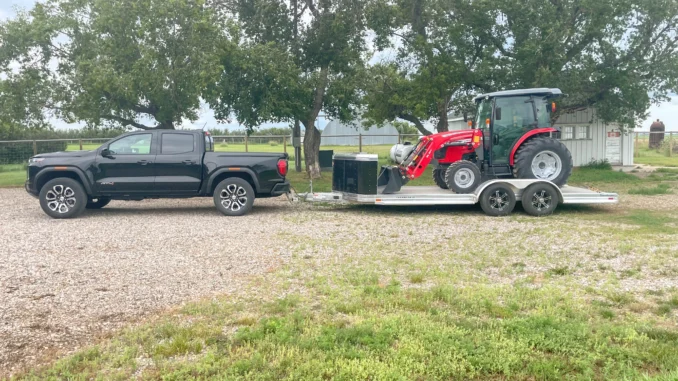
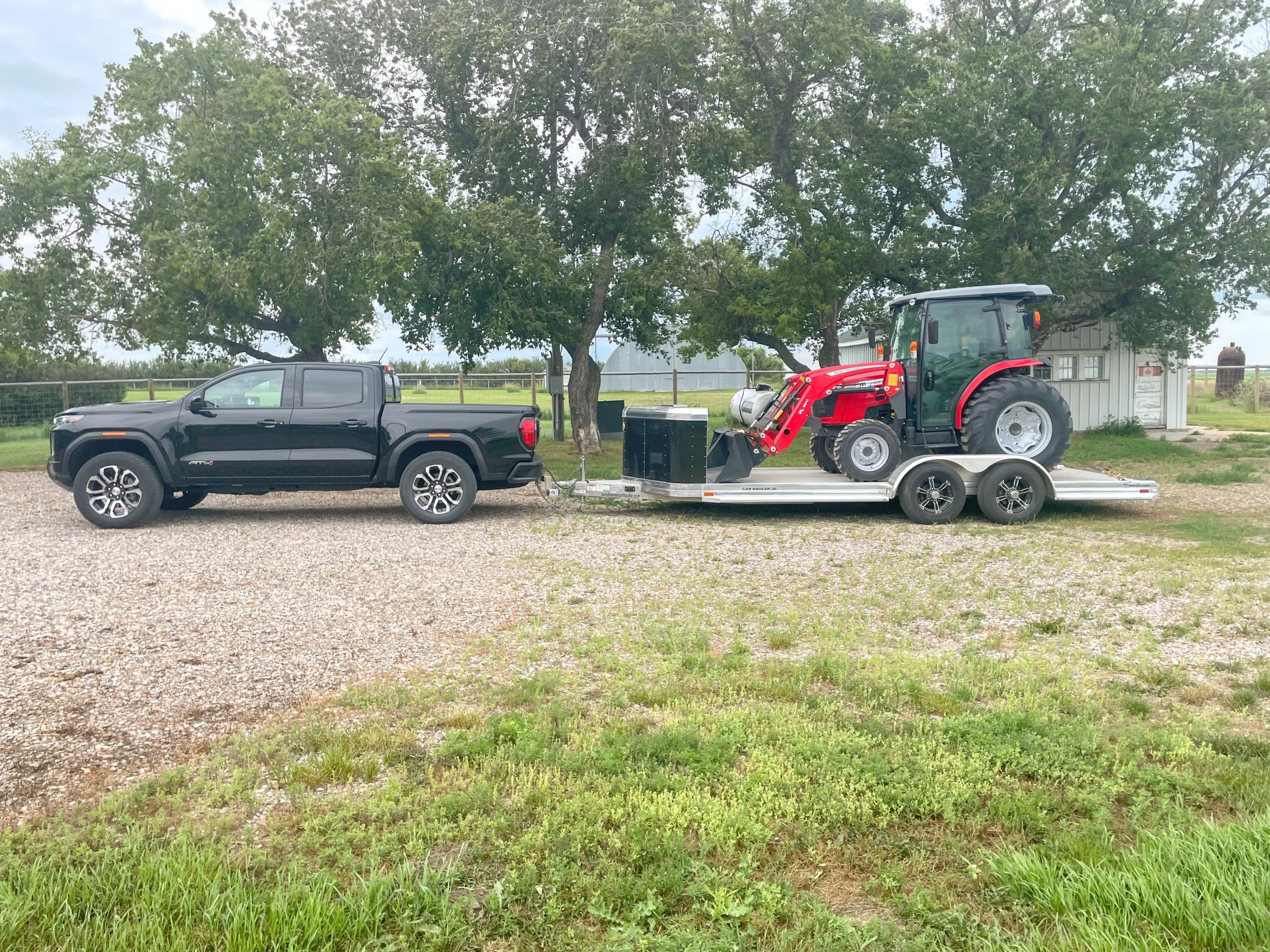
When we left you last issue, our focus was on the tow vehicle. This time, we’ll zoom in on trailers. The marketplace here is huge. One only has to look the sheer numbers of trailer listings right here on Racing Junk. For the purposes of this article, I’ll leave out enclosed trailers and target open trailers:
The first big decision you have to make is trailer construction material: Aluminum or steel? Both have pros and cons. Steel trailers are more economical than their aluminum counterparts. On the other hand, aluminum trailers usually weigh less. That has some benefits: Since the trailer weighs less, it contributes less to the GtCW (Gross Combined Weight) of the truck and trailer. As a result, the load can be a bit heavier. That’s why you see many semi-trailers (including flat decks) that are manufactured completely from aluminum.
What about overall strength? That all depends upon the alloys used in construction. Metallurgy has come a long ways over the years (for both steel and aluminum). So basically, it’s up to you. When it comes to ease of repair (if, for example, your trailer is damaged), it’s likely easier to get someone to weld a steel trailer rather than an aluminum example. Steel trailers are more prone to rust and other corrosion. For a steel trailer, that usually translates into more overall maintenance in the big picture. Finally when the time comes to sell the trailer, an aluminum example will most likely bring a better dollar.
When I was trailer shopping one decision I had to make was between a drop deck example (no ramps) or a fixed deck with ramps. I had ruled out a tilt deck for a couple of reasons: One is they tend to be heavy (and some can prove really heavy). Another is the overall deck height can prove quite a bit taller on tilt trailers. With a lighter tow vehicle, a higher center of gravity with a loaded trailer can sometimes prove a bit unnerving (been there, done that).
So what about the drop deck trailers? In my shopping, these trailers really looked appealing. There are some aluminum examples out there that don’t weigh too much more than their conventional counterparts. However, the steel examples can get right up there in weight (and in my case, they’re probably far too heavy for me to consider with my tow vehicle). Honestly I was headed in the direction of a drop deck aluminum trailer until I had a discussion with a good friend who is both a retired mechanical engineer and a pretty serious car guy. All he said was “What could possibly go wrong?” There are quite a few moving pieces in a drop deck trailer, and my pal’s comment really made me pause. For my purposes, the simplicity of ramps coupled with relatively low trailer deck won out. By the way, if loading height is an issue with a conventional trailer (where you’re loading a very low ride height car), some companies offer longer ramps. It’s an easy fix for clearance issues. In the end, your decisions (conventional or drop deck) may differ!
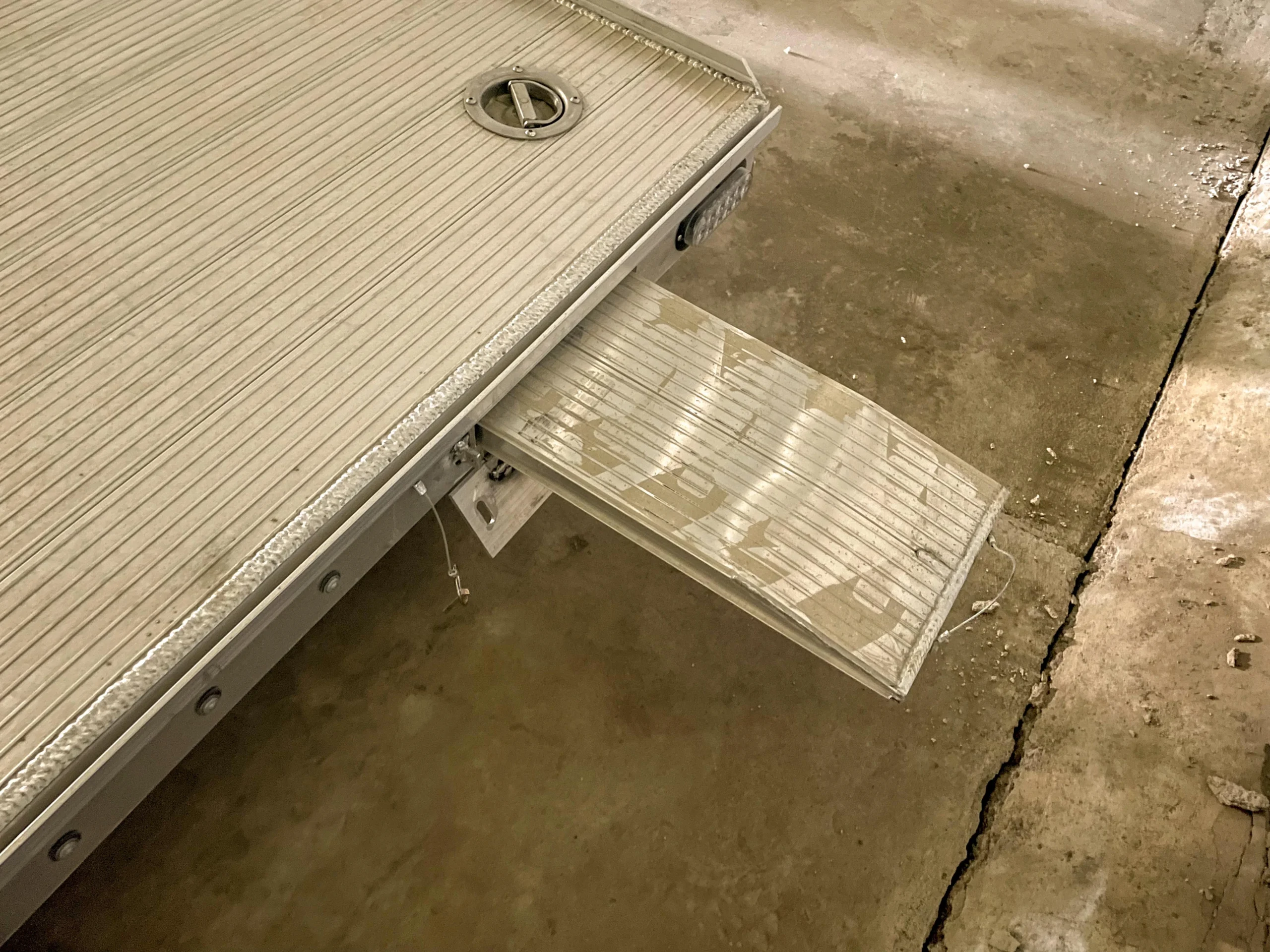
Trailer features are another consideration. Let’s get back to ramps for a minute: I once had a trailer where the ramps were stored from the side. Truthfully, this is a royal pain. Having ramps that store close to the mount location at the back of the trailer is way less hassle and work. Plus, if the ramps are steel, moving them around can get old in a hurry.
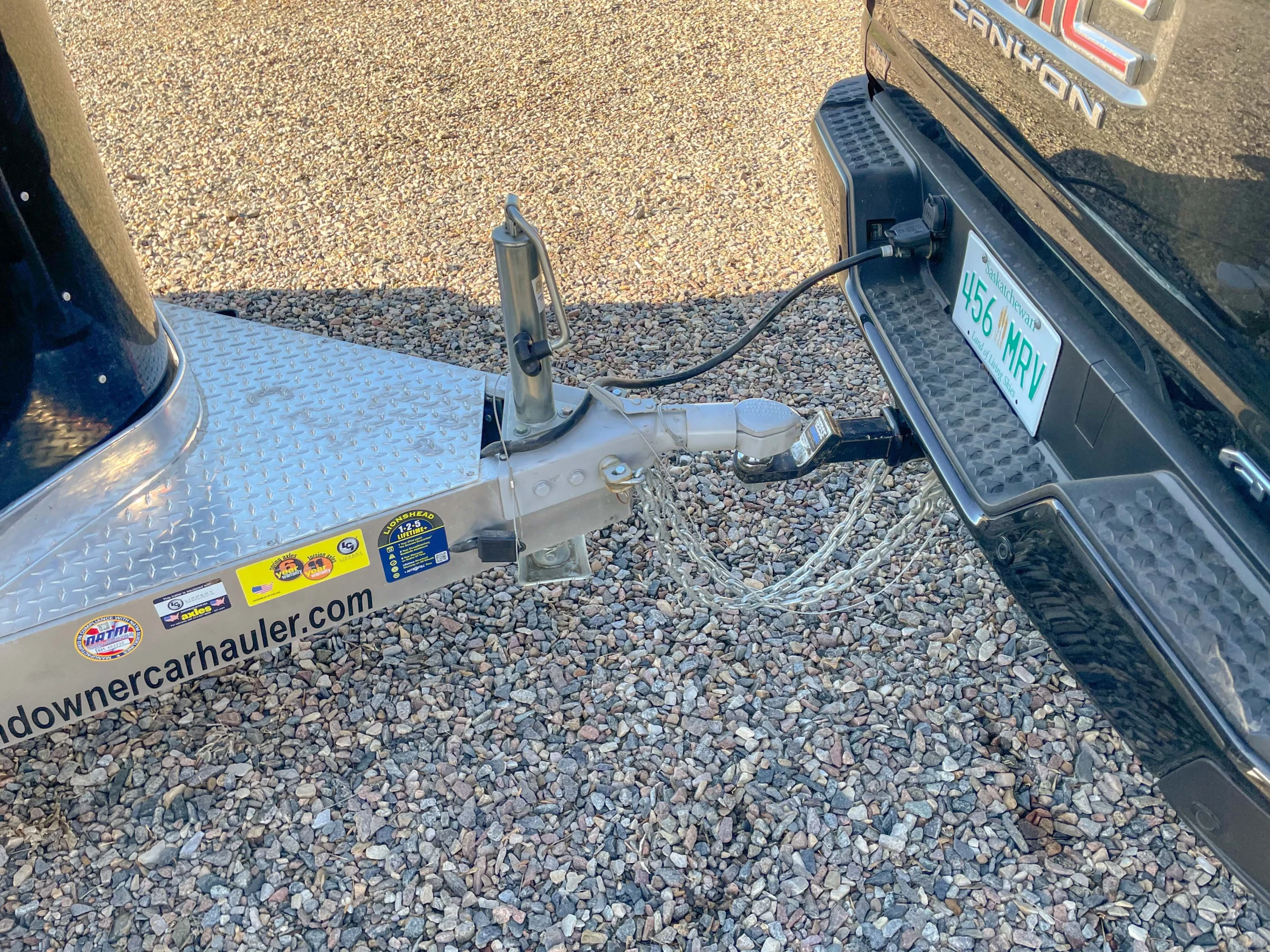
Another biggie for me is the jack location. Some trailers actually mount the jack too far forward on the drawbar. With that setup, you can’t open the truck tailgate when the trailer is attached. This is another royal pain if you need to load or retrieve something from the truck bed.
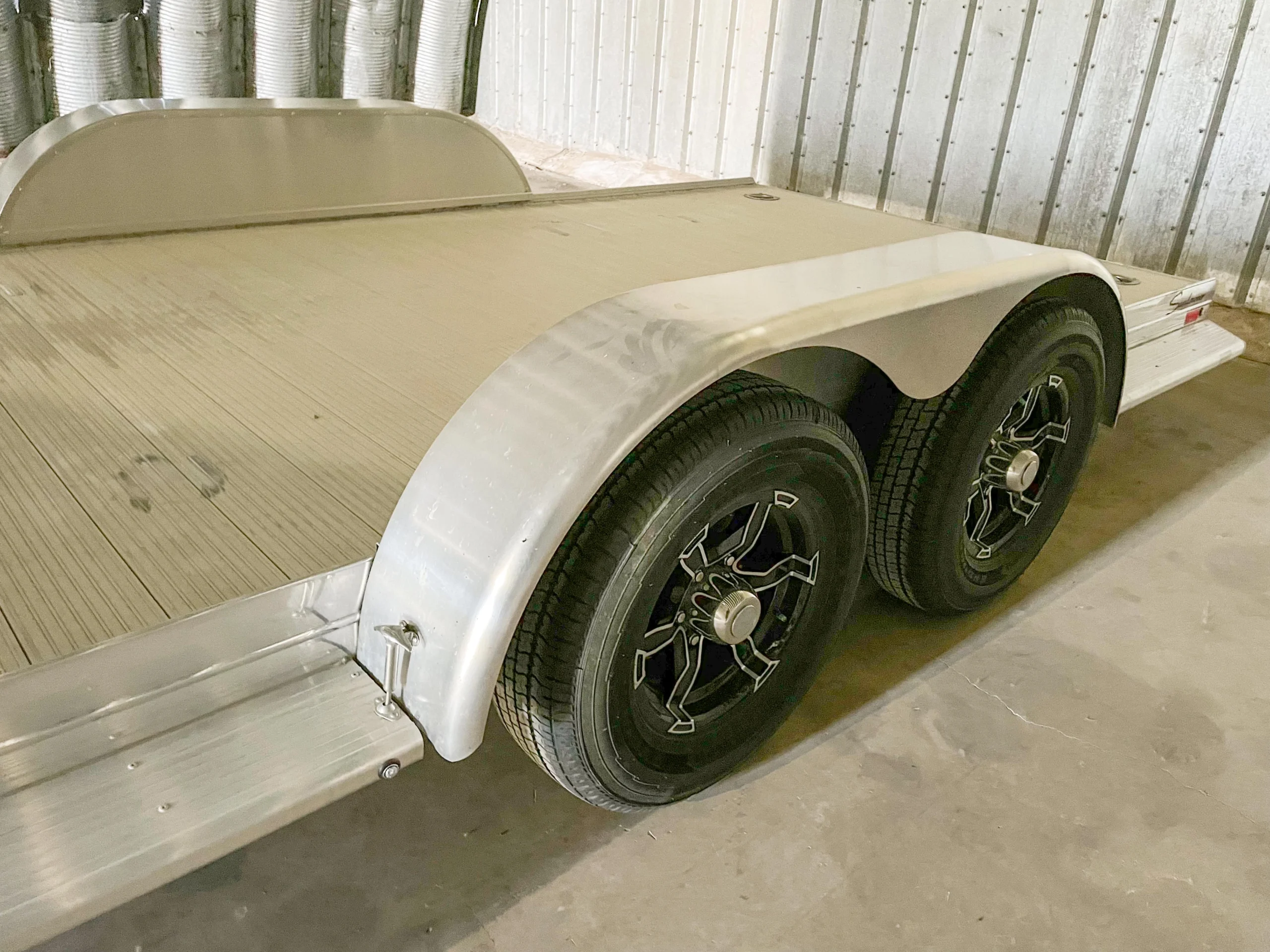
Removable trailer fenders are also a great idea, and in fact, are almost mandatory for trailer decks with low ride height. With a removable fender, you can open and close the car door(s) when it’s loaded. This allows you to steer (if winching on) and you don’t have to climb out of a window if you’re driving it onto the trailer. It also allows you to close the side window once the car is loaded. FYI, there are all sorts of different methods used to attach removable fenders. See the photos for a better look.
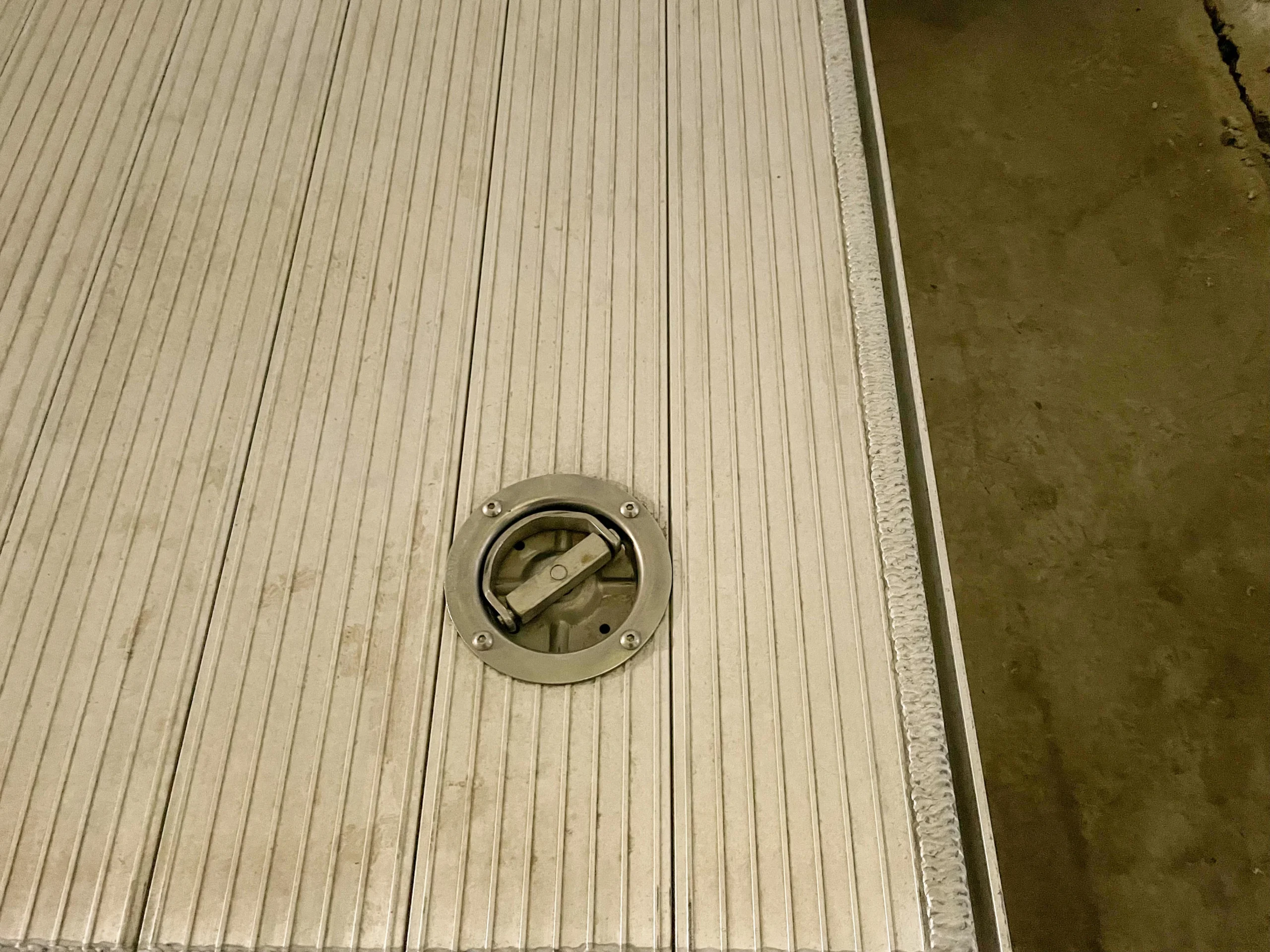
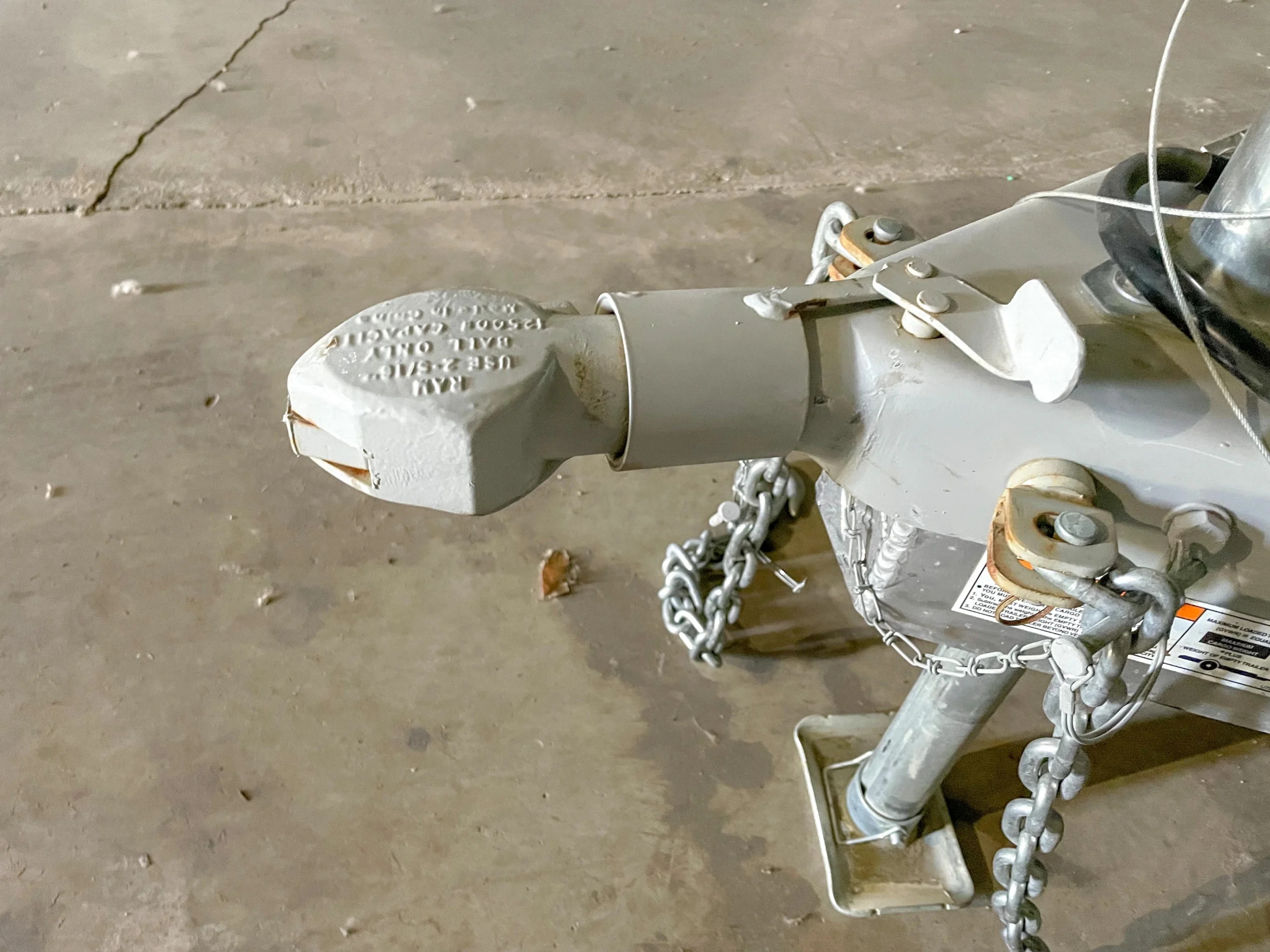
Deck D Rings are important too. Sure, you can cinch down a car by way of the trailer sides (sometimes a side rail), but a good D ring setup is much easier. Many of these D rings are flush mount and the good ones rotate. That makes the tie down process go much smoother. Hitch couplers are also a source of frustration. There are several different configurations out there. But all are designed to accomplish the same thing: Clamp the hitch around the trailer ball. Some use a form of hand wheel to tighten a clamp around the tailer ball. Others use a lever to do the same job. Yet others (Bulldog collar hitch couplers and their copycats) incorporate an internal ball and socket joint. In use, hook up is done by simply pulling the round collar (at the rear) back a bit. Then you lower the big cast coupler over the hitch ball and release the rear collar. It closes and the internal joint clamps around the hitch ball. Insert the safety pin and you’re done. It’s a very beefy setup but also a very user friendly system. Bottom line here is, once you use a collar hitch coupler such as this you won’t want to mess with levers and wheels again.
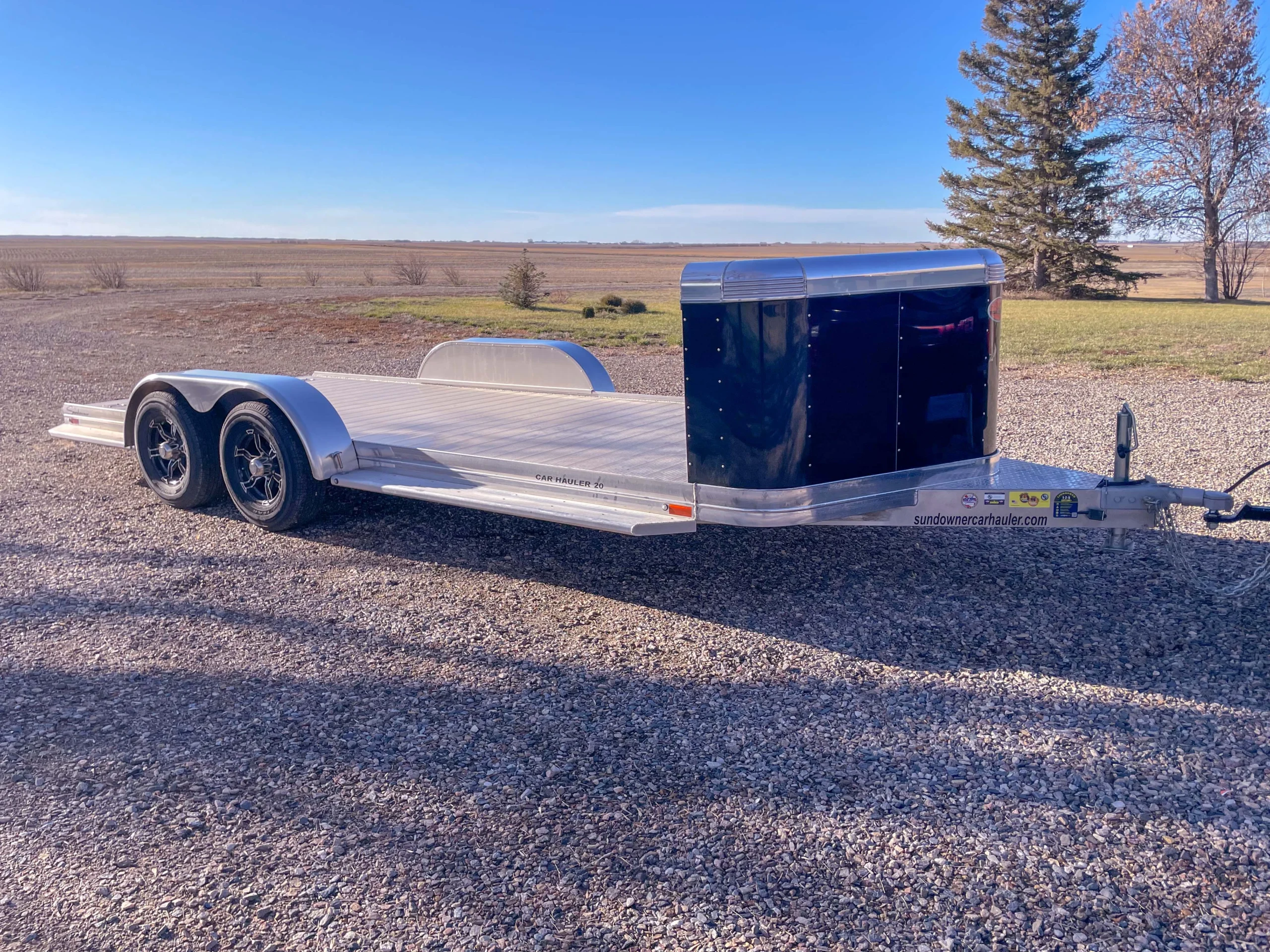
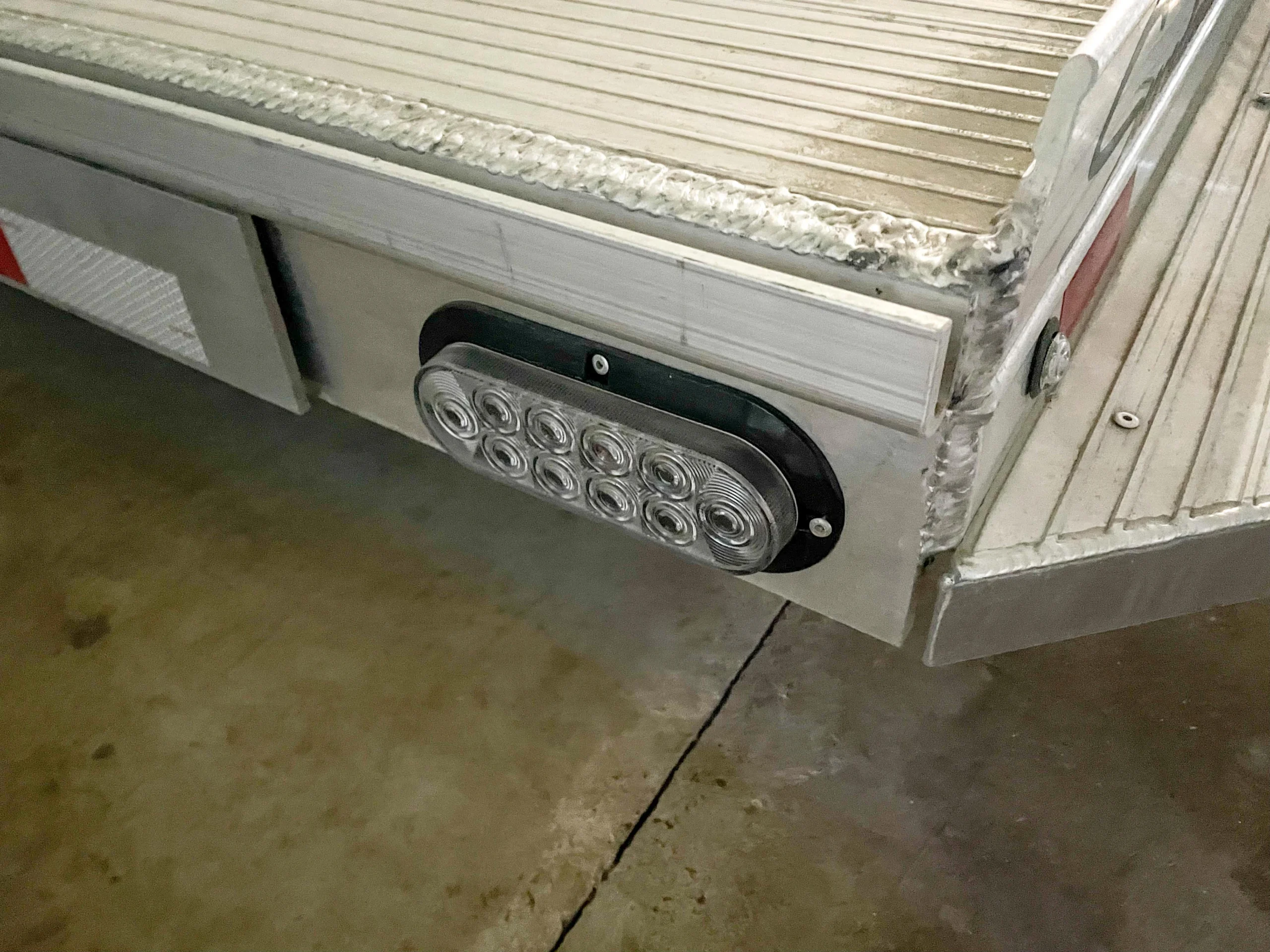
Lighting is another constant source of issues on trailers. Most trailers today make use of LED lights (and that’s good thing). Not only are they brighter, they require far less maintenance. Here, you have ensure that the wiring harness is well protected. Flush mount lights or low profile lights are also desirable. The reason is, it is not uncommon to hit a plastic light with something while loading or when the trailer is parked. Flush mounts offer more protection. Another piece that often gets damaged on a trailer is the license plate bracket. Most jurisdictions mandate some form of plate lamp and if the trailer is equipped with removable fenders, then mounting becomes an issue. On my Sundowner, the plate mounts to the trap door for the driver side loading ramp under the deck. It’s out of the way, and there’s little chance to damage the license lamp (which is offset to the left of the trap door).
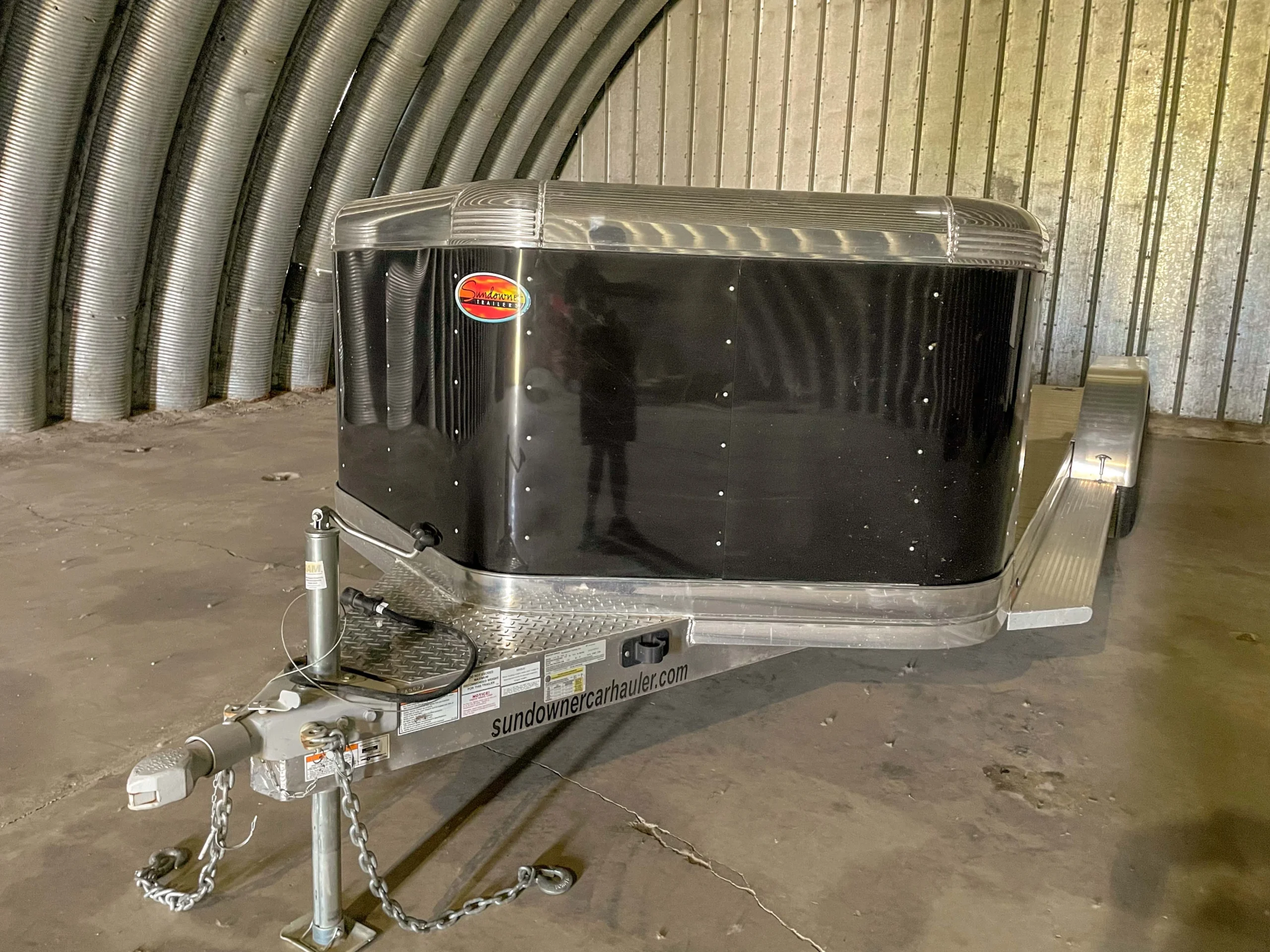
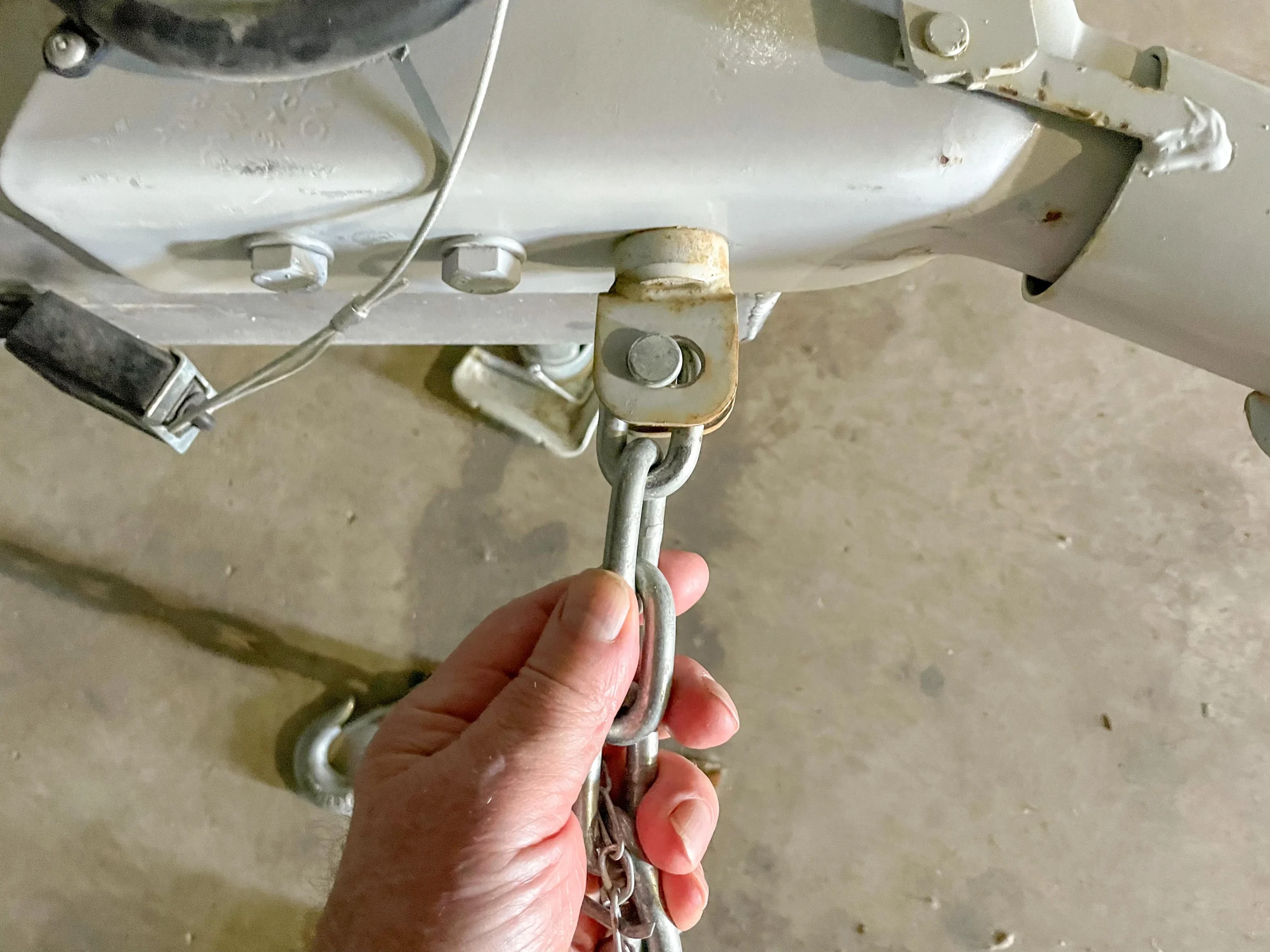
Other considerations for an open trailer include gravel guards (at the front of the trailer), spare tires, safety chain styles and hookups along with brake types, brake safety switch/cables and even the electrical hook up cable. All of these things are important and there are different takes on all of them from various manufactures. Some have better ideas than others. And really in the end when shopping for a trailer, you get what you pay for.
That’s a wrap for this segment. Next time around, we’ll discuss hitches and tie downs. You might be surprised at some of the neat technology that’s out there. They make trailering much easier, Watch for it.
Click Here to Begin Slideshow
When we left you last issue, our focus was on the tow vehicle. This time, we’ll zoom in on trailers. The marketplace here is huge. One only has to look the sheer numbers of trailer listings right here on Racing Junk. For the purposes of this article, I’ll leave out enclosed trailers and target open trailers:
The first big decision you have to make is trailer construction material: Aluminum or steel? Both have pros and cons. Steel trailers are more economical than their aluminum counterparts. On the other hand, aluminum trailers usually weigh less. That has some benefits: Since the trailer weighs less, it contributes less to the GtCW (Gross Combined Weight) of the truck and trailer. As a result, the load can be a bit heavier. That’s why you see many semi-trailers (including flat decks) that are manufactured completely from aluminum.
What about overall strength? That all depends upon the alloys used in construction. Metallurgy has come a long ways over the years (for both steel and aluminum). So basically, it’s up to you. When it comes to ease of repair (if, for example, your trailer is damaged), it’s likely easier to get someone to weld a steel trailer rather than an aluminum example. Steel trailers are more prone to rust and other corrosion. For a steel trailer, that usually translates into more overall maintenance in the big picture. Finally when the time comes to sell the trailer, an aluminum example will most likely bring a better dollar.
When I was trailer shopping one decision I had to make was between a drop deck example (no ramps) or a fixed deck with ramps. I had ruled out a tilt deck for a couple of reasons: One is they tend to be heavy (and some can prove really heavy). Another is the overall deck height can prove quite a bit taller on tilt trailers. With a lighter tow vehicle, a higher center of gravity with a loaded trailer can sometimes prove a bit unnerving (been there, done that).
So what about the drop deck trailers? In my shopping, these trailers really looked appealing. There are some aluminum examples out there that don’t weigh too much more than their conventional counterparts. However, the steel examples can get right up there in weight (and in my case, they’re probably far too heavy for me to consider with my tow vehicle). Honestly I was headed in the direction of a drop deck aluminum trailer until I had a discussion with a good friend who is both a retired mechanical engineer and a pretty serious car guy. All he said was “What could possibly go wrong?” There are quite a few moving pieces in a drop deck trailer, and my pal’s comment really made me pause. For my purposes, the simplicity of ramps coupled with relatively low trailer deck won out. By the way, if loading height is an issue with a conventional trailer (where you’re loading a very low ride height car), some companies offer longer ramps. It’s an easy fix for clearance issues. In the end, your decisions (conventional or drop deck) may differ!
Trailer features are another consideration. Let’s get back to ramps for a minute: I once had a trailer where the ramps were stored from the side. Truthfully, this is a royal pain. Having ramps that store close to the mount location at the back of the trailer is way less hassle and work. Plus, if the ramps are steel, moving them around can get old in a hurry.
Another biggie for me is the jack location. Some trailers actually mount the jack too far forward on the drawbar. With that setup, you can’t open the truck tailgate when the trailer is attached. This is another royal pain if you need to load or retrieve something from the truck bed.
Removable trailer fenders are also a great idea, and in fact, are almost mandatory for trailer decks with low ride height. With a removable fender, you can open and close the car door(s) when it’s loaded. This allows you to steer (if winching on) and you don’t have to climb out of a window if you’re driving it onto the trailer. It also allows you to close the side window once the car is loaded. FYI, there are all sorts of different methods used to attach removable fenders. See the photos for a better look.
Deck D Rings are important too. Sure, you can cinch down a car by way of the trailer sides (sometimes a side rail), but a good D ring setup is much easier. Many of these D rings are flush mount and the good ones rotate. That makes the tie down process go much smoother. Hitch couplers are also a source of frustration. There are several different configurations out there. But all are designed to accomplish the same thing: Clamp the hitch around the trailer ball. Some use a form of hand wheel to tighten a clamp around the tailer ball. Others use a lever to do the same job. Yet others (Bulldog collar hitch couplers and their copycats) incorporate an internal ball and socket joint. In use, hook up is done by simply pulling the round collar (at the rear) back a bit. Then you lower the big cast coupler over the hitch ball and release the rear collar. It closes and the internal joint clamps around the hitch ball. Insert the safety pin and you’re done. It’s a very beefy setup but also a very user friendly system. Bottom line here is, once you use a collar hitch coupler such as this you won’t want to mess with levers and wheels again.
Lighting is another constant source of issues on trailers. Most trailers today make use of LED lights (and that’s good thing). Not only are they brighter, they require far less maintenance. Here, you have ensure that the wiring harness is well protected. Flush mount lights or low profile lights are also desirable. The reason is, it is not uncommon to hit a plastic light with something while loading or when the trailer is parked. Flush mounts offer more protection. Another piece that often gets damaged on a trailer is the license plate bracket. Most jurisdictions mandate some form of plate lamp and if the trailer is equipped with removable fenders, then mounting becomes an issue. On my Sundowner, the plate mounts to the trap door for the driver side loading ramp under the deck. It’s out of the way, and there’s little chance to damage the license lamp (which is offset to the left of the trap door).
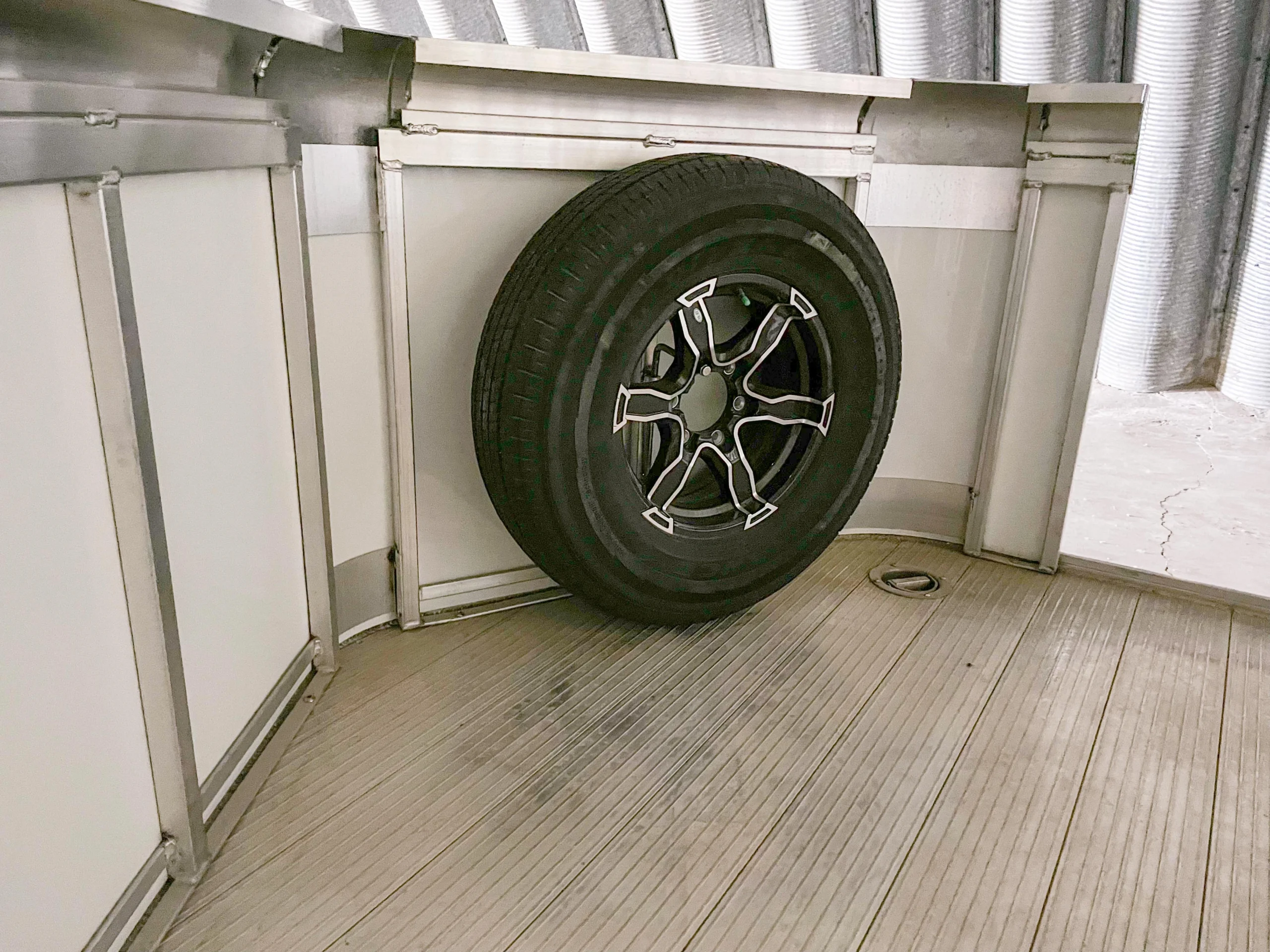
Other considerations for an open trailer include gravel guards (at the front of the trailer), spare tires, safety chain styles and hookups along with brake types, brake safety switch/cables and even the electrical hook up cable. All of these things are important and there are different takes on all of them from various manufactures. Some have better ideas than others. And really in the end when shopping for a trailer, you get what you pay for.
That’s a wrap for this segment. Next time around, we’ll discuss hitches and tie downs. You might be surprised at some of the neat technology that’s out there. They make trailering much easier, Watch for it.
Click Here to Begin Slideshow
Can you please provide the name or model of the trailer you have pictured? thanks
Trailer is a Sundowner open car hauler with the optional nose guard along with an optional spare wheel/tire.