




![[Gallery] Amelia Island Kickoff Car Show And Concours D"Lemons](https://www.racingjunk.com/news/wp-content/uploads/2026/04/DSC_2847-e1777055210316-376x206.jpg)
Take a Second Look at this 1969 Camaro-Bird
Click Here to Begin Slideshow
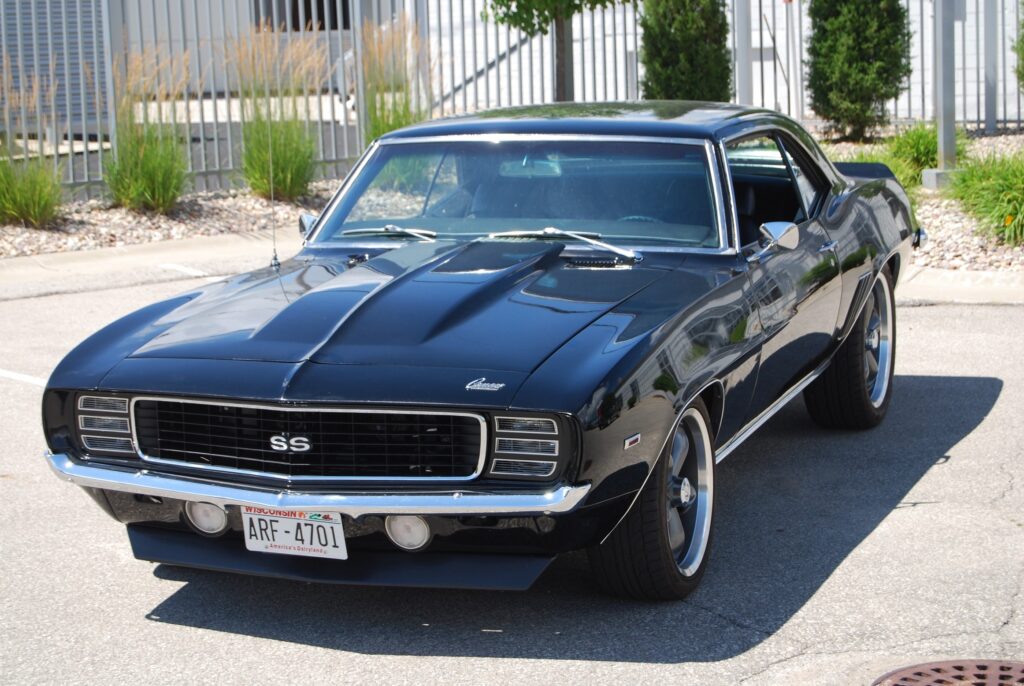
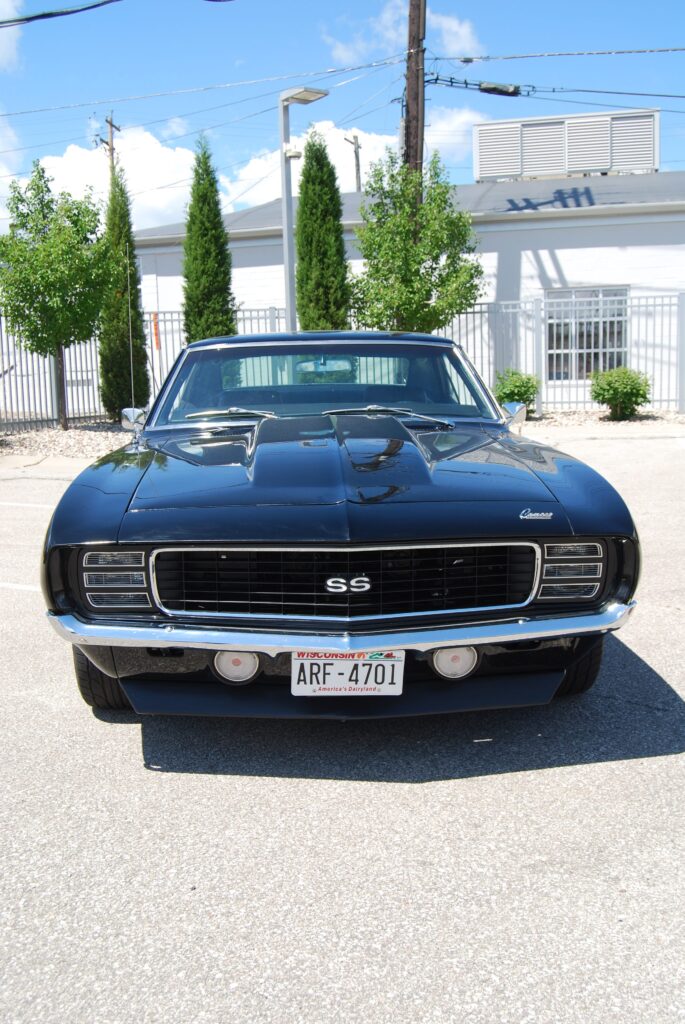
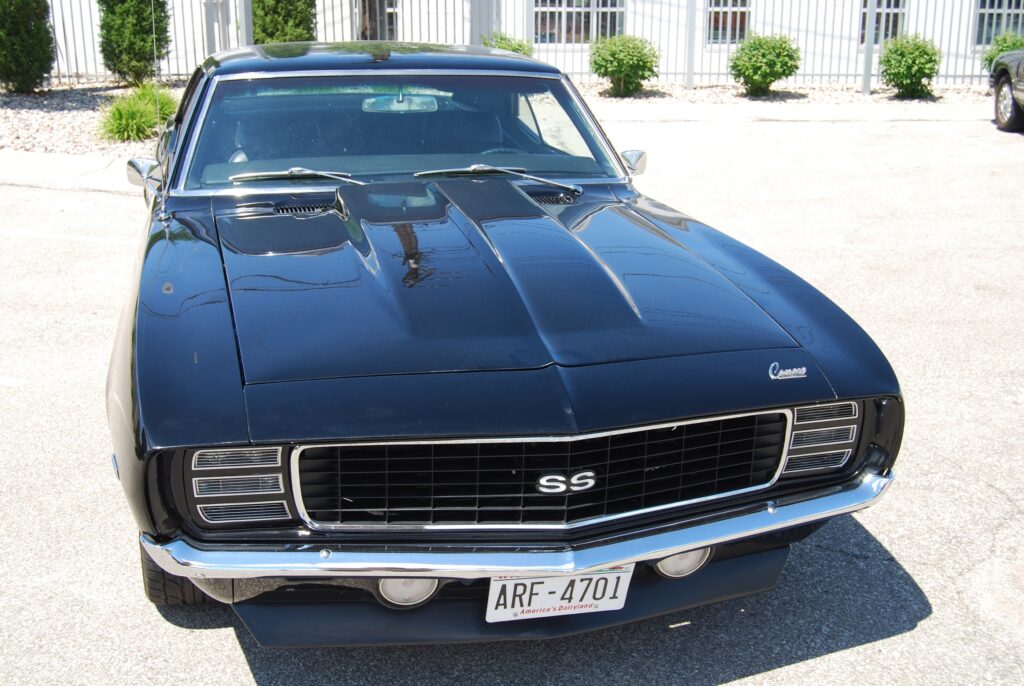
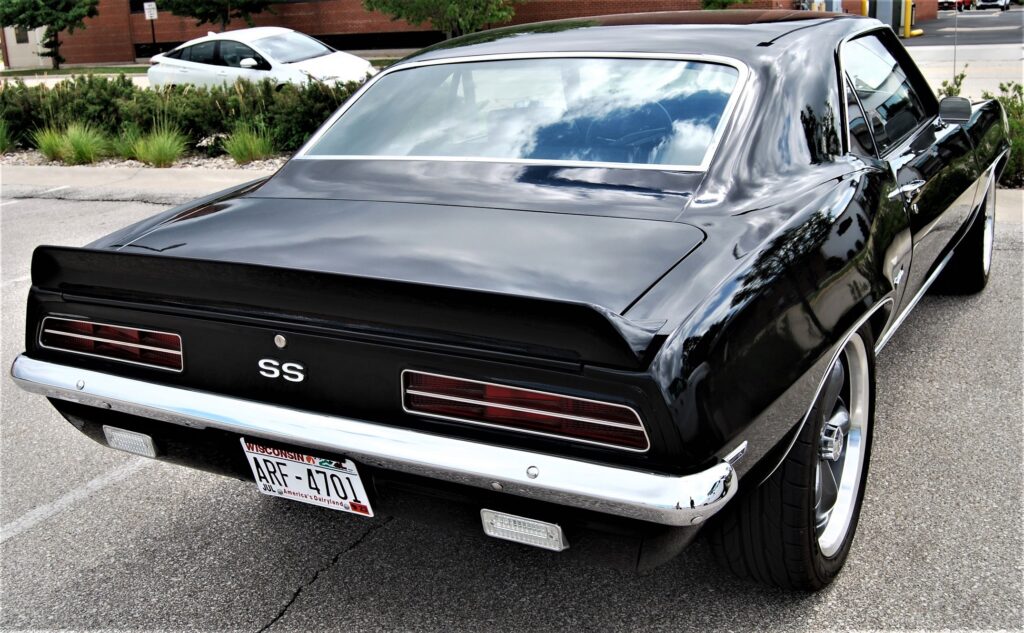
You have to take a second look at J. Ebert’s car to figure out it’s not what it looks like. At a glance you’d think it’s a ’69 Camaro, but underneath it’s actually a ’69 Firebird. Dick Kornowski—the builder of the car—wasn’t planning any funny stuff. He just bought an old Firebird with a poorly-installed flip-up front end and decided to turn it into something no one else had.
“If I had bought a frame kit and put a Camaro body on it to build a resto-mod, no one would have given it a second thought,” Dick told Hotrod Hotline. “But, I bought a Firebird frame and put a Camaro body on it.” Building the car was a retirement project that took 11 years.
The Camaro and Firebird were called “pony cars” because they were created as a marketing reaction to the Ford’s very successful Mustang. The Mustang grille had a chrome rectangle (nicknamed a “corral”) and galloping pony inside it. So, the “pony” name stuck for the sporty cars of all brands that the Mustang inspired: Camaro, Firebird, Cougar, Barracuda, Challenger and Javelin.
Camaros and Firebirds used the same basic body shell, with different sheet metal “tailoring.” Chevy rushed the Camaro into showrooms in the fall of 1966. Pontiac spent five extra months to finish the Firebird and introduce it at the Chicago Auto Show on Feb. 23, 1967.
Different sheet metal was used for the Firebird hood, grille and taillight panels. Firebirds also had Pontiac motors and a chassis tuned by Pontiac engineers. The Firebird’s suspension was firmer than that of the Camaro.
Dick Kornowski studied the similarities of the two cars. He found that Firebird doors and Camaro doors fit exactly the same. He says that alone told him his plan to build the car as a Camaro would work.
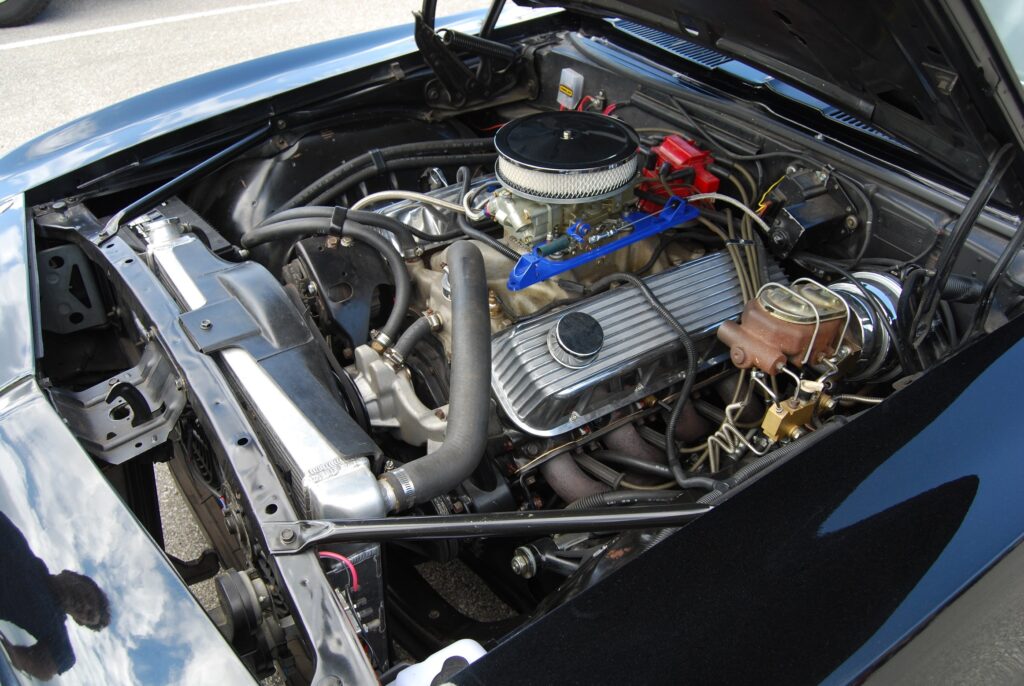
The engine in the car is a big-block Chevrolet 454, but it’s been bored .060 over and has 496 cubic inches. It mounts a Holley 850 four-barrel carburetor with a vacuum secondary. A true dual exhaust system with headers and “short” tailpipes was installed, but current owner J. Ebert wants to extend them out back. The car has gone 505.3 miles since it was restored. It’s fast and fun.
Features of the build include a Muncie four-speed, a Hurst floor shifter. power steering, power 4-wheel disc brakes, an aluminum radiator and de-clutching fan, front control arms with 4-degrees of extra caster for better steering action, coil overs and a 4-link rear suspension. The rims are five-spoke Viston Legends with Nitto NT555 245/40ZR18 tires.
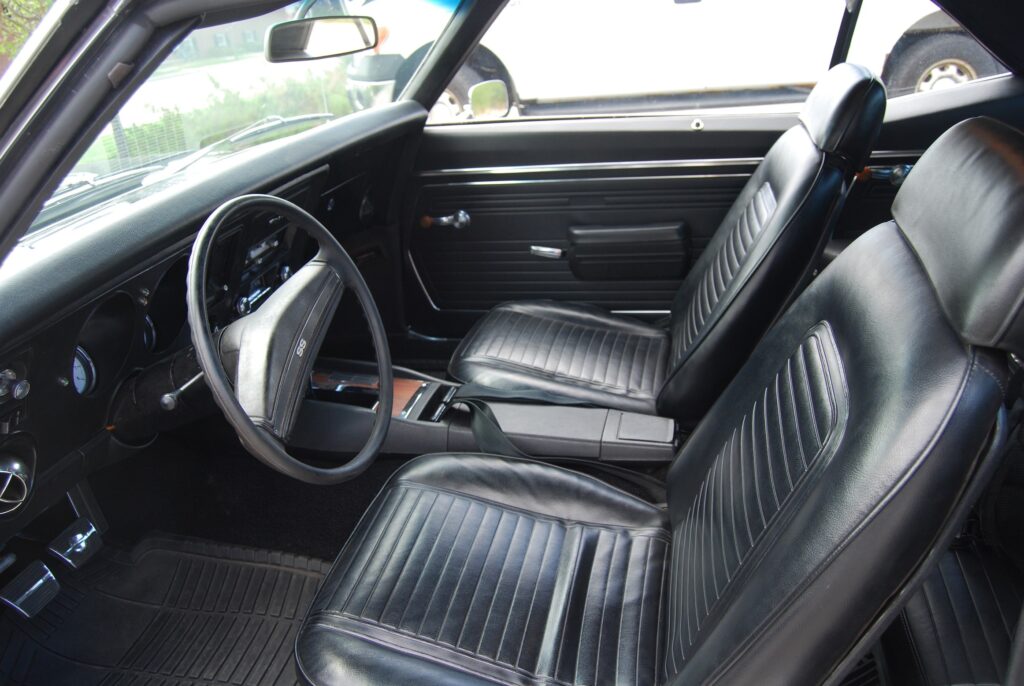
The interior is almost 100% Camaro SS with aftermarket gauges and a stock-looking radio. Kornowski left the Firebird dash and cowl in the car to make it easier to register (as a Pontiac—but not a Firebird).
If you don’t know whether to call the car a Camaro or a Firebird, don’t worry. Just all it cool!
Click Here to Begin Slideshow
You have to take a second look at J. Ebert’s car to figure out it’s not what it looks like. At a glance you’d think it’s a ’69 Camaro, but underneath it’s actually a ’69 Firebird. Dick Kornowski—the builder of the car—wasn’t planning any funny stuff. He just bought an old Firebird with a poorly-installed flip-up front end and decided to turn it into something no one else had.
“If I had bought a frame kit and put a Camaro body on it to build a resto-mod, no one would have given it a second thought,” Dick told Hotrod Hotline. “But, I bought a Firebird frame and put a Camaro body on it.” Building the car was a retirement project that took 11 years.
The Camaro and Firebird were called “pony cars” because they were created as a marketing reaction to the Ford’s very successful Mustang. The Mustang grille had a chrome rectangle (nicknamed a “corral”) and galloping pony inside it. So, the “pony” name stuck for the sporty cars of all brands that the Mustang inspired: Camaro, Firebird, Cougar, Barracuda, Challenger and Javelin.
Camaros and Firebirds used the same basic body shell, with different sheet metal “tailoring.” Chevy rushed the Camaro into showrooms in the fall of 1966. Pontiac spent five extra months to finish the Firebird and introduce it at the Chicago Auto Show on Feb. 23, 1967.
Different sheet metal was used for the Firebird hood, grille and taillight panels. Firebirds also had Pontiac motors and a chassis tuned by Pontiac engineers. The Firebird’s suspension was firmer than that of the Camaro.
Dick Kornowski studied the similarities of the two cars. He found that Firebird doors and Camaro doors fit exactly the same. He says that alone told him his plan to build the car as a Camaro would work.
The engine in the car is a big-block Chevrolet 454, but it’s been bored .060 over and has 496 cubic inches. It mounts a Holley 850 four-barrel carburetor with a vacuum secondary. A true dual exhaust system with headers and “short” tailpipes was installed, but current owner J. Ebert wants to extend them out back. The car has gone 505.3 miles since it was restored. It’s fast and fun.
Features of the build include a Muncie four-speed, a Hurst floor shifter. power steering, power 4-wheel disc brakes, an aluminum radiator and de-clutching fan, front control arms with 4-degrees of extra caster for better steering action, coil overs and a 4-link rear suspension. The rims are five-spoke Viston Legends with Nitto NT555 245/40ZR18 tires.
The interior is almost 100% Camaro SS with aftermarket gauges and a stock-looking radio. Kornowski left the Firebird dash and cowl in the car to make it easier to register (as a Pontiac—but not a Firebird).
If you don’t know whether to call the car a Camaro or a Firebird, don’t worry. Just all it cool!
Click Here to Begin Slideshow

HUH? What? Where?
I don’t see anything to do with a ‘Bird’.
Is it a secret?New version of the game ‘Clue’? 😉