



Last weekend’s playoff drama reminds us of an old bumper sticker: would you rather push a Ford than drive a Chevy?
This past weekend’s Talladega race was filled with drama, as expected. If you’re a fan of the playoff system, you certainly have to appreciate the role of these superspeedway races to shake up the playoff standings due to their inherent unpredictability. As you might expect, there was a fair share of controversy attached to this race. What may surprise you is that, for once, it’s not directed at NASCAR.
First off, let’s talk about The Big One. With several recent accidents involving cars getting airborne after high-speed crashes, NASCAR has experimented with various band-aid solutions to keep wayward race cars planted on terra firma after collisions. Several of these solutions failed, but the new package unveiled at Talladega this past weekend worked great. The new package involves extensions to the rocker panels in front of the rear tires, as well as “sails” on the roof flaps. Those roof panel additions are the big story here. These triangular sections of fabric work, in theory, as air brakes.
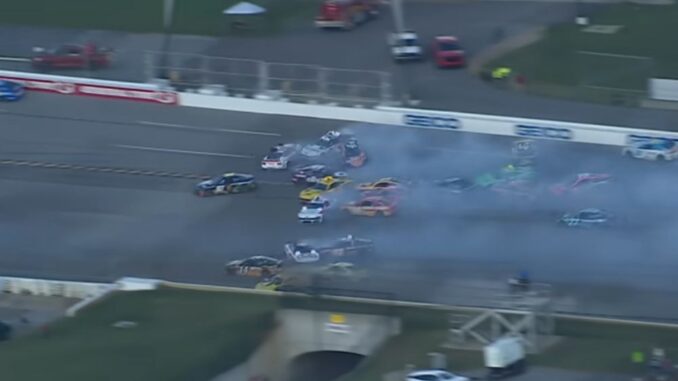
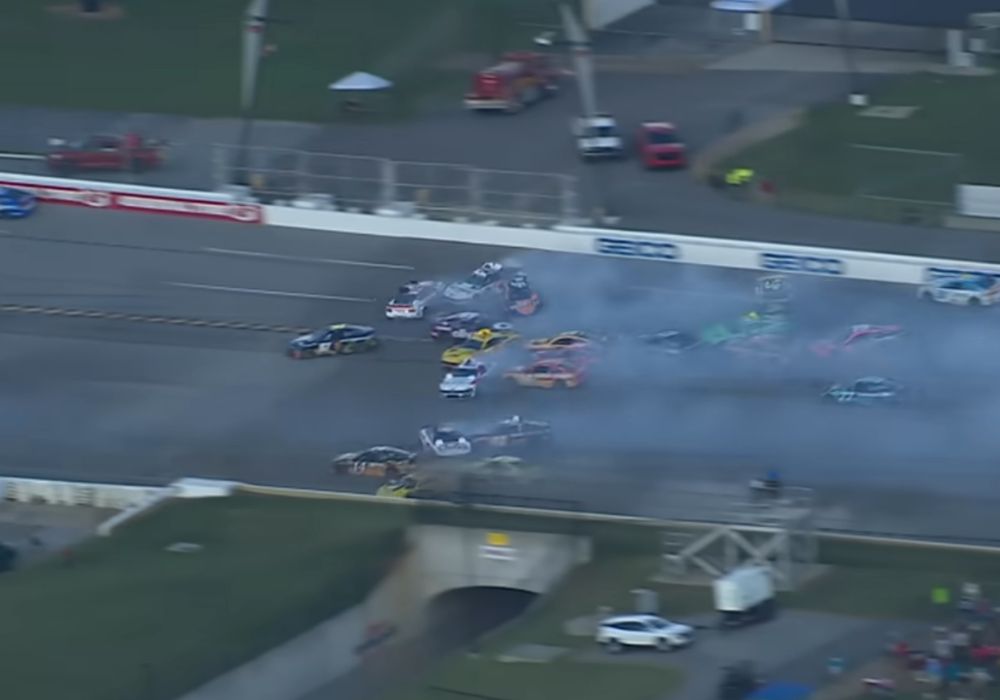
These new additions got the ultimate test on Sunday as The Big One took place with just five laps to go. Todd Gilliland attempted to blend in with the pack after serving a penalty with Austin Cindric and Ricky Stenhouse, Jr. leading the two lanes of traffic. Unfortunately, the bottom line moving out of his way caused a rubber band effect that resulted in a big shove from Brad Keselowski that spin Cindric and resulted in a whopping 27 wrecked race cars – the Biggest One in the history of Big Ones. A lot of credit goes to NASCAR, here – none of those 27 cars got airborne. Well done.
As far as controversy goes, it’s time to talk manufacturer politics. It’s no secret that manufacturers coordinate with the teams on pit strategy and drafting partners at these races. All of the Chevrolets come to pit road together. All of the Fords come together. Only Toyota has abandoned this strategy, not because it doesn’t work, but because there simply aren’t enough Toyotas in the field to build the necessary momentum off pit road to keep up with the lead pack.
As the overtime finish loomed, Brad Keselowski found himself on the front row next to eventual winner Ricky Stenhouse, Jr. As they came through the tri-oval, it seemed like Keselowski had the momentum to pass Stenhouse but came up just short. Later on, review of radio communication revealed that his pusher, Kyle Larson, was told not to push a Ford in front of a Chevy. This begs two important questions: Is this race manipulation? Have manufacturer politics become too entrenched in these superspeedway races? I’d be interested in hearing your thoughts below.
As far as the 23XI/Front Row Motorsports antitrust lawsuit against NASCAR, both teams filed an injunction to allow them to race next year as the case proceeds despite not having signed the charter agreement. This was struck down, which, to many, is actually further proof of NASCAR’s monopolistic practices. Due to continued hurricane cleanup, the hearing has been postponed to November 4th. We’ll keep you posted on developments as they occur.
Leave a Reply