



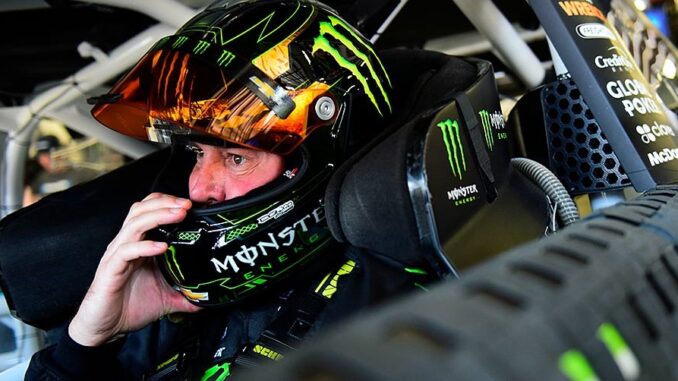

With Kurt Busch’s injuries, the issue of traumatic brain injury in motorsports is on everyone’s mind. RacingJunk asked a medical specialist to explain TBI to us.
Prior to the NASCAR Cup Series playoffs, fans were waiting anxiously for the return of 2004 Cup Series champion, Kurt Busch following a crash at Pocono Raceway which resulted in a traumatic brain injury (TBI) that has had him sidelined for over a month. However, with 23XI Racing’s withdrawal of his medical waiver for the playoffs, those hopes were dashed, signaling that neither Busch nor 23XI were ready for the champ to return to the drivers seat. This has lead fans, and motorsports journalists to ask– just how serious is this injury anyway?
Obviously, only Busch and his doctors have the answers in his case, and while the whole community wishes him a speedy recovery, it also leads to a number of questions about TBI. As a result, RacingJunk reached out to Dr. Rashid Janjua, a neurosurgeon with Novant Health, to learn more about how these types of unseen injuries affect athletes, including motorsports drivers.
“Brain injuries are a very serious thing, and not something that should be taken lightly,” said Dr. Janjua. “The type of injury that we are often seeing in any driver who has been in an accident, especially those going over 35 to 40 MPH, are called acceleration-deceleration injury with rotational elements, which is due to the rapid change in movement of the head. The forces that cause these injuries often bash the brain against the skull causing bruising and sometimes bleeding within the brain.”
Dr. Janjua went on to explain that this type of injury can lead to ongoing headaches, concentration or memory problems and even balance problems, which can make driving a challenge – especially driving at speeds of up to 100 MPH – a serious hazard.
“While there are many who have experienced TBI’s in the past, these types of injuries were often were left untreated due to the societal norms that expected athletes to just shake it off, but you can see why this would be so dangerous, especially for someone competing in this type of sport,” Dr. Janjua explained. “This is why it is good to see this athlete taking the time to heal no matter the pressure that he may feel to get back to the sport that he loves. What he will also need to remember, if he chooses to return to racing, is that a reoccurrence of this injury could occur.”
So what does that mean for an athlete ready to return? “Fortunately, sports have come a long way and innovative technologies are being developed everyday to keep athletes safer, but there is always a risk or reinjury. The most important thing to remember is to take every precaution that is available to avoid further damage.”
According to Dr. Janjua, every person heals at a different pace when it comes to brain injuries. Which means that the race and NASCAR community will continue to wish Busch a safe and speedy recovery, with fingers crossed on a return next season or whenever he is ready.
Kurt, take your time to heal. Listen to your body and forget the stress that’s in sports.
Learn from what Ernie went through.
I, and of your fans, wish you a full recovery!
God Bless!
Steve