




![[Gallery] Mecum Kissimmee Auction 2026](https://www.racingjunk.com/news/wp-content/uploads/2026/03/DSC_0717-e1774629242515-376x206.jpg)
![[Gallery] Cruisin’ One Daytona](https://www.racingjunk.com/news/wp-content/uploads/2026/03/DSC_0538-e1774027057404-376x206.jpg)
Jay Simzer's 1969 Dodge Charger: A Homage to His Dad
Click Here to Begin Slideshow
Whether it is a Plymouth Superbird with its wing the size of Arizona and shark-like nose, a Mercedes-Benz 300SL with its spread up with flight-like gullwings, a sensual E-Type Jaguar that is sublimely sensual as though it has emerged from a pool of mercury, or a black 1978 Porsche 911 with its racy bulbous curves and dramatic rear wing, I am rendered speechless from admiration. These automobiles deserve to be heralded in the pantheon of exceptional design. For me, such cars bring on paroxysms of ecstasy. Recently, I encountered another marvel. A car that encapsulates the ‘muscle’ era of the 1960s. That car is the 1969 Dodge Charger. It is metal pabulum.
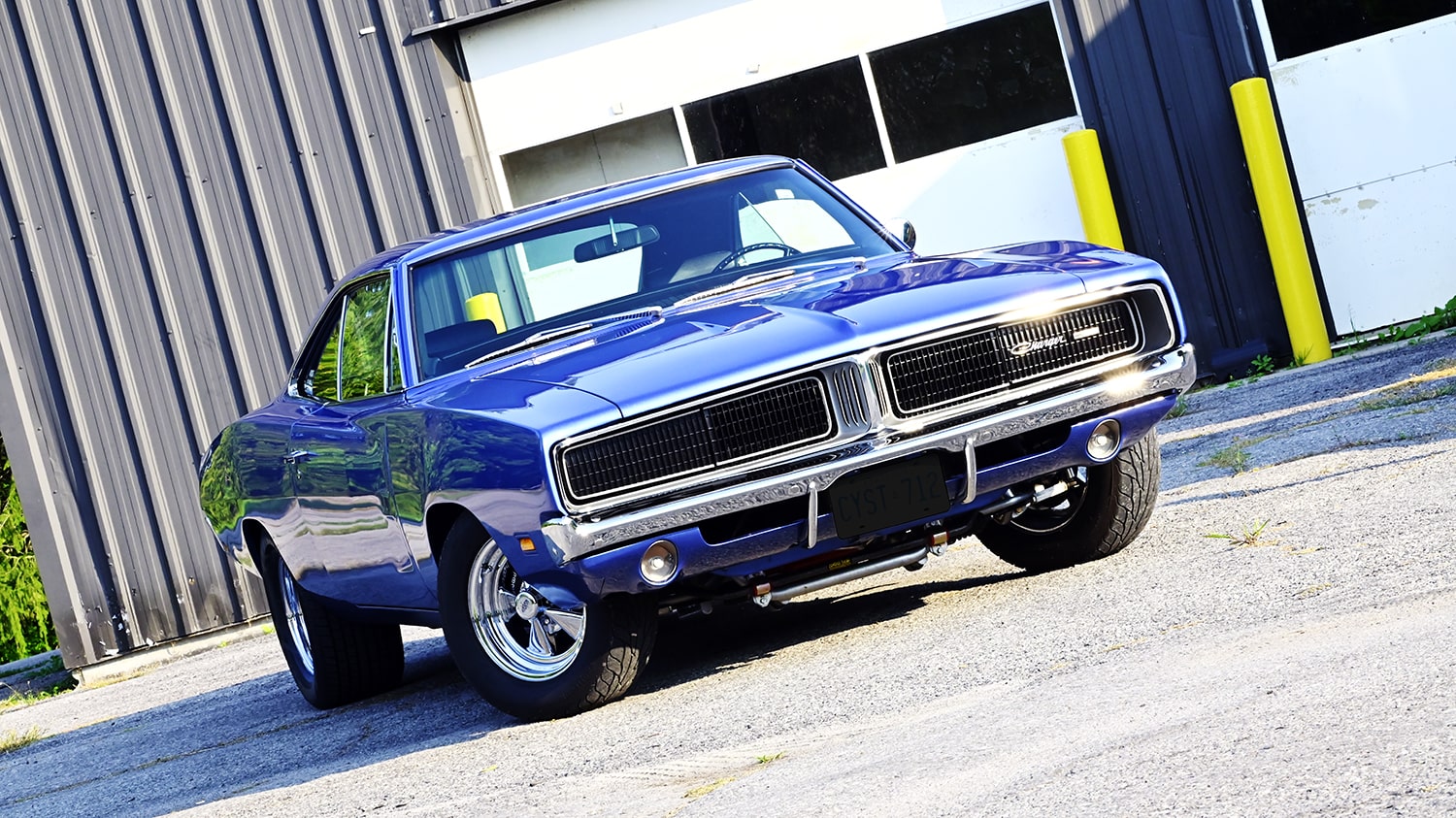
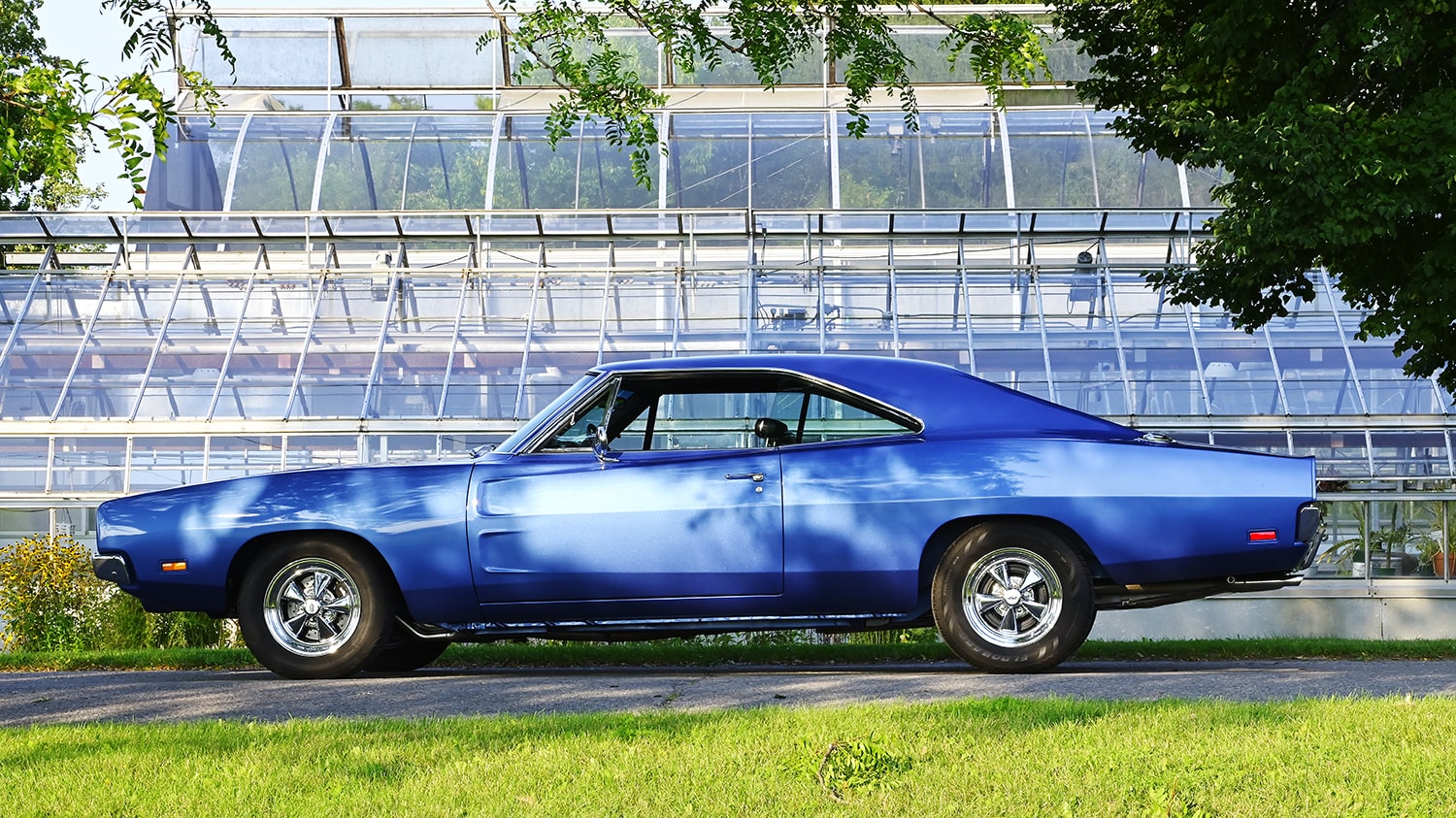
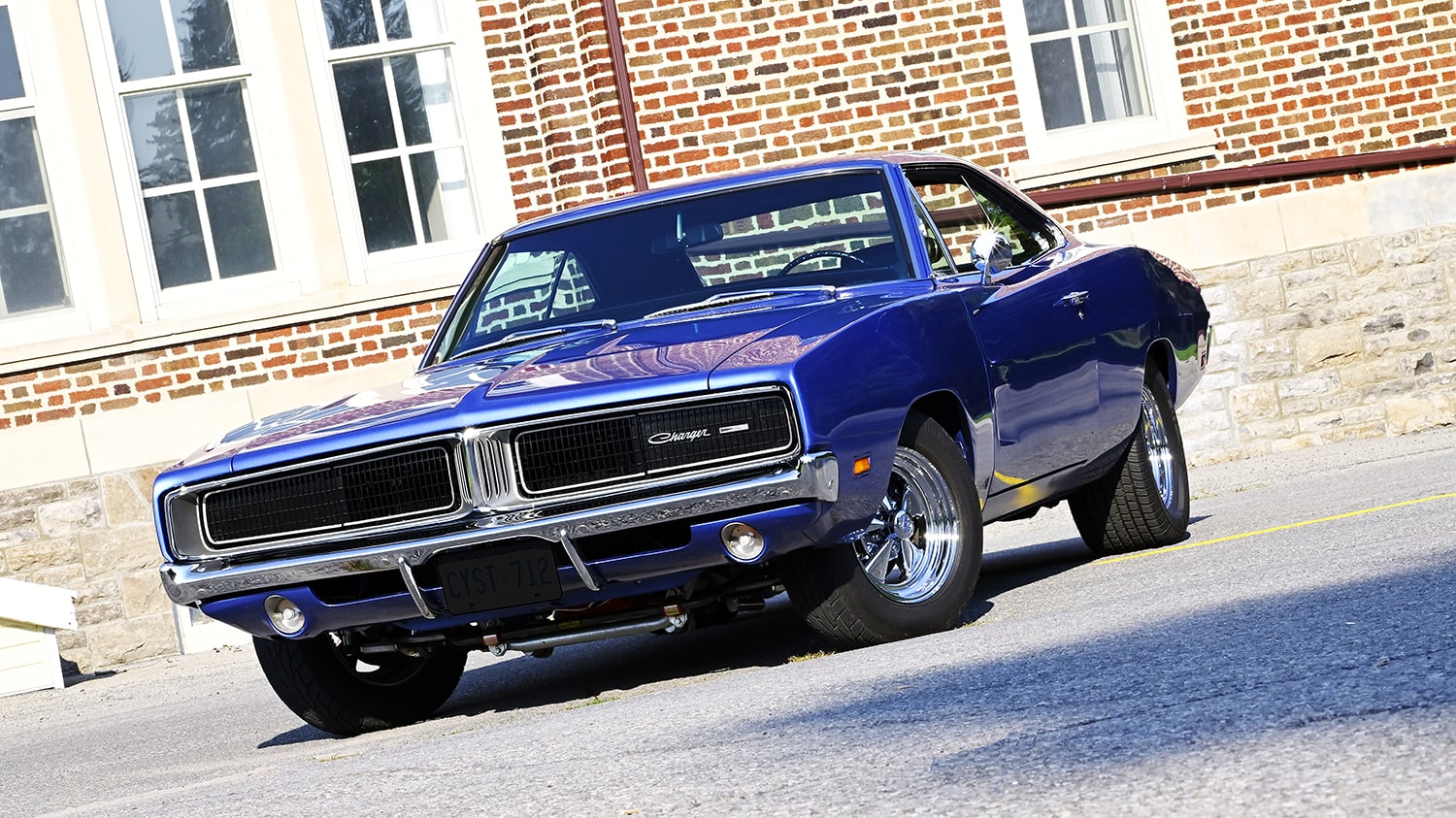
The 1968 Dodge Charger, masterminded by designer, Richard Sias cemented public acclaim with his “Coke-bottle” design of sleek curves and a long hood. But what made the car instantly recognizable was its appearance in Steve McQueen’s 1968 classic detective film Bullitt, for its famous 10-minute car chase sequence driven ruthlessly by the villains. It was also featured as “General Lee” in the TV series, The Dukes of Hazzard. “I used to watch The Dukes of Hazzard as a kid, over and over,” animates Jay Simzer, the proud owner of a scintillating sea blue ’69 Charger that has been completely rebuilt. “From then on I loved that kind of car and decided that some day I would have one.” Jay gives a smile as broad as Montana.
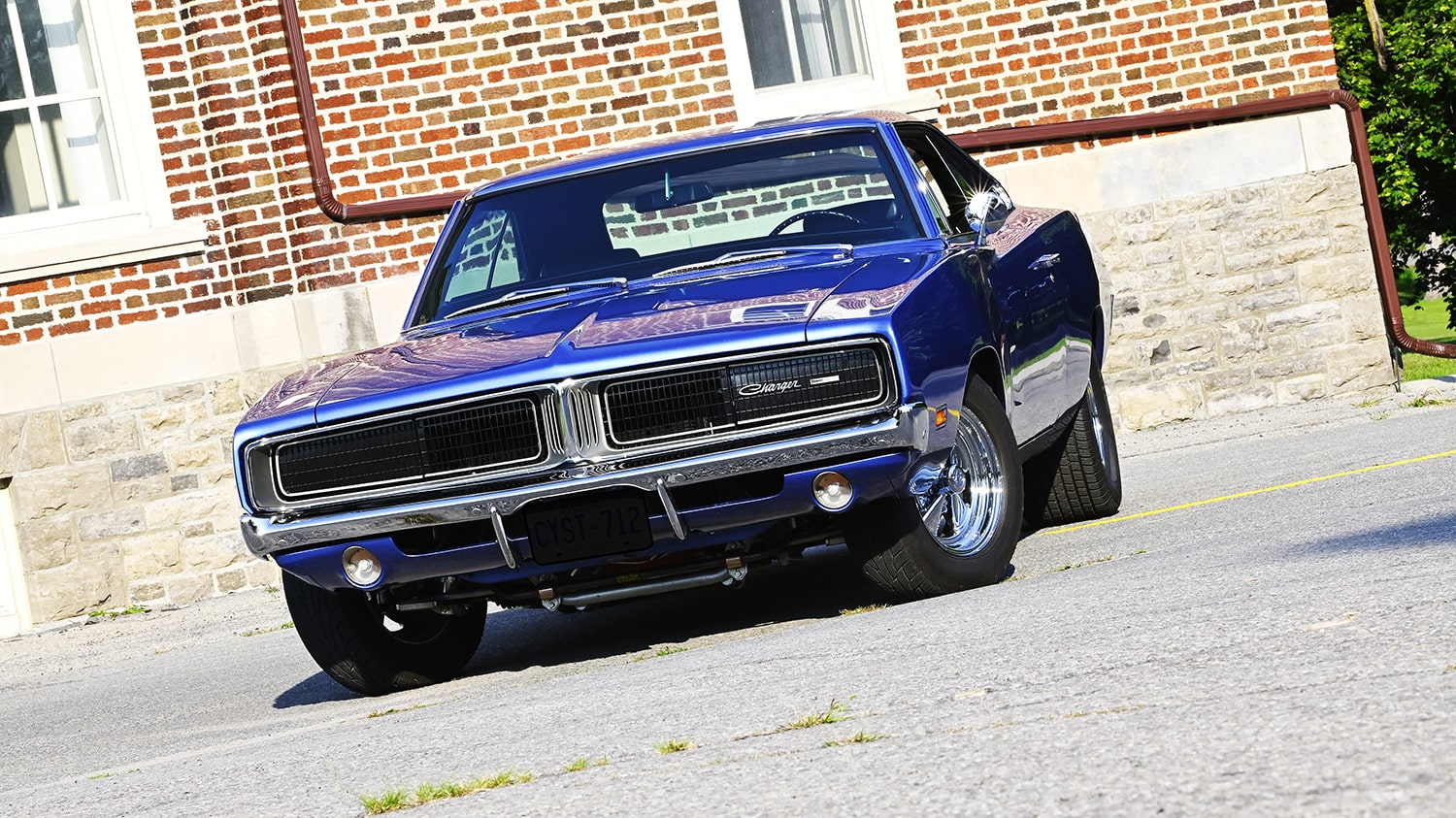
Looking back, the Chargers were a runaway sales successes in those early years and most of the credit has to go to the guy who penned the car, a young gun designer named Richard Tighstin, who took the reigns from Sias and worked for Dodge’s design boss Bill Brownlie. “I wanted the ultimate road and track machine,” he recalled in a 1994 interview, and the Tighstin ‘touch’ nailed it. For a car that was a hefty, full-sized fastback coupé, it gracefully conveyed indisputable style with practicality. He molded the roofline for better stability and greater speed with elongated buttressed rear pillars that cheated the wind. The tastefully simple front end emitted a hint of menace from its darkened full width grille concealing two pairs of headlights hidden behind the electric flaps. Even the bold styling of the eagle-shaped chrome wedge in the centre of the grille gives the car greater aesthetic integrity. Jay’s car looks like it can only be happy once it is released from its leash. For a big car, it is undeniably sexy. From its shiny Craiger wheels and flip up gas cap to its understated prowess it speaks another language and that language is speed. It feels like it houses muscle to burn.
The 1968 Charger’s shell was to last, with minimal changes, until 1970. Tighstin upgraded the hood with a reverse dual air vent theme. There was a myriad of engine options to be tailored to customer requirements. Owners could acquire an impressive 7.2-litre engine throbbing with tire-smoking torque that could out-muscle most competitors by reaching zero to 60 in six heartbeats. The standard engine was the 318 cu. in. V8, topped by the rollicking 425 hp 426 cid “street Hemi” that was basically a street legal racing car. Of course, such an engine required bolting the heavy-duty suspension down rock hard and fitting scaffolding-sized anti-roll bars that allowed the Charger to handle well. With the optional front discs you had half a chance of stopping it, too.
In 2012, Jay and his dad, Mark ventured down to Virginia to buy a Charger that was mostly original, except for the powertrain. “It had sat for awhile and needed lots of work.” It’s uncanny how buyers of muscle cars often want to convert the original engine to something filled with machoism? But who can blame them? A 289 becomes an intimidating 340. And a 340 is replaced by a Chevy 427 or for the truly adventurous, the mammoth 426 Hemi. Those who have done this cosmetic surgery soon realize that nip n’ tuck is required to compensate for the Herculean power: heavy-duty suspension, brakes, carbs and a new intake manifold. Jay nods his head emphatically. “The original 318 was long gone and we wanted something with more power. We picked up a rotten ’69 Chrysler Newport convertible that had the original 440/727. We used it for the powertrain.” Jay and his dad rebuilt the engine and transmission from top to bottom and got the engine and transmission installed. “We stripped the car down to the bare shell and built a rotisserie to put it on. After we sandblasted the shell we were on to the metal work which consisted of replacing mostly every piece of the rear end of the car,” recalls Jay. “Thank goodness for Auto Metal Direct (AMD) aftermarket panels which helped things get back together pretty nicely. After lots of hours welding and grinding, the shell was painstakingly put together. We were onto the bodywork which was a very time- consuming part. It has Headman headers that go into 2.5" stainless exhaust.” These headers are performance exhaust headers that improve a vehicle’s engine efficiency by having individual pipes for each cylinder that create a suction effect, removing exhaust gases more effectively than stock manifolds. “Currently the car has a date code ’69 440hp in it.” With such power, Jay and his dad needed heavy-duty support. “We put Edlebrock E-street heads on it with Keith Black pistons and a comp cam.” The E-Street cylinder heads feature as-cast ports and are designed for street performance applications operating in the idle-to-5500 rpm range while the Keith Black pistons set the benchmark in performance cast alloy piston technology.
“We were finally ready for paint. It seemed like that day would never come but there we were. We selected the mesmerizing Boost Blue pearl metallic hue (the original colour was B5 Blue) and applied three or four coats of clear, plus wet sanding and buffing, all done in our garage. Once the paint was done, we started reassembly. I got a new ‘control-freak’ coilover front suspension with Wilwood disc brakes to ensure stability. We rebuilt a 8.75 Sure-Grip rear end for in it. Then we recovered the upholstery with authentic seat covers, which were a perfect match, and replaced the rest of the interior with new pieces.” The coilover is a special type of sports suspension, while the Sure-Grip differential allows for the driving wheel to have better traction condition to develop more driving torque. Restoration took eleven years to complete. The length of time was delayed by various other commitments. “I would say doing the metal work (changing quarters, trunk floor, rear valance, taillight panel, deck filler) basically replaced the whole rear end of the car is what took the longest, between that, and doing the body/paint.” And to think that it was all done in his garage. It’s an amazing accomplishment considering his busy schedule, the lack of space and the amazing parts list. “A funny story is when a big order of parts finally arrived from Toronto after waiting for what seemed like an eternity,” remembers Jay. “My boss wouldn't give me the day off to go get them, so I ended up calling in sick and me and dad headed off with the trailer to get them. Well, who did we run into on the way there? My boss. I was busted,” laughs Jay. “But you know what, it was worth it because I was able to bring home all the nice new parts.”
Most cars have a direct influence from their precursor, but in Jay’s case, the influence can be attributed to his dad. If it wasn’t for Mark, the car might not have gotten off the ground. “My dad helped build the car and we spent a lot of hours together.” In many respects, their car is a homage. It is a homage to nostalgic times gone by and a homage to a father who made a young man into an adult. “Dad taught me a lot of what I know about working on cars and the rest I learned from reading and lots of trial and error. We worked on everything but the paint. It was my dad who got me into cars at a very young age. We were always working at something together out in the garage whether it was an old car or tractor or a hit-and-miss engine. We also went to a lot of auctions bringing home more parts or cars.” A bond between a father and son is like no other. After all, it isn’t unusual to share a lot in common, such as watching sports, hobbies or working on cars. A good father makes a good son for a father sets the path for his son to embark on. For Jay, the best part in owning his car can be attributed to all the time he and his dad spent in restoring the Charger back to health. It is a magnificent job. “I’m pretty proud of this car. It’s always fun to drive and it’s a thrill every time we’re out. Every time I drive it, I still think to myself that its crazy that we finally got it on the road. The hardest part now is just keeping it clean.”
Jay gazes at his work as it glistens in the sun. “I plan to keep this car until the end of my time, and then hopefully pass it down to one of my daughters to keep it in the family.” There is a heady fragrance of eau de testosterone about the car. “Building this car has taught me a few lessons. It can be fun and frustrating, but it’s a great hobby. When restoring a car, I would recommend to take your time and have lots of patience. There’s so many little pieces that take a long time to do, so just take your time. Also be prepared to spend lots of money.” As Jay starts the car, there is an exhilaration in the Charger’s rumble - a redolent bellow of V8 dopamine. I felt a tremendous rush of power as I anticipate it hitting the straightaway and eating distance at unexpected speed, but we decide not to tempt fate. “The speed is there,” Jay reassures me with a convincing grin and I believe him.
Click Here to Begin Slideshow
Whether it is a Plymouth Superbird with its wing the size of Arizona and shark-like nose, a Mercedes-Benz 300SL with its spread up with flight-like gullwings, a sensual E-Type Jaguar that is sublimely sensual as though it has emerged from a pool of mercury, or a black 1978 Porsche 911 with its racy bulbous curves and dramatic rear wing, I am rendered speechless from admiration. These automobiles deserve to be heralded in the pantheon of exceptional design. For me, such cars bring on paroxysms of ecstasy. Recently, I encountered another marvel. A car that encapsulates the ‘muscle’ era of the 1960s. That car is the 1969 Dodge Charger. It is metal pabulum.
The 1968 Dodge Charger, masterminded by designer, Richard Sias cemented public acclaim with his “Coke-bottle” design of sleek curves and a long hood. But what made the car instantly recognizable was its appearance in Steve McQueen’s 1968 classic detective film Bullitt, for its famous 10-minute car chase sequence driven ruthlessly by the villains. It was also featured as “General Lee” in the TV series, The Dukes of Hazzard. “I used to watch The Dukes of Hazzard as a kid, over and over,” animates Jay Simzer, the proud owner of a scintillating sea blue ’69 Charger that has been completely rebuilt. “From then on I loved that kind of car and decided that some day I would have one.” Jay gives a smile as broad as Montana.
Looking back, the Chargers were a runaway sales successes in those early years and most of the credit has to go to the guy who penned the car, a young gun designer named Richard Tighstin, who took the reigns from Sias and worked for Dodge’s design boss Bill Brownlie. “I wanted the ultimate road and track machine,” he recalled in a 1994 interview, and the Tighstin ‘touch’ nailed it. For a car that was a hefty, full-sized fastback coupé, it gracefully conveyed indisputable style with practicality. He molded the roofline for better stability and greater speed with elongated buttressed rear pillars that cheated the wind. The tastefully simple front end emitted a hint of menace from its darkened full width grille concealing two pairs of headlights hidden behind the electric flaps. Even the bold styling of the eagle-shaped chrome wedge in the centre of the grille gives the car greater aesthetic integrity. Jay’s car looks like it can only be happy once it is released from its leash. For a big car, it is undeniably sexy. From its shiny Craiger wheels and flip up gas cap to its understated prowess it speaks another language and that language is speed. It feels like it houses muscle to burn.
The 1968 Charger’s shell was to last, with minimal changes, until 1970. Tighstin upgraded the hood with a reverse dual air vent theme. There was a myriad of engine options to be tailored to customer requirements. Owners could acquire an impressive 7.2-litre engine throbbing with tire-smoking torque that could out-muscle most competitors by reaching zero to 60 in six heartbeats. The standard engine was the 318 cu. in. V8, topped by the rollicking 425 hp 426 cid “street Hemi” that was basically a street legal racing car. Of course, such an engine required bolting the heavy-duty suspension down rock hard and fitting scaffolding-sized anti-roll bars that allowed the Charger to handle well. With the optional front discs you had half a chance of stopping it, too.
In 2012, Jay and his dad, Mark ventured down to Virginia to buy a Charger that was mostly original, except for the powertrain. “It had sat for awhile and needed lots of work.” It’s uncanny how buyers of muscle cars often want to convert the original engine to something filled with machoism? But who can blame them? A 289 becomes an intimidating 340. And a 340 is replaced by a Chevy 427 or for the truly adventurous, the mammoth 426 Hemi. Those who have done this cosmetic surgery soon realize that nip n’ tuck is required to compensate for the Herculean power: heavy-duty suspension, brakes, carbs and a new intake manifold. Jay nods his head emphatically. “The original 318 was long gone and we wanted something with more power. We picked up a rotten ’69 Chrysler Newport convertible that had the original 440/727. We used it for the powertrain.” Jay and his dad rebuilt the engine and transmission from top to bottom and got the engine and transmission installed. “We stripped the car down to the bare shell and built a rotisserie to put it on. After we sandblasted the shell we were on to the metal work which consisted of replacing mostly every piece of the rear end of the car,” recalls Jay. “Thank goodness for Auto Metal Direct (AMD) aftermarket panels which helped things get back together pretty nicely. After lots of hours welding and grinding, the shell was painstakingly put together. We were onto the bodywork which was a very time- consuming part. It has Headman headers that go into 2.5" stainless exhaust.” These headers are performance exhaust headers that improve a vehicle’s engine efficiency by having individual pipes for each cylinder that create a suction effect, removing exhaust gases more effectively than stock manifolds. “Currently the car has a date code ’69 440hp in it.” With such power, Jay and his dad needed heavy-duty support. “We put Edlebrock E-street heads on it with Keith Black pistons and a comp cam.” The E-Street cylinder heads feature as-cast ports and are designed for street performance applications operating in the idle-to-5500 rpm range while the Keith Black pistons set the benchmark in performance cast alloy piston technology.
“We were finally ready for paint. It seemed like that day would never come but there we were. We selected the mesmerizing Boost Blue pearl metallic hue (the original colour was B5 Blue) and applied three or four coats of clear, plus wet sanding and buffing, all done in our garage. Once the paint was done, we started reassembly. I got a new ‘control-freak’ coilover front suspension with Wilwood disc brakes to ensure stability. We rebuilt a 8.75 Sure-Grip rear end for in it. Then we recovered the upholstery with authentic seat covers, which were a perfect match, and replaced the rest of the interior with new pieces.” The coilover is a special type of sports suspension, while the Sure-Grip differential allows for the driving wheel to have better traction condition to develop more driving torque. Restoration took eleven years to complete. The length of time was delayed by various other commitments. “I would say doing the metal work (changing quarters, trunk floor, rear valance, taillight panel, deck filler) basically replaced the whole rear end of the car is what took the longest, between that, and doing the body/paint.” And to think that it was all done in his garage. It’s an amazing accomplishment considering his busy schedule, the lack of space and the amazing parts list. “A funny story is when a big order of parts finally arrived from Toronto after waiting for what seemed like an eternity,” remembers Jay. “My boss wouldn't give me the day off to go get them, so I ended up calling in sick and me and dad headed off with the trailer to get them. Well, who did we run into on the way there? My boss. I was busted,” laughs Jay. “But you know what, it was worth it because I was able to bring home all the nice new parts.”
Most cars have a direct influence from their precursor, but in Jay’s case, the influence can be attributed to his dad. If it wasn’t for Mark, the car might not have gotten off the ground. “My dad helped build the car and we spent a lot of hours together.” In many respects, their car is a homage. It is a homage to nostalgic times gone by and a homage to a father who made a young man into an adult. “Dad taught me a lot of what I know about working on cars and the rest I learned from reading and lots of trial and error. We worked on everything but the paint. It was my dad who got me into cars at a very young age. We were always working at something together out in the garage whether it was an old car or tractor or a hit-and-miss engine. We also went to a lot of auctions bringing home more parts or cars.” A bond between a father and son is like no other. After all, it isn’t unusual to share a lot in common, such as watching sports, hobbies or working on cars. A good father makes a good son for a father sets the path for his son to embark on. For Jay, the best part in owning his car can be attributed to all the time he and his dad spent in restoring the Charger back to health. It is a magnificent job. “I’m pretty proud of this car. It’s always fun to drive and it’s a thrill every time we’re out. Every time I drive it, I still think to myself that its crazy that we finally got it on the road. The hardest part now is just keeping it clean.”
Jay gazes at his work as it glistens in the sun. “I plan to keep this car until the end of my time, and then hopefully pass it down to one of my daughters to keep it in the family.” There is a heady fragrance of eau de testosterone about the car. “Building this car has taught me a few lessons. It can be fun and frustrating, but it’s a great hobby. When restoring a car, I would recommend to take your time and have lots of patience. There’s so many little pieces that take a long time to do, so just take your time. Also be prepared to spend lots of money.” As Jay starts the car, there is an exhilaration in the Charger’s rumble - a redolent bellow of V8 dopamine. I felt a tremendous rush of power as I anticipate it hitting the straightaway and eating distance at unexpected speed, but we decide not to tempt fate. “The speed is there,” Jay reassures me with a convincing grin and I believe him.
Click Here to Begin Slideshow




Leave a Reply