





The 2023 Los Angeles auto show, aka AutoMobilityLA, opened to the media on Thursday, November 16th, allowing for vehicle introductions and the capability to speak with manufacturer representatives about their present and future plans. The public can access this show from Friday, November 17-Sunday, November 25th.
With the pullout of Stellantis, announced last month, together with the absence of Porsche, BMW, MINI, Mazda, Mercedes-Benz, Audi, Volvo, Polestar and so many others, the floors of the Los Angeles Convention Center in downtown LA might have looked like a ghost town. But the organizers managed to find creative ways to accent those that did commit to showing their wares in what is normally the largest United States market for consumer vehicles.
The accent for this show was on newer technology: specifically battery electric vehicles (BEVs) and hydrogen fuel cell-powered vehicles. There are combinations of both available for prospective purchasers to sample throughout the South ad West halls. There’s also mega-dealer Galpin’s takeover of a hall to showcase its many manufacturers represented.
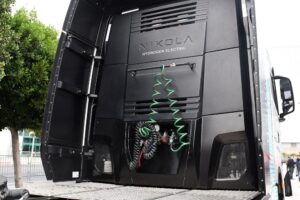
Outside the convention center, a single commercial vehicle showed that the ports of Los Angeles and Long Beach are moving forward with alternative fuel vehicles. Several Nikola hydrogen fuel cell tractors are already in use at the ports and more are on the way. Packaging for the necessary fuel cell and its battery at the rear of the tractor make for better space inside the cabin; Nikola says its vehicles can achieve sufficient range for both metro- and regional use.
Among the more extraordinary announcements was the revealing information that Hyundai and Amazon are partnering to allow customers to order Hyundai vehicles on the Amazon platform. This innovation will begin in the upcoming start to 2024 and could change the complexion of car buying. Of course, Amazon trucks aren’t yet ready to deliver new Hyundai cars to buyers, so delivery at a dealership is still on the docket.

Lucid, the BEV manufacturer, introduced its Gravity SUV, one that will go on sale starting at $80,000. The company touted its space considerations, capabilities both on- and off-road and its good range, to go with luxurious appointments.
Subaru showed the 2025 Forester, which will have a 2.5-liter four-cylinder engine for motive power at release but will be offered as a hybrid model within a year after launch. The Subaru exhibit included pets for adoption; one media member noted he’d adopted a dog during the 2022 media day and was very happy with the process and, of course, his new friend. Subaru is going to have four new BEV vehicles available by 2026 and an additional four two years later, it said.

Not only did Hyundai show off its aggressive partnership with Amazon, it brought out the newest Santa Fe SUV, with three-row seating as standard and a panoramic curved display. The Santa Fe will be available in March with a 2.5-liter directly-injected four-cylinder engine and sometime during the spring sales season, the company will launch a turbocharged hybrid. Hyundai’s XRT Santa Fe features 30-inch all-terrain tires and lifted suspension; it will tow 4,500 pounds!
There were car-of-the-year announcements throughout the day. The North American Car, Truck and SUV finalists were announced, with Car finalists being the Honda Accord, Hyundai Ioniq 6 and Toyota’s Prius/Prius Prime as contenders, SUV finalists are the Genesis Electrified GV70, Kia’s brand new EV9 and Volvo’s EX30, while Truck finalists are Chevrolet’s Colorado and Silverado EV, together with Ford’s Super Duty. The winners will be announced in January at Detroit.

The Hispanic Motor Press, representing the millions of US-based hispanic drivers noted its selections for the 2024 awards, the 14th time this group has made awards: its EV award went to Hyundai’s Kona EV, Toyota’s Prius won for its integration of technology, its BEV SUV choice is the Genesis GV70, Jeep’s Wrangler 4Xe won for being the adventure/hybrid vehicle of the year, Kia’s Telluride won for family vehicle of the year, Chevrolet’s Colorado is the pick-up truck of the year, while Volkswagen’s Atlas 7 received SUV of the year in the group’s fossil-fuel-burning category. To help present the awards, NASCAR’s Daniel Suarez, driving for Trackhouse Racing was on hand to present prizes.
Kia showed two concept cars, both of which are fully electrified: Concept EV3 SUV and Concept EV4 sedan were on the show floor, offering possibilities for future consumer Kia offerings. These were accompanied by several EV9 flagship all-electric SUVs on display. The concept cars featured bioplastics and bio polyurethane, the latter considered as replacement for leather. Both of the concept vehicles were smaller than the EV9 yet blend practicality with technical advances. Kia will be towing the 2024 numbers from LA to NYC with an EV9 before the big ball drop on New Year’s Eve!
Verge, a Finnish company that makes electric motorcycles, had a display – one of the few for two-wheelers – that showed its California edition that the company’s patented hub less motor design and technology. The motor is located in the rear wheel, enabling a larger battery that can give the Verge more than 200 miles of range with a 35-minute charge. It was interesting to see how the company integrated its display in what would normally by the upper tank area. This bike is quick, with a top speed of 124 mph!

While Honda had no press conference, it did display its current offerings, including the Prelude concept, a two-door coupe that was first displayed during car week in Monterey, CA. The first Prelude began production in 1978, so this concept’s debut is occurring 45 years later. It is a fully electrified model that might show up in the marketplace. Honda also had its BEV Prologue and an electric bike that fits neatly in the rear of this SUV. Honda is returning to having its name spelled out in separate letters at the front and rear of its vehicles, as shown on both Prelude and Prologue. Acura’s ZDX Type S was on the show floor, heralding the upcoming BEV SUV that’s similar to the Honda version, albeit with an upmarket and sporting demeanor.

Toyota’s large display, coupled with its Lexus luxury division’s floor space, showed off the hybrid Crown sedan and the electrified compact Crown Signia SUV that are coming for the 2024 selling year. The company’s best-selling Camry sedan will have a new front fascia to tell it apart from earlier models when it debuts as a 2025 model.
Both Chevrolet and Ford have massive displays that are centered on their fossil fuel products and, in particular on trucks. Neither manufacturer had a press conference but Ford did offer inside ride-and-drives with its Bronco SUV. Volkswagen’s display was ID.Buzz-centric as it brings in an electrified version of its much-loved bus. Nissan, too, had a smaller display this year. In addition to the large Ford Bronco test track, there was also an EV indoor track and a track for Hyundai vehicle testing indoors.

A small lobby display for Northern California electric robo-truck purveyor AITEXX, which had a single preproduction truck on hand, showed that a variety of strange-looking electric trucks are on the horizon, and not just from Tesla, which had zero presence at this show.
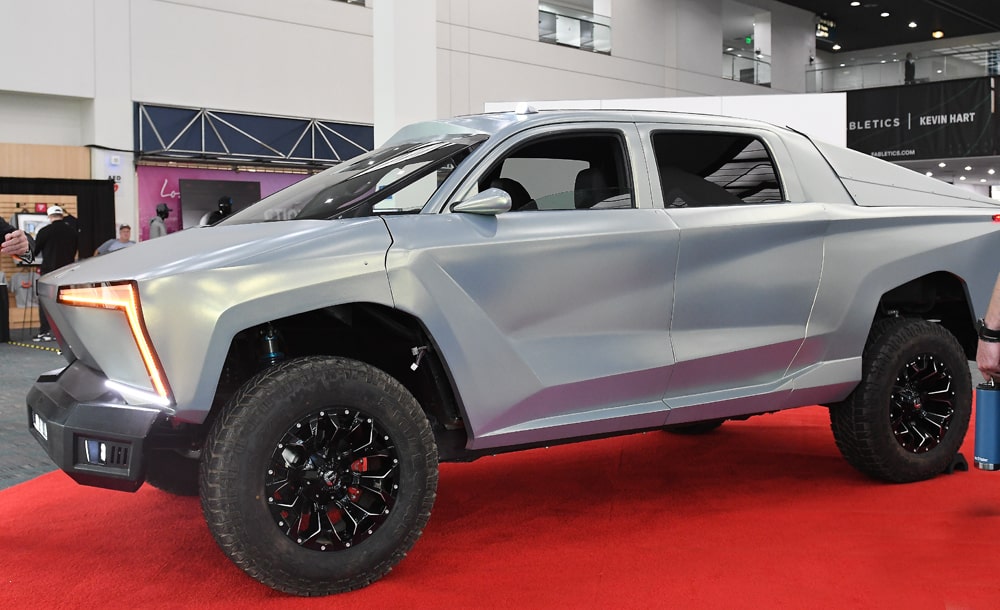
Actor/entrepreneur Kevin Hart took over the space normally allocated to Porsche to let the public see just how he spends his money. He had at least a dozen of his cars on display in the Petree Hall, together with displays of the smoothies he markets, his restaurants and even the tequila brand he represents. Hart’s culinary delights definitely allowed the media to relax and reload after shifting from one hall to another from early morning to late afternoon.
Leave a Reply