Weekend Racing Recap 8/12/24: Whatever it Takes

NASCAR has created a monster. Will they be able to keep it under control?
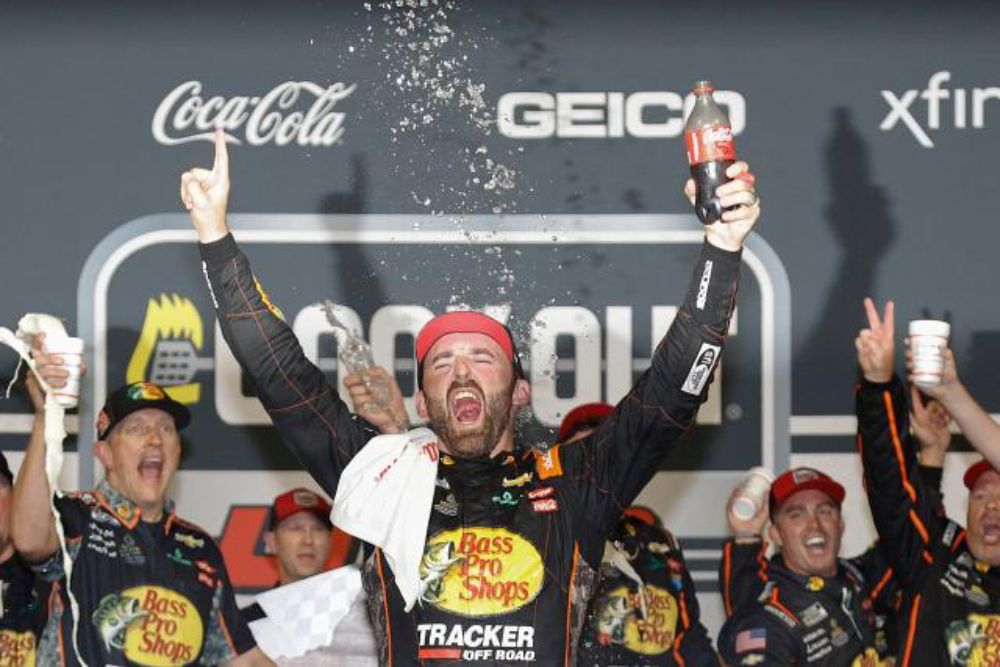
I don’t think it’s a stretch to say that all of us were excited to get back to racing after the two week long summer Olympic break. The conversation we should be having is about the Goodyear option tires. We might finally have a tire that will fix the abysmal short track racing we’ve experienced. We should be celebrating Austin Dillon, who drove the race of his life, and his crew, who executed strategy nearly perfectly during the race. It really seemed like the beginning of Richard Childress Racing’s redemption arc after a truly abysmal season. In the closing laps of the race, Dillon was out to a comfortable lead, cruising to his fifth Cup Series victory.
Then, on lap 398, Ricky Stenhouse, Jr. did what he does best, and inexplicably wrecked right in front of the leader for no apparent reason.
Before we examine the restart, Dillon’s actions, and his repercussions, we have to go back to 2004. NASCAR’s popularity was surging. It was the number one spectator sport in America, and NASCAR had plans to boost that popularity among casual race fans. In 2004, they instituted two major rule changes – the Green-White-Checker finish, and the playoffs. The GWC rule effectively ensured that every race would finish under a green flag. This, somehow, made the racing more exciting. As the talent in the booth will gleefully tell us, “cautions breed cautions,” and we’re often treated to multiple late-race restarts with more passing – and more wrecks.
I’m not going to buy into any conspiracy theories, here – I don’t think NASCAR intended to cause more accidents. At the time, we were just three seasons removed from the loss of the sport’s greatest talent. Incidentally, I don’t recall anyone complaining when Earnhardt won the 1998 Daytona 500 under caution, but I digress. In fact, the GWC rule addressed a major safety concern – racing back to the yellow flag. Until 2003, cars could continue racing back to the caution flag. This effectively prevented emergency equipment from entering the track until every car had slowed down. In 2003, it was decided that the running order would be set at the moment the caution flag was thrown. Credit where credit is due – that’s a good rule. The GWC rule came into play for the following season.
The other rule change was the playoffs. In lieu of a full-season points format, where every position in every race counts, and consistency is key, NASCAR has created multiple “playoff formats” that ultimately result in the entire season boiling down to a single race. So long as you’re at least 30th or better in “regular season” points, you can win your way into the playoffs, guaranteeing a 16th place or better season points position and a guarantee of around $2 million in charter money for your team. The playoffs account for the final ten races of the season, and the conversation about “playoff implications” of a given win begins happening about five minutes after the green flag waves at Daytona. Combined with the recent addition of sports betting talk from the booth, you’d be forgiven for watching the races on mute.
I could write an entire article about the playoff format, but for the sake of being brief, I’ll simply state that it’s contrived, confusing, and has done nothing to retain the casual fans that left over a decade ago. Instead, the playoff format rewards flukes, streaks, and inconsistency. No other motorsport does this, and when you meet a friend, family member, or coworker who wants to try to understand NASCAR, it’s difficult to justify your enthusiasm to them. If you’re lucky, they start zoning out halfway through the conversation and think about what’s for lunch – then you won’t have to answer any difficult questions about why NASCAR is trying to follow the format of stick-and-ball sports it shares nothing in common with.
So, with these two rule changes in place, we find ourselves at the end of the 2024 Cook Out 400 at Richmond. Austin Dillon, sitting 32nd in points, and already locked-in-with-a-win Joey Logano find themselves on the front row. On the restart, Logano surges to the lead, clearing Dillon after a couple corners and looking at his second victory of the year. A tough break for Austin and the number three crew, but that’s racing. Also in the picture is three time winner Denny Hamlin in third. Entering the final turns on the final lap, several car lengths back, Dillon, urged by his spotter, makes zero effort to make the corner and moves Logano out of the way like an eight year old playing Gran Turismo. The loss of momentum causes Hamlin to squeeze by, until Dillon right rears him (once again at the urging of his spotter), sending him careening towards the wall – one of the dirtiest, most disrespectful, and most dangerous moves a driver can make. It was pure desperation, but it worked. Dillon crossed the line first and was declared the winner.
The racing world was understandably shocked and upset by what was a pair of undoubtedly filthy moves. Things got worse when we heard the spotter audio. Worse yet was NASCAR’s inaction. Penalties, which are typically announced on Tuesday morning, were delayed until late Wednesday afternoon. The penalties that ultimately resulted – loss of playoff eligibility, loss of points, and a multi-race suspension for the spotter – made sense to a lot of folks, including me. They were about as well as anyone could expect after the fact. The problem was that NASCAR didn’t act when they should have and disqualified Dillon on Sunday night before he ever even made it to victory lane.
At any short track in the country, on any given Saturday night, the race official’s hammer would have come down hard and fast on the sort of driving we saw on Sunday night. Even your average iRacer would have expected a suspension after that sort of behavior. But somehow, in the top level of the sport, it takes almost 72 hours to fix a problem that was started almost 20 years ago. As always, NASCAR is reactive and not proactive when it comes to officiating and rules changes. Dillon may not be in the playoffs this year, but he still has the trophy. The message to young drivers isn’t a positive one, but it’s crystal clear: “Be smart, be consistent, and race clean – until you make it to the big leagues, that is. Then you do whatever it takes to win.”
From that perspective, it’s hard to fault Dillon for the way he drove. He was doing whatever it took to ensure success in a flawed system that rewards this sort of driving. This one’s on NASCAR. Whether they realize it or not, they got exactly what they wanted this past Sunday. Let’s hope this coming Sunday isn’t more of the same.