Three Pedals on the Floor: Different Strokes for Different Folks, Part II

In the first part of this series (SEE HERE), we began our investigation into two very different types of high performance clutches. The first (which we’re looking at here) is a single disc affair. But it has some twists. Instead of using a common diaphragm or Borg & Beck pressure plate, the McLeod setup we focused in on is a combination Long/Borg & Beck arrangement. It’s not new technology (McLeod pioneered this setup decades ago), but it still works very well, thank you. What you end up with in this curious mix of parts is the heavy-duty hat found in a Borg & Beck pressure plate, but with Ford style Long levers in place. More on this arrangement in the accompanying photos.
Backing up the package is a steel flywheel. It’s SFI approved. That means the piece passed a stringent rotational test (without disintegration or ever stress cracks). The last thing you need is floor and limb removal courtesy of a departing flywheel. And don’t laugh – it’s an ugly picture and it can happen all too quickly. That’s why high quality clutch components with SFI tags are extremely important.
The flywheel we showed you was a pretty light steel job at 25 pounds. You can get flywheels in plenty of different weights (typically 25, 30 and 40 pounds). The reason for having different weight options is due to the engine characteristics coupled with the vehicle weight. Honestly, a little 283 is going to need a bit more flywheel weight to move a heavy car than say a 427 in a something light like a Corvette.
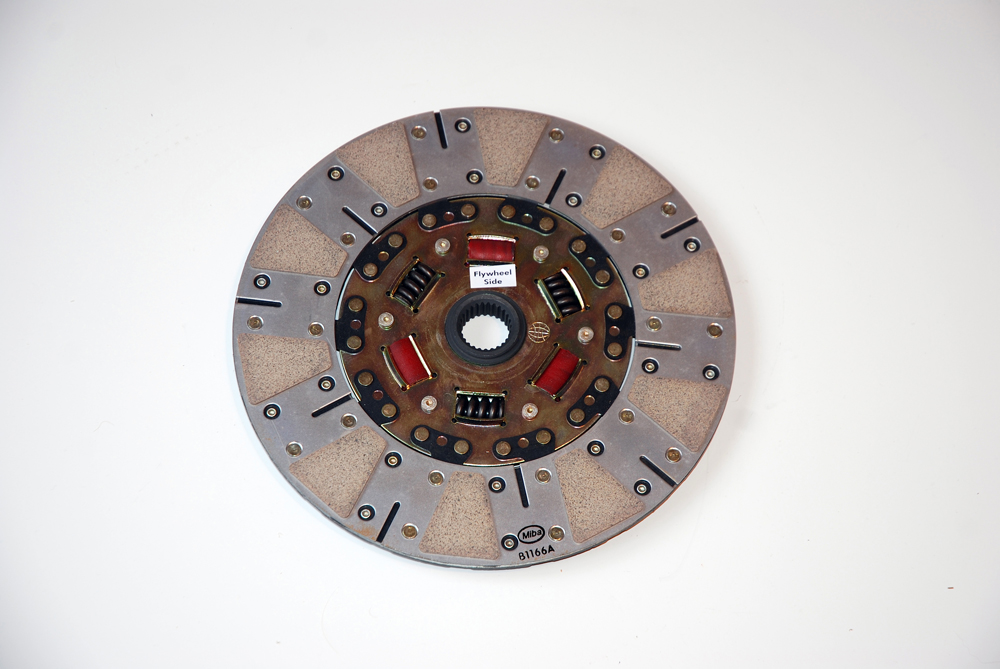
So far so good. What follows is a more in-depth look at the pressure plate levers along with a look at how clutch disc technology has progressed. Bottom line here is, this “ain’t the Sixties” anymore. It is possible to mix old school proven parts with next technology.



In Part III, we’ll dig deep into dual-purpose multi-disc clutches.