Click Here to Begin Slideshow
Race cars, modified street cars and hot rods are pretty evenly split between cars with rack and pinion steering and those with old school recirculating ball steering boxes. What’s the difference between racks and steering boxes? Let’s begin with the recirculating ball setup first, and we’ll move on to racks after. The older configuration steering box uses a worm and sector arrangement that is without question, more complex than something like a rack (although a good old-fashioned Detroit-built steering box is likely as strong, and heavy as an anvil). Here’s why:
Recirculating ball steering gear consists of several parts contained inside a steering gear housing or “box”. The steering gear shaft is connected to the steering wheel either directly or more often, through some form of flexible “rag” joint. A worm gear is situated on the end of the steering gear shaft, while a cross shaft (Pitman) is mounted inside the box at a location 90-degrees to the worm gear. A ball nut rides on the worm gear while a gear on the cross shaft, termed the “cross shaft sector”, is engaged with this nut.
Both ends of the worm gear are supported by either ball or roller bearings, and they’re adjustable so as to remove end (or side play) from the worm gear. The cross shaft is supported by bushings, needle bearings, or a combination of the two. Further to this, some sort of provision is often made to control the worm and cross shaft clearance.
All of these bits and pieces are encased in a cast iron or cast aluminum housing that is partially filled with lubricant. Because of this, seals are necessary to keep dirt out and to keep the lubricant in. Finally, some sort of mounting arrangement must be made so that the box can be mounted in a rigid part of the car (usually the frame). Unfortunately, rigid for a vintage street car and rigid for a race car can be two different things. And when it comes to recirculating ball steering systems, rigid usually means large and heavy.
In operation, the ball nut has internal threads that mesh into the worm threads. There are continuous rows of ball bearings between the two. The ball bearings are recirculated through two outside loops, called ball guides (hence the term “recirculating ball steering”). The sliding ball nut has tapered teeth machined on one face. These teeth mate with teeth on the sector. When you turn the steering wheel, the nut moves up or down on the worm. Since the teeth on the nut mesh with the teeth on the sector, the movement of the nut causes the sector shaft to rotate and consequently move the pitman arm along with the steering linkage.
The recirculating ball configuration is designed to create friction-free contact between the nut and the worm. If, for example, you crank the steering wheel to the left, the ball bearings roll between the worm and the nut and work their way upward in the worm groove. When the ball bearings reach the top of the nut, they enter two ball guides and are directed downward into the worm groove at a lower point. When you crank the steering wheel to the right, the ball bearings circulate in the opposite direction.
As you can see, it’s a relatively complex arrangement. The nature of the beast ensures that it is heavy, burly, bulky and for many modified applications, complex. In contrast is the rack and pinion system, and we’ll get into that in the very next issue.
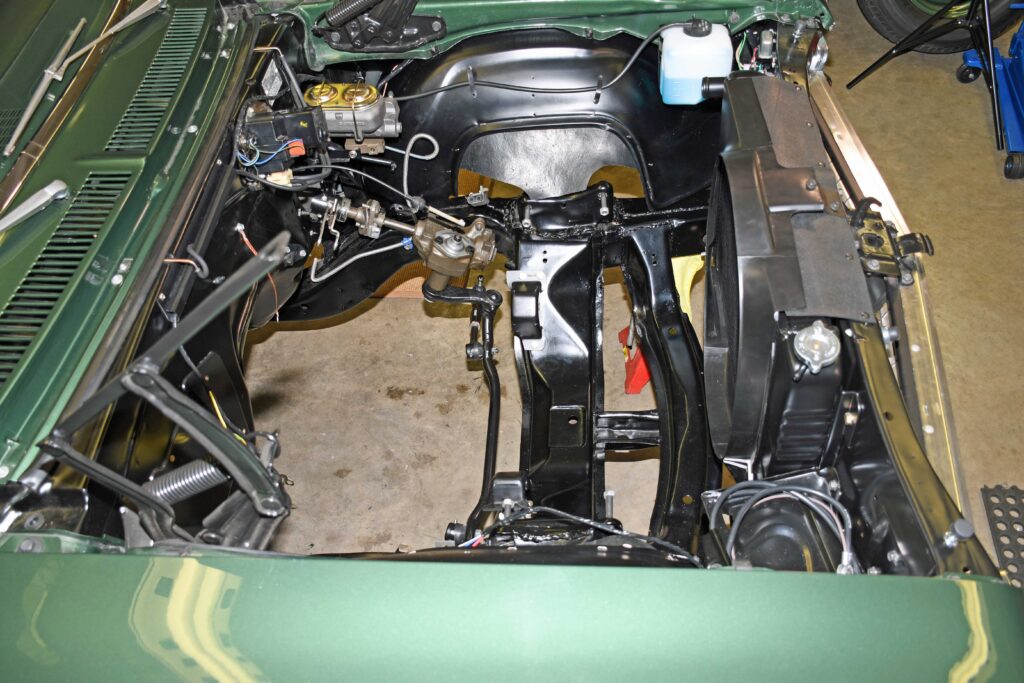
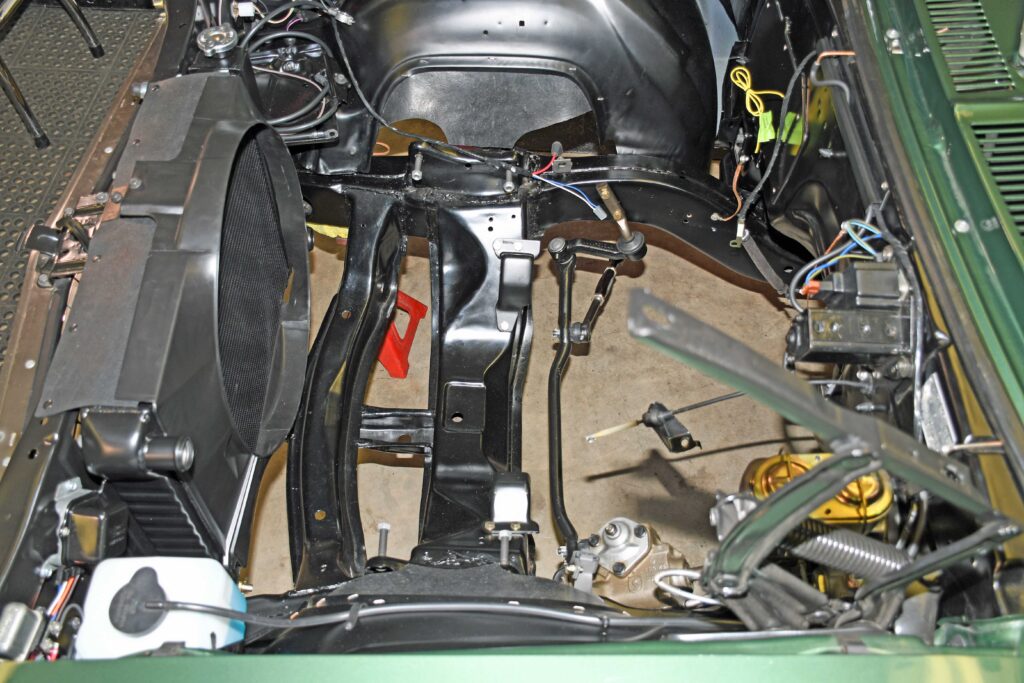
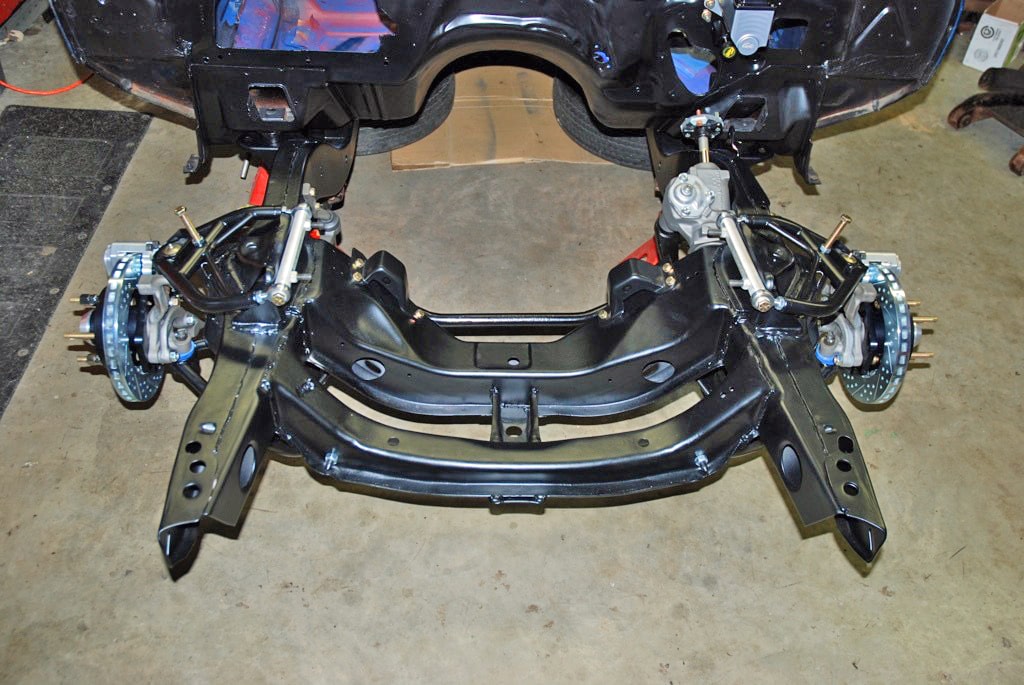
In the meantime, check out the accompanying photos and photo captions. You’ll see why a vintage steering box and associated linkage bits consume a big chunk of front-end real estate:
Click Here to Begin Slideshow
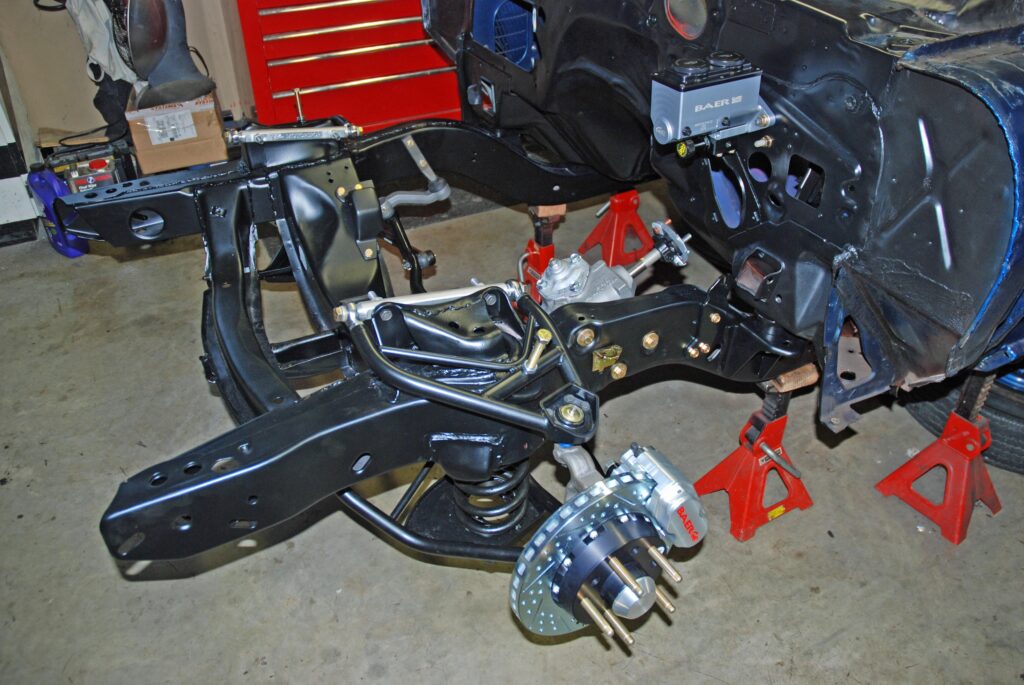
This is a typical rear steer setup (steering box behind the front axle centerline). It’s easy to see how bulky this arrangement is.
In contrast is a front steer system. As you can see, the steering components are moved ahead of the front axle centerline.
From the driver’s side of the car, you can see, with a rear steer system it’s not much better. There are a lot of parts in the system and they can interfere with headers, the oil pan and other components.
Dead on from the front of this subframe, the steering box is massive, particularly if compared to a modern rack and pinion.
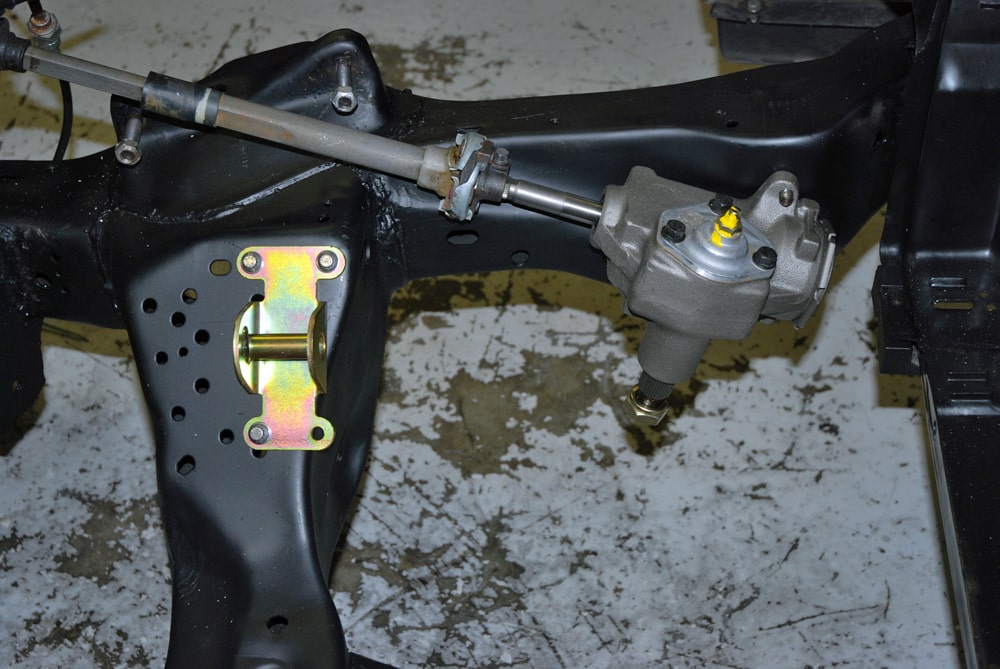
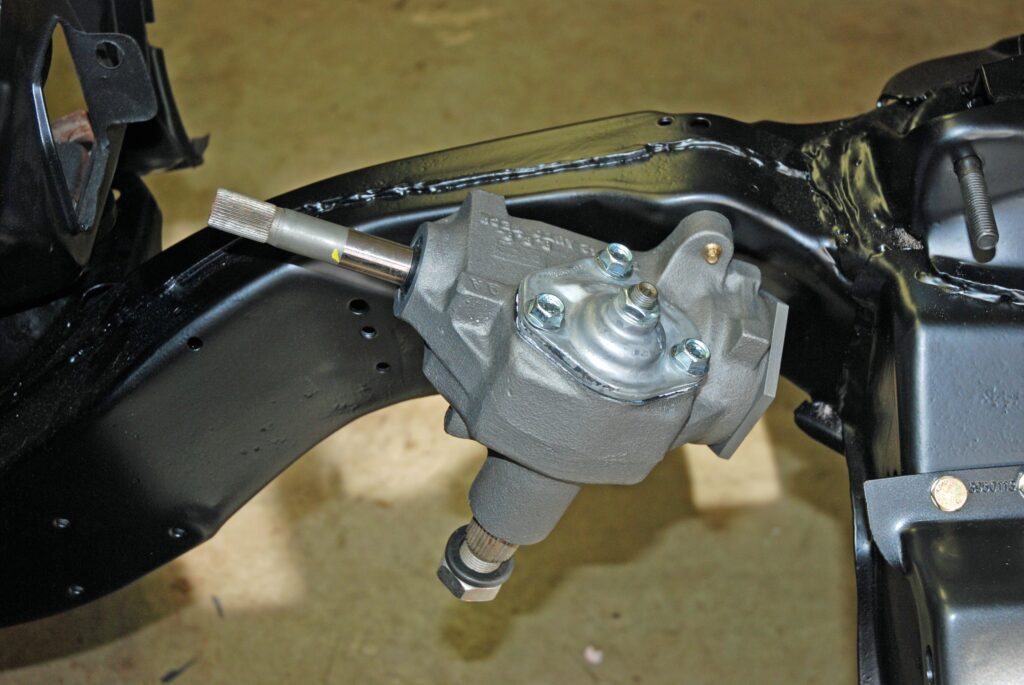
This is a typical GM manual steering box. Because of the weight and forces placed upon it, the mounting arrangement must be stout. See the next photo:
Three large bolts pass through the frame in order to secure the steering box. The system is certainly functional, but as noted previously, it’s bulky and heavy.