Racers Lee Kunzman, Bob Sharp Pass a Day Apart

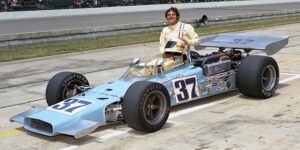
Race car drivers are tough hombres. Both mentally and physically, anyone that sits behind the wheel of a specialized vehicle built and tuned to go faster than it should – over the road, at least – has to be tough and sharp. Recently, our motorsports world lost two of those tough guys: Lee Kunzman and Bob Sharp.
Kunzman, who died February 27 at age 80, was an exemplary USAC competitor who raced in the CART championship 48 times, including four starts at the Indianapolis 500. He never won major open-wheel events like Indy, but recorded 21 top-10 results, with a best finish of second in 1979 at Atlanta Motor Speedway, losing to three-time Indianapolis 500 winner Johnny Rutherford.
Kunzman’s success in USAC racing, with 30 national event feature wins as a driver – 16 in midgets and 14 in sprint cars – took place in the 1960s and 1970s. While he had success on the track, Kunzman came to be known for his survival from racing accidents, including third-degree burns and broken bones. The native Iowan earned induction into the National Sprint Car Hall of Fame in 2006, in part by winning his very first USAC start, at the Mississippi Valley fairgrounds in Davenport, Iowa
Kunzman’s Little 500 Rookie of the Year honors in 1967 gained him attention by team owners, with his USAC breakout season coming in 1969, when he secured eight USAC National Midget wins, including the Astro Grand Prix victory on the indoor dirt oval built inside Houston’s Astrodome. In 1970 he won the Night Before the 500 at (what is now called) Lucas Oil Indianapolis Raceway Park, but just a few days later, when Kunzman’s throttle stuck on his sprint car, causing a crash at I-70 Speedway in Odessa, Missouri, he sustained severe burns over 40 percent of his body, together with multiple fractures.
Kunzman’s two-month hospital stay didn’t deter him, as he returned to drive in April of 1971, winning his first race back in the cockpit, a USAC National Midget feature at Ohio’s Tri-County Speedway. This began a successful era for Kunzman, who earned fifth, third and second in USAC’s National Sprint Car standings from 1971 through 1973.


As Kunzman met success in his USAC career, his success in INDYCAR flourished as well. He finished third in late 1973 at Texas World Speedway but then, as so often happened for the Iowan, an accident in testing at Ontario (California) Motor Speedway in December of 1973 forced him to miss the whole 1974 INDYCAR campaign. As with most racers, Kunzman persistently returned to the cockpit in March of 1975 for the 500-mile race at Ontario, finishing fourth at the site his accident, just 15 months prior, after relearning how to walk and talk
After retiring from the driver’s seat, Kunzman served as Hemelgarn Racing’s team manager in Indianapolis. Together, with driver Buddy Lazier, the team earned the Indianapolis 500 in 1996 and the INDYCAR SERIES championship in 2000. Lazier’s successes included second place results at Indianapolis in the vaunted 500, taking runner-up positions in both 1998 and 2000. Kunzman suffered the effects of his many accidents throughout his later years. No cause was given for his demise.
A day later, February 28, Bob Sharp passed away, just 11 days before his 86th birthday. Sharp was widely known for his introduction of the Datsun race cars in American racing on the east coast, where he had his Connecticut Datsun – and later Nissan – dealership. He began racing Datsuns in 1965 and drove them through to 1976. He earned six SCCA national championships in Datsun 1500s, 510s, 240Z and, later, a Nissan 280Z, earning 13 podium results at the annual SCCA Runoffs. He won an IMSA GTU title and used his racing success to massively increase sales at his dealership.


Like so many, Sharp began racing in 1960 after his Army service ended. He started with an Austin-Healey [Bugeye] Sprite that he also used as his daily driver, competing across the northeast area in SCCA competition. He switched to a Lotus Seven for a few seasons before driving a Datsun, an affiliation that lasted 35 years. The red, white and blue Bob Sharp Racing livery became synonymous with his successes.
Sharp, at age 24, started his own dealership and repair shop in Wilton, CT. It was a three-bay garage, Gulf fuel station and used car dealership, with a race car occupying one of those bays. To fund his racing, Sharp convinced the head of Nissan USA-East Coast to sponsor his team in 1965; his became the first factory-backed racing sponsorship.
While Sharp’s Bob Sharp Racing driving career was business-based and helped secure great success for his dealership, it was his mentorship to Paul Newman, the actor who’d been bit by the racing bug after filming “Winning,” and had dipped his toe into the sport, that brought Sharp even more fame. Showing fellow Connecticut resident Newman the ropes in Datsun race cars, Newman secured four SCCA national titles and more than two dozen race victories. Newman joined Bob Sharp Racing in 1972, a year after he and Sharp began working together, particularly at Lime Rock Park in Lakeville, CT, not too far from both of their homes.


Sharp’s love of the sport rubbed off on his son Scott, who followed his dad’s success with his own, securing three SCCA Runoffs winner’s Gold medals and the SCCA TransAm Championship in both 1991 and 1993. When Scott Sharp graduated to open wheel racing in 1996, he was co-champion of the inaugural Indy Racing League (IRL) season, earned pole position for the 2001 Indianapolis 500 and amassed nine victories in his 13-year career. Scott Sharp earned the American Le Mans Series (ALMS) 2008 P1 championship and won 13 times over 11 years in IMSA competition.
Bob Sharp entered the SCCA Hall of Fame in 2018; While known for his driving career and for his mentorship of both Newman and son Scott, Bob Sharp went out of his way to guiding many into competition, particularly at the local level. Sharp gained renown for his ability to nurture talent and willingness to take others to the top of the sport, and for his generosity of spirit within the racing community. Many drivers who worked within Bob Sharp Racing went on to successful careers, thanks in part to Sharp’s mentorship. Some of those drivers were Sam Posey, Brad Frisselle, Elliott Forbes-Robinson, along with Newman and Scott Sharp.