Old School Ignition Fixes: Half a Dozen Little Tune Up Tips
Wayne Scraba
Click Here to Begin Slideshow
While all of today’s cars are computer-controlled, there are still a few of us “antiques” out there who deal with the cars and parts of yesteryear. In the pages that follow we’ll take a look at a half dozen “old school” ignition fixes. These are things for dinosaur cars with distributors, advance mechanisms and even points. Perhaps we’re stuck in the Sixties with this technology, but you have to admit it was (and still is) dirt simple and for the most part, rock solid reliable when properly setup. Below, you’ll find tips on refining those ancient technology pieces, all in an effort to make your geriatric car quicker, faster and maybe even more efficient. If that interests you, check it out! And by the way, down the road, we’ll follow up with another short tech tip article that deals with Holley (and derivative) carburetors in the same fashion. Watch for it!
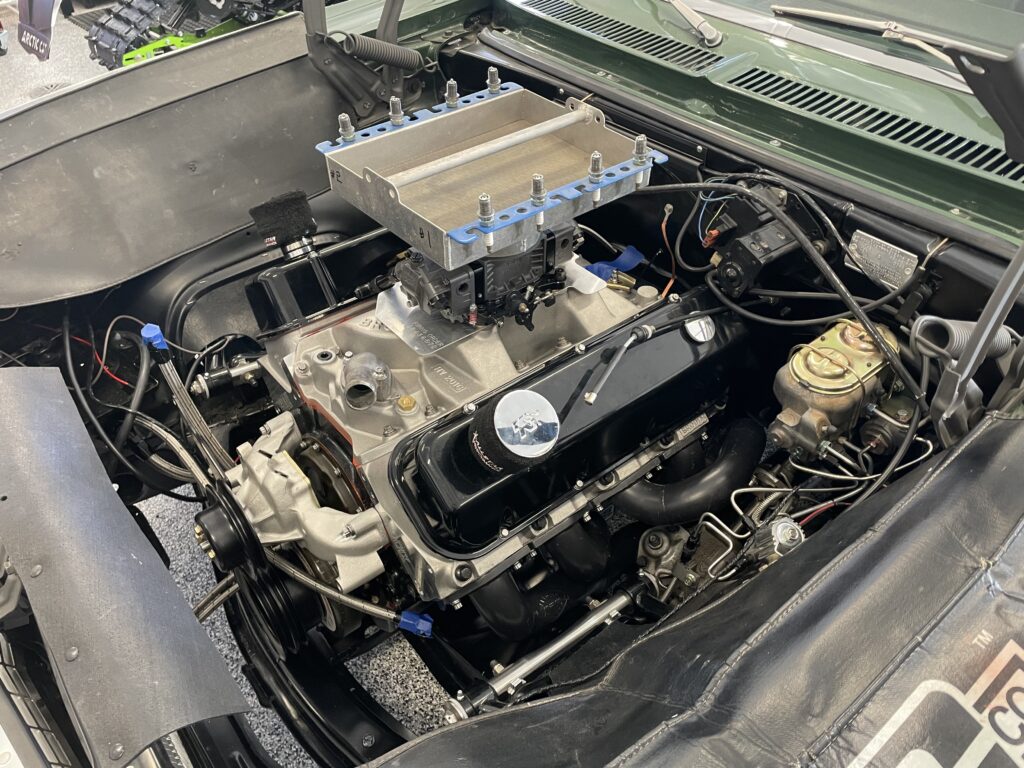
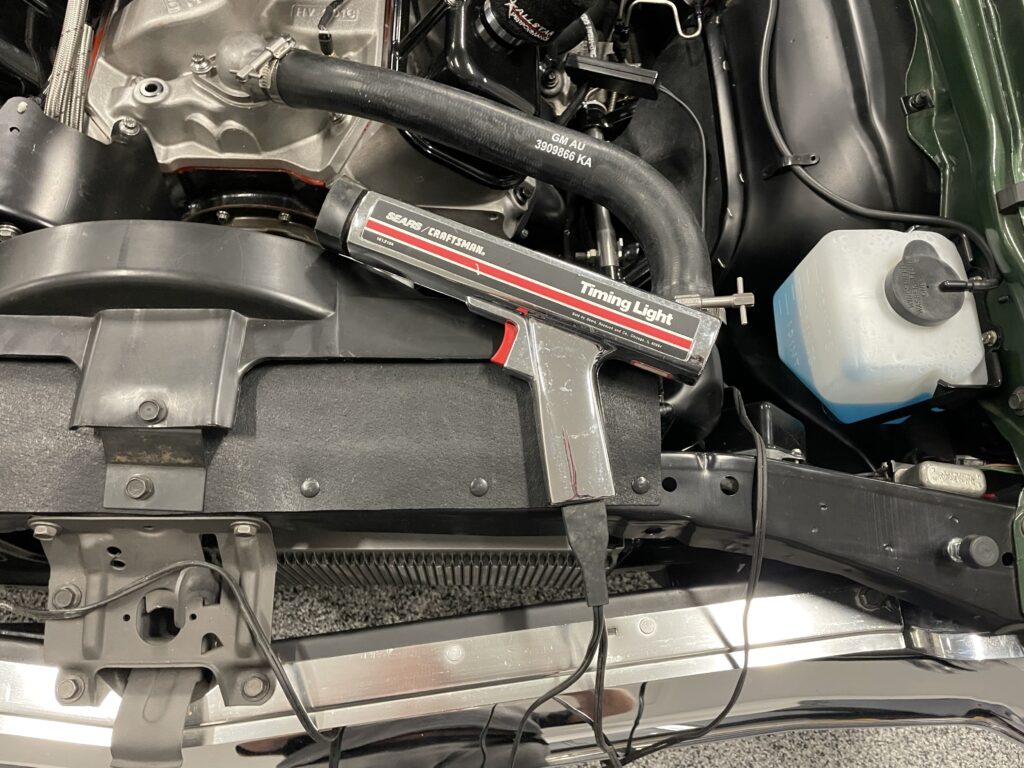
Initial Advance: Here’s the first big stumbling block for novice tuners: Insufficient initial ignition advance. If you look at OEM specs, many cars had initial timing set in the area of 4-degrees before top dead center. There are many reasons for this, but primarily it was to prevent engine spark knock from poor fuels and in later applications, to help burn exhaust gases hotter in order to meet emission standards. We can’t give you exact numbers, but with decent fuel, your hot rod will be a lot happier more initial advance – something in the range of 8 to 12-degrees initial isn’t out of the question.
Limit Mechanical Advance: Once you add initial, it is a very good idea to limit the amount of mechanical advance the engine sees. Again, we can’t give you exact numbers, but the total advance (initial and mechanical) should most likely be in the range of 38 to 42-degrees on the harmonic damper (you’ll need a timing tape or a degreed damper). Using a vintage Delco distributor as the example, advance is easily limited by swapping the stock OEM vinyl limiter with a larger solid example (these come in kits from both Mr. Gasket and Moroso).
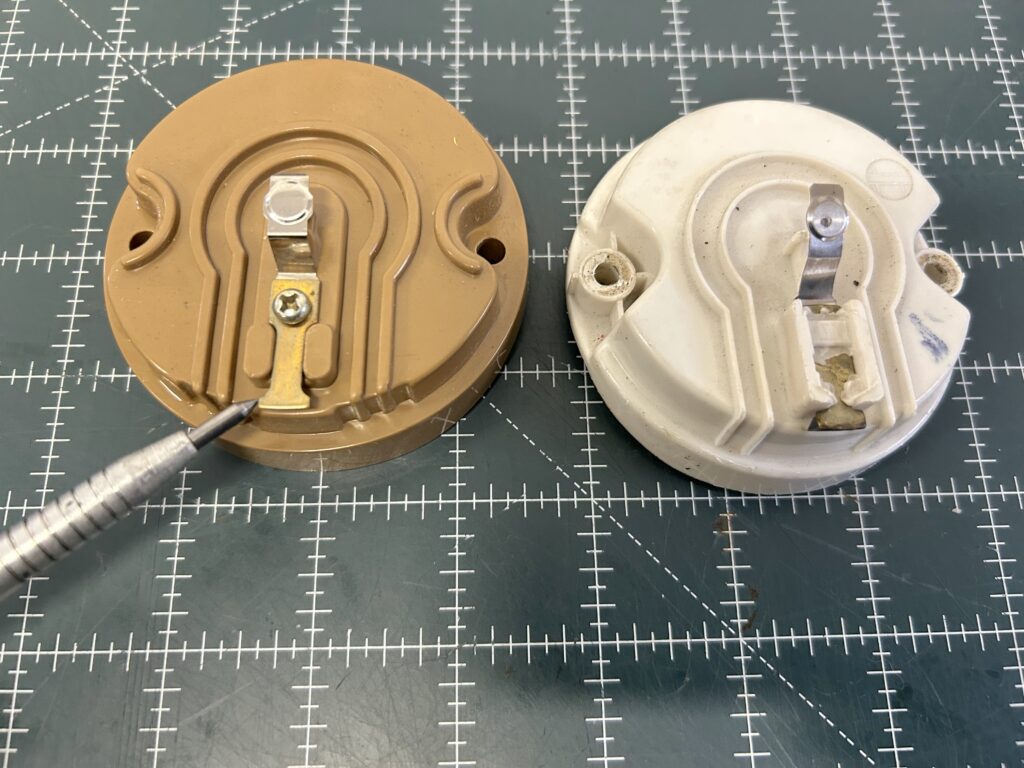
Differences Between Rotors: Not all distributor rotors have been created equal. In fact, many of today’s jobber rotors are junk. Period. In contrast is an old hot rodder and racer favorite: The ACCEL rotor. They’re are manufactured from a 60,000 volt-capable alkyd compound, stress-relieved at the time of molding to ensure stability and resist centrifugal forces at high engine speeds. If you look closely at the rotor, the arc ribs are tall – much taller than a jobber or OEM rotor. This helps to prevent arc-through and ignition crossfire. The rotor blade is also slightly longer than stock and is built from stainless steel. It’s held in place with a screw where some jobber rotors have their tips lightly secured with plastic. Finally, if place them side by side, you’ll easily note how much heavier the ACCEL rotor is when compared to a jobber piece.
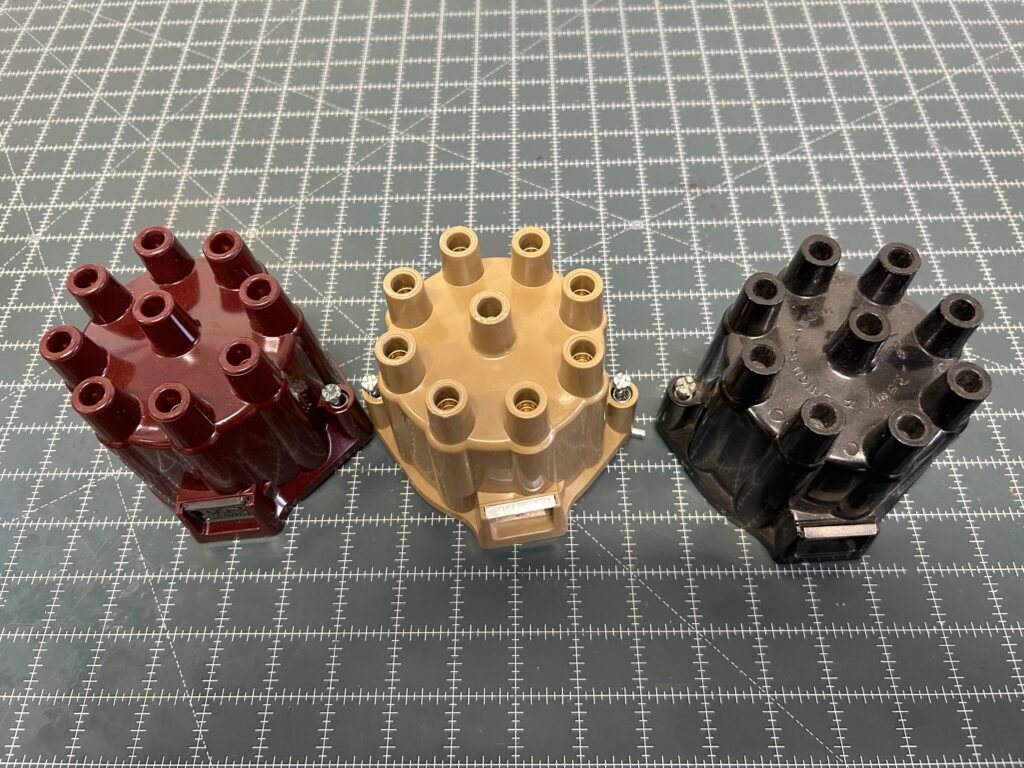
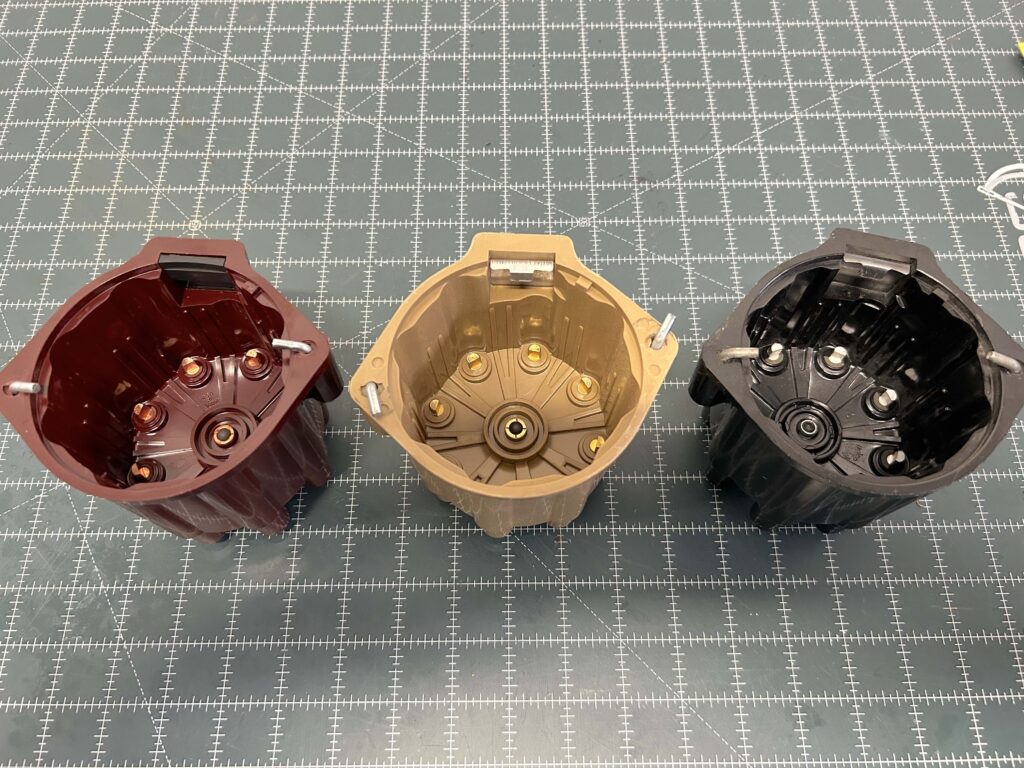
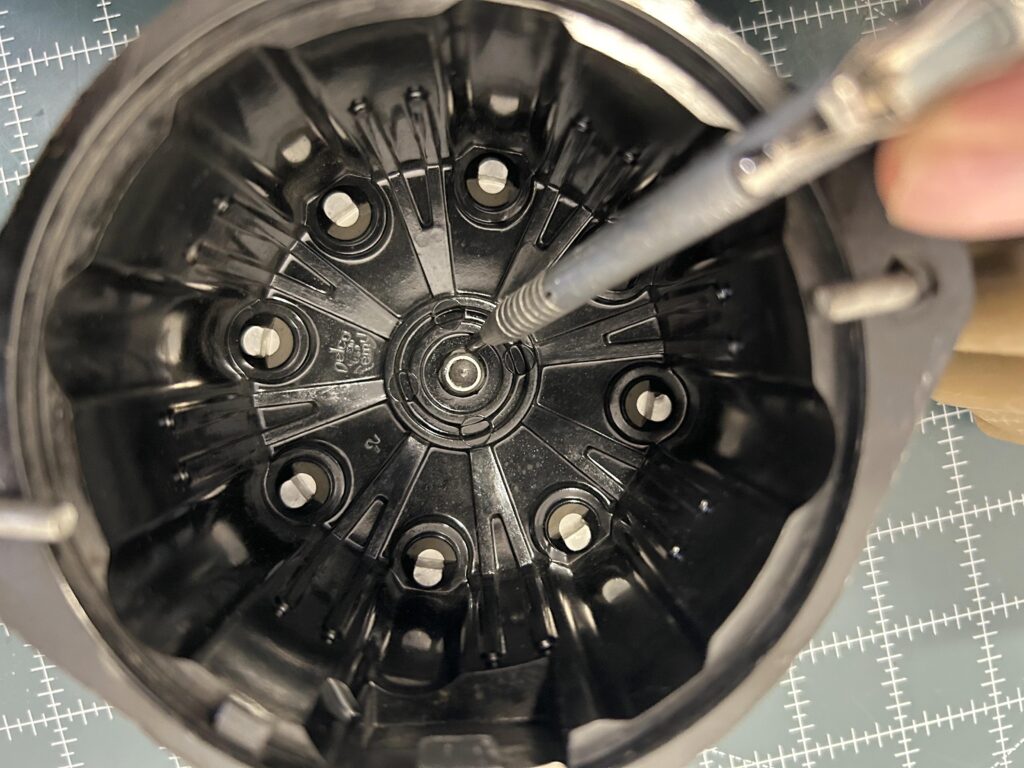
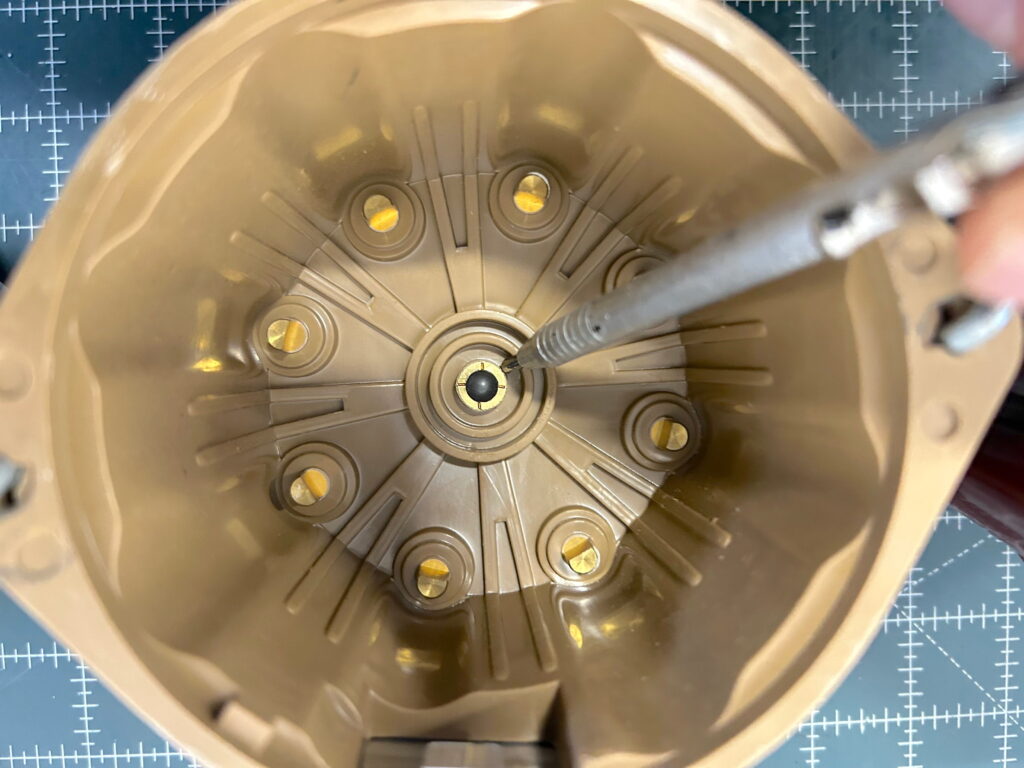
Differences Between Caps: Just like rotors, there’s a big difference in distributor caps. My two favorites are MSD caps and ACCEL caps. The ACCEL cap is also manufactured from a high strength alkyd material and the internal posts have brass inserts. Meanwhile the MSD cap is manufactured from a modern, high strength DuPont Rynite material. Both MSD and ACCEL caps have a much larger internal contact button at the coil post when compared to a stocker. Many stock caps have aluminum posts. ACCEL caps use brass posts while MSD caps use a slightly different copper alloy. Aluminum may be a better conductor, but it tends to erode quickly especially when high spark voltage enters the equation. The bottom line is, these caps are more durable than stock and provide maximum energy transfer.
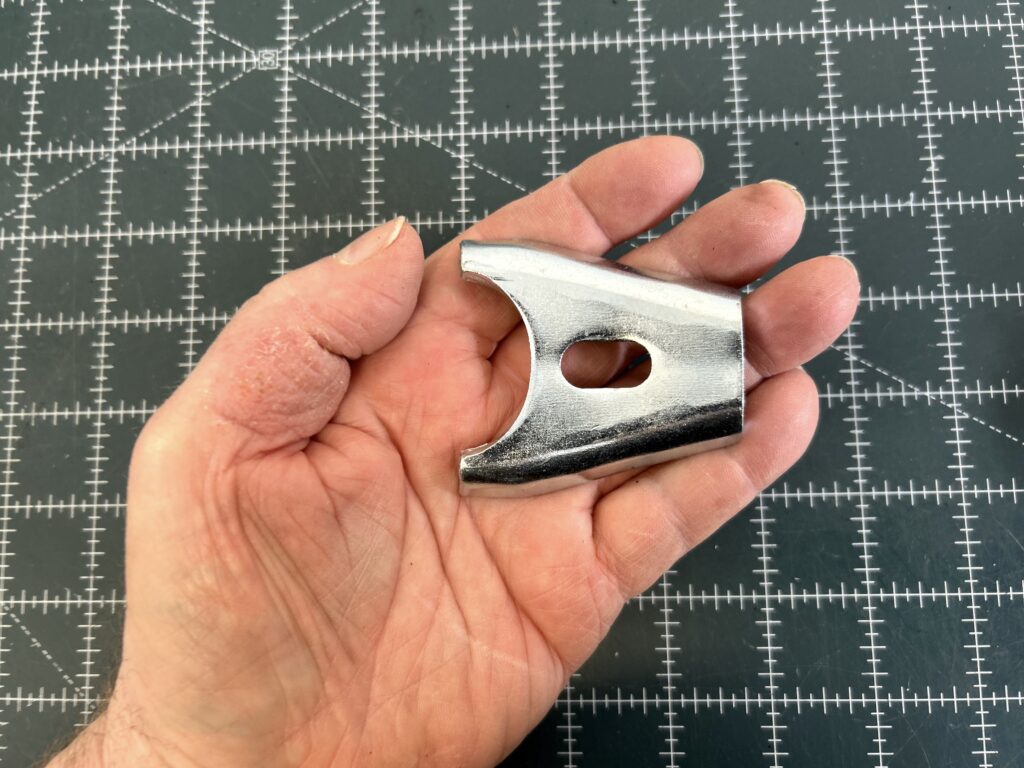
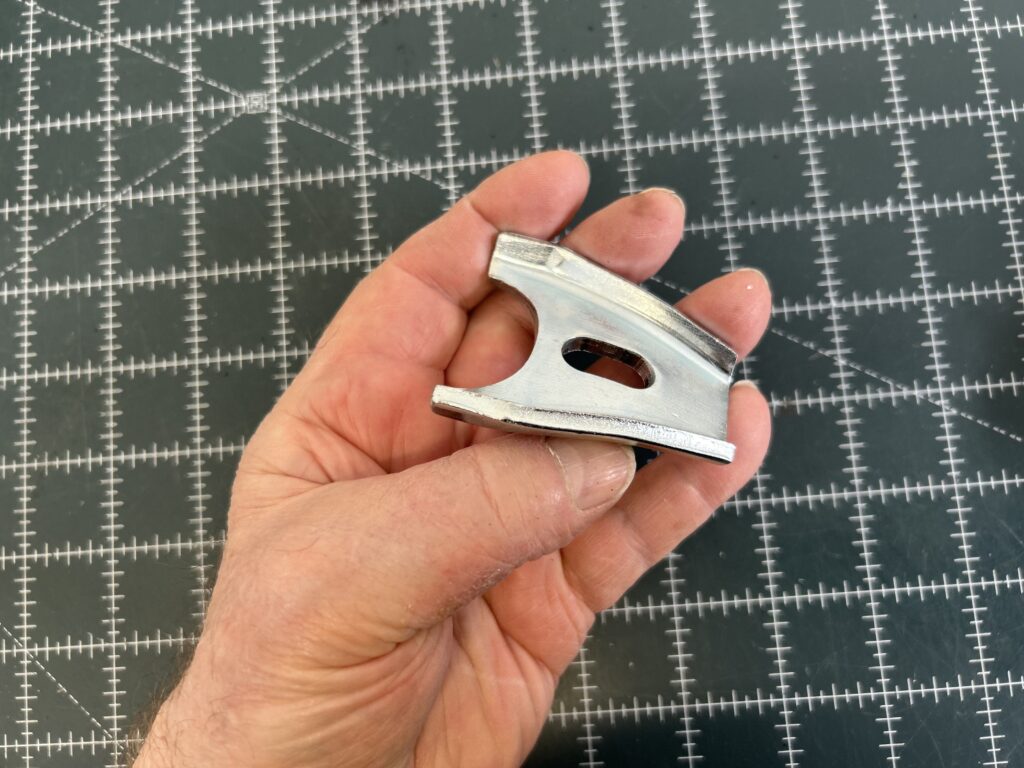
Rock Solid Distributor Hold Down Bracket: This might at first glance seem trivial, but many OEM distributor hold down clamps were extremely poor quality (case-in-point – the wire jobs GM used). The last thing you need when setting the timing on an engine is for the distributor to actually move after you’re done. Inexpensive but beefy solid steel clamps are available for many vintage engines. The Moroso job shown in the accompanying photos is a great example.
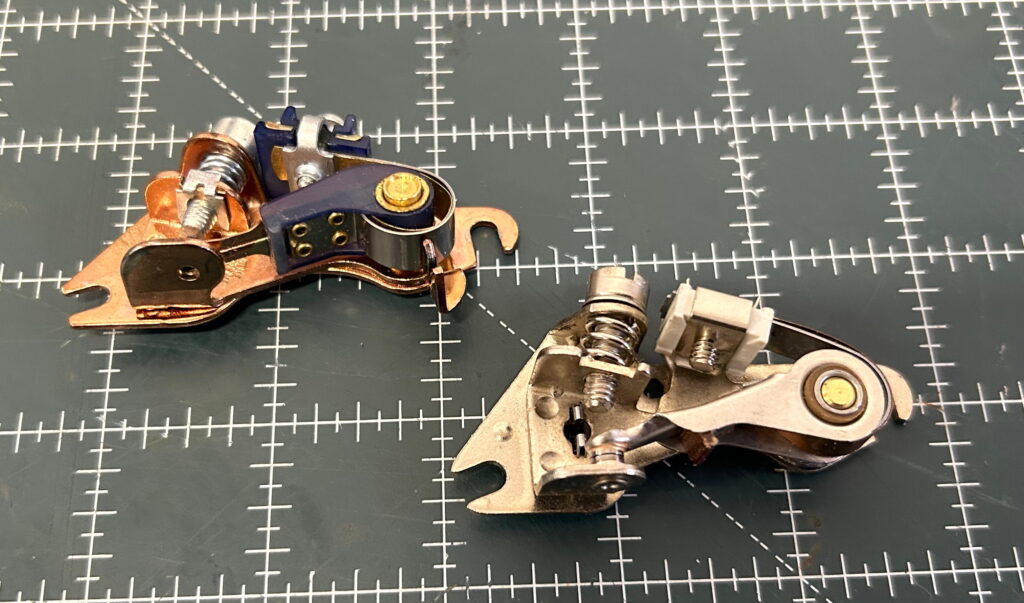
Differences Between Point Sets: If you have a point triggered vintage vehicle, I strongly encourage you to carefully examine ignition points from different manufacturers. In some circles you’ll find people extolling the virtues of this point set or another. Because of this, I placed a BlueStreak points set alongside an ACCEL point set (both for a Delco distributor). The BlueStreak gets high praise from many, but it has a lot of differences when compared to the ACCEL. The ACCEL point set is definitely heavier in weight. The BlueStreak uses a lot of plastic in construction, particularly at the contact arm. The ACCEL has a larger contact surface and the contact arm is much heavier (it’s steel). This means it doesn’t flex. The BlueStreak set I examined had a stronger spring, but that’s about. Basically, try before you buy!
Click Here to Begin Slideshow
When setting timing, you’ll find that most pre-computer cars don’t actually have enough initial timing. Many vintage cars have 4 degrees or less of initial advance. Your car will be happier with more.
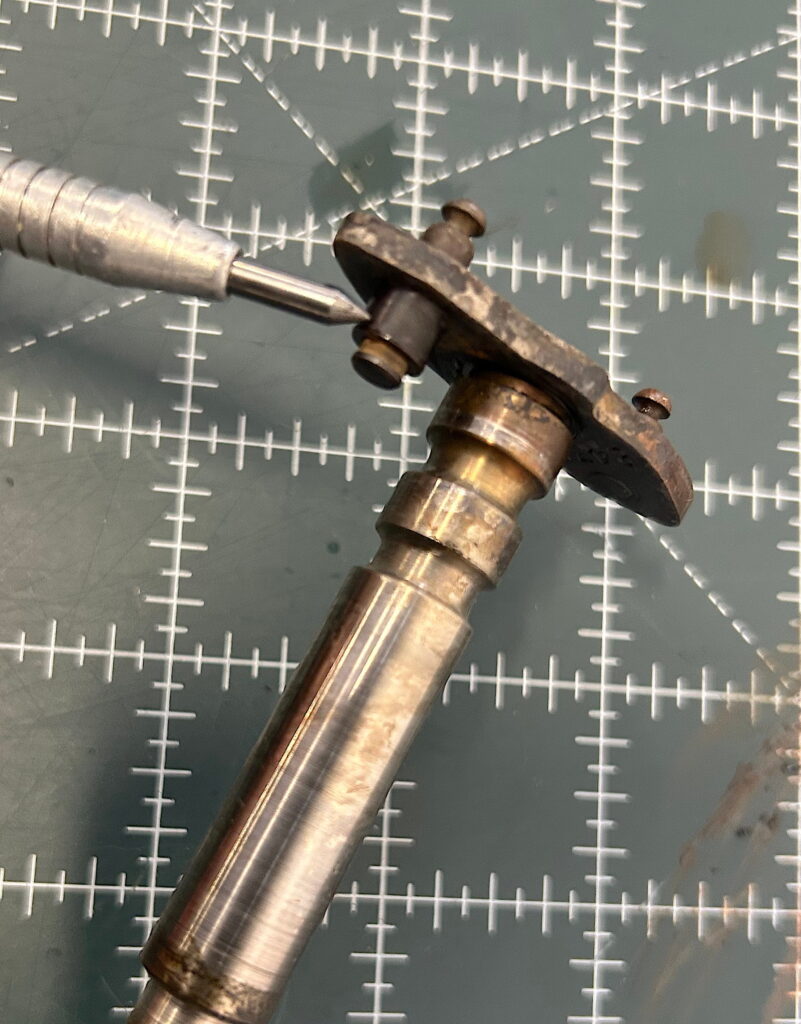
If you add quite a bit more initial timing, you might end up with too much total mechanical timing. This photo shows a stock soft plastic (nylon) advance stop in a Delco distributor. Larger, solid stops are included with many advance curve kits.
Take a look at this! ACCEL rotor on the left. Jobber replacement rotor on the right. Not only is the blade longer on the ACCEL rotor, it’s also more secure. There are other benefits too. See the text for more details.
Distributor caps seem simple enough, but there are also huge differences between them. Left to right, this trio includes an MSD Cap, an ACCEL cap and a vintage restoration Delco cap.
Internally, the aftermarket caps incorporate brass contacts. The OEM cap has aluminum contacts. While at first glance aluminum is a better conductor, it is not as durable as brass, particularly given the conditions inside a distributor cap.
Note the contact button on the Delco distributor. Many OEM distributors use a carbon material for the button.
In contrast is the contact button in an ACCEL cap. It’s a large diameter brass piece.
Here we have a well-loved and well-regarded Blue Streak point set on the left and an ACCEL point set on the right. If you get right down to it, the ACCEL piece is far more robust. The text offers more insight.
This is the beefy Moroso distributor clamp mentioned in the text. When you tighten this down, it’s not going to move. By the way, the clamp is supplied with a hold down stud and a nut.