NHRA Tinkers with Pro Stock. Again.
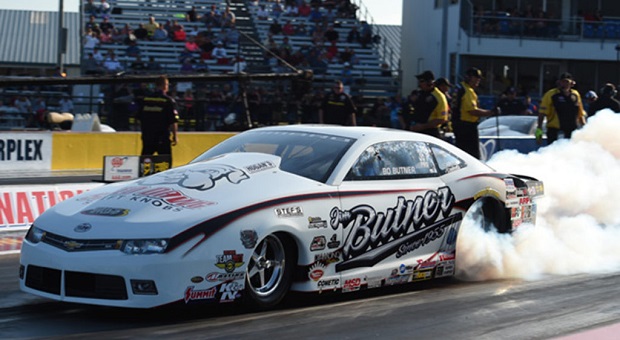

Give NHRA some credit – they’re trying to fix the issues they created with Pro Stock, which has lost popularity since the inception of the electronic fuel injection era two years ago. At that time, body styles changed when the intake was moved from atop the cowling to the base of the front end, making the cars’ body styles more streamlined.
There was a lot of expense involved in changing Pro Stock to meet NHRA’s new criteria; one of the few items they kept in place was the requirement that a car be of 2009 or later vintage, whether domestic or foreign. The cars may be 2- or 4-door coupes or sedans, and minimum weight with driver at the end of the round remains 2,350 pounds.
Everything else is changed.
In a letter sent to competitors by Glen Gray, NHRA’s vice president of technical operations, NHRA stated that the technical department worked “very closely with Pro Stock teams and vehicle manufacturers to accept any currently approved engine combination in any currently approved body, regardless of the manufacturer.”
Since 2012, there have only been Chevrolet champions and, for the past few years, it’s been Summit Racing domination, with Jason Line earning the title last year and Bo Butner earning his first championship in 2017. Allen Johnson, who retired after the 2017 season after racing with Mopar his entire 22-year career, won the title in 2012 for Mopar, driving a Dodge Dart; his was the sole non-Chevy entrant in the six-race Countdown to the Championship playoffs this year.
NHRA is hoping to bring more Dodge Dart entries and, perhaps, invite more Ford Mustangs to the fray. Recent Dodge Dart entries have included Johnson, Deric Kramer, Alan Prusiensky and V Gaines. The latest Mustang body has yet to make its NHRA debut – but this decision could mean more Fords and Dodges in the Pro Stock paddock.
Jerry Haas, who’s been building Pro Stock bodies for four decades, has had interest from clients wanting to run Mustang bodies. “I’m sure that as soon as the announcement gets out there,” he said, “I’ll get more calls and interest in the Dodges, too. All three of the body styles – Chevrolet, Dodge and Ford – are so close aerodynamically that there’s no advantage or penalty for choosing your favorite. They’re so close it’s unreal.”
NHRA mandates Pro Stock internal combustion V-8 engines that have a single camshaft, 90-degree heads (45-degree max) that have a maximum of 500 cubic-inch displacement. If designed and cast with OEM approval and currently accepted by NHRA, aftermarket blocks are permitted. The sanction removed a requirement that the engine be of the same corporate make as the body used in competition, meaning a Chevy engine could run in a Mustang body.
Whether these actions result in added competitors in the factory hot rod class will be revealed in pre-season testing and when the 2018 campaign begins at Pomona in February of next year. Will it make smaller teams more competitive, or will fans see 16 Chevrolet-powered cars of different body styles racing within a couple hundredths of each other?