NHRA Reverses One Ruling, Should Reverse Another
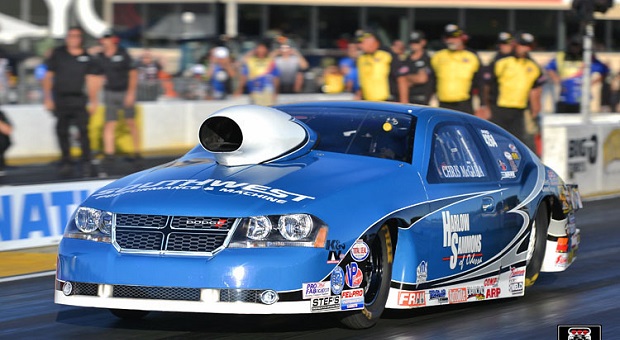

Just when we thought it was sensible to believe dictates that come from NHRA’s Glendora, Calif. offices, the sanctioning body has reversed its proclamation to shorten fields for Pro Stock in nine races during the 2018 season.
On Sunday, during the Toyota NHRA Nationals on The Strip at Las Vegas Motor Speedway, the series declared it had changed its mind; all 24 races will accommodate 16 cars and drivers next year. The series cited “a collaborative and productive meeting with several Pro Stock drivers and teams.” The group discussed a few initiatives that could serve as alternatives to NHRA’s previous decision to run eight-car fields at those nine events, all in mid-season.
To keep the category healthy, NHRA and its Pro Stock competitors are discussing the possibility of a new engine platform, one that NHRA’s tech department is currently evaluating. “NHRA will continue to work with Pro Stock teams and manufacturers this year, carefully evaluating key metrics and supporting initiates to generate interest” in the class. There were 20 Pro Stock entries at Las Vegas, all vying for 16 spots in Sunday eliminations.
“We all share a common goal to make the Pro Stock category grow,” said Peter Clifford, NHRA president. “It’s exciting to see that the teams came to us with collaborative ideas and started an open dialogue that resulted in new solutions.”
Unfortunately, they’re not discussing anything further concerning those Pro Stock initiatives.


At the same time, NHRA has decided to mandate 40-degree headers for its Funny Car class next year, when most competitors are using 50+ degree settings. While some competitors say it won’t change how the cars run, others aren’t so sure. One crew chief noted the laid-back headers that have recently come into vogue actually serve as a propulsion device and allow the crew chiefs and tuners to apply added front downforce through ballast, as the current settings tend to reduce downforce to the front of the car.
Because of this increased front downforce with the laid-back headers, the rear tire doesn’t suffer as badly as it will when the 40-degree header is mandated. It might take a while, but most tuners agree they’ll be back to the times and speeds they currently achieve in the 1,000-foot floppers – however, it’s going to be more brutal on engine parts and on tires.
Sure, they might not burn the body wraps as much as they do now; 40-degree headers might also make the cars a bit easier to drive. The change might even stop the wheel-stands we’ve seen throughout this summer that have hurt some chassis – and consequently budgets – but tuners and crew chiefs don’t think it’s in the series’ best interest to continue to take away performance from a sport that thrives on innovation.