Is Stage Racing Making NASCAR Exciting Again?

I told a buddy of mine the other day about how NASCAR races are in stages now. He couldn’t believe that there are actually programmed breaks in the race. I remember hearing something along the same lines when the “competition caution” was first introduced. Now, while it may not be universally liked, the competition caution is at least an accepted part of the sport. I don’t think stage racing is going to take as long to sway the unconvinced.
Stage Racing Is Not New in NASCAR
The Can-Am Duels at Daytona are in effect stage races. These are races that have been held prior to the Daytona 500 and lead up and influenced the starting order of it for years. Although not many would admit it, they are stage races. The real new thing about stage racing this year is that every race, in all three national series, is broken up into three stages.
Doubting Thomas Admits He Was Impressed by Racing Action

My buddy John grew up watching NASCAR back in the day when the only drivers who weren’t racing to the front were the ones who couldn’t. There came a time when ‘points racing’ became a thing – don’t push yourself or your car, don’t take any risks until the last part of the race. Being involved in or the cause of a wreck fighting to keep yourself in the top 10 all day doesn’t do you any good if you’re not around when the checkered flag waves.

Points for leading a lap and leading the most laps gave drivers with cars that could run up front all day to fight to do so. However, many perennial favorites were found actually moving towards the back of the lead lap for most of the race, usually avoiding the pitfalls that befall some (sometimes many) of their competitors in the laps leading up to what Darrell Waltrip calls “Go Time.”

With a couple exceptions, this year’s eight races have been much better throughout the race than previous years. The fact that stage points carry over to championship/Chase points is instilling the urge to run at the front throughout the race, or at least at the ends of the stages in more drivers. Drivers who wouldn’t normally run up front are doing so. There’s more passing and side-by-side racing action throughout the race than we’ve seen in a long time.

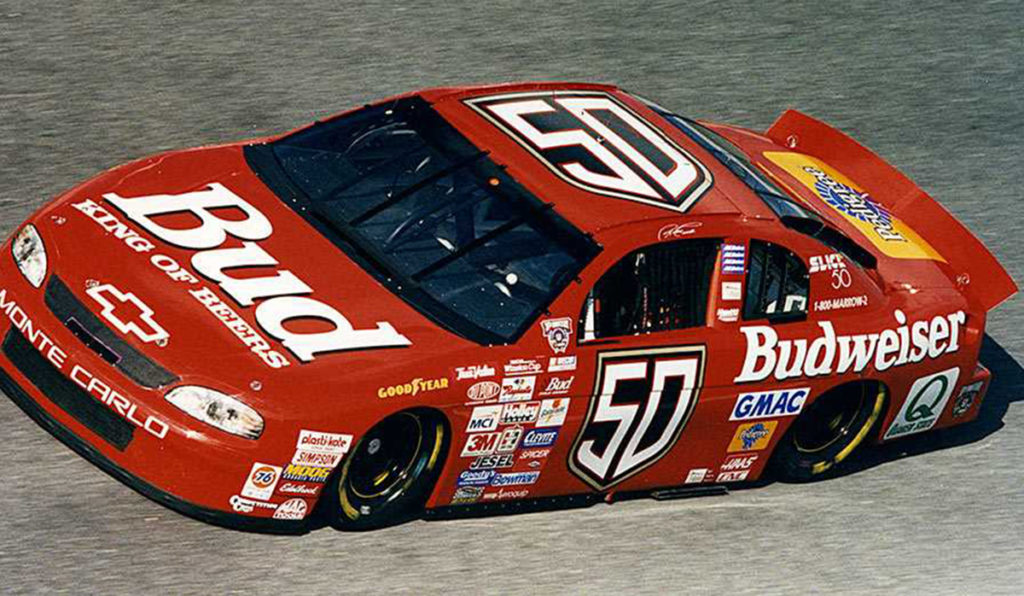
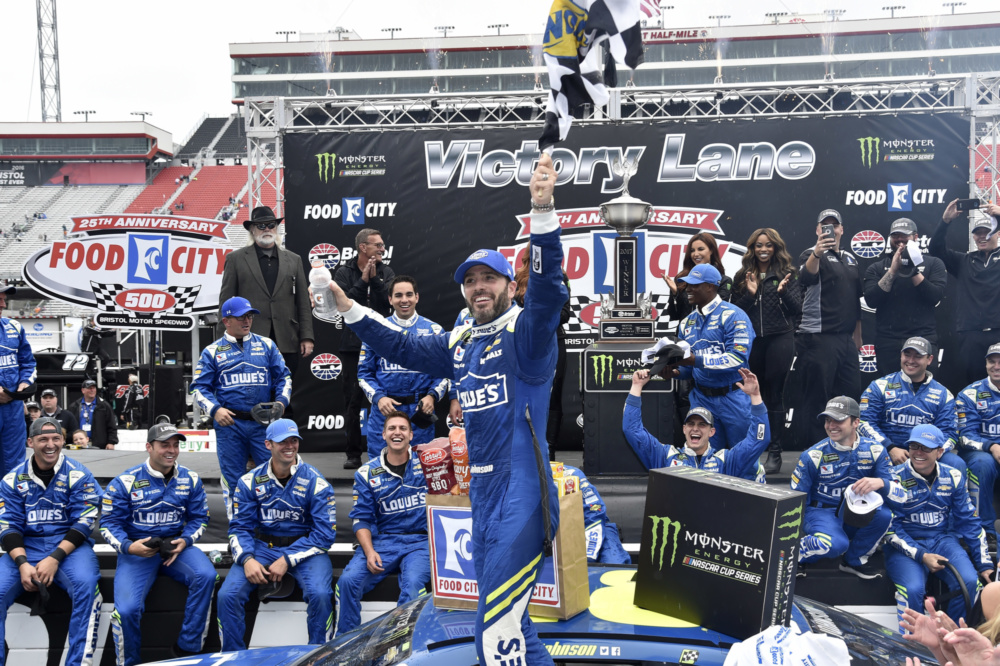
John last watched a NASCAR race more than 15 years ago. He said that even then the excitement factor in most races rose and fell as drivers decided to start seeing how well they could pass and what they needed to work on to help them do so more efficiently. He said Monday’s Food City 500 at Bristol had more excitement throughout the race than what he remembered from his last race.
Drivers Still Gain Championship Points in Three Ways
Last year, a driver could earn bonus points for leading a lap and for leading the most laps of the race. Stage racing has done away with these bonus points and instituted new ones gained in new ways. Winning the race still nets the driver five points the other drivers don’t get, but these are now playoff points that mainly count in The Chase. Stage winners get one playoff point for use in The Chase. These points are added once The Chase begins.
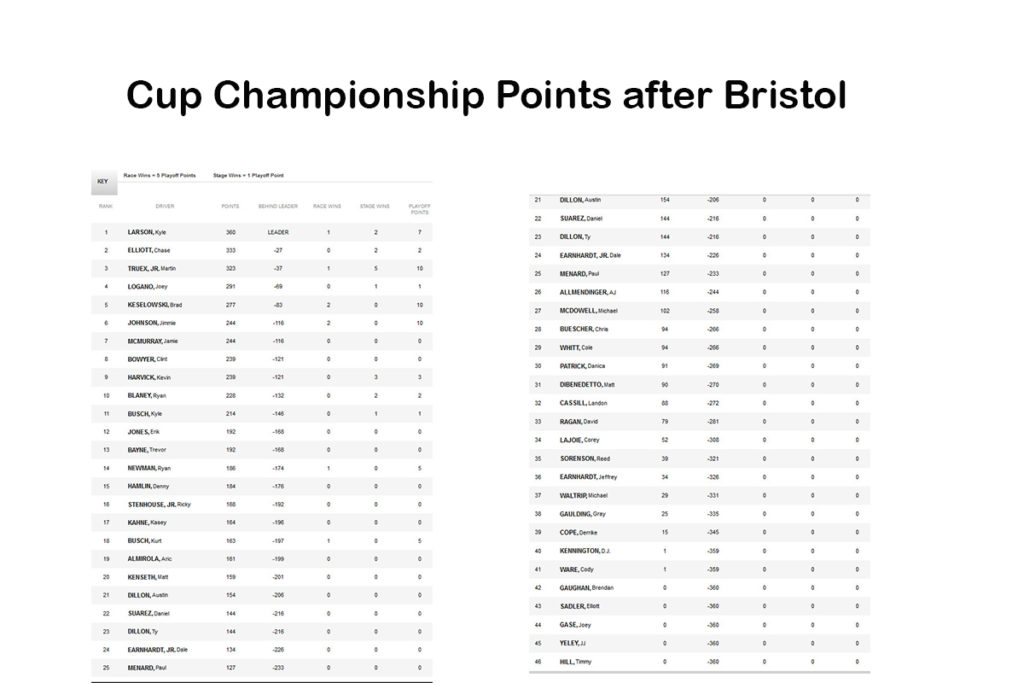
Where you were in the standings when the checkered flag waved determined where on the zero to 40 championship points scale you land. Points earned here determine if you become a member of The Chase after the 26th race of the season at Richmond. Stage points, ten for the stage winner on down to 1 for tenth place, also count towards a driver’s championship total.
Points for Doing Well Pushes More Drivers Towards the Front

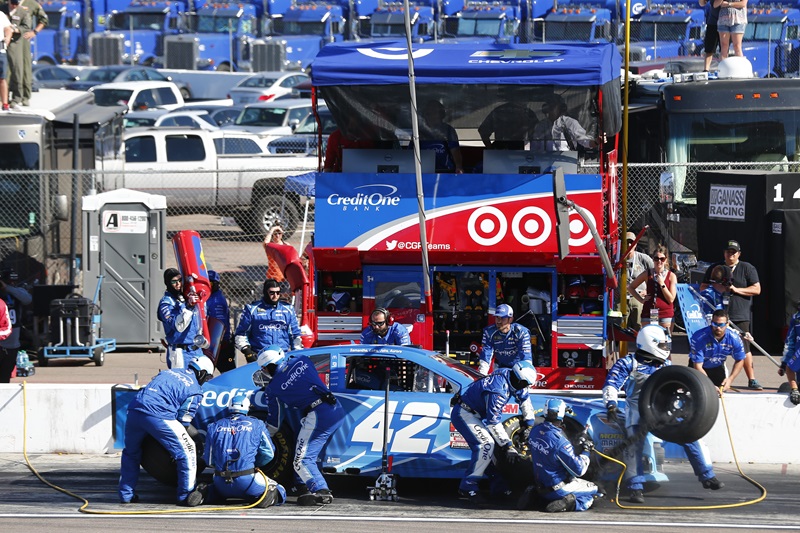
Doing well in the first two stages of races delivers rewards up to the Chase and beyond. It’s like the “getting a win lets us do xxxxxxxx” from back when getting a win basically secured you a spot in the Chase. Points garnered in stages can be the difference between advancing to The Chase or not. They can also be the difference between advancing or not between rounds of The Chase.
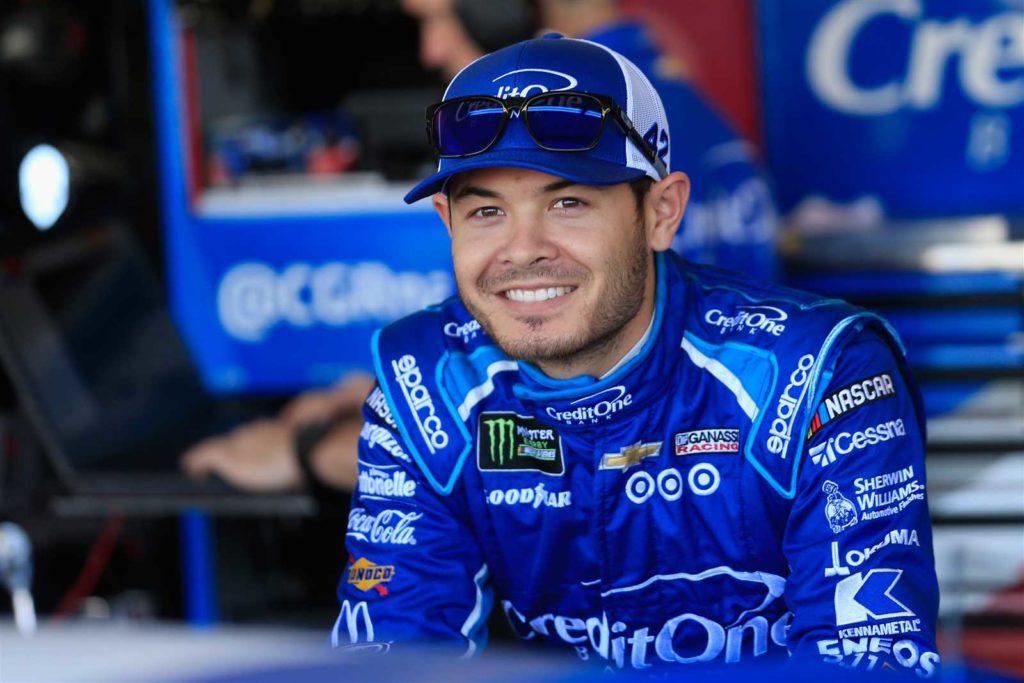
Sure, except for the “usual suspects,” drivers at the back aren’t going to fight tooth and nail to get to the front from the drop of the green and keep at it until the checkered flag waves throughout the race. Stage points means that more drivers are going to fight to get and stay in range of that magical “Top Ten” so that they can make a run with any chance of succeeding.
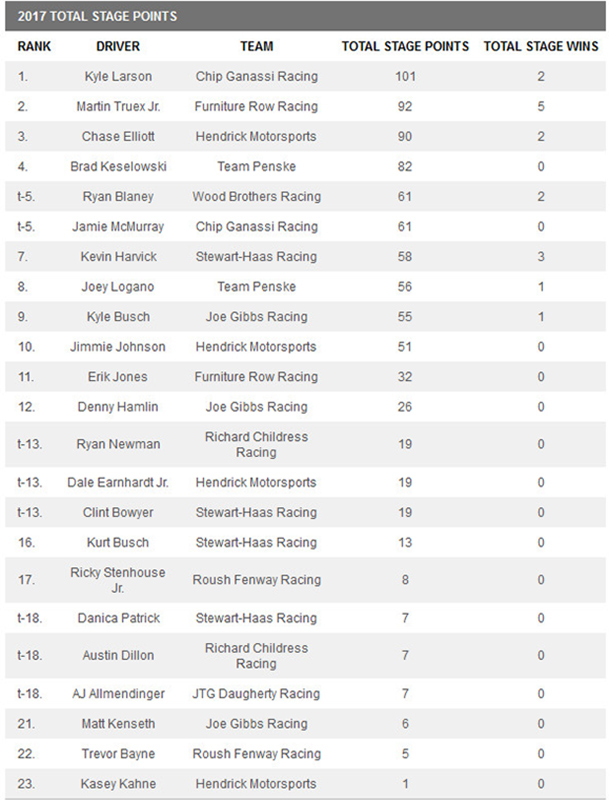

That’s making for better, more exciting racing than what we’ve seen the last few years. It could be improved upon by adding another stage to every Cup race, breaking the race up into four equal segments. Jimmie Johnson recently said, “It’s tough. The competition in this garage area, the format and the fact there are points and a rhythm of the race with stages, it’s like three shorter races now and there is a reward at the end of each of them.”
Brad Keselowski, who was one of the drivers with whom NASCAR consulted when deciding to implement stage racing, said “In general, NASCAR wanted there to be more moments that mattered, more moments that make the SportsCenter highlight reel… That was a key moment in the race, and it’ll be a key moment in the season as we get into the playoffs. But that’s what this format is supposed to be about, is having more moments like that. Whether you agree with specific moves is really neither here nor there, but when you put more on the line throughout the race, you get more moments like that.”

What do you think? Has stage racing brought excitement back to NASCAR, or have “the powers that be” made another mistake that will drive fans away? Let us know how you feel in the comments below.