Infiniti Makes Dream of Production Variable Compression Engine Reality
Mike Aguilar
Click Here to Begin Slideshow
All images from screenshots unless otherwise specified.
Engine compression has been the Achilles Heel of engine design for decades. If you want great acceleration, especially in boosted engines, you want low compression. On the other hand, if you want efficiency (and thus fuel economy), you want high compression. Current engine design doesn’t provide for any middle ground unless you go with a mid-range compression ratio. Infiniti has just shattered this design paradigm with the world’s first variable compression engine, giving aficionados the best of both worlds.
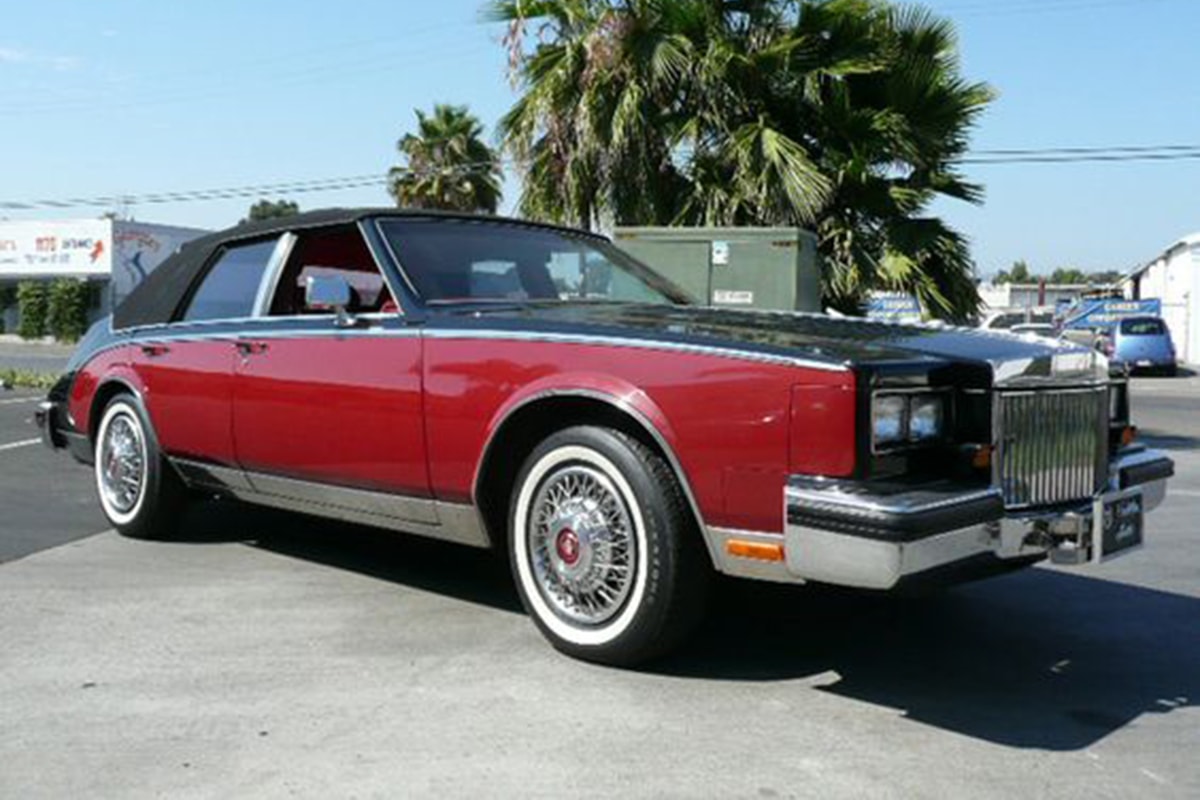
Cadillac was one of the first manufacturers to introduce a variable displacement engine for passenger vehicles in 1981. The Seville was in fact the only Cadillac that year not to have the L62 V*-6-4 engine. This Eldorado had the variable displacement engine.
Image courtesy Pinterest/Chicagobred1 (resized).
An engine’s compression ratio can only be changed by altering the difference in the height between its lowest and highest positions. We do this by altering stroke on the crank, rod length and piston deck height. We can do a little more by machining the block and heads. Bolt it all together and that’s it. From the moment you turn the key on that engine until it goes to the drag strip in the sky, the compression ratio only changes minutely with engine wear. Even variable displacement engines retain the same compression ratio no matter how many cylinders are being used.
Infiniti’s VC-Turbo engine, which will appear in a future version of the QX50 first, shatters everything engine designers thought they knew about compression ratio. With the addition of a small electric motor connected to a small lever system, Infiniti engineers created the world’s first production variable compression engine.
Stab your foot on the throttle when merging into highway traffic, and this motor moves a lever which uses cam and lever action to lower the engine’s compression to 8:1 for that burst of power you need. Once you settle into traffic comfortably and stop accelerating, the motor moves the levers again and the engine’s compression slowly (or quickly) shoots up to 14:1 to save you money on gas.
The design is mind-blowingly simply when one thinks about it a little while looking at the cutaway engine Infiniti had set up onstage. Use a motor to move a lever that moves a cam attached through a connecting rod to another cam attached to the crank in the middle and the piston connecting rod on the other end to change the engine’s compression ratio. It took 20 years to come up with, though! Engine efficiency is also improved because the design change has all but eliminated side thrust on the piston by straightening out the path of the connecting rod.