Holley Tri Power Series Part 2
Check Out – Part 1 – Part 3 – Part 4
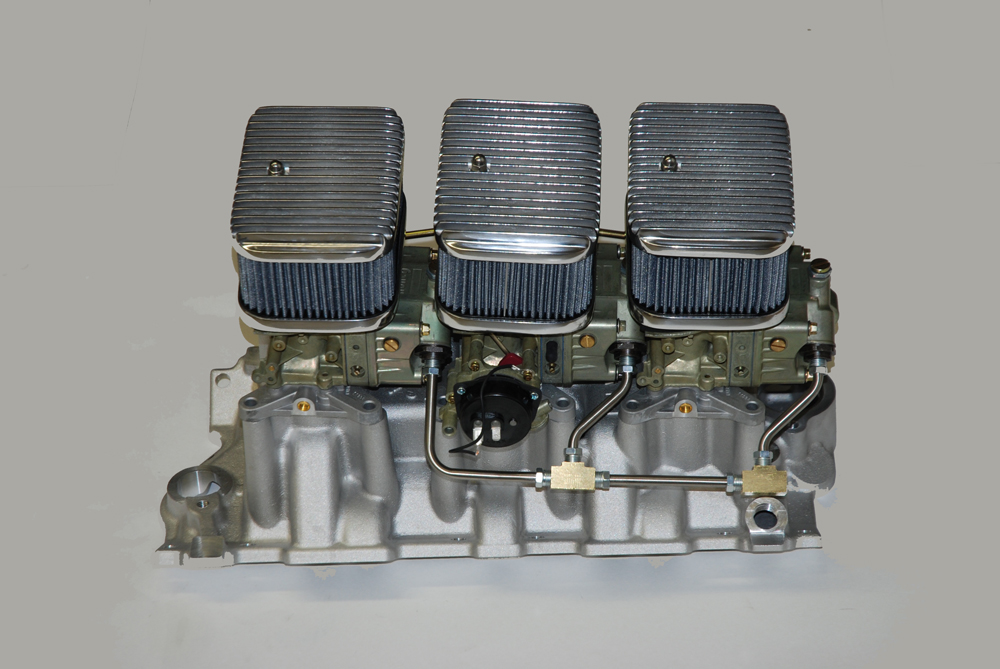
Last issue, we previewed the intake portion of Holley’s brand new three-deuce setup for the small block Chevy. If you recall, the intake is a 180-degree dual plane Weiand that is setup for street use. It accepts conventional cathedral bowl Holley two barrel carburetors with a maximum throttle bore size of 1.50-inches. Those Holley carbs are the focus in this issue of “The Burnout”.
The manifold is engineered to accept a 325 CFM Holley carb in the middle, accompanied by a pair of 350 CFM carburetors. That’s a lot of CFM – 1,025 in total, and certainly too big for a street-driven small block. But there’s a catch here (and one that a big print competitor of ours failed to notice in their review of the system): Two-barrel carburetors have their CFM ratings performed at a different pressure drop than similar four-barrel carburetors. Here’s how it works:
A two-barrel carb is tested (for flow) at 3″ Hg depression. On the other hand, four-barrel carburetors are flow rated at 1.5″ Hg depression. These are the industry standards for carburetor airflow testing.
As you can see, the two-barrel test depression is double the four-barrel test depression, however flow varies with the square of depression. That means that it’s easy to convert from one test depression to the other. Here’s the formula:
Divide the cfm by the square root of the pressure it was flowed at, and multiply that by the square root of the pressure you want to calculate for.
500cfm / (sqrt of 3) = 288.675134595
288.675134595 x (sqrt of 1.5) = 353.55339059
That’s the hard part. There’s a simpler way (but perhaps not quite as accurate) to accomplish the conversion:
- CFM divided by 1.414
- 500 divided by 1.414 equals 353.6
- Using our tri-power setup as the example, then:
- 1025 divided by 1.414 equals 724.9 or, 725 CFM.
725 CFM is pretty much right on target for a street driven small block, particularly when you consider the fact the secondary’s can be staged. Internally, the carburetors are very much standard issue Holley (which is a very, very good thing!). That means tuning and replacement parts are readily available. It also means the carbs are simple to work on with a straightforward design.
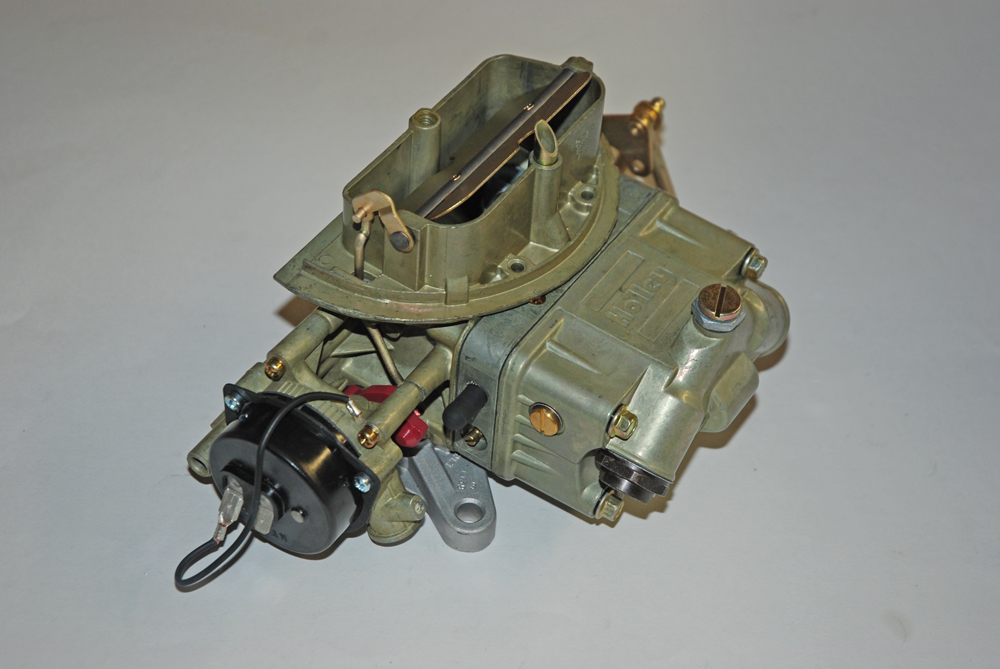
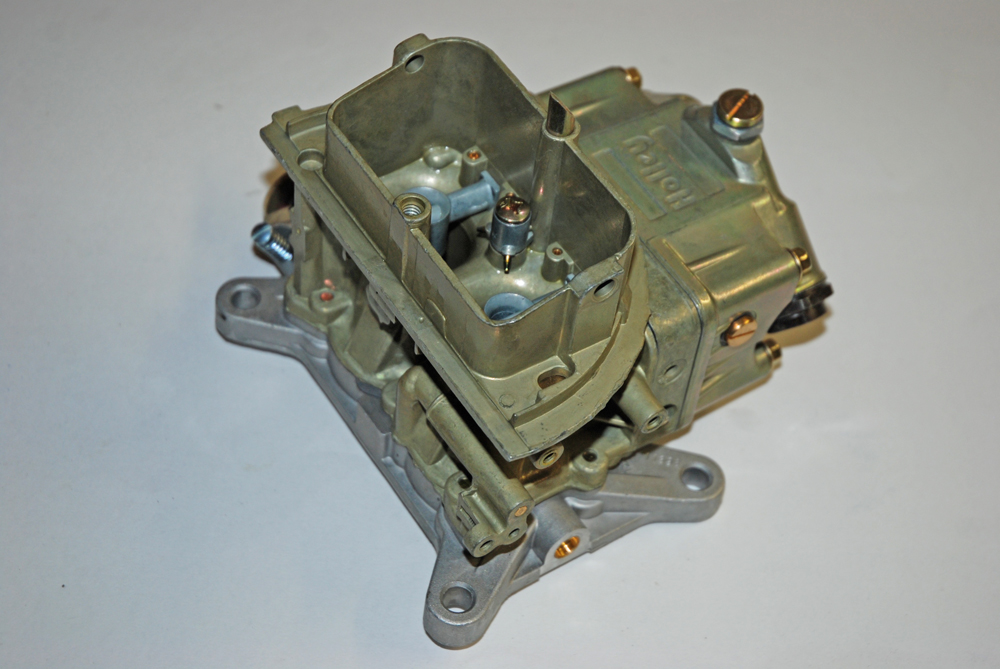
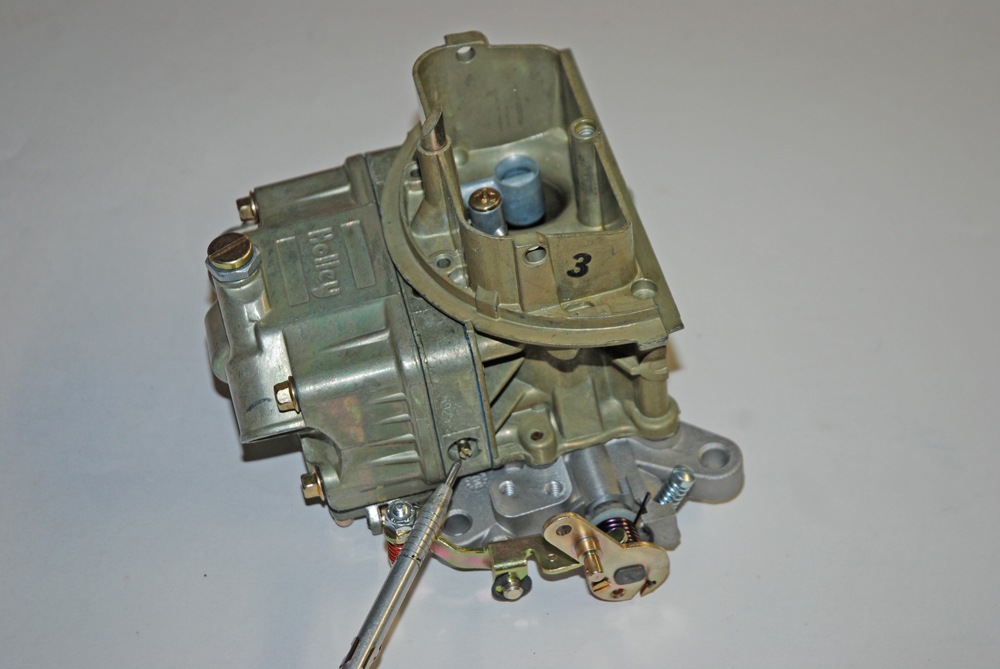
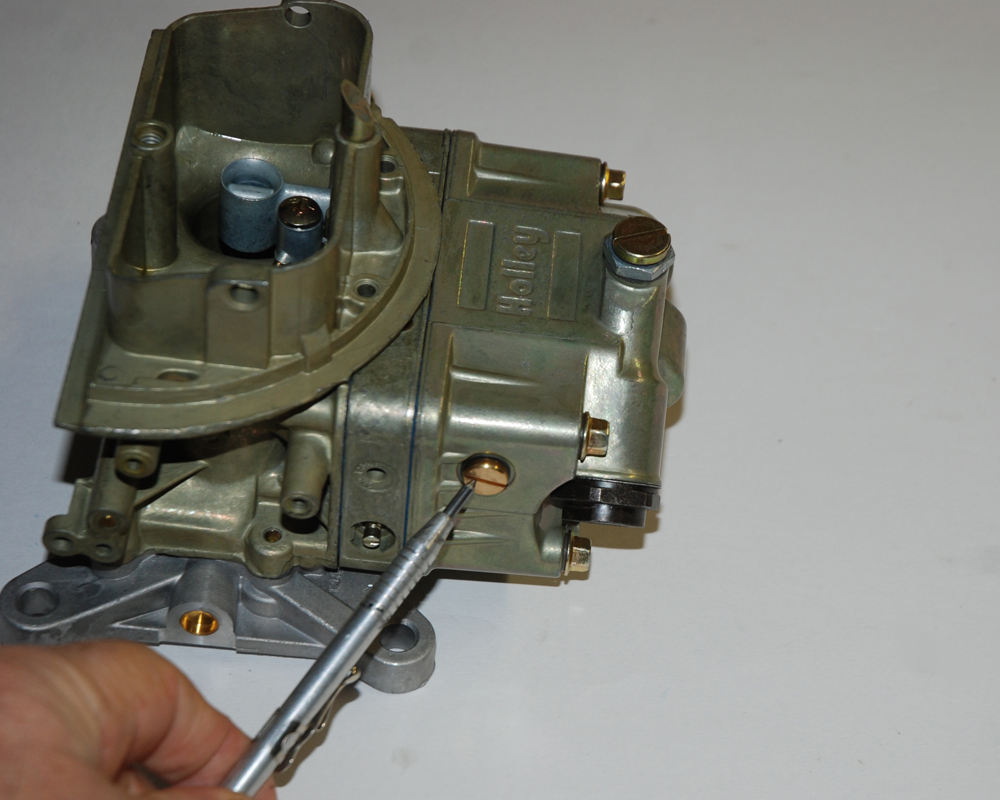
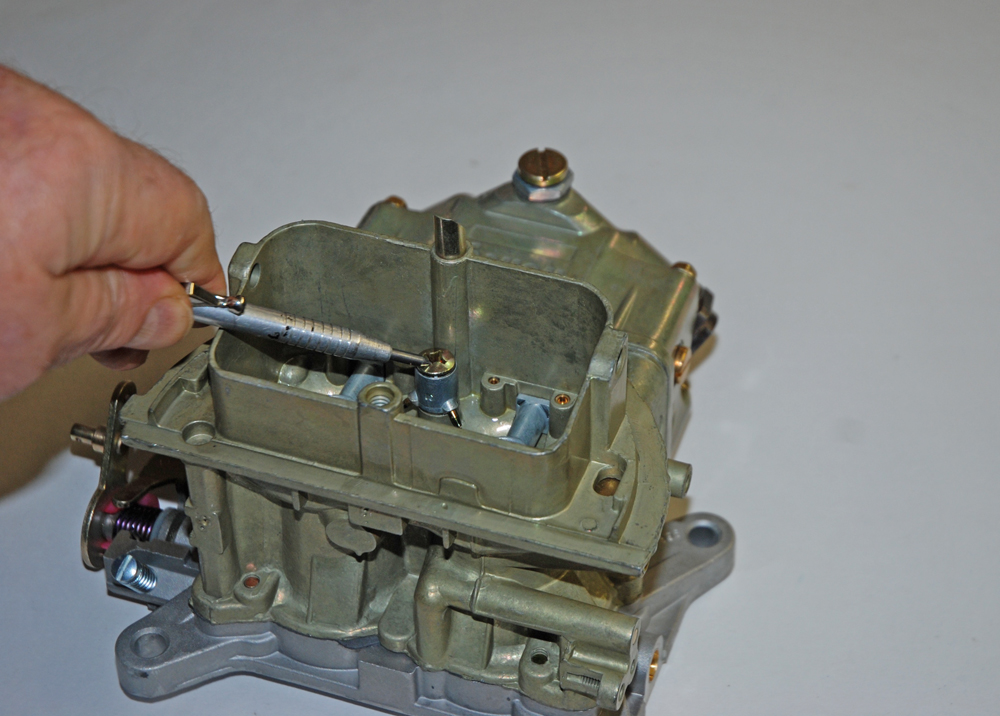
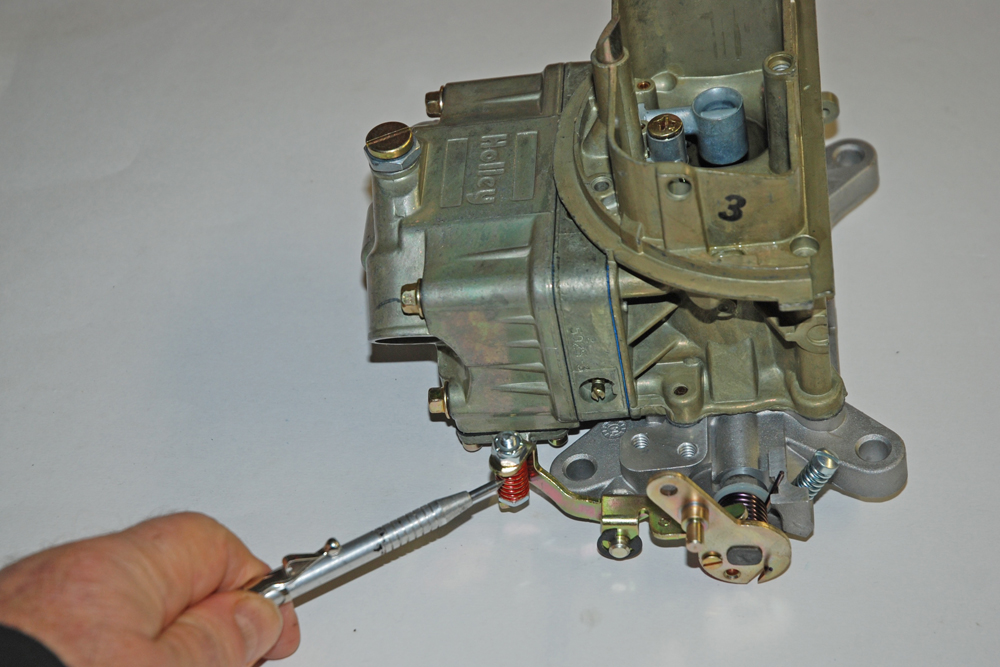
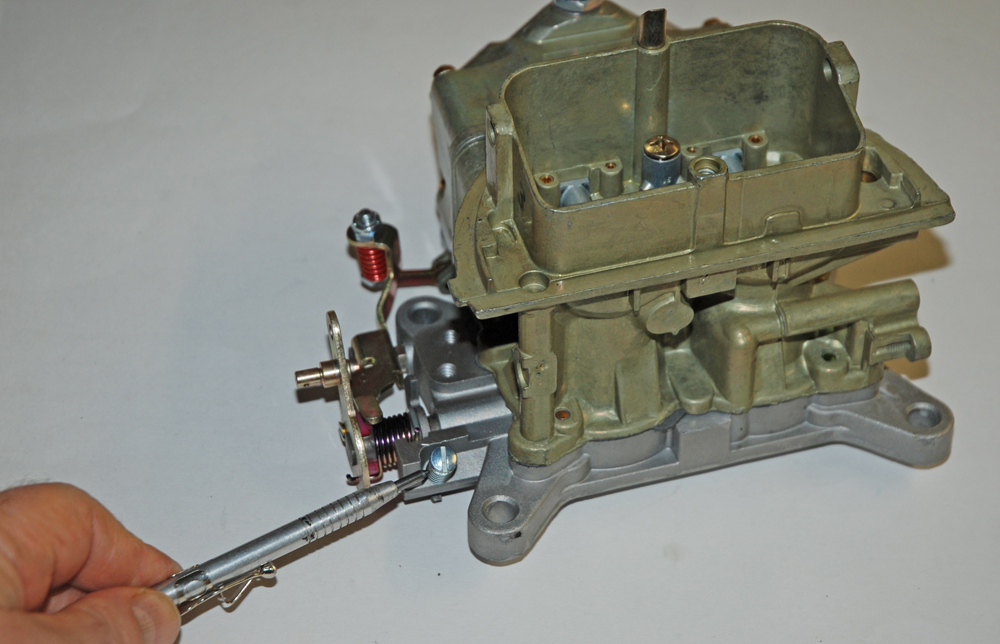
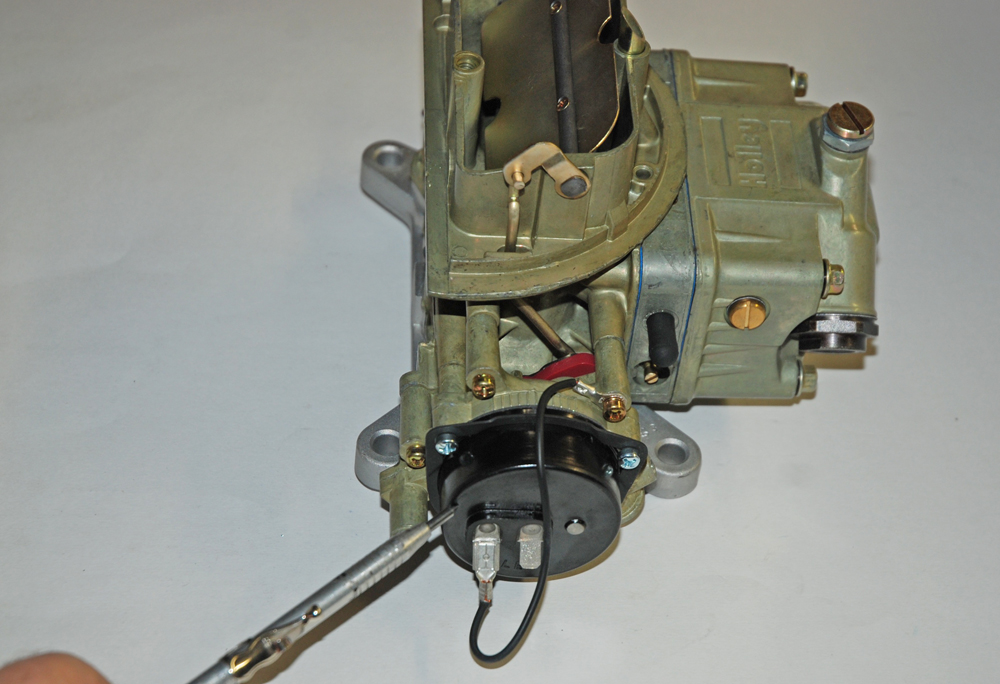
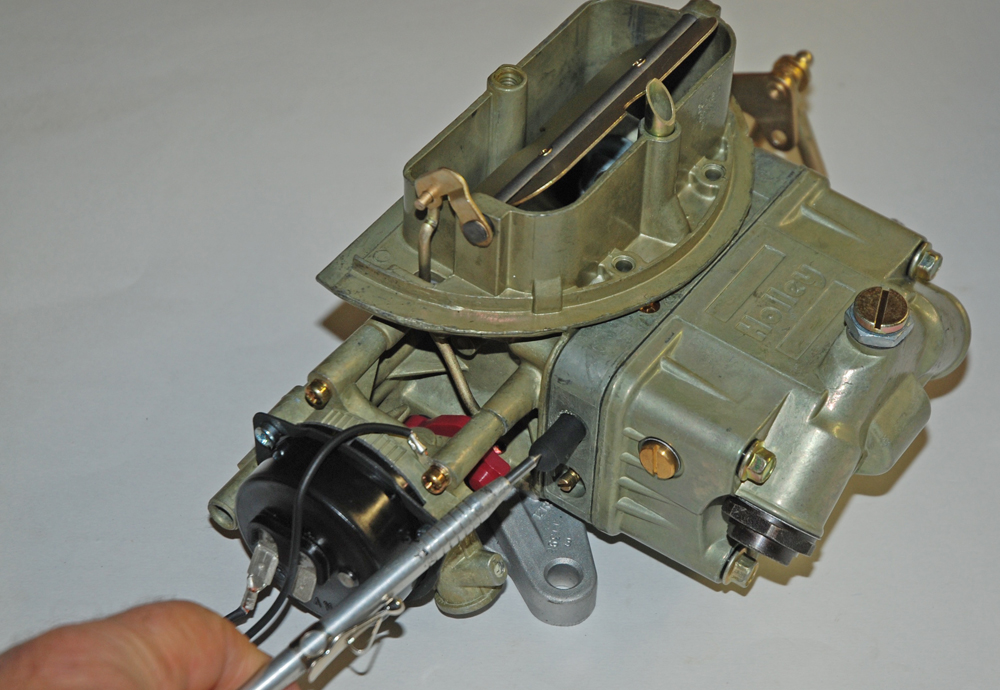
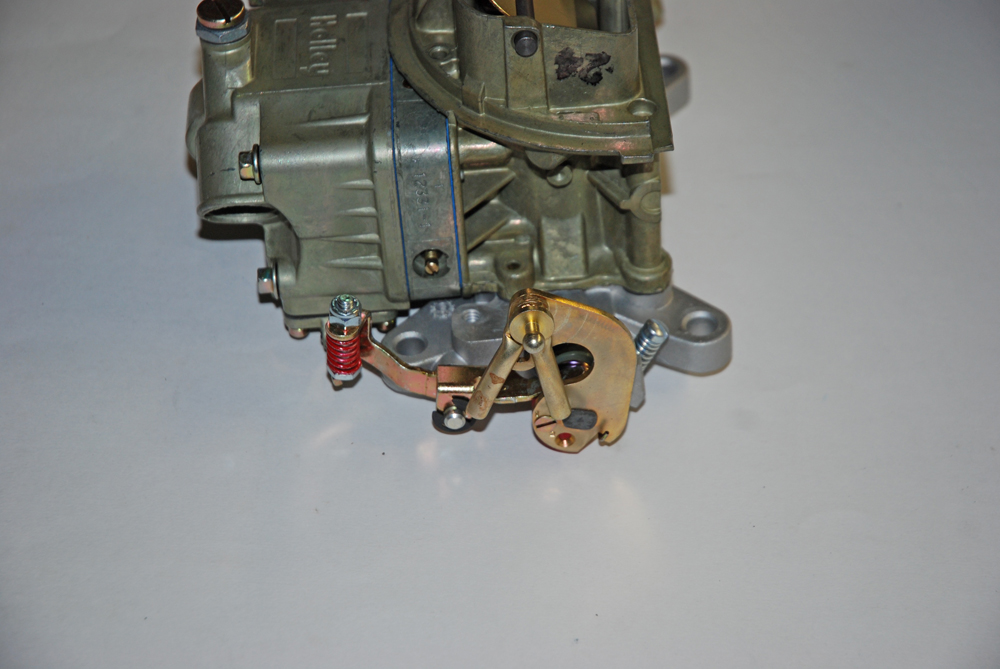
In this issue, we’ll look at the outside features found on the tri-power carbs. Next issue, we’ll open them and have a look inside. Meanwhile, here are the photos of the exterior features of the carburetors:



Check Out – Part 1 – Part 3 – Part 4