Elegant Engineering: Inside Eaton’s Efficient Detroit Truetrac Differential
Wayne Scraba
Click Here to Begin Slideshow
It’s no secret that an open differential (fondly referred to as a “peg leg” in some circles) just doesn’t cut it in a high-performance application. Having one tire go up in smoke while the other does nothing won’t get you down or around the track in short order. That’s why spools and positractions are so common in motorsports. While spools have their place, for the majority of dual duty drag cars and other competitive motorsport applications, a differential of some sort just makes solid sense. Today, there are sorts of choices for a “positraction” differential (limited slip, no spin, locker, etc). All of those differentials use diverse technology (some similar, some completely different) in order to lock the wheels of the car up when required and to automatically release one of the wheels when not required. Many of these differentials use some form of internal clutch or friction material pack. These clutches simply wear with age, so basically, the more they’re worked the shorter the life span. There’s more too: Some of those differentials can prove to be rather abrupt (!) when they do their job. If you have Huge “X” Large power in the car, you have to pay attention with some differential configurations when the roads are damp or the pavement is cold. Let’s just say, when a beefy old school differential locks or unlocks, you usually know it. You can hear it and you can regularly feel it. On the flipside of the coin is an innovative Eaton product, and that’s the Detroit Truetrac. This is a differential that uses absolutely no clutches or friction materials in operation. Instead, it relies upon a set of helical cut gears to lock and unlock the differential. The Truetrac was actually introduced in the Seventies and over the years, Eaton has constantly tweaked and refined the technology. It is very simple in design (and keep in mind in world of motorsports, simple is definitely good). Basically, it’s a maintenance free rear end. Plus, the overall design is extremely stout (more later). An added bonus is the fact it requires no special lubricants or friction modifier additives to function properly either. It’s important to understand the Truetrac is a helical gear, limited slip differential. It is not a “locker” nor is it a “positraction”. Eaton notes the Truetrac operates on the principle of “torque biasing”. Typically, a Truetrac will provide approximately three to three and a half times the torque of the spinning wheel to the wheel that has traction. According to Eaton: “The Truetrac differential operates as a conventional open differential under normal driving conditions. It allows one wheel to spin faster or spin slower as necessary. When a wheel encounters a loss of traction or the terrain changes, internal gear separation forces take effect and in turn, they transfer torque to the high-traction wheel. The helical-shaped gears mesh with increasing force until wheel spin is slowed or completely stopped. When the vehicle exits the low traction situation, the differential resumes normal operation.” This Eaton video shows the basic differences between a common “differential” versus a Truetrac. It also illustrates how the Truetrac works: https://videos.eaton.com/detail/videos/differentials/video/2196423811001/eaton-truetrac-limited-slip-differential:-how-it-works-applications?autoStart=true&page=3 By design, the Truetrac will operate seamlessly on the street. Basically, it has no bad manners and you won’t feel anything grave either. Eaton tells us that in a drag racing application, the car will hook and go straight in a repeatable fashion. When you launch the car, this temporarily creates a very high gear separation within the Truetrac. This forces both wheels to drive in unison, which in turn moves the car forward as efficiently as possible. Essentially, both wheels are locked together and provide identical traction. And that’s good news for us. There’s more too, when it comes to power and torque capabilities from Eaton: “The Detroit Truetrac is designed to handle more torque (power) than the axle shafts it drives. Horsepower has little influence on the differential since it is more of a function of engine RPM. Each model of Truetrac is designed to unique torque capacity specifications; however, they are all developed to handle the extreme torque loads typical in professional racing and military applications. The torque limit is largely limited by the “barrel” diameter (the inside diameter of the ring gear) but is also limited in c-clip models by the reduced pinion gear sets due to the c-clip installation pocket. Since these parameters are dictated by the axle design and ring gear strength, the Truetrac differential should not be the limiting component in the axle’s torque capacity.” When it comes to construction, the Detroit Truetrac is built with a forged or billet, heat-treated and fully-machined case. The large internal helical gears are extreme quality. End caps are cast and they too exhibit fabulous machining. Fasteners are Grade 8, and an important note: There are no huge “open windows” in the case (when compared to a conventional limited slip differential). Obviously, this leads to an exceptionally strong case. All driveline loads are distributed over a large amount of material (gear teeth). This helps create the high torque handling capability. Further to this, Eaton notes: “From a high-level system view, the units are constructed similarly to an open differential except all gears are helical and the “pinion” gear is split into two intermeshed gears. Because of the three gear tooth mesh interfaces, the design must have lash. While all Truetracs (and helical gear differentials in general) have internal lash, units with preload are less noticeable. Typically, Truetracs have a maximum lash of three to four degrees side-to-side between gears. This is normal and required for the superior torque transfer design of the product.” For applications, Eaton offers Truetracs for a huge range of popular high-performance vehicles common in our industry. Included in the mix are the following (but certainly not limited to these either – there’s a huge number of Truetrac applications for other combinations as well including modern musclecars): Dana 60, Mopar 8-3/4, Ford 9-inch, Ford 8.8-inch, GM (Chevy) 12 bolt, GM 10 bolt (8.5-inch) and GM 10 bolt (8.20-inch). Within this mix, Truetracs are available for several different production and even non-production axle spline configurations. Case-in-point, the 12 bolt Truetrac shown in the accompanying photos is designed to work for 33-spline aftermarket axles with a 1.41-inch diameter axle shaft. FYI, stock for a 12 bolt is a 31-spline axle with a 1.29-inch diameter axle shaft. In some cases, the desired gear ratio determines which Truetrac to order. For example, a 4.10:1 and up 12 bolt uses one particular Truetrac part number while a 3.08:1 to 3.90:1 example uses another. You can download Eaton’s complete differential application guide right here: https://www.eaton.com/content/dam/eaton/products/differentials-traction-control/eaton-performance-differential-application-guide-en.pdf In the photos (and captions) that follow, we’ll give you a close look at a 33-spline 12 bolt Truetrac. Bottom line here is, if you’re looking for an extremely beefy differential, this setup might be right for you. It’s certainly no “peg leg”! Check it out:
Click Here to Begin Slideshow
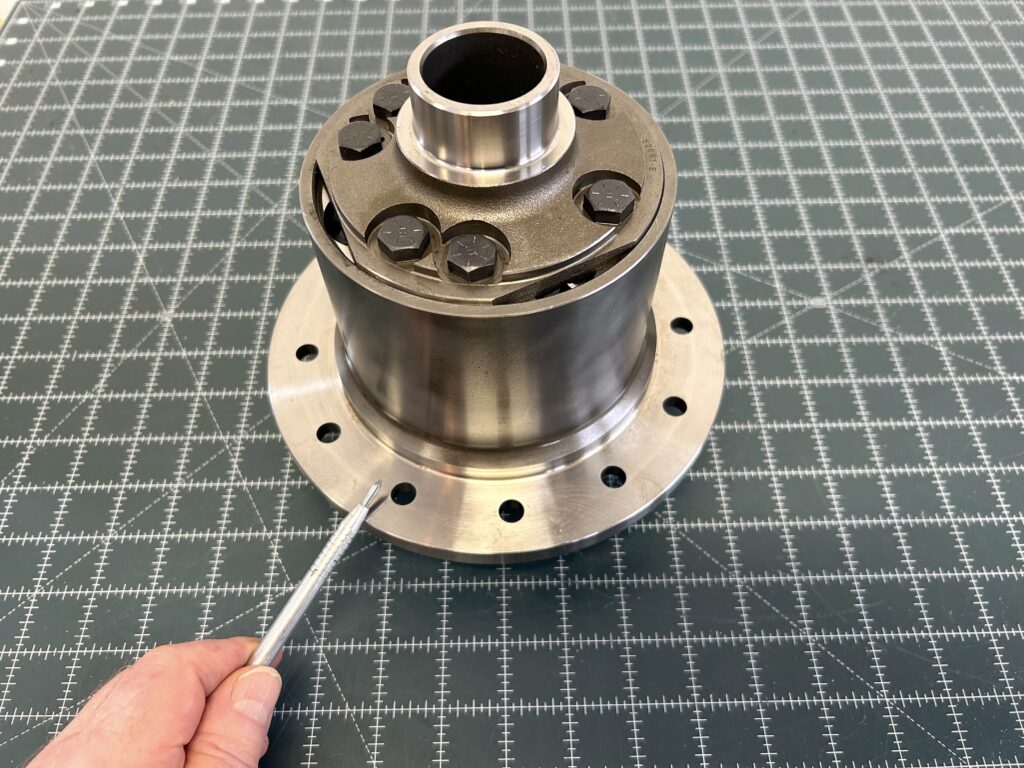
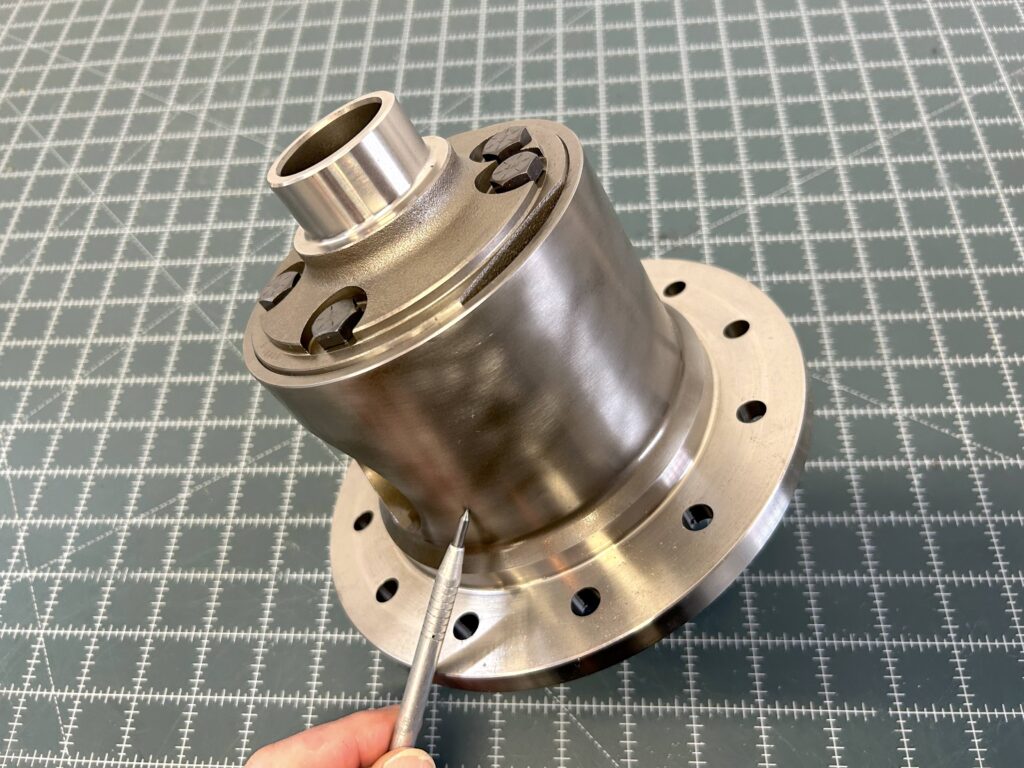
When you take a quick glance at the Eaton Truetrac, you’ll quickly note the entire main case is machined. More in the next photo:
While most other differentials are designed with huge windows allowing access to the internals, the Truetrac is almost fully enclosed. Clearly, this configuration isn’t going to deflect anywhere under load.
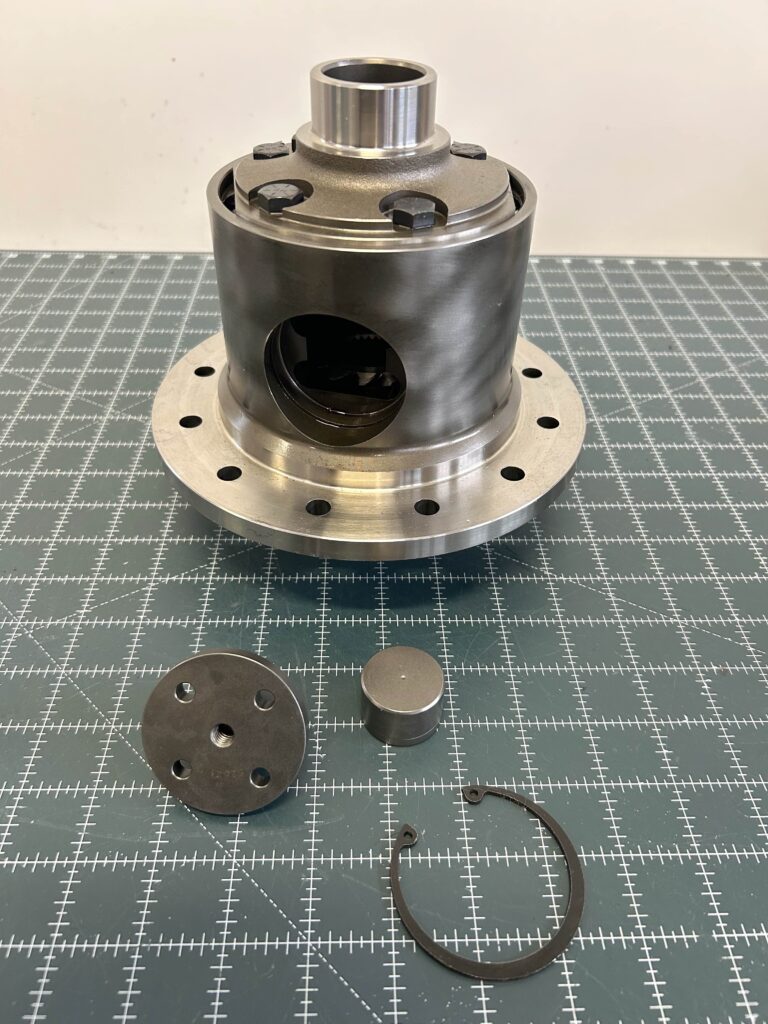
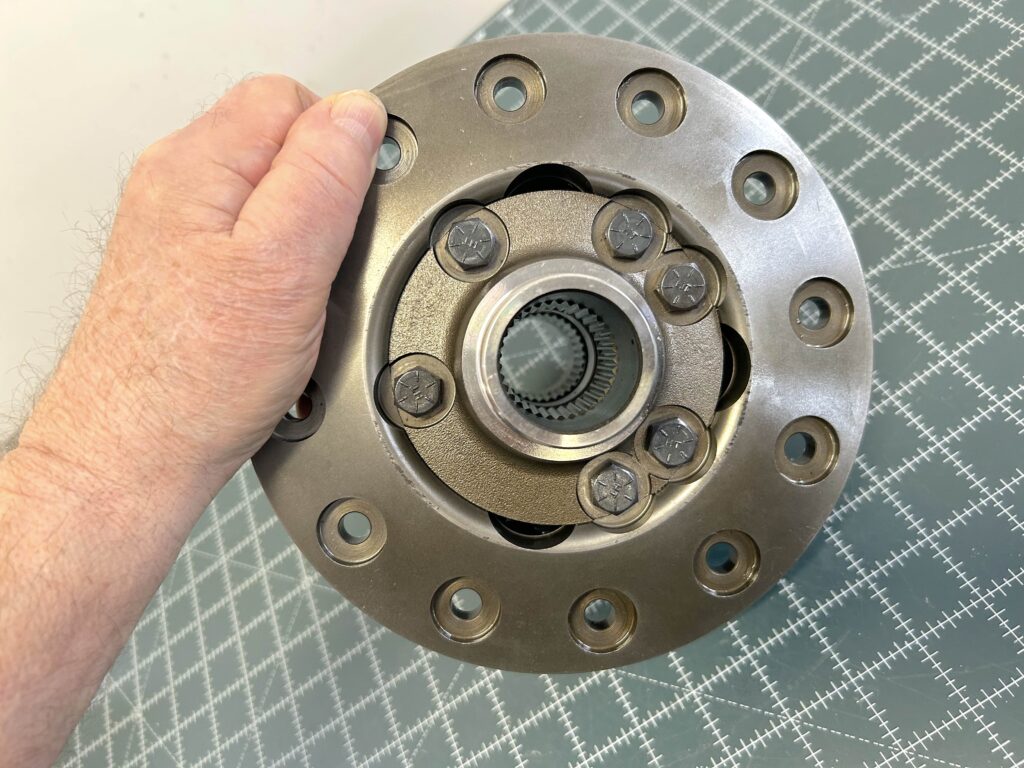
On one side, there’s an opening for what amounts to a load button for the axles. This allows access to the c-clips for axles with that configuration.
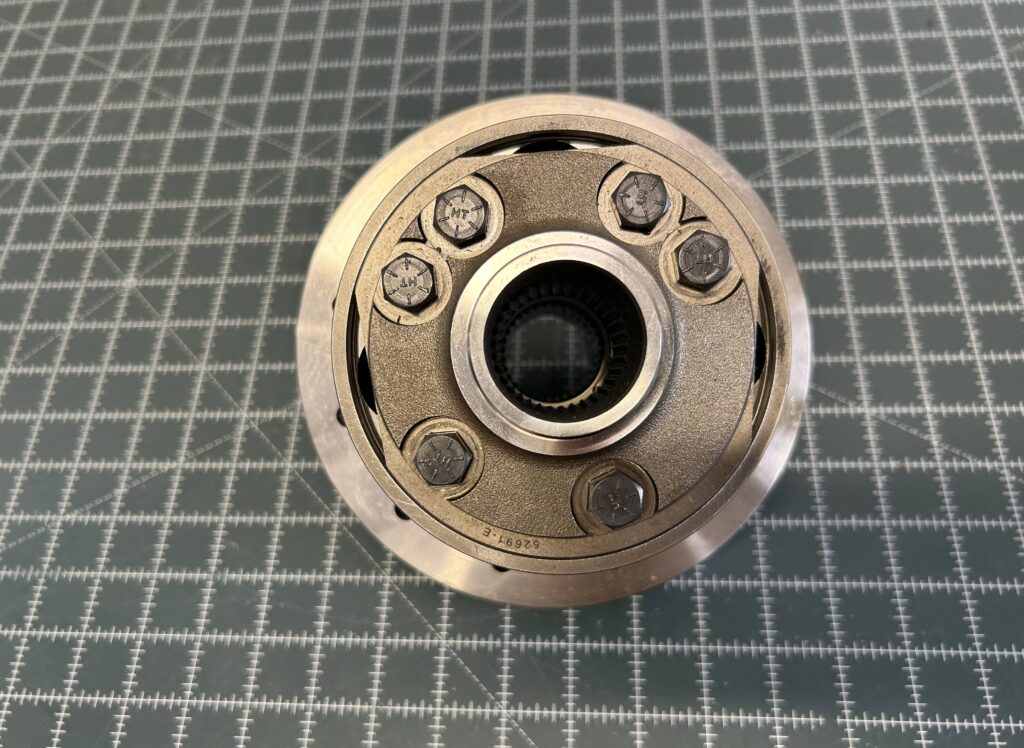
On each end of the case, you’ll find a set of cast and machined end plates. This provides access to the helical internal gears.
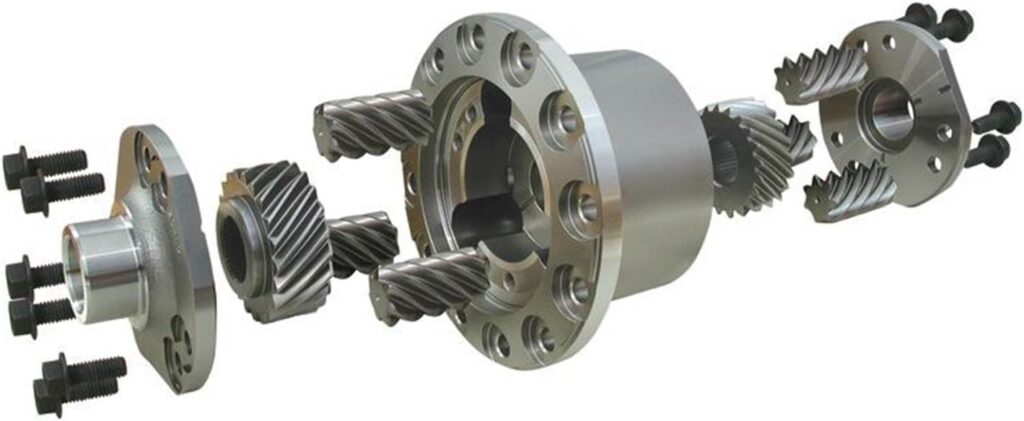
(Credit Eaton Corporation): This photo from the folks at Eaton shows how the helical gear arrangement works inside the Truetrac. When your car is launched, this creates a very high gear separation within the Truetrac. This forces both wheels to drive together, which in turn moves the car forward as efficiently as possible. Essentially, both wheels are locked together and provide identical traction.
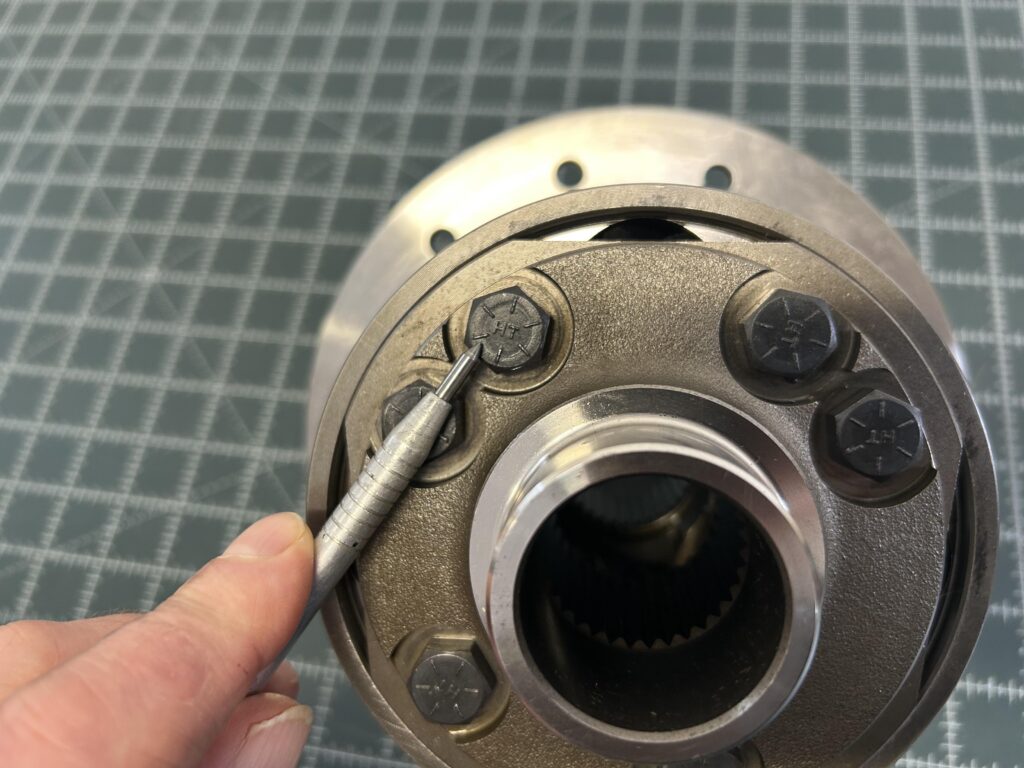
Note the fasteners – they’re all Grade 8.
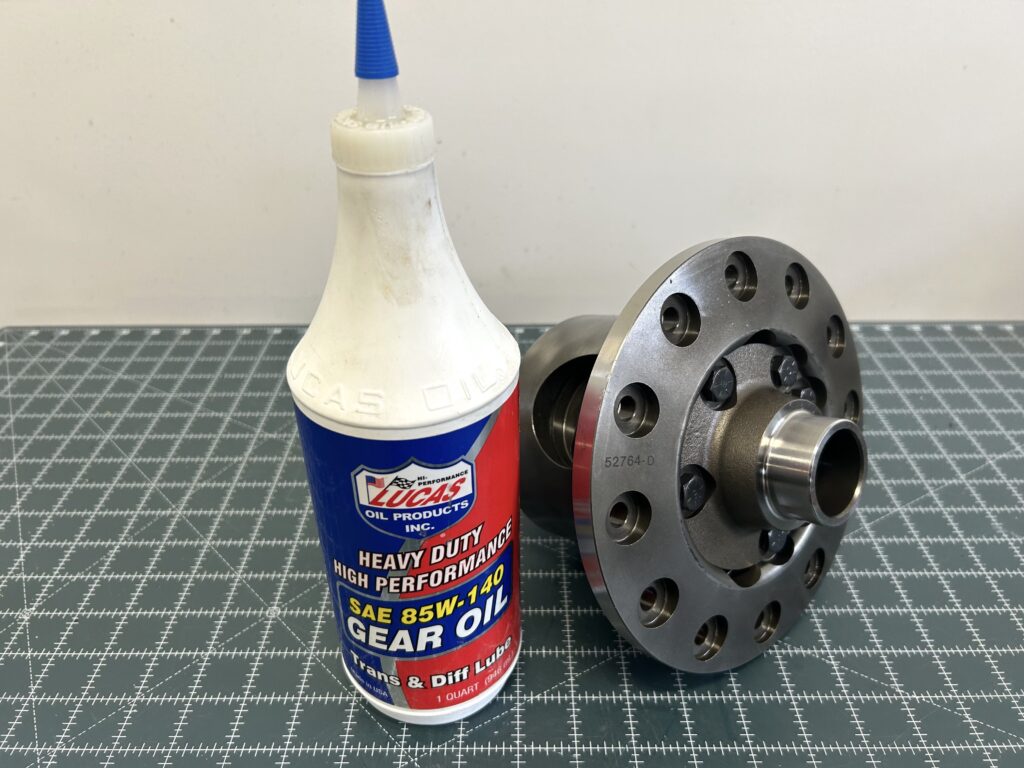
Because there are no clutches, there is no need for a special positraction fluid or special additives of any sort. Good old fashioned conventional (non-synthetic) gear lube will work just fine.
This particular Truetrac is built for a 12 bolt Chevy with 33-spline aftermarket axles. This means the axle shaft diameter is 1.41-inches (up from a stock 31-spline at 1.29-inches). See the text for more info along with an Eaton application link.