Compressed Air – The Shop Staple Part 1

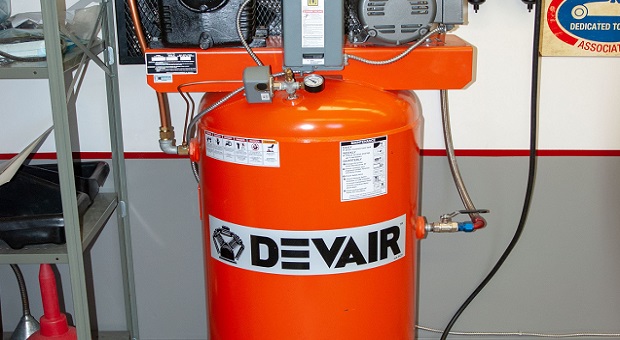
Today, battery driven power-tools tend to dominate the market. You see them everywhere, but they’re certainly not without limitations. The big dilemma? You always need a back-up battery ready to go, and if you forget, then you have to wait to charge another battery. Sure you can swap out batteries from other similar tools, but what if they’re not charged either? Or what if the batteries from other tools are not compatible? Lots of folks find this frustrating. Me included. Prior to the rush toward battery powered tools, air driven tools were the standard – and they still might be. There are a lot of advantages to having access to air tools in a home shop. But to use them, you’ll need a decent air compressor. And with that compressed air is a much more important ingredient within your shop environment as a device to pump up tires. I consider it as important in the workshop as electricity and access to running water.
Isn’t that a bit of a stretch? Not if you’ve ever had the opportunity to use air tools. Most air tools are much smaller than their electric counterparts. At the same time, many of those air tools pack a much larger wallop. There is a catch though: The air compressor must be sized correctly in order to get the most out of your air tools. The truth is a small portable one-cylinder compressor will never keep up to an air ratchet, let alone a high-speed air drill.
Picking A Compressor
Air compressors come in a variety of styles, ranging from tank-less inflating devices to heavy-duty industrial jobs, with plenty of stops along the way. Finding a generic air compressor is easy but picking the ideal shop air compressor isn’t quite as simple. There are four major ingredients to consider before purchasing an air compressor: They include: Pump configuration, tank size, power and electrical requirements.
Pump Configuration
The pump is a critical factor in determining the ideal air compressor. There are three basic types of pumps in use today: Invector, Direct-Drive and Belt-Drive.
Lightweight invector compressors feature a universal motor with a unique cooing system, which, according to some manufacturers extends the life of the air compressor. Direct-drive compressors feature standard induction motors. Direct drive pumps are oil free, so they’re perfect for the occasional-to-moderate-use owner, who doesn’t want to deal with servicing issues. These models are typically compact, and in generally speaking will last about 500 hours. Belt-drive pumps are quieter than their oil-free counterparts. If you use your compressor regularly, this is the pump format you should look at. They’re best suited for do-it-yourselfers and professionals who frequently use their air compressor. Belt-drive pumps will last three or more times longer than direct drive models, but they require regular servicing (oil changes, filter changes, etc.). All of the heavy-duty commercial use compressors you see in repair and body shops incorporate belt driven pumps. There are even larger commercial compressors available that incorporate rotary screw pumps, but they’re beyond the scope of this article.
There are two different types of belt drive pumps commonly available: Single stage and two-stage. Single stage is just that: What it puts out goes directly to the tank. Don’t confuse cylinders for stages. It is possible to purchase an air compressor with a two-cylinder, single stage pump. A two-stage pump is slightly different. In this case, the pump usually has two different sized cylinders (and accompanying pistons). Air pressure is first created in the larger displacement low-pressure cylinder, then pumped into the smaller displacement high-pressure cylinder, and finally into the tank. The main reason for buying a two-stage compressor is to create an adequate supply of high-pressure air (for example, the air required to operate something like a spray gun or air drill). Many two-stage pumps (such as the pump shown in the accompanying photos) are inter-cooled between stages. The reason is, compressing air creates heat. And like an automotive turbo or supercharger, less heat equals more power, or in this case, more efficiency.
One other pump consideration is speed. In the past we once used a large single stage 230-volt commercial compressor that worked by way of a high-speed pump. It had the capability of powering almost any air tool we had in our arsenal, but the jackhammer noise it made was almost unbearable. A slow speed, highly efficient pump is much more tolerable. The Devair compressor you see in the accompanying photos is far quieter and runs smoother than many portable 110-volt compressors. It operates at a mere 675 RPM while set at 175 PSI.
Tank Size
Air compressor tanks vary widely in size, ranging from 2 to 120+ US Gallons (certain big commercial duplex models have 240-gallon tanks). The longer you need to continuously use an air tool, the bigger the tank you’ll need. Tools that work in short bursts (for example, an impact wrench) work reasonably well with a small tank. On the other hand, tools that continuously use air such as die grinder or spray paint equipment or a sand blaster mandate a larger tank size. If you can’t decide between two comparable air compressors, buy the one with the larger tank. As tank size increases so does the overall size of the compressor. If you want a reasonably big tank, but have space concerns, consider a vertical tank instead of a horizontal model.
Next time around we’ll discuss tool power requirements along with the electricity a compressor demands. In the meantime, check out the accompanying photos, along with a sidebar that takes some of the confusion out of one of the most cherished compressor name brands ever.
###
Sidebar: What Is A “Devair or DV Systems Air Compressor” And Where Did It Come From?
DV systems manufactures Heavy-Duty Cast Iron Reciprocating air compressor units for use in both industrial and automotive applications. You may recognize the company by its former names: DeVilbiss or Devair.
The DeVilbiss Company of Toledo, Ohio began manufacturing air compressors in the early 1900’s to address a need for better quality compressors for refinishing applications. The DeVilbiss plant in Barrie, Ontario, Canada was built in 1954 and compressor manufacturing started in that facility shortly after. It was at this plant that most of the DeVilbiss compressors you see in body shops and repair shops throughout North America were manufactured. Given various business deals, corporate restructures and so on, the fabled DeVilbiss name changed, and the side of the business that made compressors was renamed “Devair”. And then a few years ago it was renamed to “DV Systems”. Now, these new DV compressors are basically the same as the old, much cherished DeVilbiss brand (don’t confuse the new DeVilbiss compressors on the market with the old one’s though – they’re completely different).
DV Systems manufactures two-stage, pressure lubricated compressor units ranging from 5 hp to 30 hp, refrigerated air dryers to complement those units and a variety of accessories to provide you with a quality compressed air system.
The compressor pumps and complete outfits are still manufactured in Barrie, Ontario, Canada and distributed throughout North America. The bottom line here is, if you’re in North America, and you’re searching for a compressor just like the old DeVilbiss at your friendly body shop, the chances are you should be looking for a DV Systems compressor.


