Breaking Down Drag Racing at Miles of Mayhem 2022 Part 2
Wayne Scraba
Click Here to Begin Slideshow
Recall the Mayhem article we recently published? It was all about a wild drag and drive event hosted in Western Canada. To recap, the Miles of Mayhem event took place at four tracks that spanned a distance of 1700 kilometers, or roughly 1050 miles. Each of the tracks was setup for 1/8-mile competition. In the first part of this series, we zoomed into the basic rules for all eight classes. And much to my surprise, the cross section of cars was robust. That made me smile. If you could imagine it, someone probably built it (and if they haven’t built it, someone is likely planning to build it!).
The part of the event that contributed to the camaraderie was the drive. Here, the toughness of the car (and to some degree, the toughness of the competitor), really shone through. For the 2022 event, the drive part of the equation crossed two western Canadian provinces (both with vast distances and relatively sparse populations). So, if you ran into mechanical issues, you couldn’t drive, limp or hitchhike to the local auto parts store for supplies. Ditto with calling for a tow. That’s the reason most competitors towed well-stocked trailers.
As we noted in the first part of the series, roads varied too. Checkpoints were important as well. According to Miles of Mayhem Drag & Drive organizers:
“Following the specified route is mandatory. Traffic, construction, potholes, gravel, weather, and winding roads should all be expected.
“In the event of a rainout, competitors are still required to drive the entire route, must stop at checkpoints and be at the drag strip in specified hours to remain in the competition and receive information about the schedule and driving directions to the next track.
“Each day has at least one mandatory checkpoint. Each competitor must carry a digital camera (phones are good too) that must be used to photograph their car at each checkpoint. Each competitor will have to show their picture to the Miles of Mayhem staff when turning in their daily time slip to verify that they have followed the route to receive the next day’s map and schedule.”
A series of host hotels were posted online along with the rules for the season. It wasn’t a requirement to stay at those hotels, but most competitors did. I wasn’t there, but I can imagine the relief of crawling into an air-conditioned hotel room was a big bonus, considering the weather conditions this year.
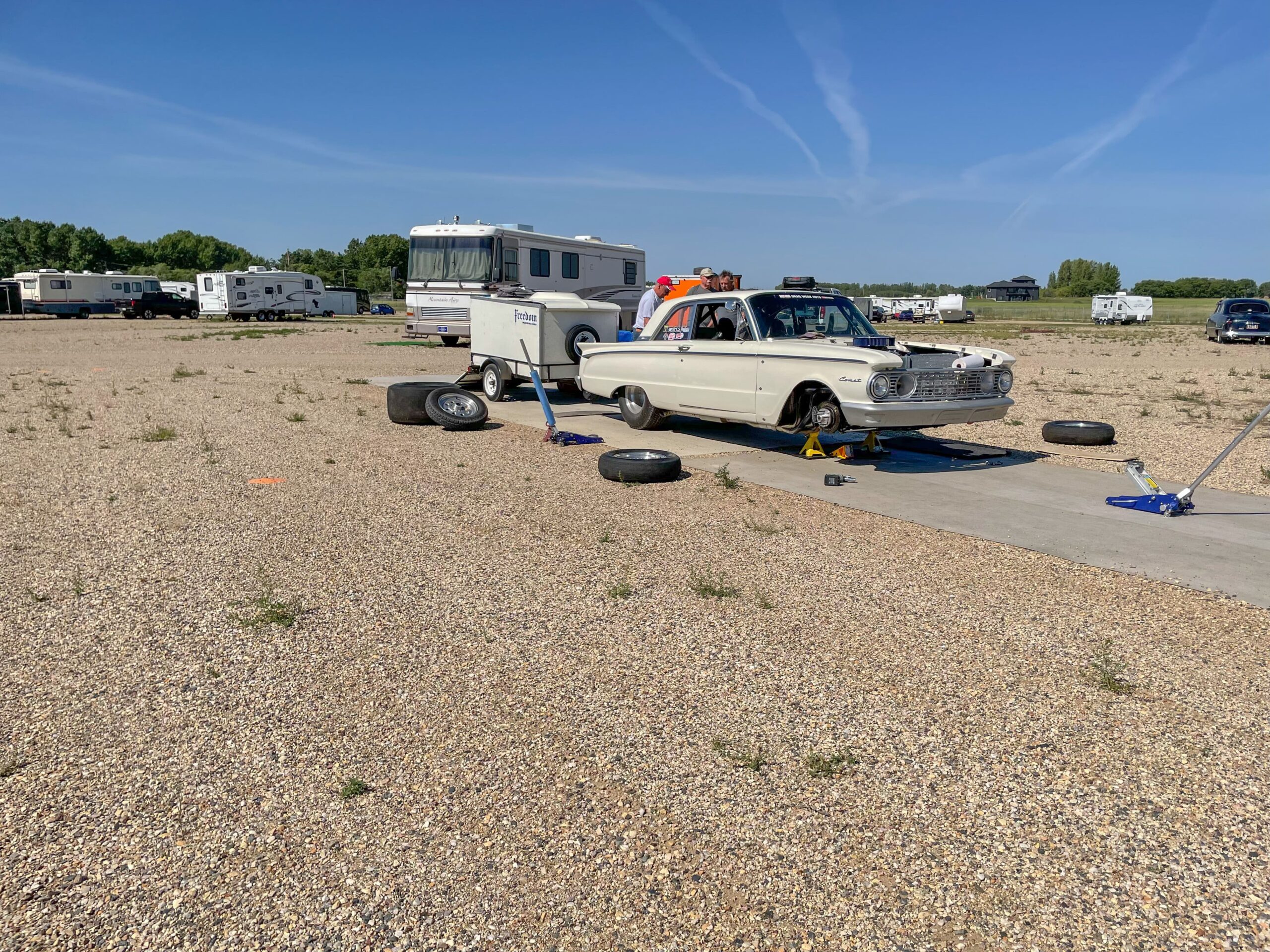
In the end, there were a variety of mechanical casualties. And yes, I did see plenty of cars on jack stands. Bottom line here is, it’s a grueling event that tests the racer’s mechanical capability just as much as it tests their driving ability. Stamina helps too! But near the end, there were a lot of happy campers – win, lose or draw.
For a closer look at some of the cars in competition, check out the accompanying photo slideshow.
Click Here to Begin Slideshow
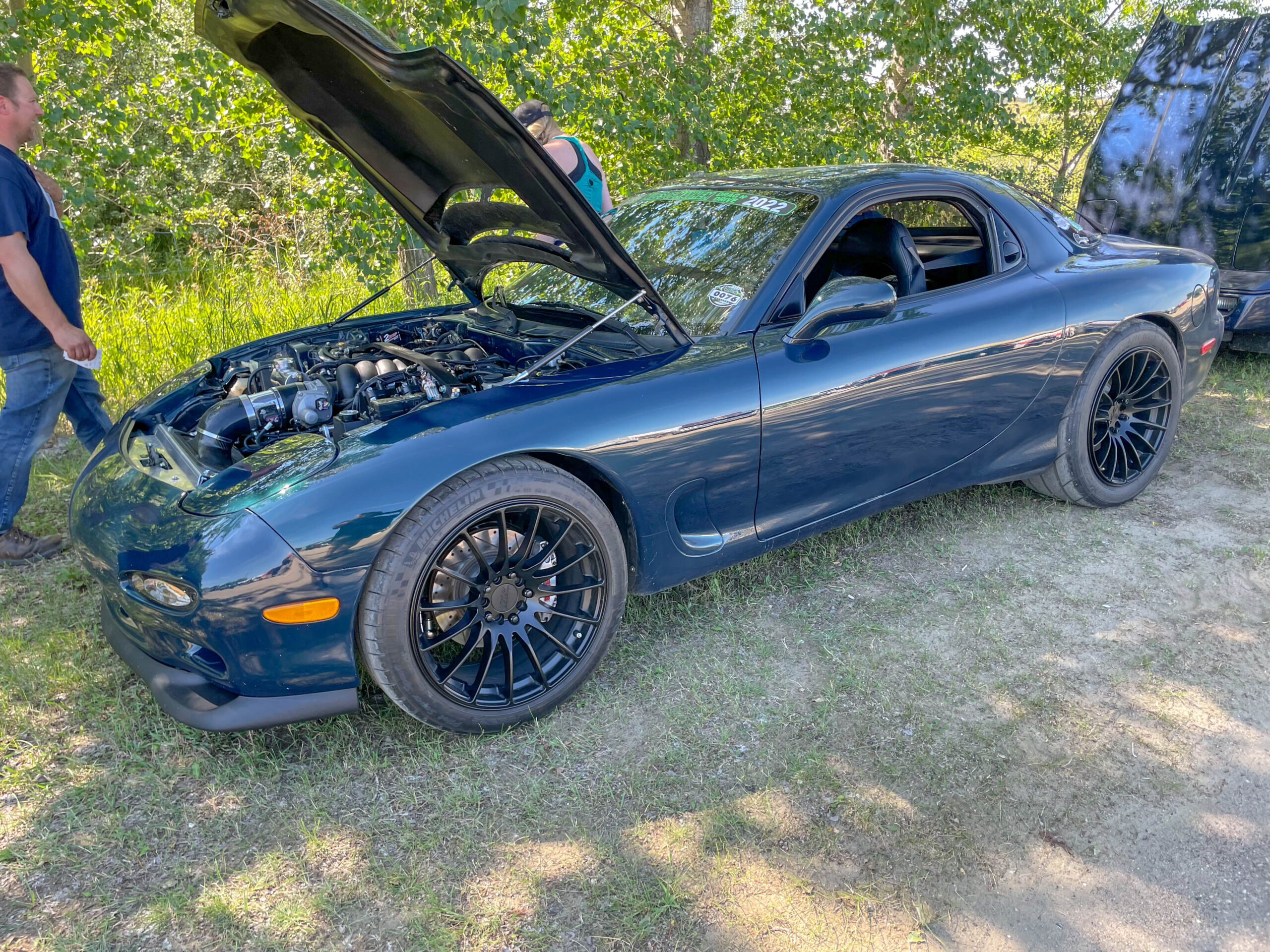
I’m not a really big import guy, but this Mazda RX7 really caught me off guard. It was incredibly well-built, quick, and according to the owners, very comfortable. The builder notes the concept here was small car, light weight and good power – similar to what Shelby accomplished decades ago. See the next photo:
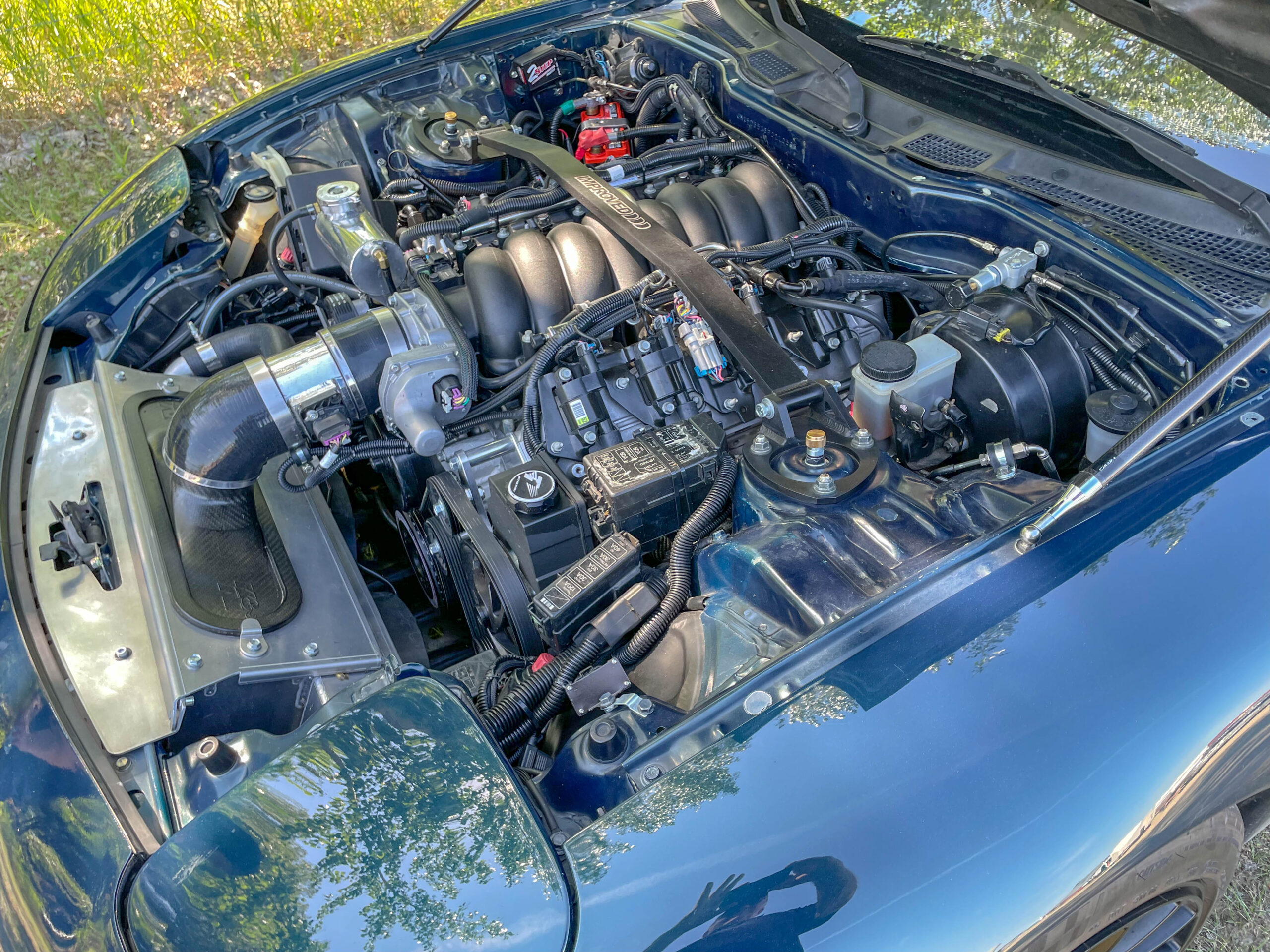
LS Power! As you can see, the install was stellar. It looks like everything grew there naturally. If you’re thinking…”road car only”, think again. See the two step on the passenger fender well, just about the flyweight battery?
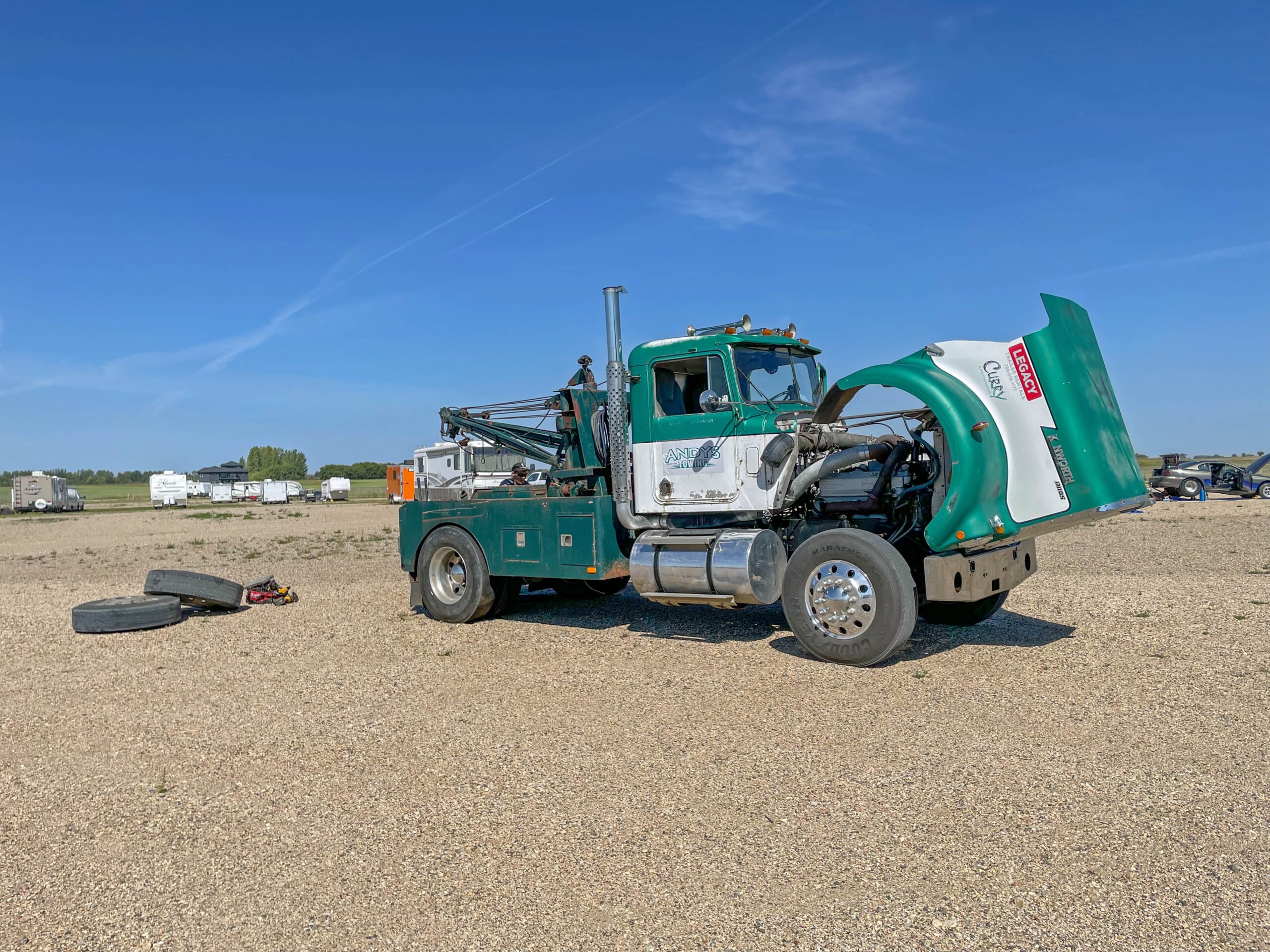
A tow truck for the masses? Wrongo! The big K-Whopper rig wasn’t there for work. It was competing in the truck class. The burnouts were absolute stellar. More truck class photos down the page.
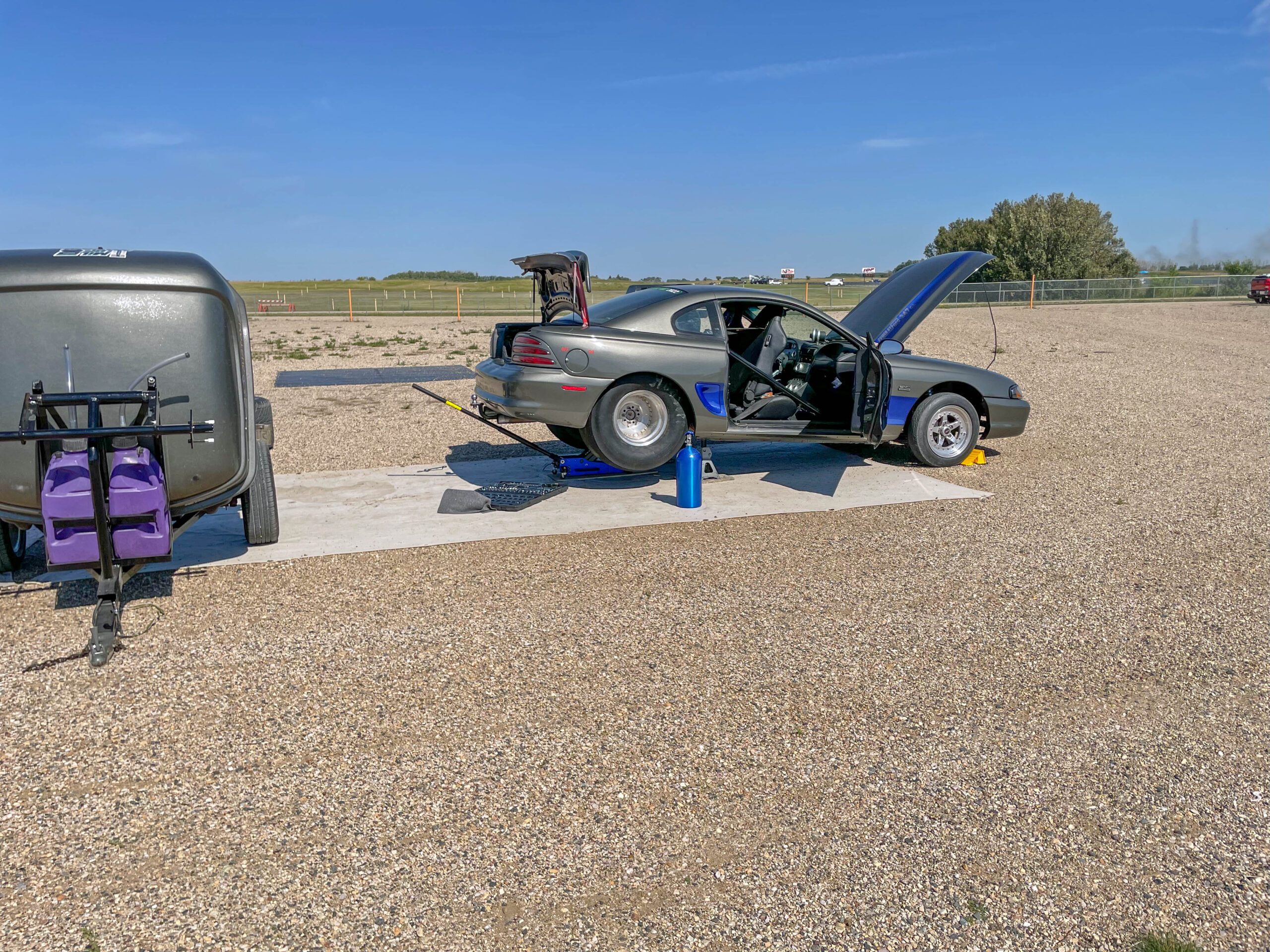
This Mustang was in the Pro Street category (note the big skins out back). Under the hood was heavily reworked Windsor. Note too, the car is on spray. These guys were definitely prepared, judging from the trailer and the equipment they brought with them.
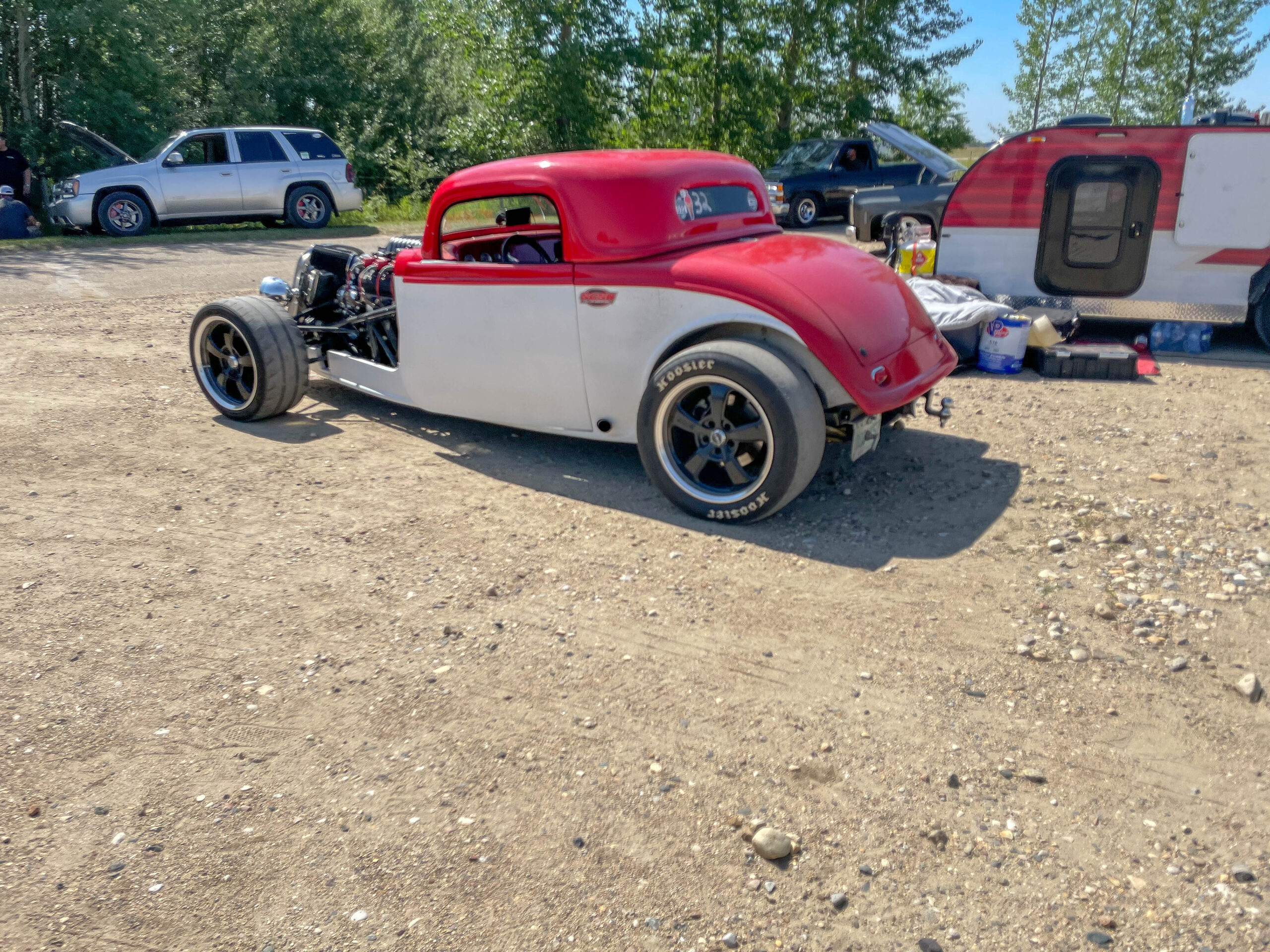
On a slightly different note, check out this Factory Five ’33 Ford kit car. It pulled a color matched trailer. And if you look closely, there’s a can of VP race fuel in the background. A VP dealer was there providing high octane fuel for those who needed it. More in the next photo:
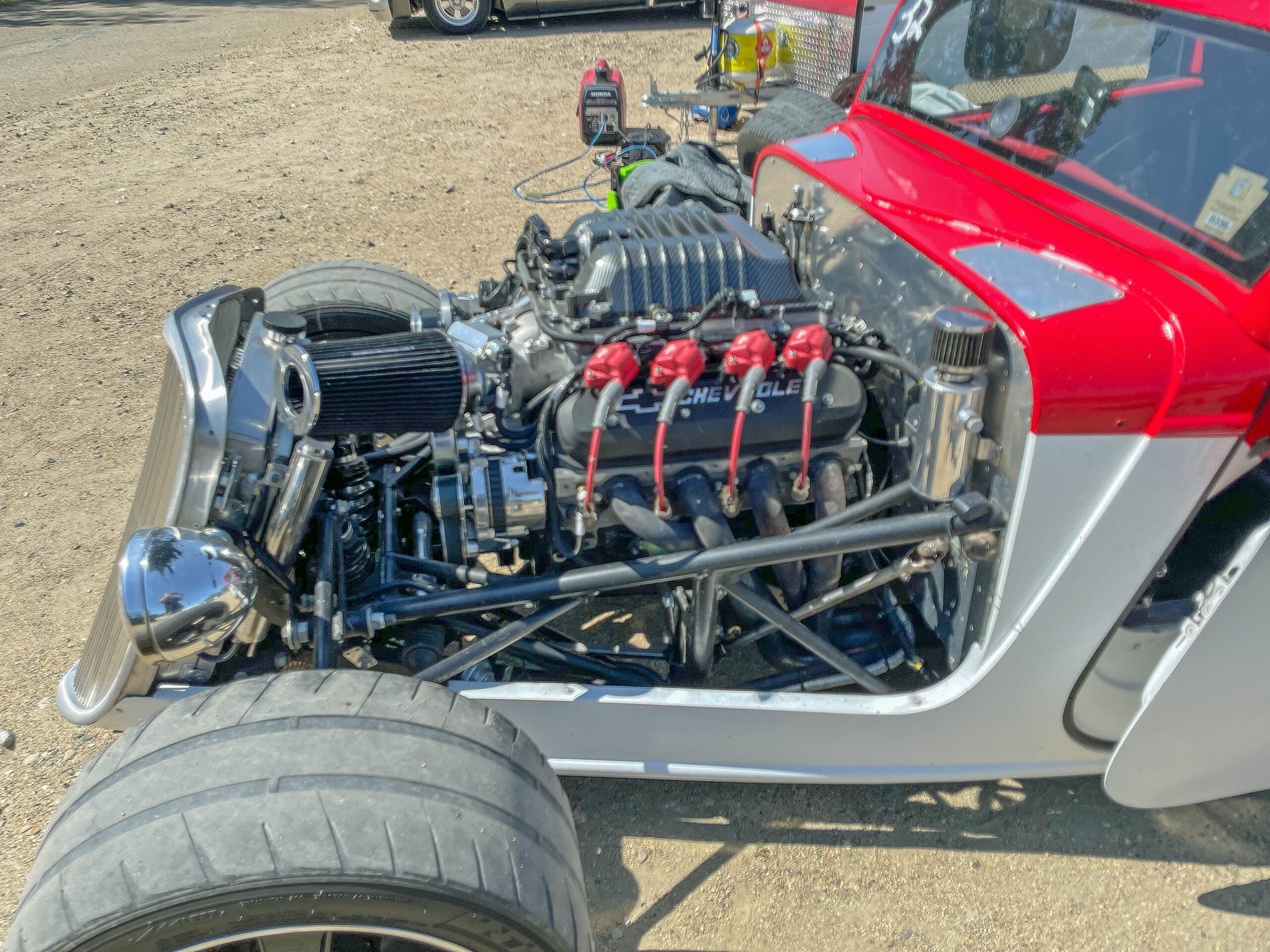
This is what made the kit car interesting for me. With a blown LS for grunt, and with a good amount of boost, you can understand the need for a shot of VP.
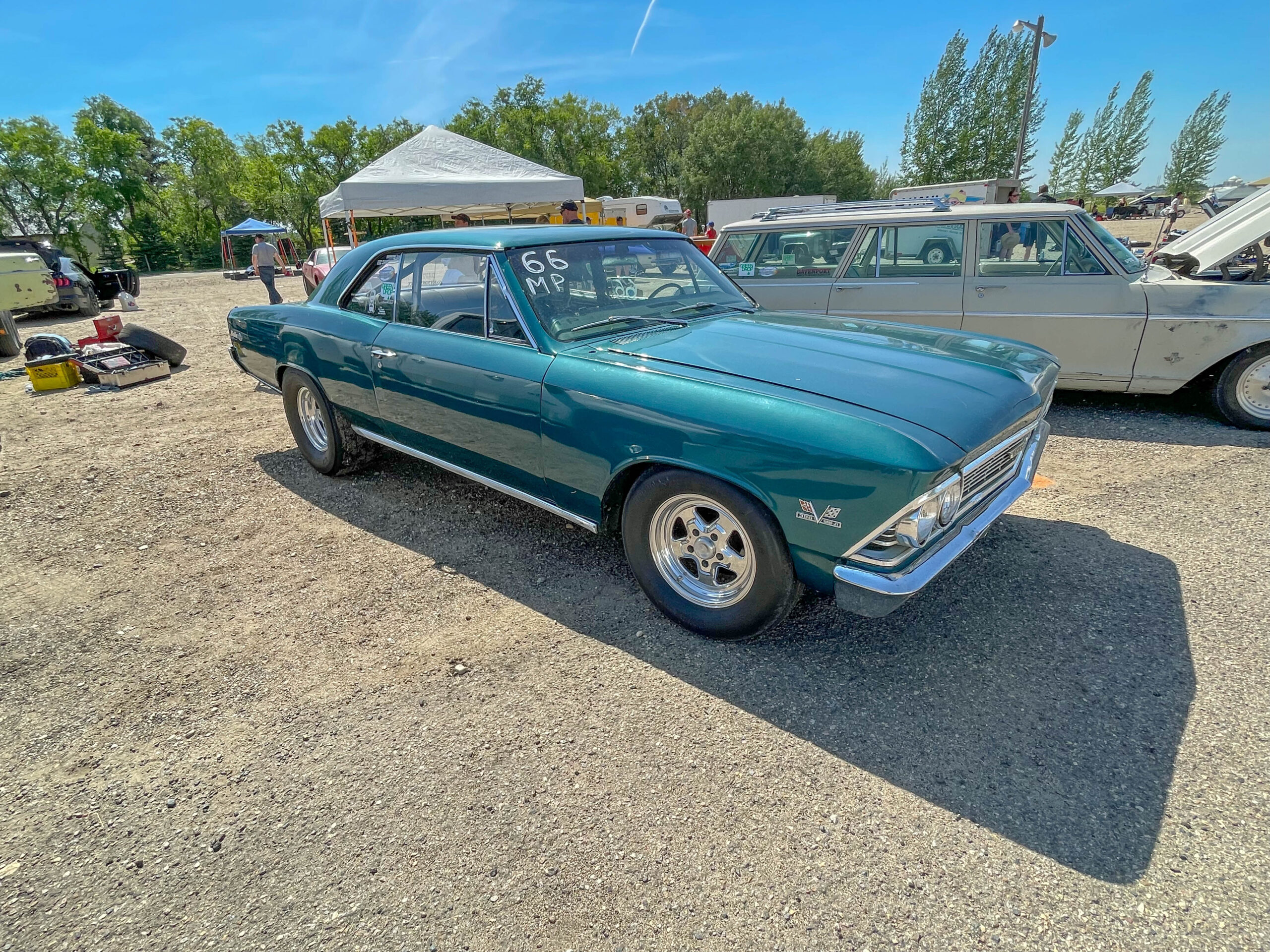
Not everything was LS or Coyote powered. This Malibu was old school. There was a built big block under the hood. In the end, this Tropical Turquoise Chevy made the distance.
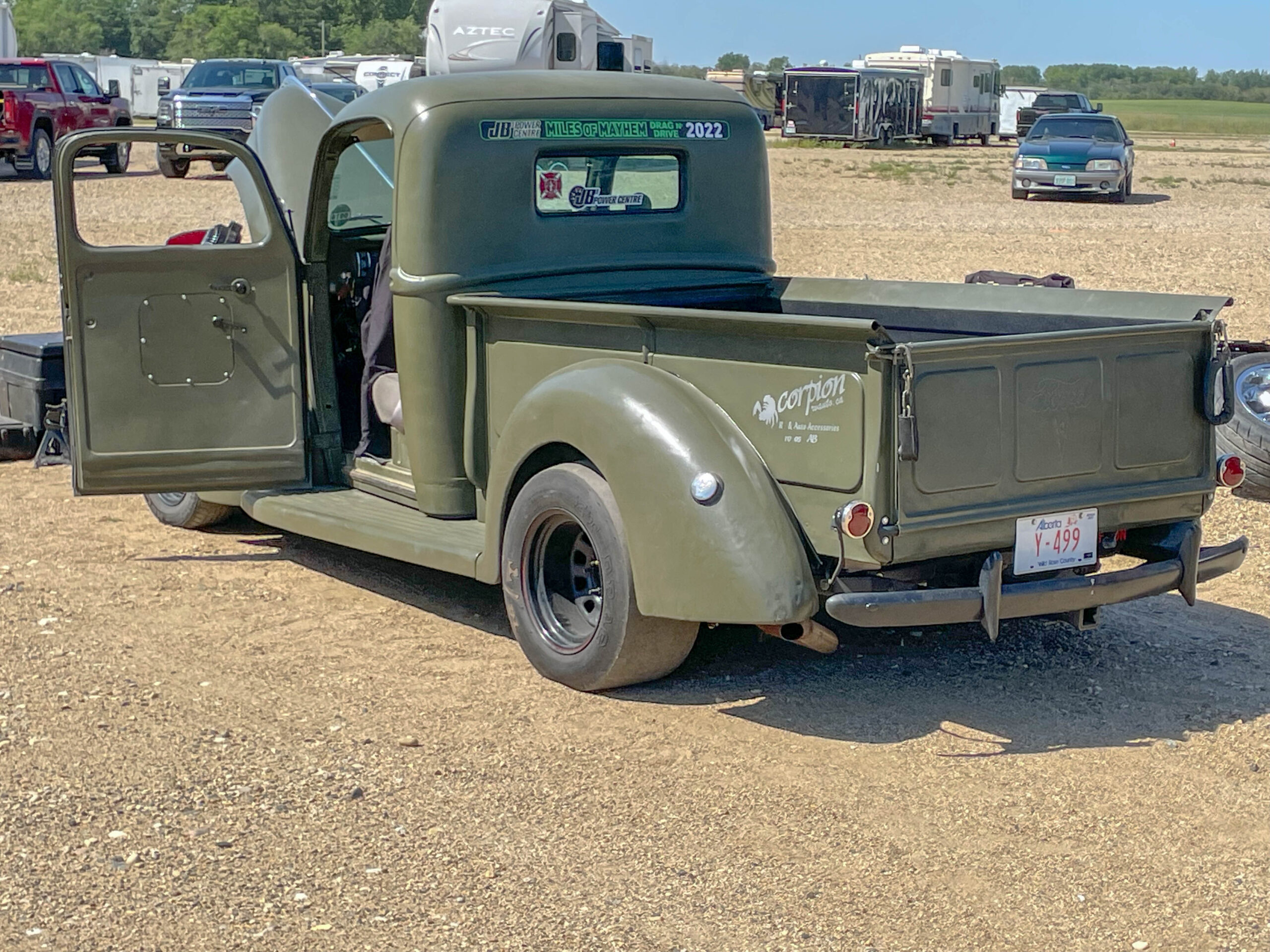
Pickup trucks of all shapes and sizes were well represented. Although there’s some room in the bed for hauling, many of the truck class competitors towed trailers. Note the trailer hitch receiver under the back bumper.
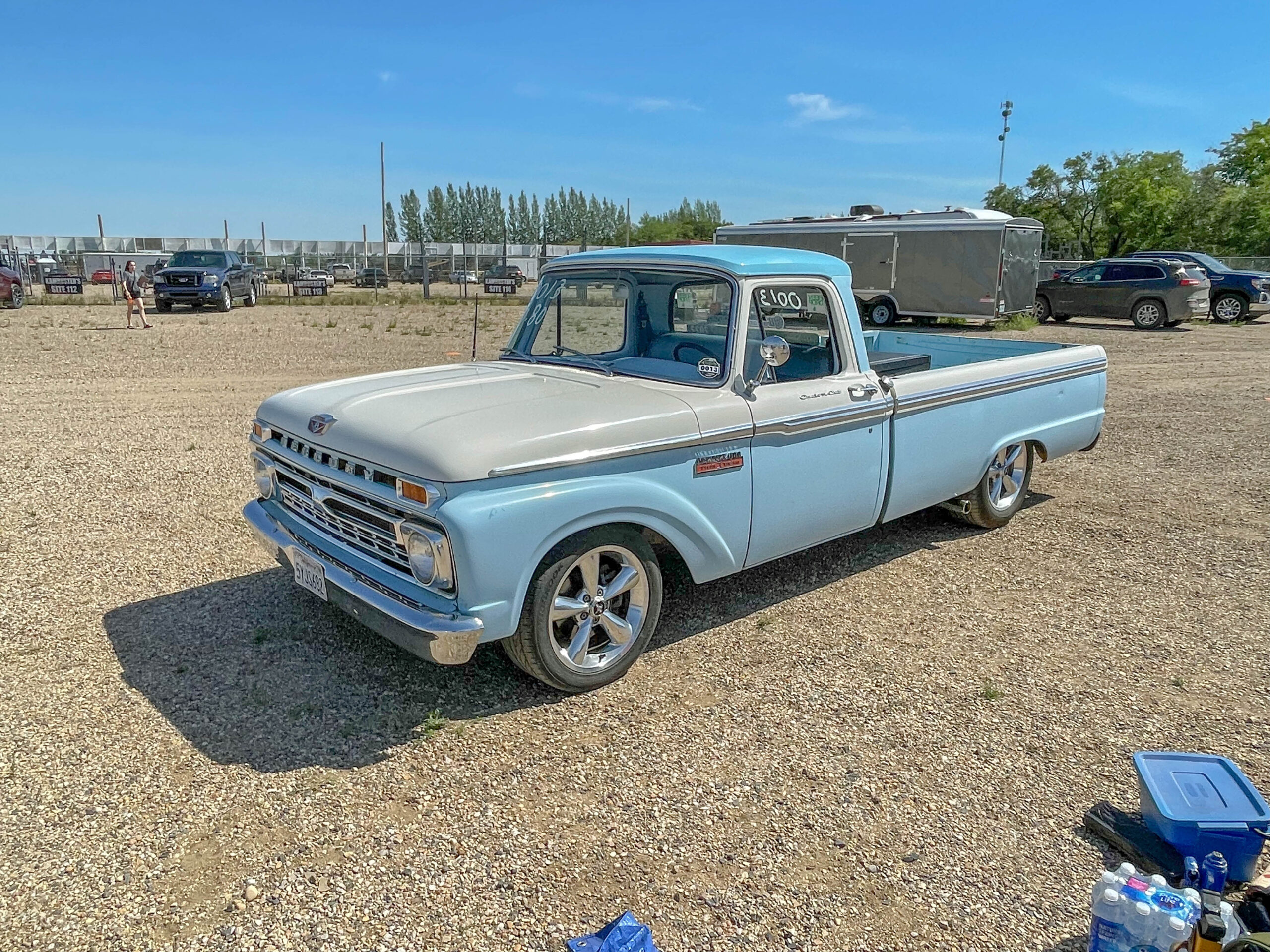
Here’s a Canadian “special”. It’s a Mercury pickup from the mid-sixties. This two-tone rig blew by me on the highway enroute to the dragstrip. And yes, the occupants were having a good time.
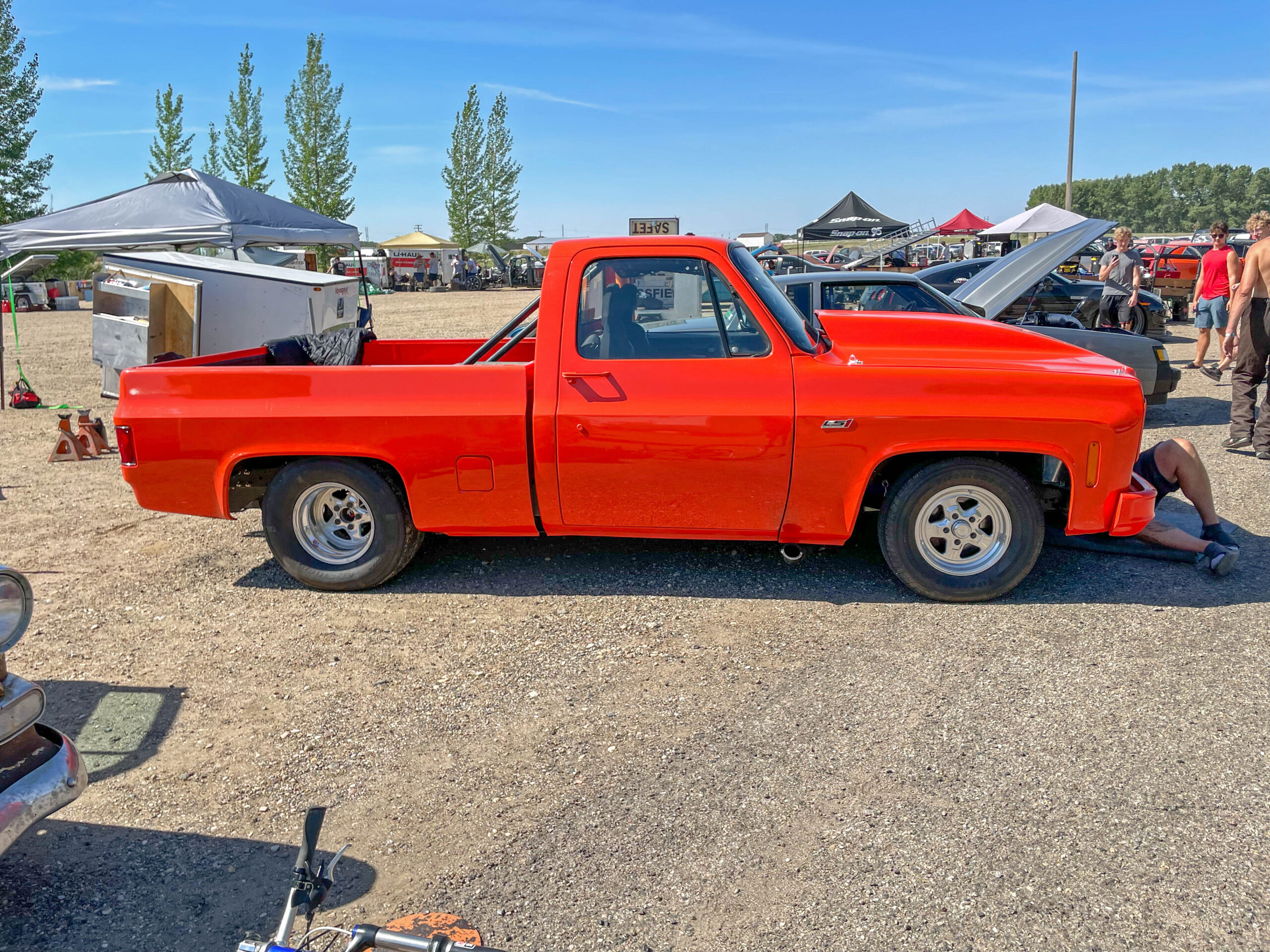
As you might have guessed, western Canada is truck country. Here’s the last pickup to round out the truck coverage. The retina-searing red square body GM was LS-powered. No slouch either.
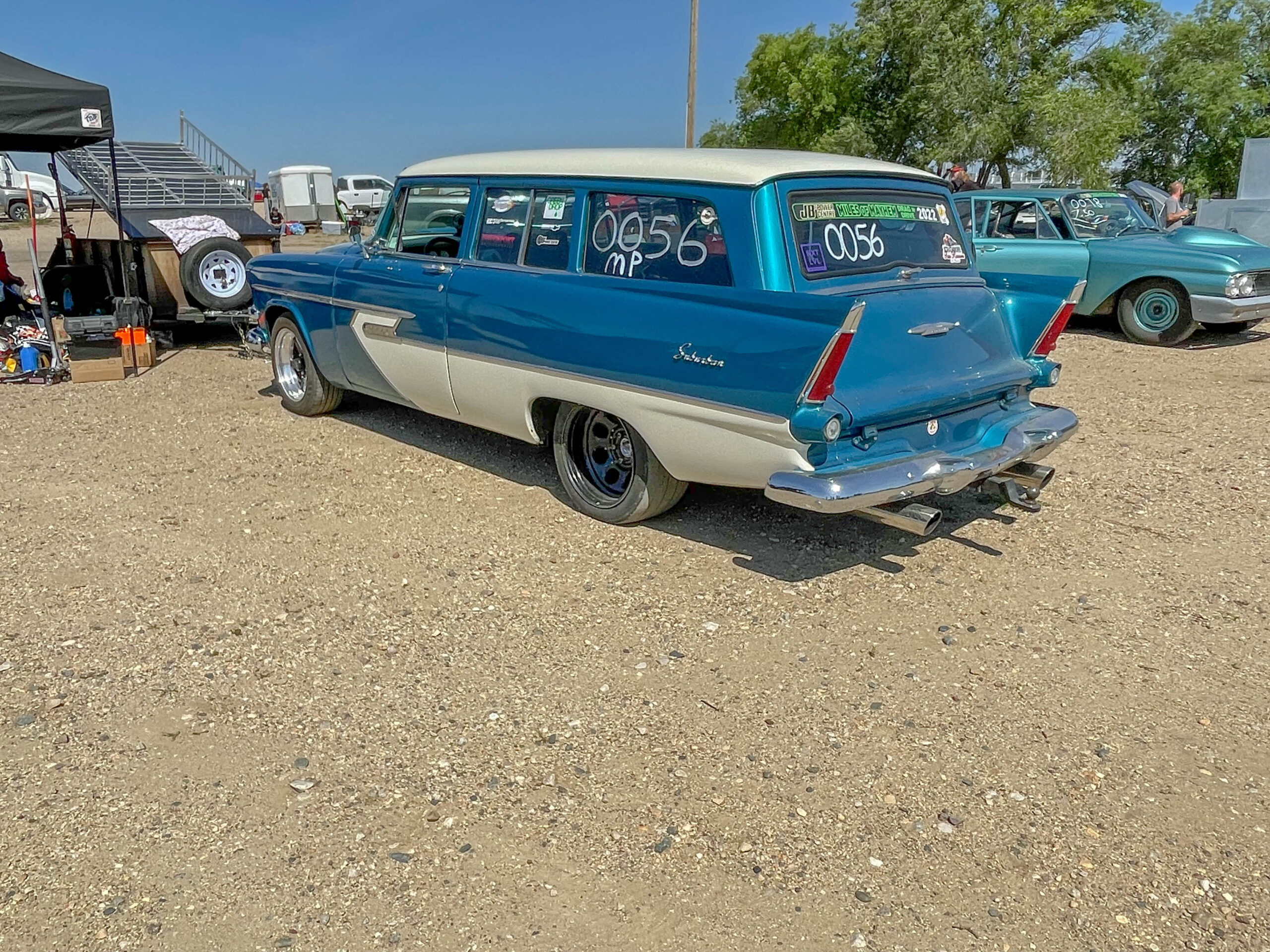
I’ll leave you with this! It’s a ’56 Dodge Suburban. When was the last time you saw one of these, let alone on the dragstrip…with a trailer hitch?